
‘These causes call me’: Charlotte-based, Iraqi-born cartoonist spreads messages of unity
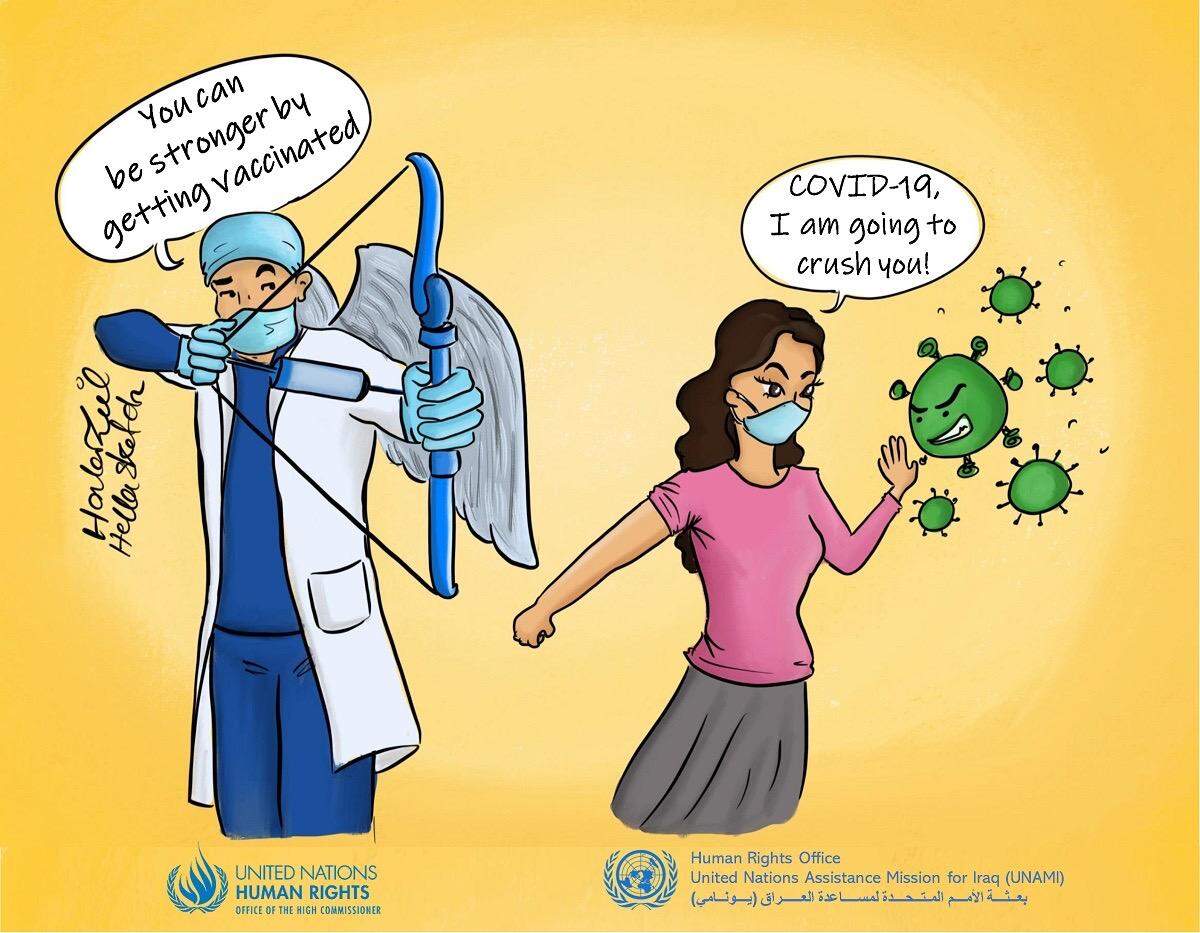
In a recent cartoon, a scaly, lizard-like beast arm wrestles a healthcare worker. Viral spikes rise from the enemy’s head, but the healthcare worker, who grips a vaccination syringe in his hand, looks determined to win the fight.
“Together we can contain coronavirus,” the caption reads. “Health workers are at the centre of this fight, taking personal risks to protect us.”
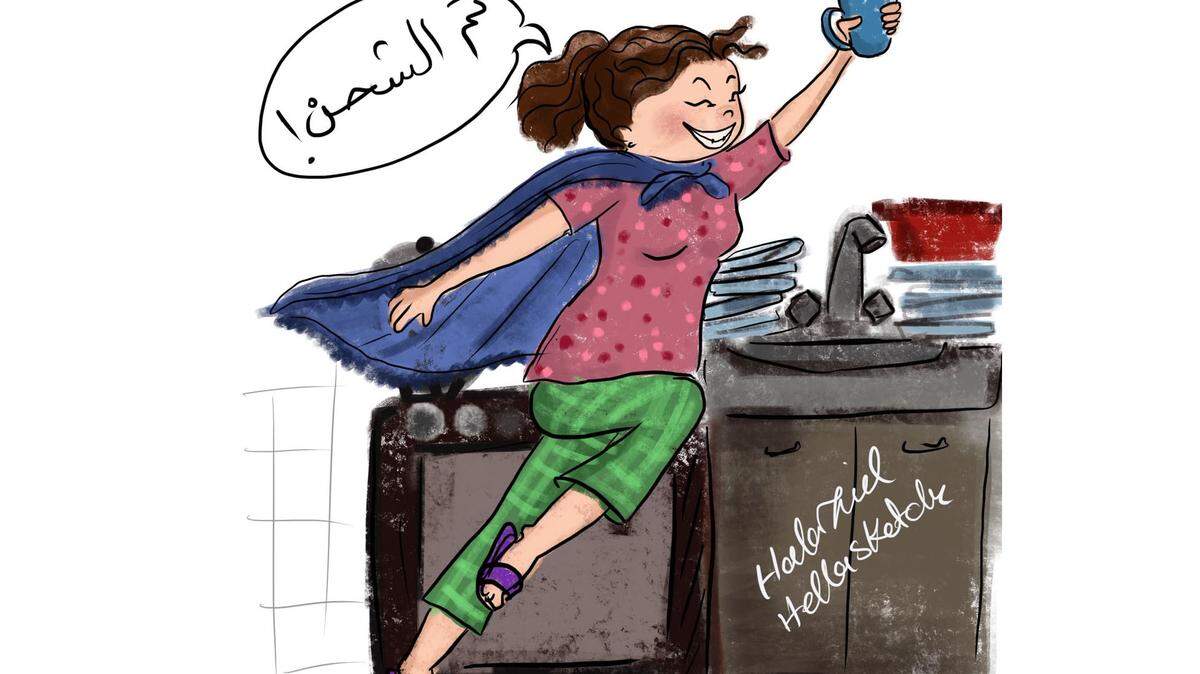
The illustration, drawn for the United Nations Assistance Mission for Iraq, is one of many recent drawings by Charlotte artist Halah Kheldoon. She’s an Iraqi native who is helping spread the message of the effectiveness of the COVID-19 vaccination in her native country.
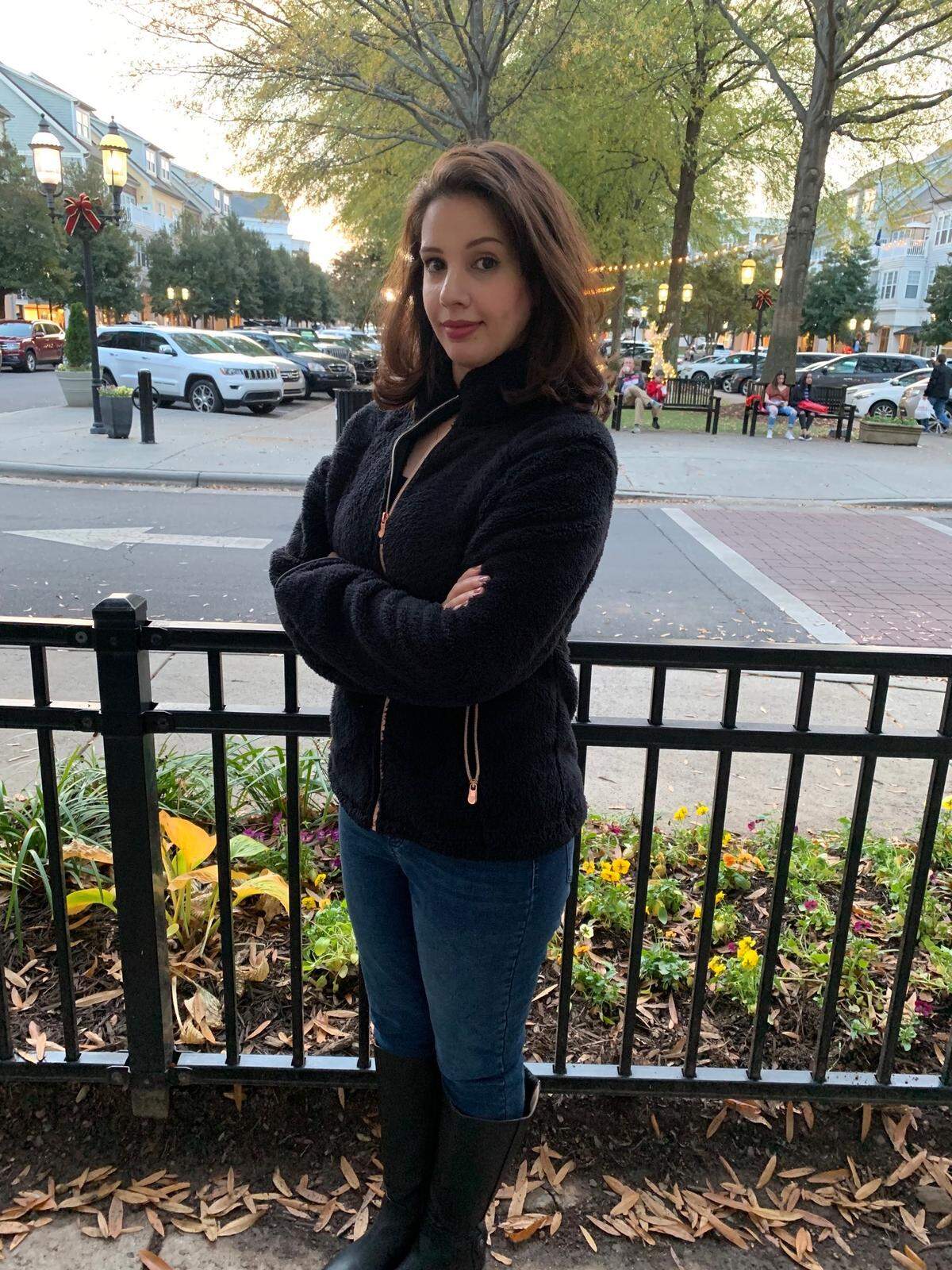
Kheldoon, 35, known as hellasketchz to her more than 53,000 followers on Instagram, moved to Charlotte from Baghdad in 2016 to join her family. They had relocated to the U.S. in 2014.
“Here, I have freedom of speech. I can talk about things and I’m not afraid to be killed because of my thoughts,” she said. “Maybe if I was in a different place (without as much freedom of speech), I might get killed or hurt because of encouraging or raising awareness (about) some causes.”
Living in fear
Kheldoon grew up in Baghdad in the 1990s, her country on the precipice of war with the U.S. “We (were) expecting to die in a bomb every day over there,” she said. “You just do your routine, but you think you are going to be next.”
It was a life of fear and shortages, perhaps most salient to the budding artist, a lack of stationary and coloring books.
“My family made a rule: I had to use one paper per day,” Kheldoon said. “So as a child, it was a struggle. I love drawing, so one paper wouldn’t be enough.”
Her talent came from her mother. “She used to draw amazingly. She used to teach me a lot of basics —how to draw, how to use colors, how to match them,” Kheldoon said. “I still use these lessons.”
But given the cultural stigma of artists as late-night revelers in Iraq, she opted for the college track and stopped drawing. “To go to art school (puts) a stigma on you,” Kheldoon said. “So I couldn’t finish studying art over there, and I kept it as a talent and that’s it.”
In 2008, Kheldoon earned a bachelor’s degree in statistics from the University of Baghdad’s College of Administration and Economics.
By 2014, her father, mother, and younger brother had emigrated to the U.S. Because she was 21, she wasn’t considered part of the immediate family anymore and had to await her own visa.
By 2016, Kheldoon made it to the U.S., but the transition came with its own pain.
The year before she obtained her visa to join her family, her mother died of breast cancer. “I couldn’t catch her before I got rejected… so I couldn’t have the chance to see her before that.”
Kheldoon also had to adjust to the American accent. “It was hard for me to get used to the accent. We studied British English.”
Then there was the stigma of how some Americans perceived Iraqis.
“Starting from zero in a different culture is a big step,” she said. “Especially when you are from the Middle East and you have that stigma (that) you are a terrorist. I can’t change that, but what can I do? I’m just a normal human.”
‘A way of expression’
When Kheldoon got to the U.S., a friend suggested that she start creating art again. “It’s a way of expression, while I’m adapting to my new place,” she said.
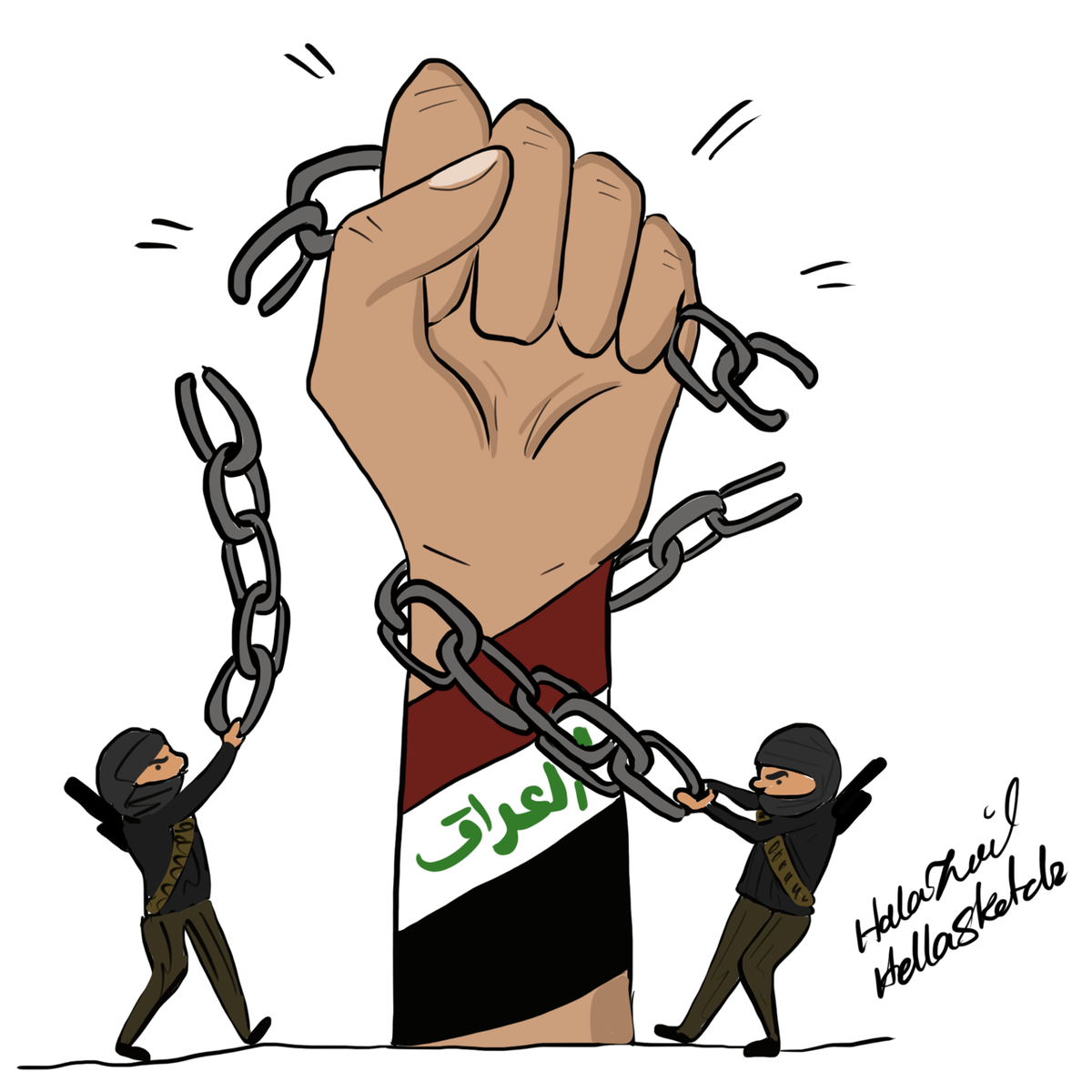
But more than for her own enjoyment, she also puts purpose behind her art, including messaging speaking out on behalf of abused women, standing with refugees or combating child abuse. “All of these causes call me,” she said.
Kheldoon also has worked with the World Health Organization and is currently illustrating a professional development educational text for Iraqi teachers with UNESCO.
In Charlotte, she has worked with the Carolina Refugee Resettlement Agency, selling her artwork to raise funds to support resettling refugees.
Kheldoon shares her sketches through social media and sells digital work on T-shirts, mugs, pillows, bags, and other accessories through an online shop.
While she’s considering going to art school, she continues creating her art from her home near the U.S. National Whitewater Center.
Her family members are now U.S. citizens and Kheldoon is finishing up her own citizenship application.
She still thinks of her homeland, and one of the things she missed most was the food. So Kheldoon took it upon herself to remedy that, making her own taste of home, adding, “Thank God I learned how to cook.”
More arts coverage
Want to see more stories like this? Sign up for the free “Inside Charlotte Arts” newsletter at charlotteobserver.com/newsletters. You can also join our Facebook group, “Inside Charlotte Arts,” at facebook.com/groups/insidecharlottearts.