
Bringing the spirit of Brazilian percussion to Charlotte with classes and a new festival
Luciano Xavier began drumming in his native Brazil before he was even tall enough to reach the top of a drum.
At 4 years old, his godfather noticed his rhythmic ability and built him a special stand to help him reach the atabaque (“ah-tah-bah-kee”), the traditional drums used in the Candomblé faith.
So began Xavier’s training in the art of percussion in his hometown of Salvador, Bahia, in northeastern Brazil, a city known for its giant carnival celebrations. Xavier was immersed in the art form year-round through his religion and daily life in Salvador.
Since relocating to Charlotte in 2016, Xavier has focused on bringing authentic Brazilian drumming to the Queen City through classes and performances in a way that respects the cultural context from which it comes.
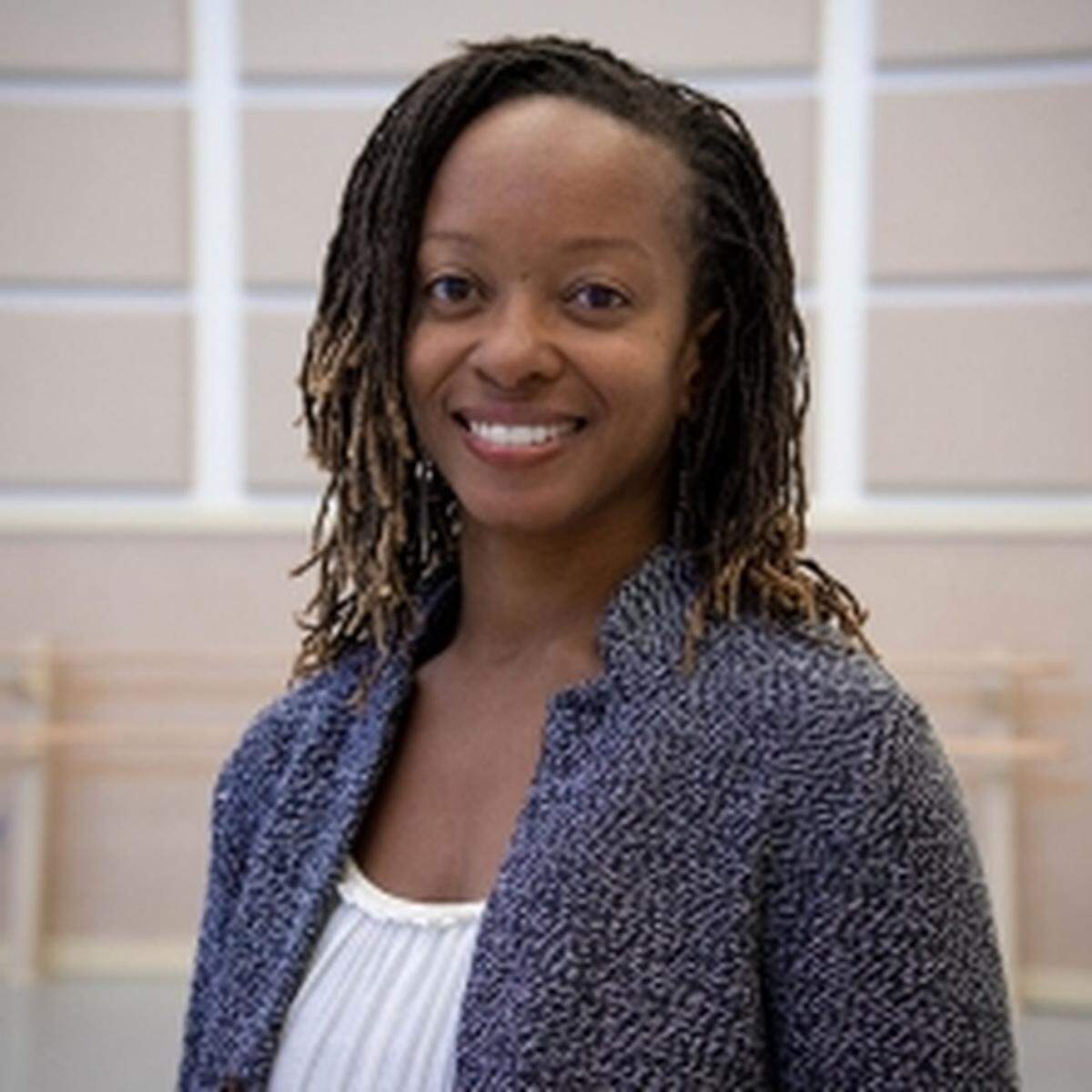
During his conversation with the Observer, Xavier spoke in his native Portuguese, and his wife, UNC Charlotte Assistant Professor of Dance Tamara Williams, served as interpreter. The two often team up professionally.
The couple’s latest collaboration is “Lavagem!,” a festival of indigenous and African-Brazilian arts and culture that will feature free performances as well as drumming and dance workshops. The events take place April 7-10 in various locations around Charlotte.
The festival is produced by Bloco Afro Ayédùn, a community organization the couple founded in 2021 to support and promote Black culture and heritage. Funding for the festival comes in part through an Arts & Science Council Cultural Vision Grant and the N.C. Arts Council.
Brazilian percussion and religion
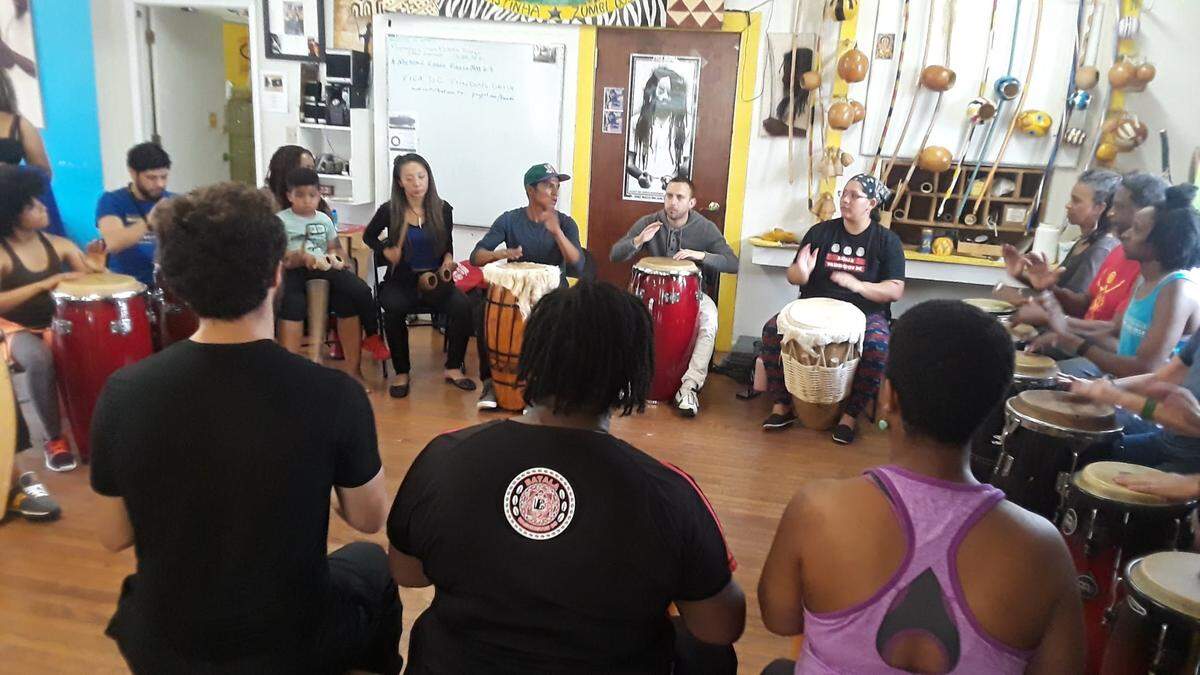
For Xavier, the cultural context within which he learned to play the atabaques is significant. Drumming is an essential part of Candomblé, a religion with African roots that is widely practiced in Brazil.
It’s normal for children to come with their extended families to the Candomblé house of worship, where they see day to day activities like music, dancing, women cooking and men working to make the traditional drums.
”Without the percussion,” he said, “the whole ceremony wouldn’t even exist.”
The atabaques are more than instruments of accompaniment. In Candomblé tradition, the drums are believed to have divine spirits that must go through special rituals and ceremonies just like a person would experience throughout their lifetime.
The same instruments are used in contemporary Brazilian music. But Xavier said it is vital to know which rhythms are acceptable to play outside of religious practice and which ones are sacred.
“There are some rhythms that don’t leave the Candomblé house,” he said.
That’s one reason why knowledge of the cultural context and respect for tradition are so important when teaching the art form. It can’t be done haphazardly.
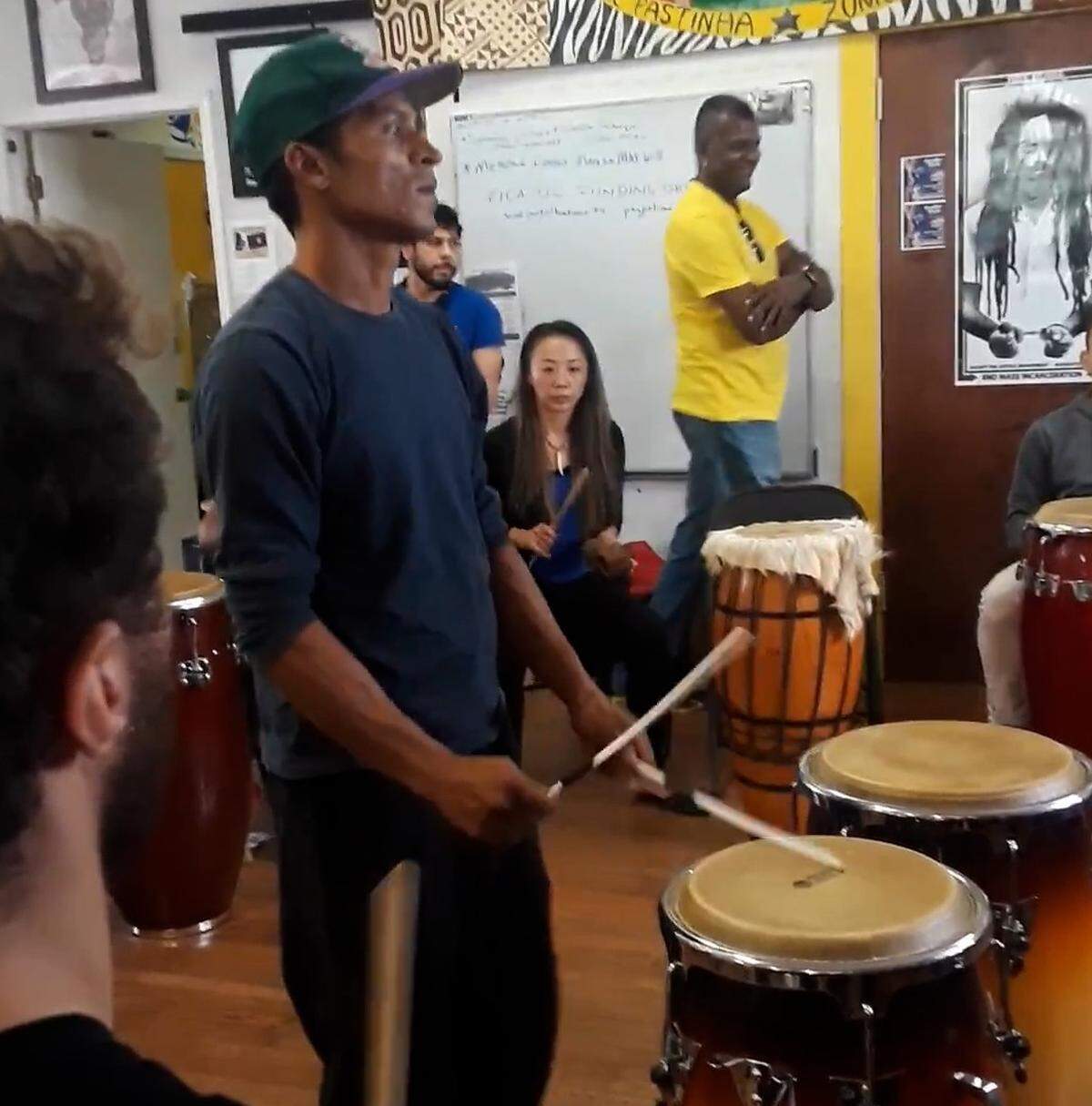
“In sharing a culture, you have to have responsibility because you’re sharing the story of people,” Xavier said.
For him that means being a teacher with a level of cultural understanding that goes beyond the surface. It’s “something that you lived or that you really studied deeply so that you know exactly what it is that you’re sharing or talking about,” he said.
There’s a living history in the rhythms too, which span contemporary Brazilian music and dance. Knowing this history is also important.
Throughout Brazil, for example, you can find many types of samba. They all have the same percussive roots, linking them to the rhythms and dance known as the Batuqué in Cape Verde.
“The African ancestors brought so much information to my country,” Xavier said.
The rhythms they brought were preserved by the people of Brazil. But they were also flexible enough to evolve, enabling them to create the culture they have today.
Learning through cultural immersion
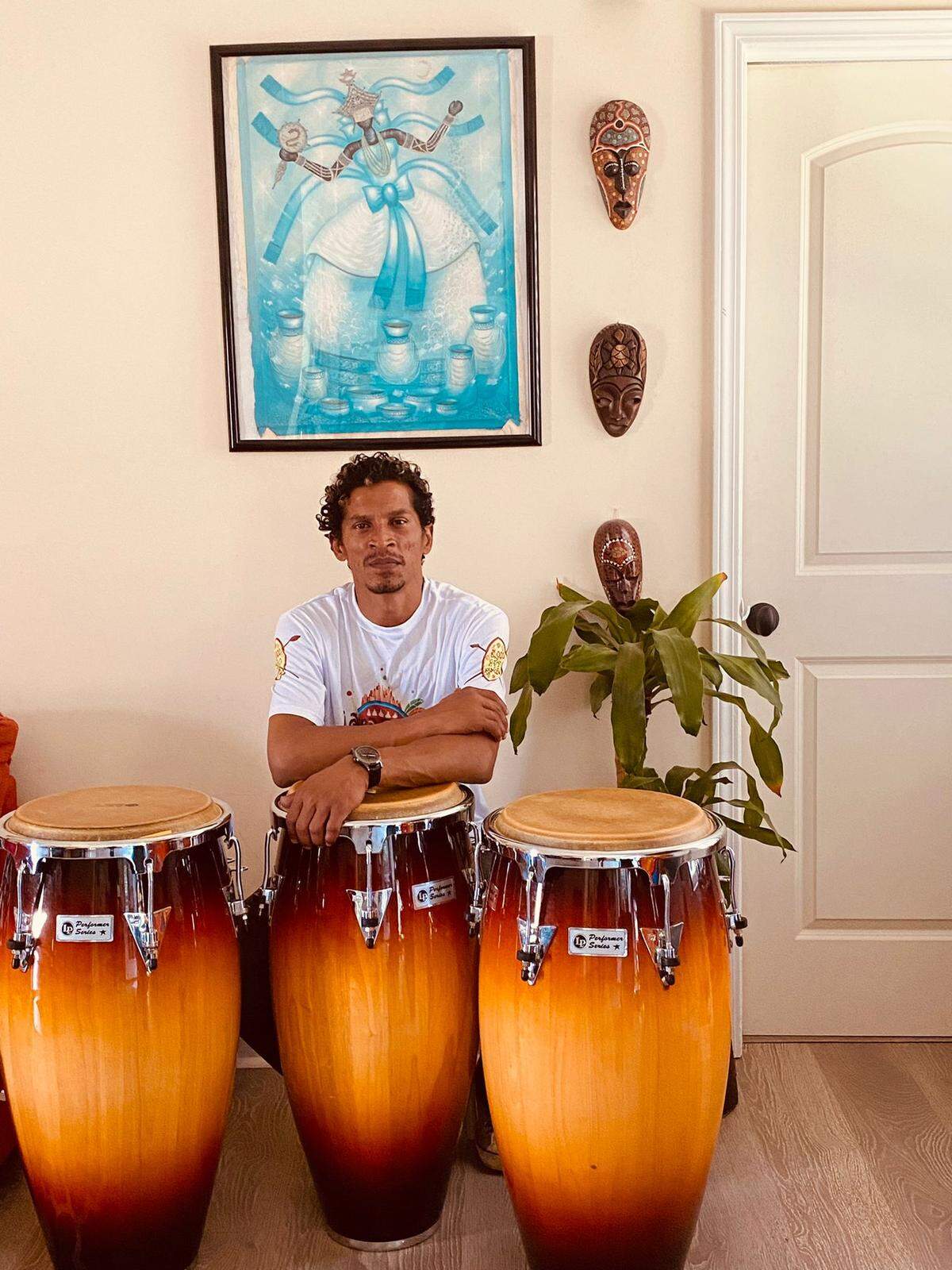
In the Candomblé house, Xavier learned mostly by ear. “I heard a song or a rhythm just one time and the next day I’d play everything,” he said.
Xavier’s more formal music training started with the Ilê Aiyê, a large community organization in Brazil centered around Black identity and pride that began in the 1970s.
The group was one of the first “bloco afros” in Bahia, promoting global African cultures as a “bloco” or performance group at carnival. It remains one of the most popular blocos during carnival, and Xavier has performed with them multiple times.
When people think about this Black community, they imagine it’s all about percussion, dance, music and food, he said. Those were all things Xavier wanted, but he discovered participation required more than that. There were always lessons in music theory before they could play their instruments.
“In this community, you have to show up… with a notebook and pen,” he said.
After that he got involved with Projeto Axé, an afterschool program that partnered with the Ilê Aiyê and broadened his exposure to contemporary music outside of the Candomblé tradition. The organization was created by an Italian, Cesare de Florio La Rocca, to help youths, especially those most economically vulnerable, by promoting cultural pride through the arts.
“It’s really important to know his name because he saved many children and gave many opportunities to the children in Salvador,” Xavier said. “And I’m one of those young people that was part of that project.”
He also studied contemporary music, training and performing with some of Brazil’s premier music groups and dance companies, including Balé Folclórico da Bahia. And he has performed and lectured as a master percussionist across Europe, South America and the U.S.
In Charlotte, Xavier and Williams’ new Bloco Afro Ayédùn models itself on these types of community organizations. Ayédùn means “life is sweet” in the Yoruba language.
The group, which started hosting events via Zoom last year, will be dedicated to supporting and promoting all sorts of Black arts and cultural traditions in Charlotte.
The hope is for it to expand beyond the arts too, with local professionals sharing their own knowledge and experiences with the community.
The Lavagem! Festival
A lavagem is an African Brazilian ritual symbolizing renewal.
“Music and dance are a marriage,” Xavier said. “Neither of them live alone. You need the music to dance. But you also need the dance to do and create music… the person dancing gives energy, the person playing gives energy.”
That energy will be featured at Lavagem!, April 7-10, which includes guest artists from Brazil teaching samba dancing, capoeira martial arts and other activities.
As the COVID pandemic wanes, Xavier said the festival provides an opportunity to bring people together and participate in a symbolic communal cleansing. It also will be the moment when Xavier officially inaugurates new instruments he purchased for the community to use, thanks to a 2022 ASC Artist Support Grant.
In Salvador, Bahia, on every street you see men, women and children of all ages playing a drum, Xavier said. He wants everyone in Charlotte to have that possibility here too.
His goal is to make Brazilian drumming classes and workshops accessible to the entire Charlotte community. And a great place to start is with this weekend’s festival.
“It’s for everyone to take part. If you’ve played your whole life, if you’ve never played one time ever before, you need to come,” Xavier said. “If you want to be a percussionist in the future and you’ve never played before? Good. You should come too.”
Want to go?
Lavagem! Festival Events are free but registration is required. For details, check out @blocoafroayedun on Instagram or online at https://blocoafroayedun.wixsite.com/come-unity.
More arts coverage
Want to see more stories like this? Sign up here for our free “Inside Charlotte Arts” newsletter: charlotteobserver.com/newsletters. You can also join our Facebook group, “Inside Charlotte Arts,” by going here: facebook.com/groups/insidecharlottearts.
This story was originally published April 7, 2022 at 6:00 AM.