
She loved her Black caretaker. Now, Judy Goldman explores if Mattie Culp loved her back
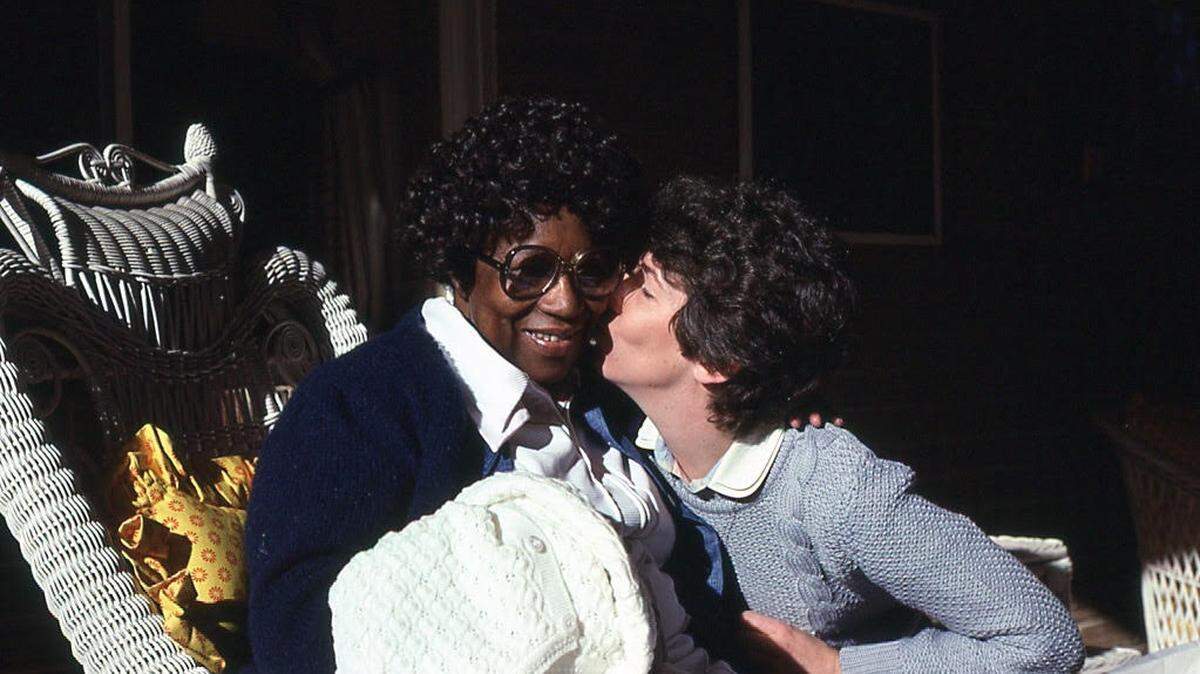
Charlotte’s Judy Goldman grew up Judy Kurtz in Rock Hill, a privileged child on a street of manicured lawns and camellia bushes.
In 1944, when Judy was 3, her parents hired Mattie Culp, a Black live-in maid, to cook and clean and care for their three children, but especially to look after Judy, their youngest — to iron her dresses and fry her over-light eggs. Judy and Mattie slept together in one bed, Mattie’s quiet hymns “jesusing” her to sleep.
By day, the two walked to Woolworth’s for crepe paper, which Mattie fashioned into ruffled dresses for Judy, so magical they looked like dance costumes “for an MGM musical.”
“Our love was unwavering,” Goldman writes in “Child” (University of South Carolina Press, $19.99 paper), her memoir about Mattie. But she also knows that love was “uneven.” Now, at 80, Goldman, vowed to get this “jumbled up love story” down on paper. How, she asks, do you measure love when one person is paid to care for another?
To Judy, Mattie was a marvel. “And what was I to her?” she wonders.
“Child” is brave and lyrically told, a hymn of praise to a woman Goldman adored. Goldman talked with The Charlotte Observer’s Dannye Romine Powell about her seventh book and third memoir.
Q. Not only was your life privileged, but both your parents were exceptional — your mother “sweet-natured” “affectionate” and “empathetic.” Your dad “principled” and “fair-minded.” Both Mattie and your mom “doted” on you. You even ask, “Who in the world is lucky enough to have two perfect mothers, their faces forever shining down on you?’ So I ask: In childhood, did any rain ever fall on your parade?
A. Honestly, my childhood was embarrassingly coddled. Rain fell later: When I was in my thirties, my parents were both dying, my mother of Alzheimer’s, my father of cancer. My sister and I could not take away each other’s pain, so we turned on each other. My brother lived in New York City and was flying home to visit less and less. It felt like I was losing my entire family in one sweep. Only Mattie remained steadfast. Perhaps, this grown-up heartache was the price I had to pay for a happy childhood.
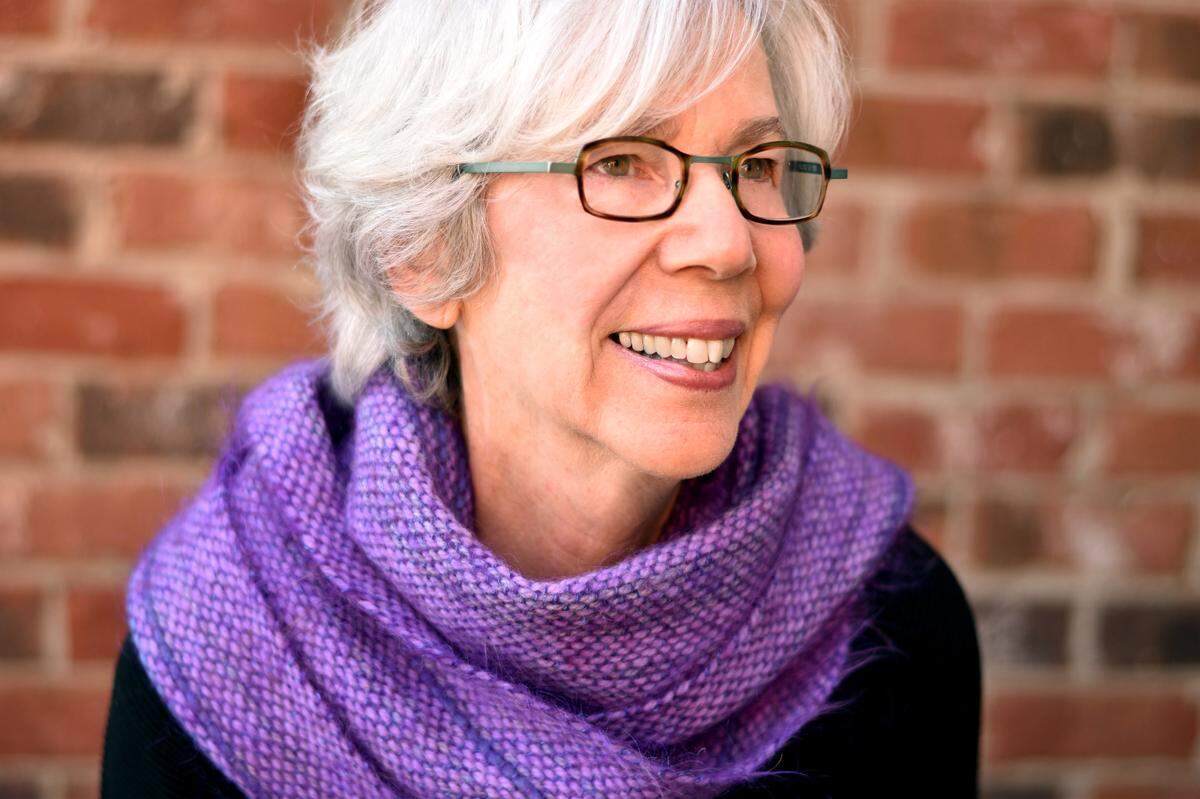
Q. Mattie lived with your family, the six of you sharing one bathroom for many years. Everywhere you all were, Mattie was there, too, leading a very white life. Was she able to maintain her Black connections? Did she regularly attend a Black church?
A. Mattie’s best friend worked for our neighbors. Late afternoons, before they had to start dinner, Pernettia would walk over, and she and Mattie visited in Mattie’s room. As much as I loved when Pernettia came, loved seeing their friendship up close, I knew their opportunities for companionship were limited. Their visits were always at our house, never at the house where Pernettia worked.
After Mattie separated from her alcoholic husband, she and her boyfriend kept company until he died. But there was nowhere in Rock Hill for this Black couple to go just to be together. So, after Mattie cooked our dinner and did the dishes, she and Knox “dated” in his car, parked in our driveway. The car windows were open to the warm night, rolled shut if it was cold.
In St. Matthews A.M.E. Zion Church, Mattie was known as “Mother Culp.” Monday through Saturday, Mattie inhabited a white world. Sunday mornings, she was a leader in her Black church.
Q. Did you ever sense Mattie longing for another life, maybe with her own child, who was living in Charlotte with an aunt and uncle she believed early on to be her parents?
A. I feel mildly clueless and insensitive when I say that I never sensed any longing in Mattie for a different life. This does not mean she didn’t experience longing. If she did, she would never have felt — in the tightly choreographed 1940s and ‘50s Jim Crow South — that she had the right to express grief over not being able to raise her own child.
Q. What made Mattie so darned lovable — for everyone in your family — and beyond?
A. I love this question! What a privilege — to introduce you to Mattie! She was everything! She was kind (but not a pushover — there was a dogged sureness, a confidence to her); she was openly affectionate; she was playful; she was imaginative; she was intuitive; she was a great listener (eyeball to eyeball). There was also a sense of calm in her; you felt safe and secure in her orbit.
And there was her practicality; she was a stunningly smart observer of the world. You learned so much just from a simple conversation. And, she always saw the best in you; you wanted to do everything you could to deserve that. Woven through all these qualities: her astonishing tenderness. Just when you needed her love the most, she knew and delivered.
Q. Your parents, then you and your siblings, took complete care of Mattie until her death. Why do you think more people don’t assume financial responsibility for the Black people who’ve worked for them over long years?
A. I suppose those are not normally the terms of the deal (which isn’t exactly a deal, since only one side draws it up). When I was little, I told Mattie over and over, “When you get old, I’ll take care of you.” I believe I looked at my relationship with her as having two parts: Part one, she looked after me. Part two, I looked after her. It’s not that the members of my family were uncommonly open-minded or magnanimous. We just did what you would do for a loved one.
Q. You admire James Baldwin. If you two could sit and talk, what do you think he might say you got right in “Child,” and where might he say you missed the mark?
A. Maybe he would pat me on the arm and say that I tried my best to examine, with honesty, old and worn prejudices. But I’m afraid what he’d really say is that I, a privileged white woman, should never have presumed to understand the power dynamic between my family and Mattie. He might say, “You have no right to tell this story when you have no idea what it was to be a Black maid.” He’d be correct in this. My hope, though, is that I’ve examined my relationship with Mattie in a way that honors it and also exposes it. I want this book to be a personal meditation on love… in the shadow of white privilege and racism.
Q. Let’s say Mattie had never had the good luck to work for your family. Let’s say she’d been hired as a maid in a hotel. What do you imagine her life might have been like?
A. I hate to even think about that! But I believe, for an uneducated Black woman in those times and in that place, her life would have been more impoverished, more disenfranchised, more exposed to the oppression and harassment all around. But, really, if I’m laying bare what needs to be laid bare, I have to acknowledge that if she had worked elsewhere, if she had not “lived in,” maybe she would have had the joy of raising her own child.
Q. Your family did everything in its power to give Mattie a good life. (Even a diamond ring one Christmas.) Yet, there was little you all could do at the time to change the inequality of the system that both you and Mattie lived under.
A. I am a minimalist. I pack way too small a suitcase when I travel. My refrigerator is never full. This trait also applies when it comes to confronting injustice. I’m ashamed to admit that I only try to do what I can in my own small quarters. Maybe my way of trying to right this wrong in very small ways started in childhood. Mattie and I would take walks around the neighborhood, keeping tabs on a tiny house being built one street over.
We fantasized about buying that house and moving in. I write in my book: “If the two of us went off to live in our own make-believe world, could we bypass what loomed out in the real world?” No matter how much I loved her and wanted to protect her, there was nothing I could do to change things. Maybe that’s why I wrote this book.
Q. Did your exploration leave you feeling that Mattie genuinely loved you, despite being paid to care for you?
A. In my memoir, I tried to be careful never to presume to know what Mattie might be thinking and only convey what she actually said to me. Any reflection I included was my own. But now I’m going to go out on a limb and claim that I truly believe I did know what she was thinking, just as she knew what I was thinking. We were both secure in the knowledge that we loved each other deeply. It’s a knowing that is like none other.
(Goldman will talk about Child: A Memoir at Park Road Books on May 5 at 7 p.m. The event is free and open to the public.)

This story was originally published April 27, 2022 at 6:00 AM.