How a Gaston County kid grew up to win a Pulitzer — for a play set at a family cookout
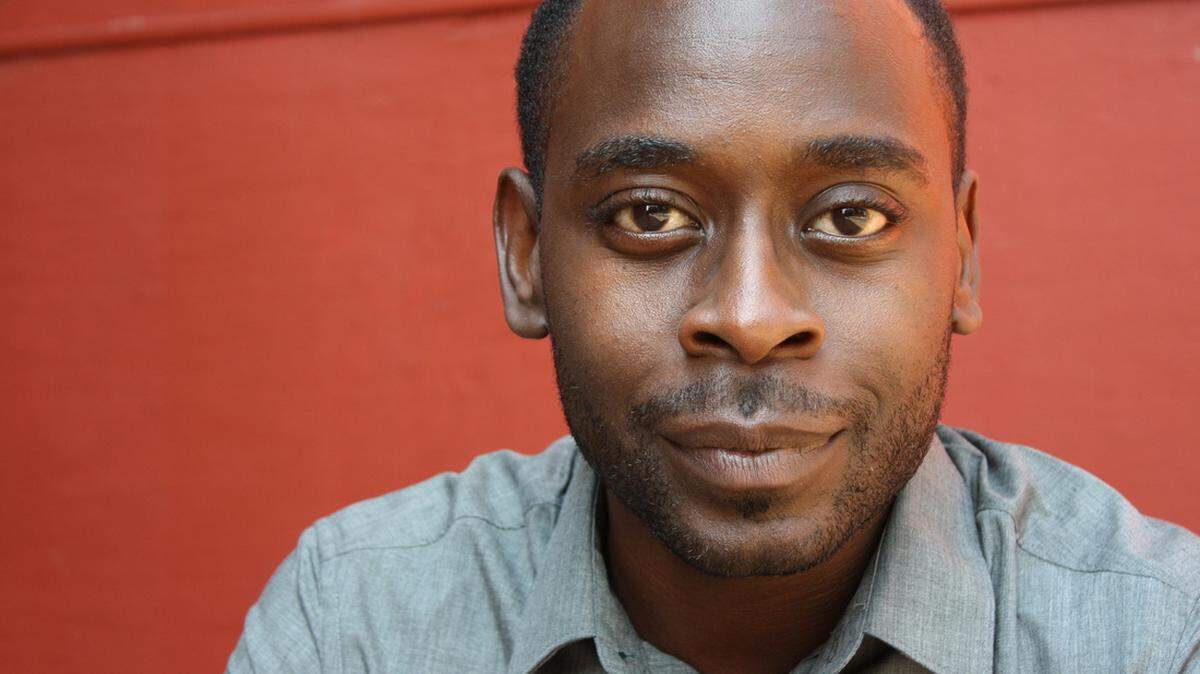
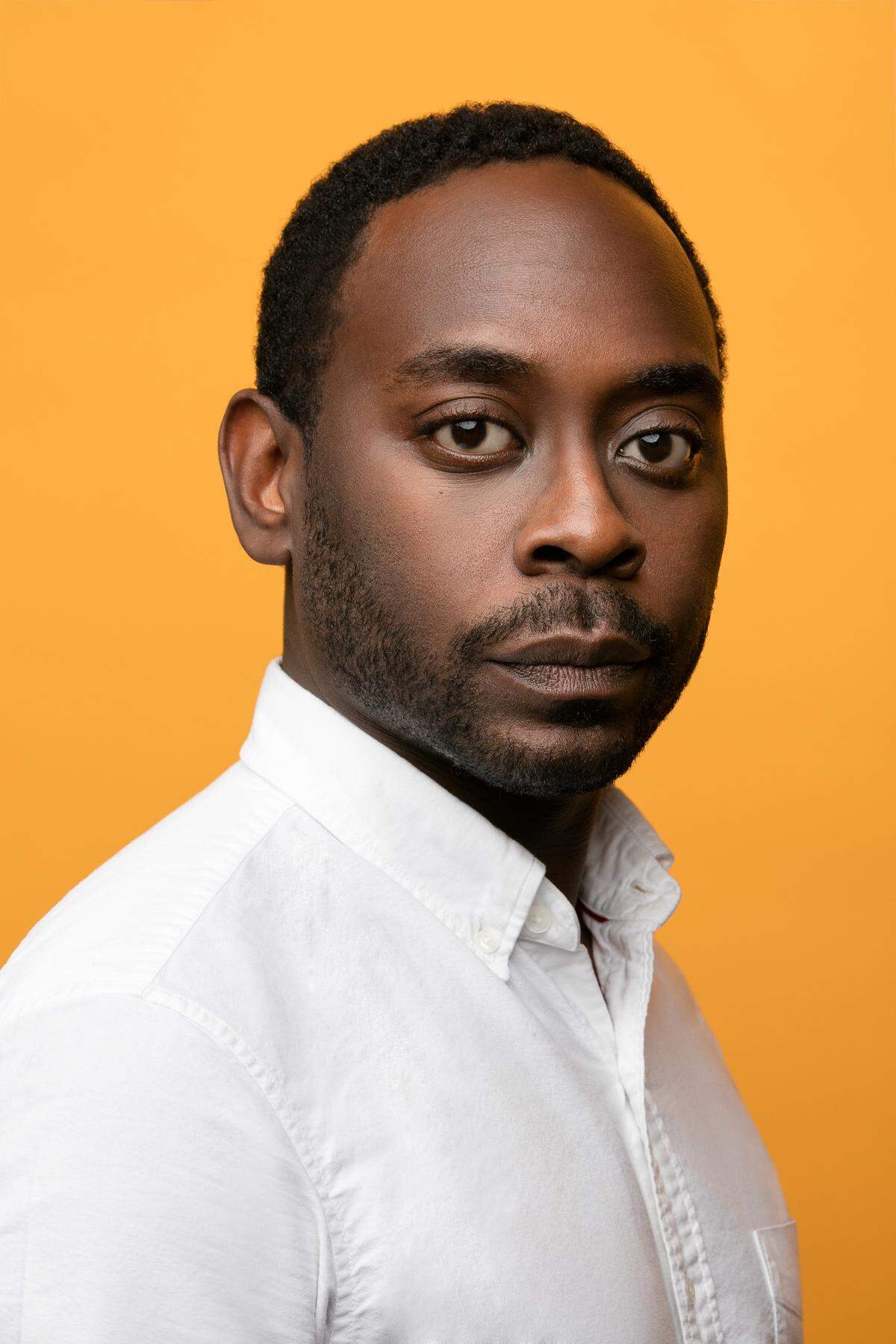
In the nearly seven weeks since playwright James Ijames became Pulitzer Prize-winning playwright James Ijames, the 41-year-old Gaston County native has enjoyed many of the spoils that come with earning what’s widely considered to be among the nation’s most prestigious awards related to the theater.
Within just a few hours, the show that won him the prize — “Fat Ham,” a bold, Southern-fried twist on Shakespeare’s “Hamlet” — sold out its planned monthlong New York debut at the Public Theater off-Broadway.
Since then, the co-production with the National Black Theatre has been extended not once, not twice, but three times.
Ijames (say “Times,” without the “T”) also has enjoyed an unanticipated boost of visibility for his work in his adopted hometown of Philadelphia, where he’s currently directing someone else’s award-winning play: “Fairview,” by Jackie Sibblies Drury, who won the Pulitzer Prize for Drama three years before him.
Oh, and he’s been tapped to help write the book for a musical, which he can’t yet discuss; and to develop a TV project, also a secret; and to produce an actual physical book of “Fat Ham” for publication, due probably sometime next year.
But some things haven’t changed for Ijames.
“I mean, I have a lot of student-loan debt,” he says, laughing. Though a full ride and a stipend got him through the MFA acting program at Temple University, he had to borrow heavily to complete his bachelor’s in drama at Atlanta’s Morehouse College. “I’m at a point in my life where I pay it, and it’s fine — you know, I’m not struggling to pay it anymore,” adds Ijames, who draws his primary income from his job as an associate professor of theater at Villanova University. He laughs again. “But it’s still there.”
A much more important thing that’s remained the same, though, in his mind? He says that, despite being the owner of a newly minted Pulitzer medal, he still hasn’t forgotten where he comes from.
‘I was hooked from that point’
Ijames was born at the former Gaston Memorial Hospital in Gastonia and raised in Bessemer City, son of James Sr. and Denise, younger brother to sister Dana and older brother to sister Heather.
From an early age, he demonstrated a prodigious talent related to the arts.
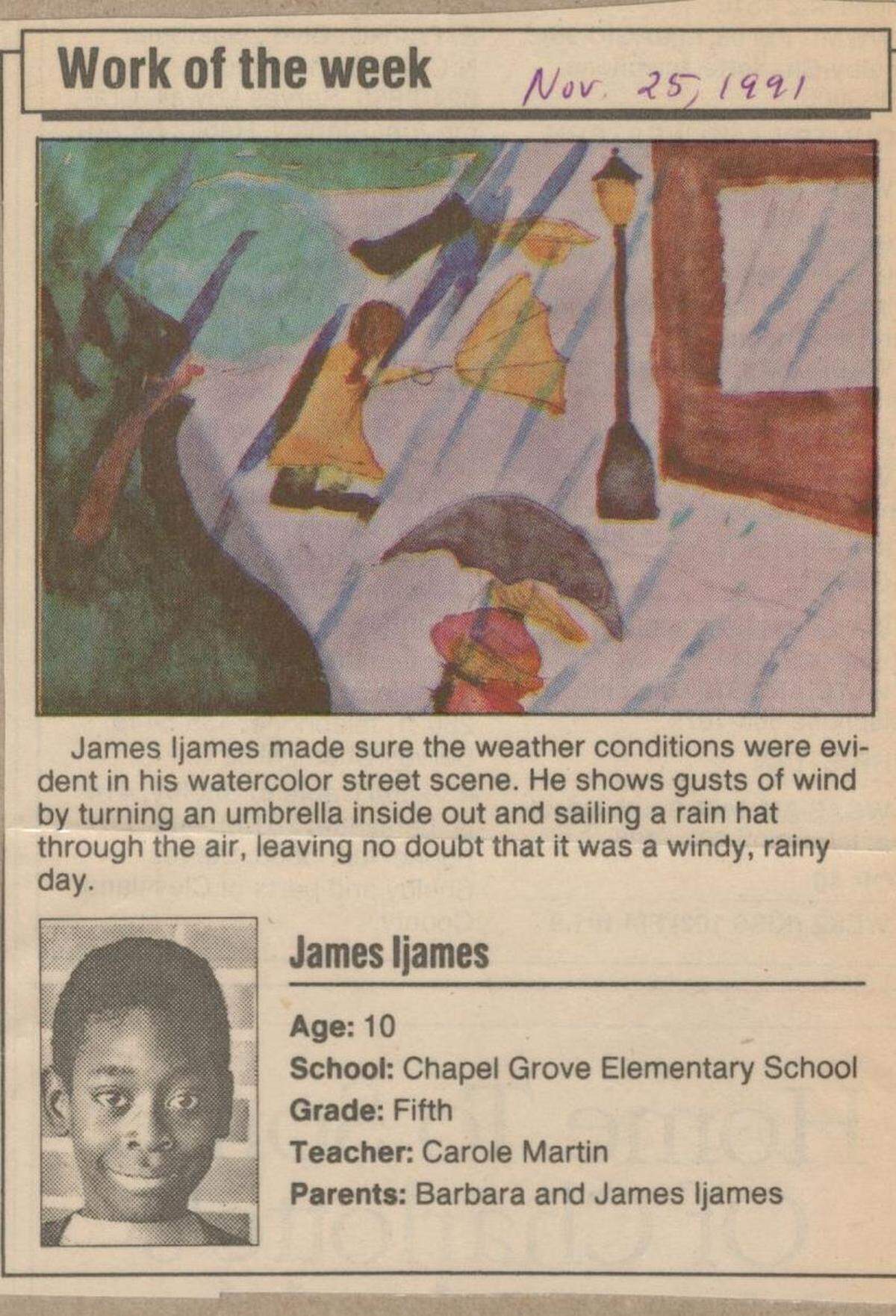
As a 10-year-old fifth-grader at Chapel Grove Elementary School in Gastonia, he painted a picture of a pedestrian struggling with her umbrella on a rainy, windy day that was so striking, the Gaston Gazette newspaper published it.
As a middle-schooler, he volunteered to write a Christmas play for his church — St. James Baptist in Bessemer City — that earned rave reviews from congregants. And at Hunter Huss High School, although his main area of interest was choir-singing, he also showed an aptitude for the written word, according to one of his former teachers.
“Just about every morning when they would come in,” Jacqueline Robinson recalls, “they would have something that they would have to write about in their notebooks ... and from his writings, it was clear: He was such a deep thinker.”
Robinson, now retired, taught theory and writing skills at Hunter Huss. But she also was a choral music teacher, and her recommendation helped send Ijames to the North Carolina Governor’s School after his junior year.
That summer program, which has a heavy lean toward exposing young adults to the arts, is what made him fall for theater. Upon returning to Hunter Huss for his final year, he elected to take drama classes in addition to choral music classes.
“But I still didn’t think of theater as a thing I could do for a living,” Ijames recalls. “I just was like, I like this. I enjoy this. I want to learn more about it.”
The tide turned quickly after that. During his freshman year at Morehouse, where he was enrolled as a music major, he auditioned for “a mini-version of ‘Hamlet’ that Spelman College was doing” ... and got cast in the lead role.
“That was it,” he says. “I was hooked from that point.”
He changed his major to theater; spent three summers during his undergrad career with Children’s Theatre of Charlotte (one as an intern, one as a teaching artist, one as coordinator of its satellite-location summer camps); and did indeed go on to study acting at Temple as a grad student — although by then, he had an ulterior motive.
Acting? It was a means to an end.
Being an actor, he decided, wasn’t for him. He just didn’t love being the center of attention. What he really loved was writing.
And the guidance, from one of his acting teachers at Morehouse, was simple:
Ijames probably wouldn’t get into an MFA playwriting program, because most of the spots go to older, more seasoned applicants. He probably would, however, get into an MFA acting program, and in that capacity could work with playwrights, learn from playwrights, and use his experiences as an actor to develop into a better writer.
He took the advice, performed in plays while studying acting at Temple, performed in plays after he earned his master’s in 2006, was more prolific as an actor than he was as a playwright for several years afterward.
“But I kept trying to get people to produce my plays,” Ijames says. “The whole time. I would work at a place, and then I would talk to the director and say, ‘Hey, can I send you something to read?’”
They often said sure, they frequently liked what he’d sent, and over time, Ijames wrote more and acted less.
But the game-changer came along in 2014, when he was hired by Villanova. The steady salary and the more consistent work schedule allowed him to do even more writing, and freed him up on nights and weekends, where in the past he’d had to spend so many of them on stage performing.
By the end of 2018, his 2017 play “Kill Move Paradise” had won the both a prestigious Kesselring Prize (worth $25,000) and an even-more-prestigious Whiting Award (worth $50,000), and he’d left acting behind.
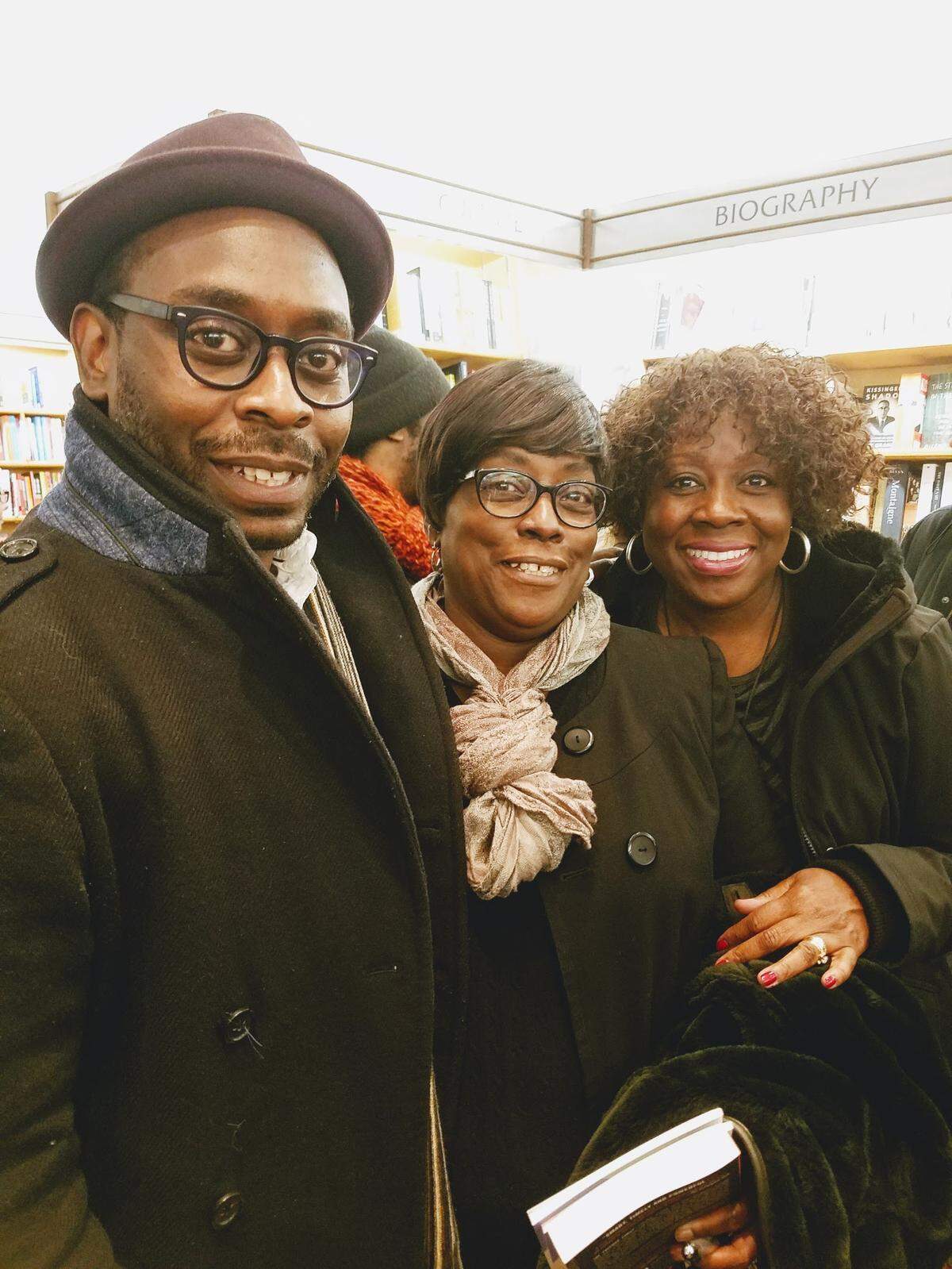
He was also, at that point, at least three years into working on a play that was inspired in roughly equal measure by “Hamlet” — the Shakespearean work he’d been obsessed with for a decade and a half — and his experiences growing up in a big Black family in North Carolina.
The makings of a masterpiece
Ijames says he identified with Hamlet as a character “not because of what happened to him, but because he was quiet, brooding, thoughtful, always trying to find the right thing to say.”
In the case of “Fat Ham,” Ijames decided the right thing to say about “Hamlet” was to bring it closer to his experience. “I was like, ‘Well, we can put it in the South, and we can put it in a backyard. And we can have these people speak with great poetry, but in the language and in the colloquialism of my family, of my youth, of my community.”
The result: a tragi-comedy that centers around a gay, overweight, insecure college kid named Juicy, whose late father shows up in ghostly form at a backyard barbecue and demands that his son avenge his murder.
There’s actual Shakespeare text in the play, but as Ijames explains, “the way I’ve positioned it in the play, you might miss that it’s from something else, because what Shakespeare does with meter and rhythm and music and language is very close to the way I think people who live in the South speak.
“There’s a real music to the way that we talk. And at our most extreme — you know, when you think about the most extreme depictions of Southern speech — it’s almost operatic. So I didn’t want to shy away from that. I wanted to lean into that.”
And Juicy isn’t the only gay presence on stage. Ijames, who himself came out later in life, reimagined several of the Bard’s traditionally straight characters as gay.
These were astute decisions that made the finished product something of a revelation.
After “Fat Ham” made its debut last year as a digital production (due to COVID) by Philadelphia’s Wilma Theater, where he serves as lead artistic director, the New York Times noted that the play “refuses the tropes of Black suffering even as it engages the seriousness of the Shakespeare. It is the rare takeoff that actually takes off — and then flies in its own smart direction.”
He also earned raves from his family.
“Oh, I thought it was great,” says Ijames’s aunt, Juanita Walton of Belmont. “It tapped on some very serious issues, very deep kind of things, but it always brought us back to humor — which, in our family, there’s a lot of. ... I thought it gave a good depiction of the South, and family drama. Even though it necessarily wasn’t our family drama. But I could see how he (used) little pieces of his life.”
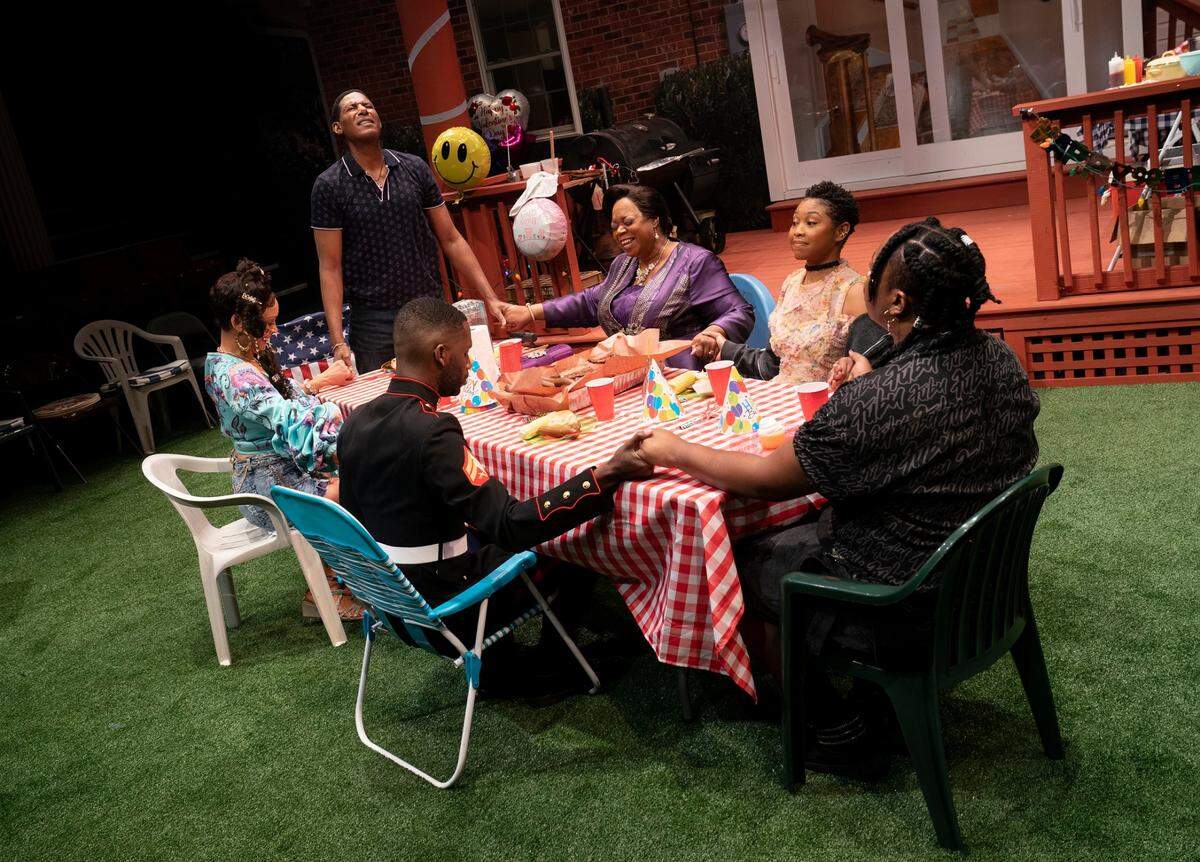
Ijames knew it was some of his best work, and was touched when multiple Wilma staffers approached him about the possibility of submitting a Pulitzer entry on his behalf based on the filmed version.
But after that, he mostly tried to shut it out of his mind.
‘Don’t forget about your feet’
In fact, on the day the Pulitzers were to be announced — Monday, May 9 — he didn’t immediately know he’d won.
The theater department at Villanova had a celebration planned for graduates of the program for later in the day, and Ijames immersed himself in preparations for that, steering clear of following the announcements of the winners as they were made online. But when he took a quick break to take a look at Twitter, he saw it at the top of his list of Mentions.
Congratulations to James Ijames ...
A few moments later, he was calling his mother.
“He told me that he had won,” says Denise Ijames, who now lives with her husband in Kings Mountain. “And I said, ‘Are you sure?’ He said, ‘Yes. That’s true.’ I said, ‘OK!’”
Then, she says, she started crying.
They were happy tears, but they were sad ones, too. Less than 14 months earlier, her youngest child — James’s sister, Heather Ijames of Kings Mountain — had died at the age of 36 of acute pancreatitis. Denise couldn’t help but think of Heather, and her children’s closeness: Though James hadn’t lived in North Carolina for more than two decades, he and Heather had remained in touch practically every day.
“I don’t know that I had time to really process it,” James Ijames says, as he reflects again on receiving the news about his Pulitzer on campus. “Then I got in my car and I was driving home, and that’s when it just all kind of hit me. I instantly thought of her.”
His voice starts to shake as he continues. “I think she would have been proud. But ... she would probably say something to me like, ‘Don’t forget about your feet. Keep your feet on the ground. Don’t lose the stuff about you that actually makes you a good writer, because you’re chasing something else.’”
.JPG "IMG_0375 (2).JPG")
Those are things he tries to remind himself of on a regular basis — especially now: Stay grounded. Don’t forget where you come from. Stay true to your roots.
He still thinks of her every day, and has continued to try to find ways to honor her memory, whether it’s a dedication in the end credits of the Wilma’s digital production of “Fat Ham” or a play he’s writing that was inspired by challenges she faced in the last year of her life.
And the more you talk to him, the more abundantly clear it becomes how much Heather, and his mom, and the rest of his tight-knit family, and those deep North Carolina roots mean to him.
How — although he’s plenty proud of his Pulitzer, and although he’s enormously elated about the fact that the in-person production of “Fat Ham” will continue pleasing crowds up in New York City through July 17 — he attributes the prizes he’s won and the plays he’s written to that family, and to those roots.
“When I think of (home) ... I think of my family, and I think about the people like Miss Robinson who saw potential in students, and then spurred them on,” Ijames says. “I think about Franklin Boulevard (in Gastonia), that thoroughfare through this town that goes from strip mall to strip mall. But it’s also full of churches and people who are trying to figure things out, and people who are curious about the world. It’s no different than New York to me in a lot of ways. It’s just smaller, and slower.
“So when I go home, my hope is that they can still see me, even though I’ve been gone for so long. If that makes sense. ... I don’t want to lose the person that I was when I was there — because I think that person has gotten me to where I am.”
More arts coverage
Want to see more stories like this? Sign up here for our free “Inside Charlotte Arts” newsletter: charlotteobserver.com/newsletters. You can also join our Facebook group, “Inside Charlotte Arts,” by going here: facebook.com/groups/insidecharlottearts.
This story was originally published June 24, 2022 at 6:00 AM.