
An expert’s guide to the Mint’s American art exhibition that spans the centuries
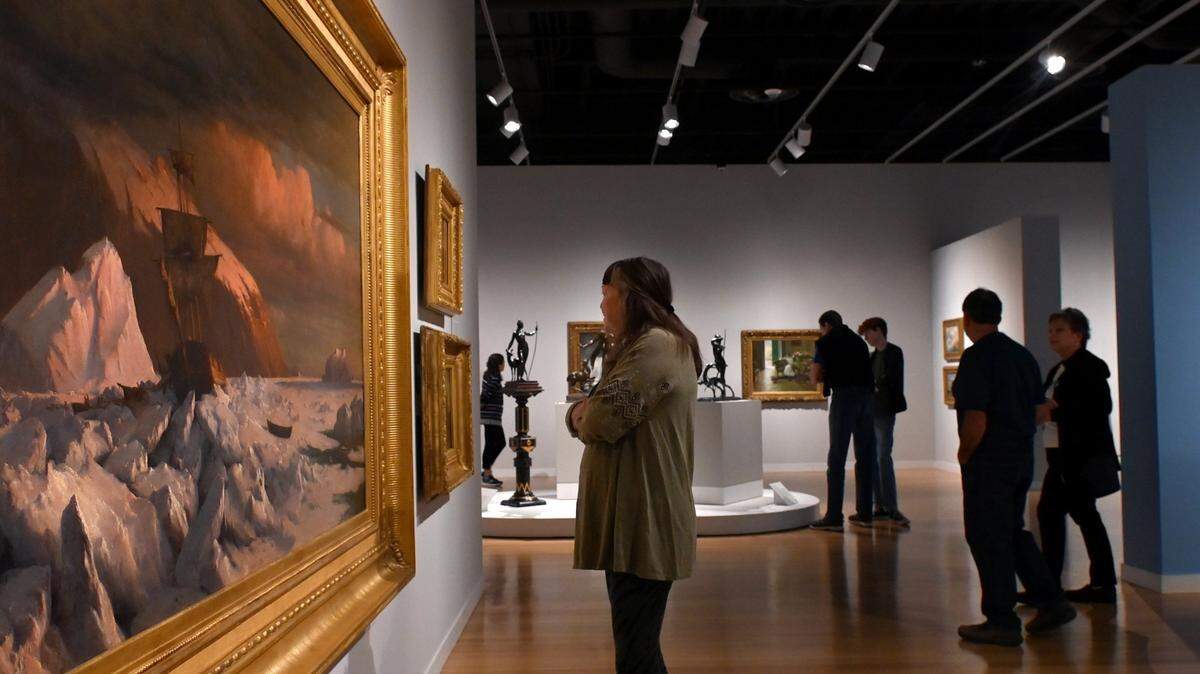
A lot of artistic ground is covered in the latest Mint Museum exhibition.
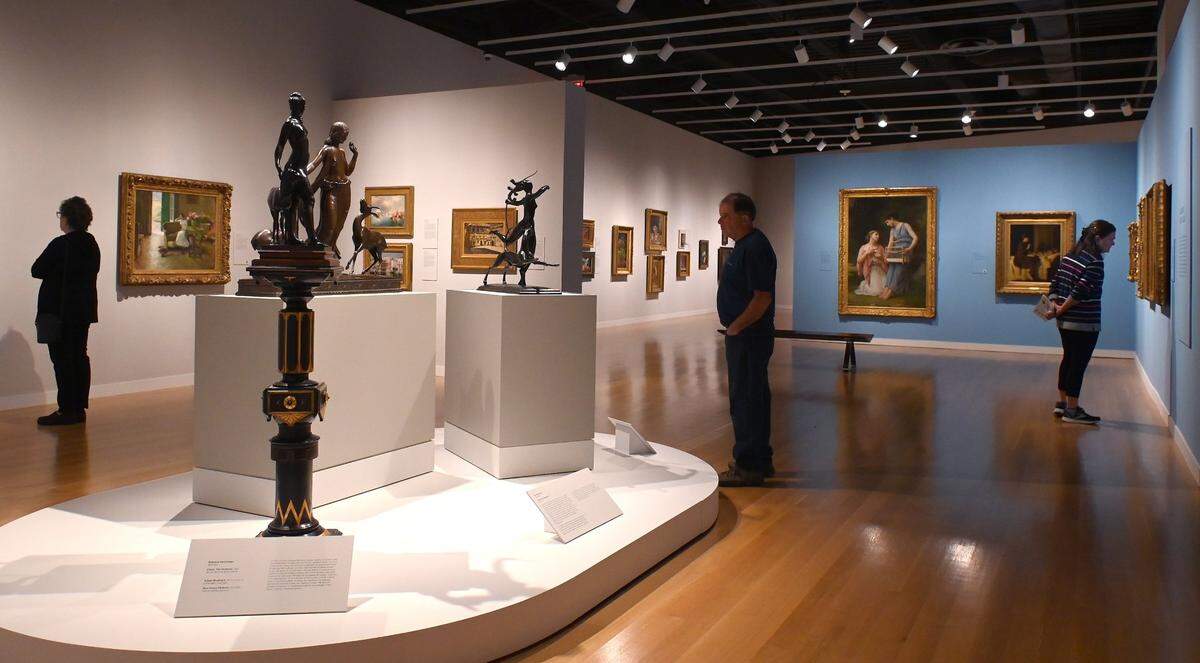
The Mint Museum Uptown’s exhibition, “American Made: Paintings and Sculpture from the Demell Jacobsen Collection,” features 100 works spanning over two centuries of American history, starting all the way back in 1766.
From portraiture and landscapes to still lifes, scenes of everyday life and trompe l’oeil optical illusions, it offers a comprehensive view of American art from the Colonial era to the modern one.
“It’s a great chance to see one of the top, privately held collections of American art in the world,” said Jonathan Stuhlman, senior curator of American Art at The Mint Museum. He curated the exhibition alongside Mint President and CEO Todd Herman and Kevin Sharp, director of the Dixon Gallery & Gardens in Memphis, Tennessee.
The show, which debuted in September, will be on view there through Dec. 24. After that, it will go on tour to four other museums across the South.
We turned to Stuhlman to be our guide for the exhibit, about what to look for, and to focus on a trio of paintings that exemplify the show.
About the exhibit
This is the first time this many works from the Demell Jacobsen collection have been brought together in one exhibition.
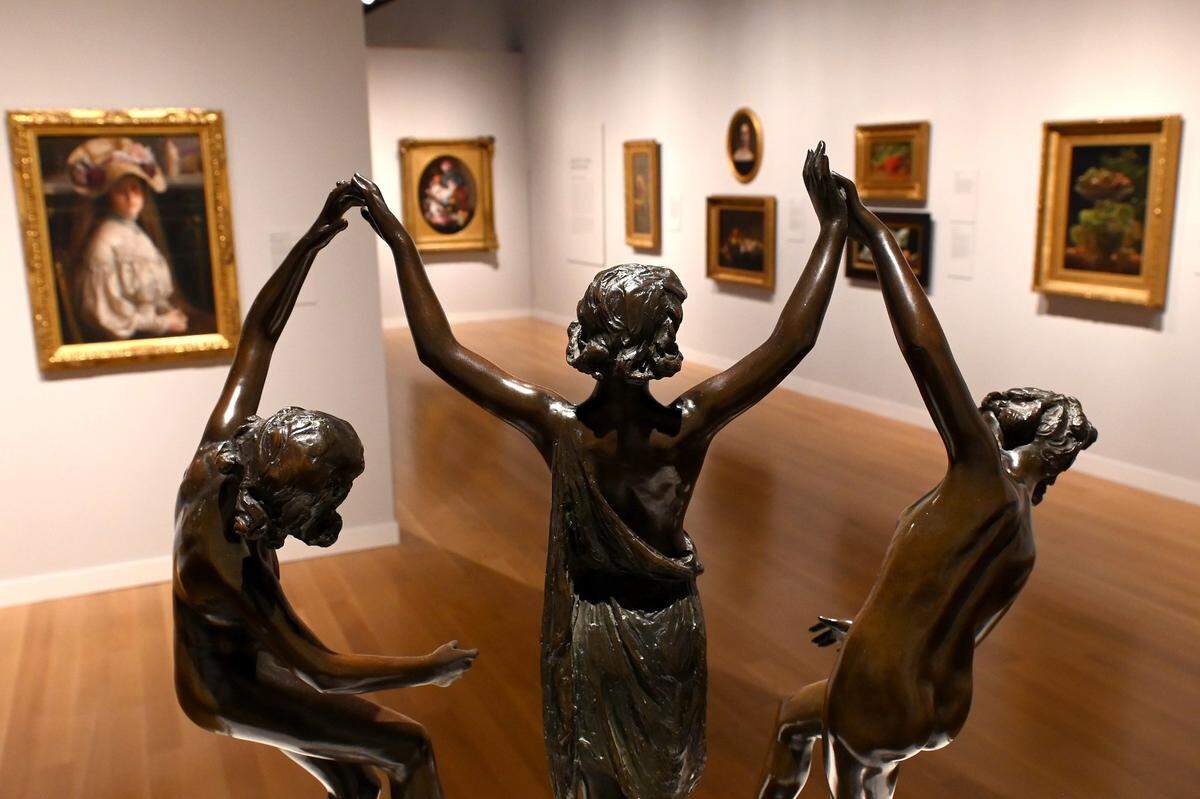
It includes early colonial portraitists like Benjamin West and Rembrandt Peale, landscape artists like Thomas Cole and Asher B. Durand, late 19th century expatriates such as John Singer Sargent and Mary Cassat, and influential proponents of modern art like Charlotte native Charles Alston.
The works have been assembled over the last 25 years by scholar, businesswoman and art collector Diane Jacobsen.
She and her late husband, bank executive Thomas Jacobsen, collected American art. It was one of Thomas Jacobsen’s last wishes, Stuhlman said, that his wife continue to expand the collection with the goal of making the works available for the public to enjoy.
In 2012, she formed the Thomas H. and Diane Demell Jacobsen PhD Foundation in St. Louis. The nonprofit’s mission is to acquire great works of American art, conserve them if necessary and get them in front of the public.
“She doesn’t just buy things and they all hang in her house or her apartment or go to a warehouse somewhere,” Stuhlman said. “The foundation’s mission is really to share and educate.”
What to look for
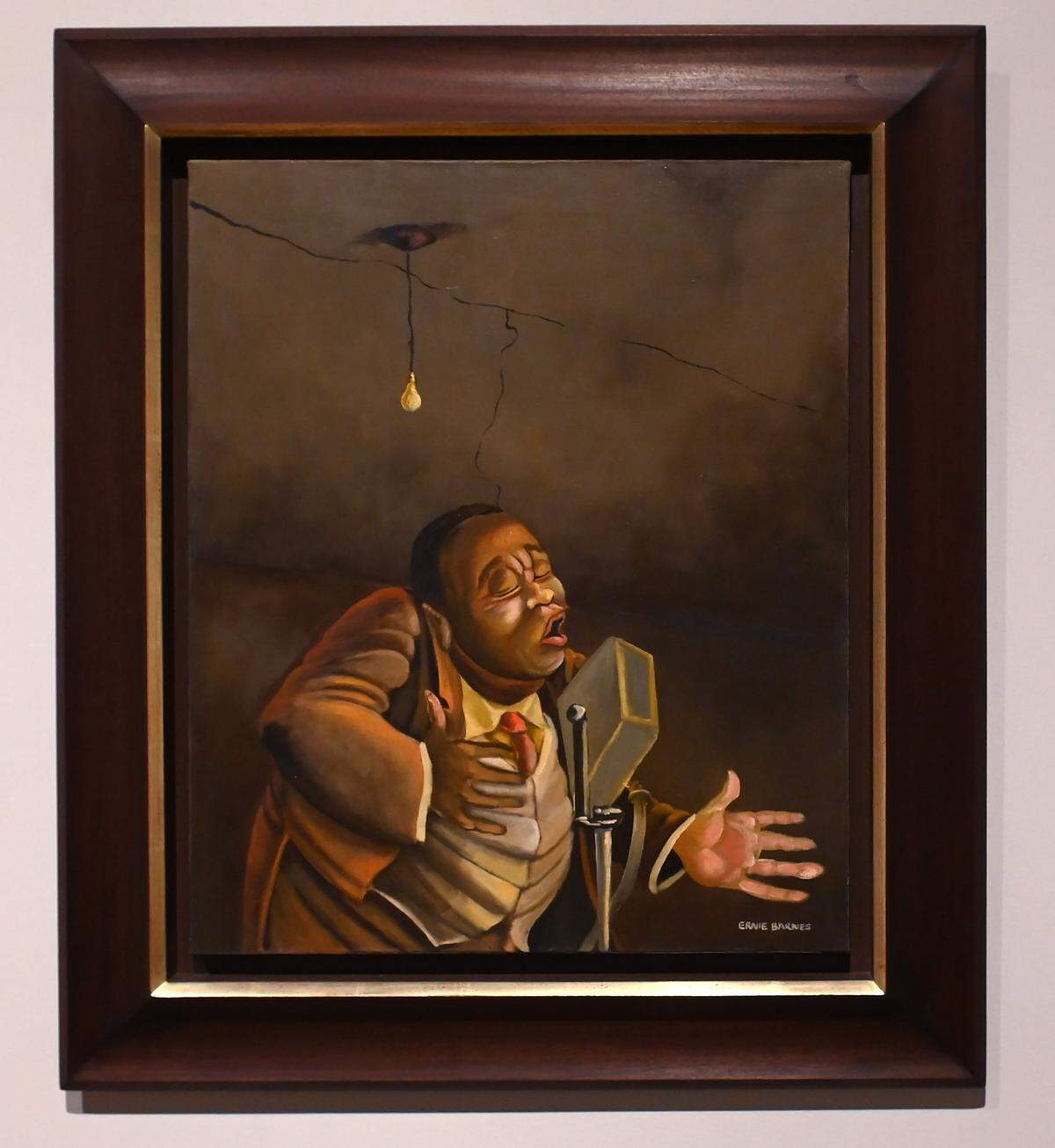
Exquisite paintings: Stuhlman said first and foremost, the collection focuses on high quality works, whether they were created by well-known artists or lesser known ones. Jacobsen also has sought out pieces by women and artists of color, who tend to be less well known than their white male counterparts.
Details: Both the paintings themselves and their context, as described on accompanying placards, are fascinating. “Oftentimes how these things came into the collection is equally as interesting as the works,” said Stuhlman.
The frames: Jacobsen is passionate about appropriately displaying works with beautiful, original frames from the period whenever possible. For example, she searched for 14 years to find a 19th century American frame with an Arabic-inspired script ornamentation to match the Moorish-influenced architectural details of one painting on display, “Sacristy and Doorway of the Cathedral, Granada,” circa 1880, by Edwin Lord Weeks.
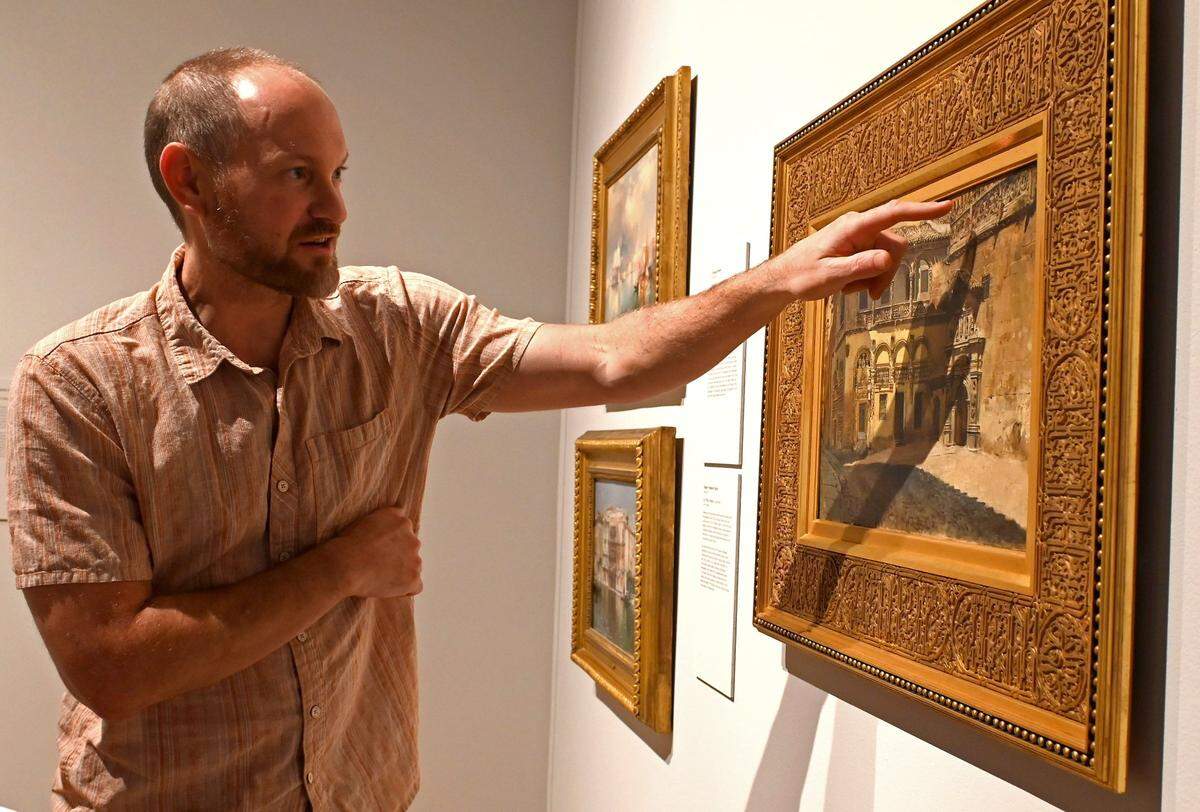
“It’s not something that people think about,” Stuhlman said. “But I think it’s something that artists thought about during their time… putting a different frame on things can completely change how you see the picture.”
Here’s a closer look at three other works from the exhibition, with background and viewing tips from Stuhlman:
The earliest work
“Portrait of Booth Grey,” 1766, by Benjamin West, oil on canvas
A little history: Portraiture was the dominant form of art in America’s early years.
West was one of the first American artists to gain national and international significance, Stuhlman said. He grew up in America, then went to London to continue his training. He stayed there, became a painter to King George III, and served as second president of the Royal Academy of Arts in London.
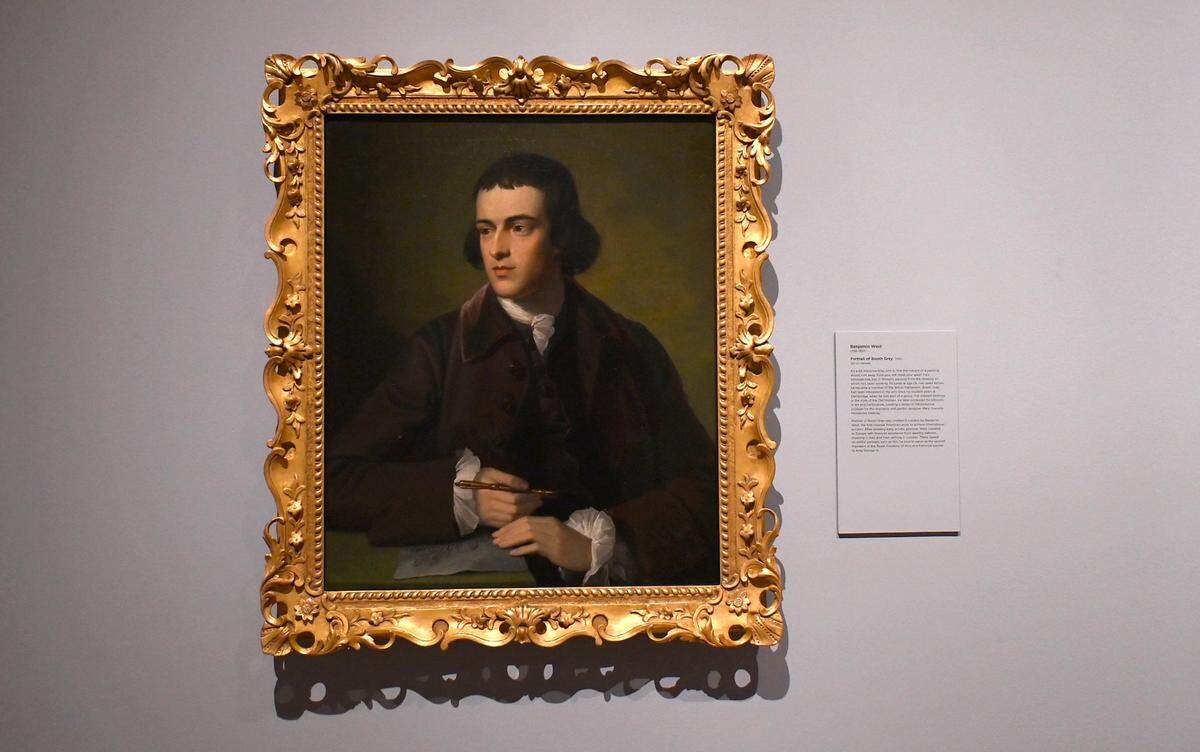
What to look for: The painting is in great condition. It exemplifies West’s skill at capturing the sitter’s personality. Grey, a politician with an interest in arts and botany, is shown turned to the side in contemplation, as he works on a drawing. In the painting, you can see textures ranging from Grey’s clothing to the pen he’s holding.
A curator favorite
“The Counterfeit Note,” 1858, by Daniel Huntington, oil on canvas
A little history: Huntington was best known as a portraitist and teacher during his time. But this image is rare: a complex, multi-figure, genre scene of everyday life. “This is a painting that I find fascinating,” Stuhlman said.
It captures a specific time in American history, Stuhlman said, before centralized currency. Counterfeit bills were a major concern around the Civil War era. (According to the U.S. Marshals Service, an estimated 30% of the currency being circulated during the 1860s was counterfeit.)
Counterfeiters often worked in pairs, a key point for the artwork too.
Another reason Stuhlman likes this work: the museum’s own historical connection to currency. The Mint’s Randoph building originally served as the first U.S. Mint branch outside of Philadelphia.
.jpg "TheCounterfeitNote (1).jpg")
What to look for: The artwork shows amazing details and textures, including baskets, hats, brooms, suspended fabric and the subjects’ clothing. The shopkeeper is examining the bill while his wife gestures over her shoulder and whispers in his ear. Meanwhile, the male customer in back looks disreputable, clutching a package with his hat pulled low. In the foreground is a well dressed woman and a dog.
The question, Stuhlman said, is whether the woman is an innocent customer or an accomplice. When Jacobsen purchased the painting, she emailed her network of curators, asking their thoughts on it. Various opinions came in, Stuhlman said, but he maintains the lady is in on the scam.
“I’m going to trust the dog,” he said. “He’s got his eye on her. He knows something’s up… He is checking her out just as suspiciously as that guy is looking at the bank note.”
A more recent painting
“Dance Around a Flower,” 1962, by Haywood “Bill” Rivers, oil on linen
A little history: This work is like nothing else in the exhibit, Stuhlman said, and it’s by an artist he did not previously know. Through his research, he learned Rivers, who was African American, came from the small town of Morven, Anson County. He eventually went to Baltimore for art school, then spent most of his career in New York and Paris.
But like his well-known contemporary, Charlotte native Romare Bearden, Rivers always reflected on his North Carolina roots. This is a transitional work for the artist, who first painted in a simplified, representational style and later created abstract works.
What to look for: At first, the viewer notices the tension between all of this activity on the left, balanced by an expanse of white and a little bit of yellow on the right side. The paint is thickly applied, in a style that evokes mosaic or a puffed up quilting square. Stuhlman thinks this connects with Rivers’ upbringing, within a family with a quilting tradition. Abstract floral quilt squares appear in some of his other works.
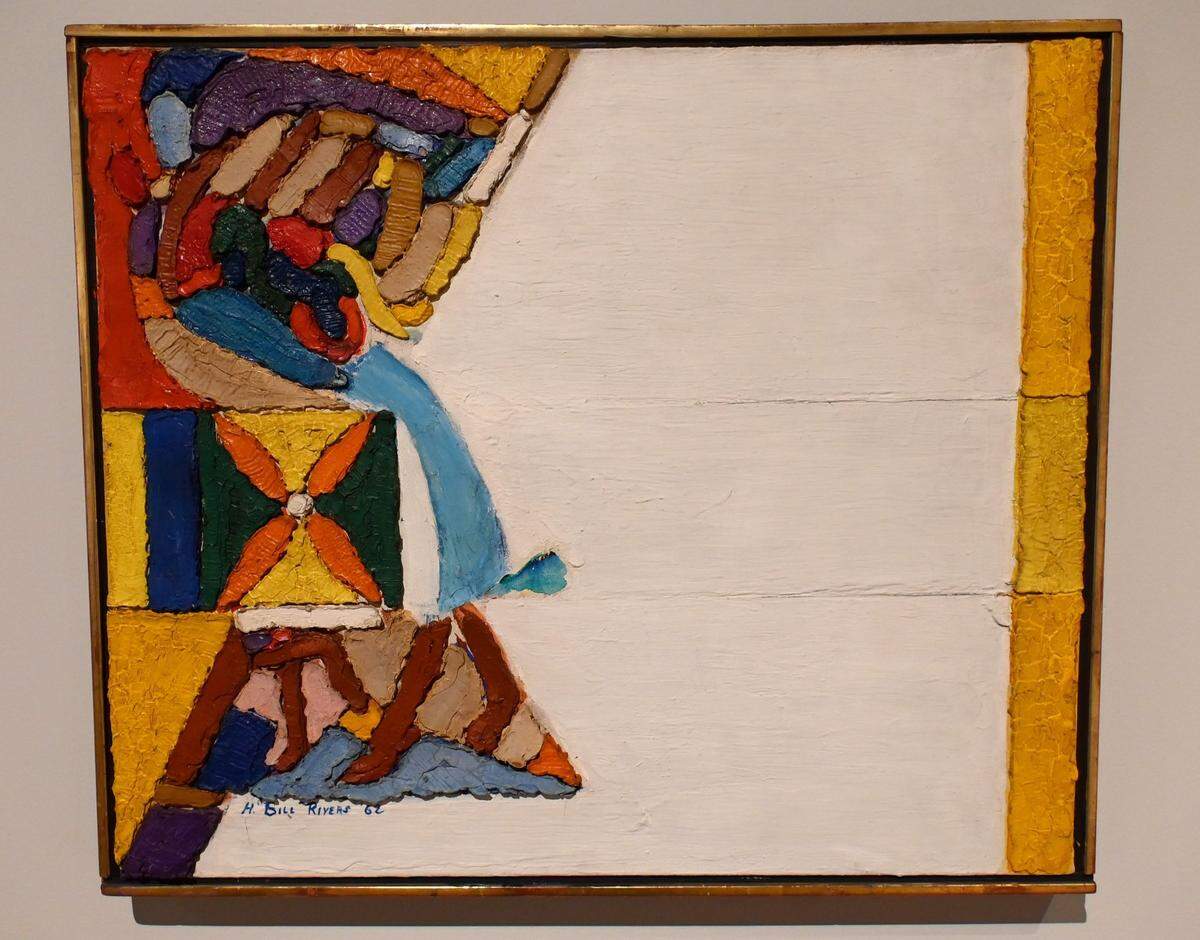
If you look at it long enough, Stuhlman said, you see two sets of legs. These abstract figures are bending and dancing together.
“I like to end here when I give a tour, anyway,” he said. “Just because to me… if Diane’s mission is to collect interesting and great examples of American art and for people to learn about American art —even a curator can learn about something from her collection.
“There’s always something new you can discover.”
More arts coverage
Want to see more stories like this? Sign up here for our free “Inside Charlotte Arts” newsletter: charlotteobserver.com/newsletters. You can join our Facebook group, “Inside Charlotte Arts,” by going here: facebook.com/groups/insidecharlottearts. And all of our Fall Arts Guide 2022 stories are here: charlotteobserver.com/topics/charlotte-fall-arts-guide