Review: Riveting ‘A Soldier’s Play’ takes on complexities of race, murder and sacrifice
A simple pair of Aviator sunglasses is enough to establish you are in for a riveting, thought-provoking night of theater in the not-to-be-missed “A Soldier’s Play.”
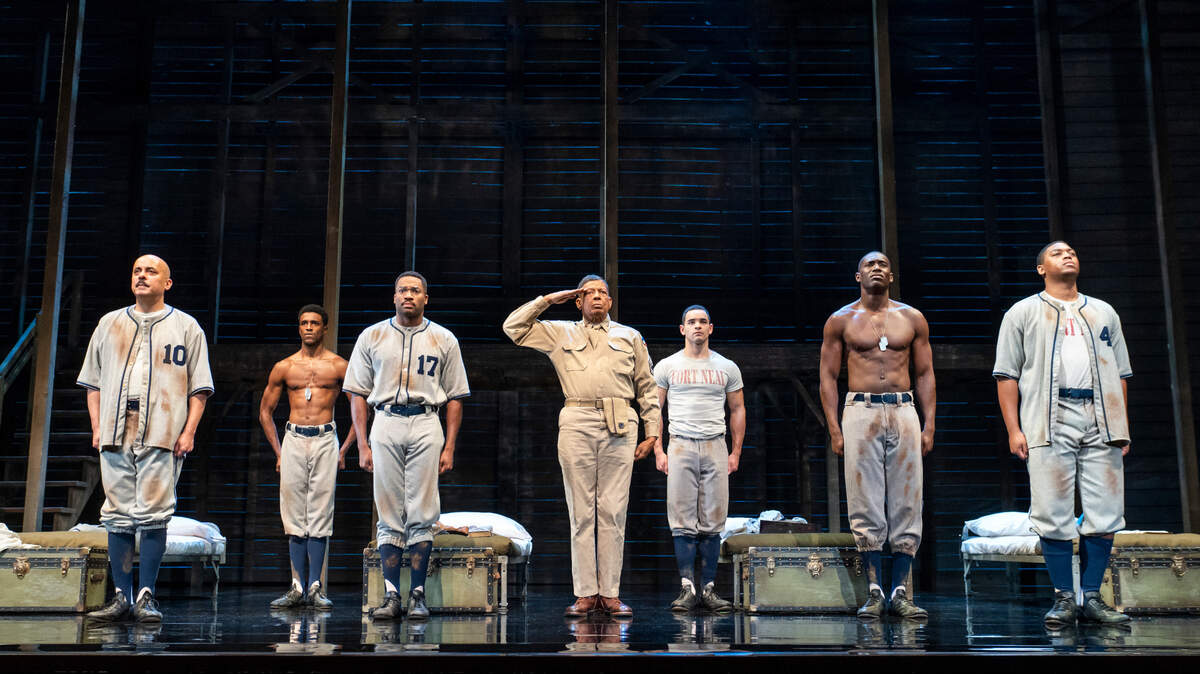
The revival of Charles Fuller’s 1982 Pulitzer Prize-winning play opened Tuesday at Blumenthal’s Knight Theater for a two-week run. It’s set in a segregated Louisiana Army base in 1944, where the Black sergeant of an all-Black unit is murdered soon after the show begins.
Enter Norm Lewis.
The popular Broadway pro takes a rare turn away from musicals as Capt. Richard Davenport, the dogged Army lawyer assigned to investigate the killing. He instantly clashes with the white commanding officer at the base, effectively played by William Connell, who insists he wants to find the killer but appears unnerved by meeting his first Black officer.
Referring to West Point, Connell’s Captain Charles Taylor explains, “There were no Negroes at the Point.” He doubts Davenport will get anywhere with his probe, and barks at him to take off the sunglasses he’s been wearing.
“I intend to carry out my orders. And I like these glasses — they’re like MacArthur’s.”
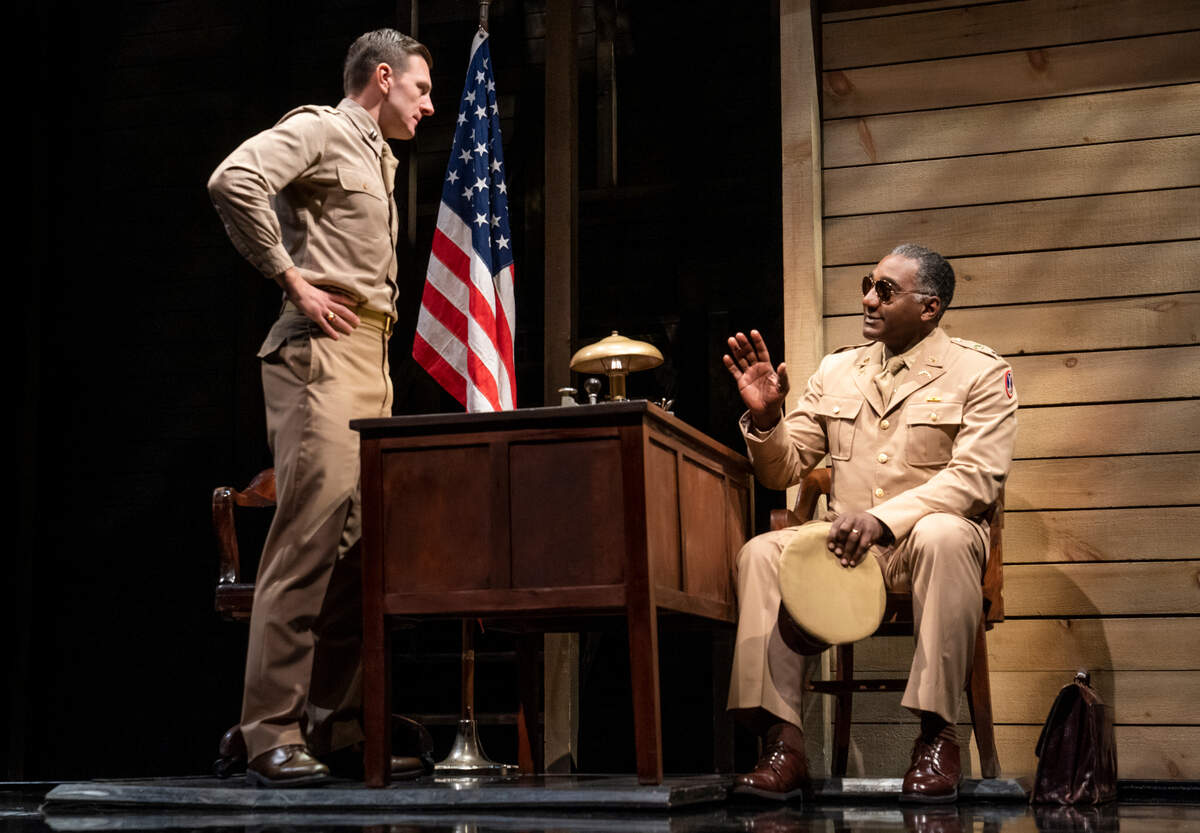
Lewis’ words are measured and calm and leave no doubt who’s really in charge. But the show is more than just a showcase for Lewis’ formidable talent.
For that to happen, “A Soldier’s Play” needs to work on many levels: as a murder mystery, a memory play, an exploration of Black identity and service, and as a portrait of multiple characters who are anything but one- dimensional. It succeeds on every level in both entertaining the audience and challenging their expectations and assumptions.
Among the cast’s many stand-outs is Eugene Lee.
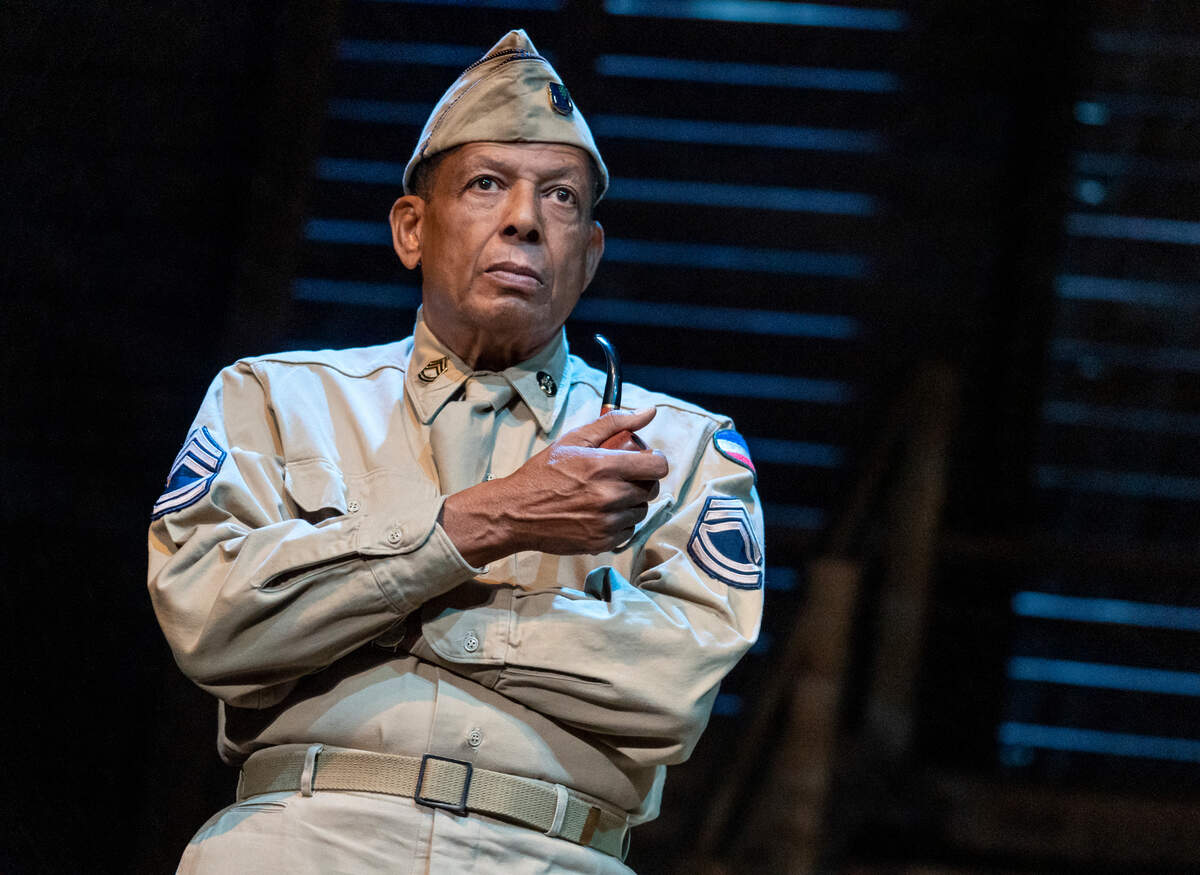
He played Cpl. Bernard Cobb in the show’s original Off-Broadway production in the early 1980s, appearing alongside a couple of aspiring actors named Denzel Washington and Samuel L. Jackson. In this version, Lee is murder victim Sgt. Vernon C. Waters.
Waters is the play’s most complicated character. He’s striving to improve the Black man’s station after the war, but consumed with self-loathing as well as anger toward fellow men who don’t measure up to his standards.
Different versions of Waters recur throughout the show as various soldiers describe their interactions with him. They populate a barracks teeming with suspects.
There’s Sheldon D. Brown’s gentle Pvt. C.J. Memphis, a country kid with an affinity for a song and his guitar. Pvt. James Wilkie lost his sergeant’s stripes because of Waters, and as deftly portrayed by Howard Overshown, makes his resentment clear despite still striving to follow Waters’ orders.
Others, including Tarik Lowe as Pfc. Melvin Peterson and Will Adams’ Cpl. Cobb, harbor their own reasons for disliking the sergeant.
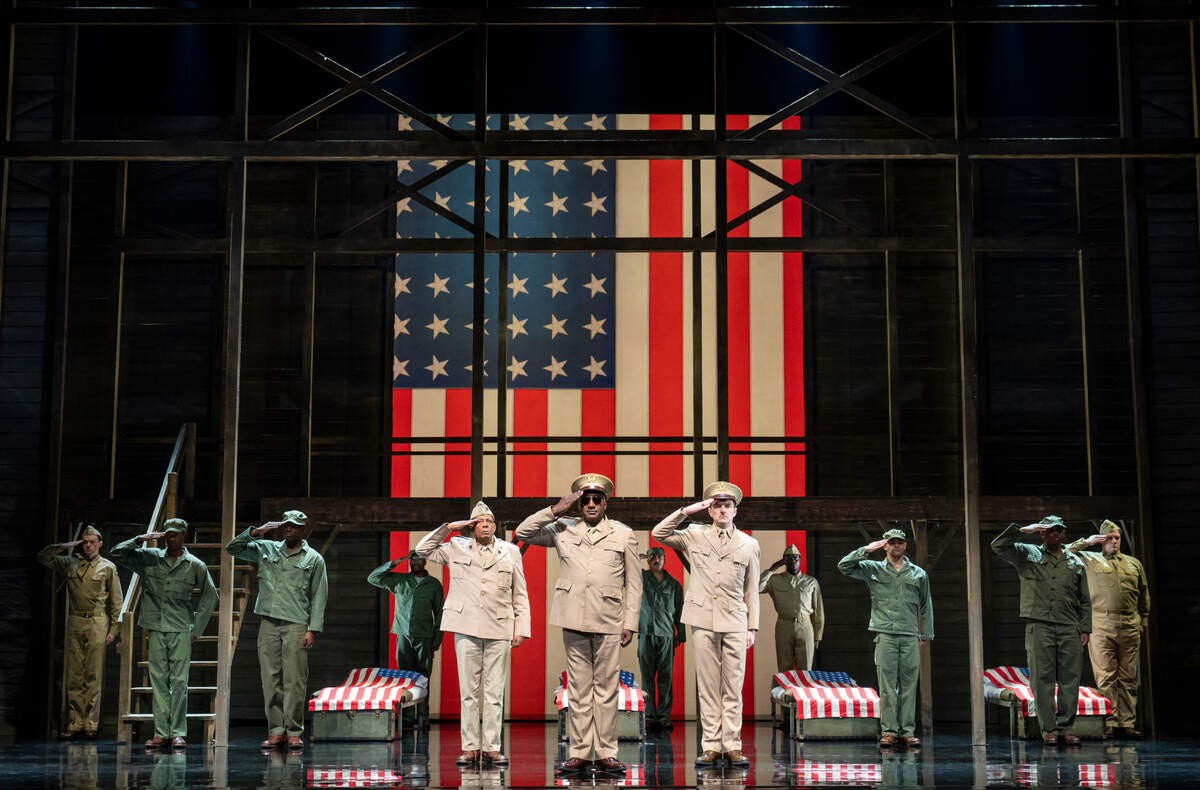
While the show functions as a whodunnit, it also effectively explores issues of pervasive racism contrasted with the hope that change and a better life is not out of reach.
But that racism is never far from mind, whether it’s “the colored troops” getting assigned all the grunt jobs the white soldiers don’t want to do, or the threat of lynching by the local KKK.
There were several gasps from the crowd throughout the show, including when a Black character exclaims, “I hate myself!” and a white officer responds, “Don’t blame us, boy. God made you Black, not me.”
‘A Soldier’s Play’ resonates with relevancy
With its spartan set of a barracks, beds and some desks, this show seems tailor-made for an intimate setting like the cozy Knight Theater. Director Kenny Leon keeps the pace brisk, the action taut and the audience guessing about the killer’s identity.
Fuller died in October at age 83, long enough to see his show finally make it to Broadway in 2020 and win two Tony Awards.
But it’s his words that continue to resonate with relevancy over 40 years after he wrote them, brought to life by a company of actors who expertly elevate them.
“A Soldier’s Play”
When: Jan. 10-22
Where: Knight Theater at Levine Center for the Arts, 430 S. Tryon St., Charlotte.
Tickets: Blumenthalarts.org
More arts coverage
Want to see more stories like this? Sign up here for our free “Inside Charlotte Arts” newsletter: charlotteobserver.com/newsletters. You can join our Facebook group, “Inside Charlotte Arts,” by going here: facebook.com/groups/insidecharlottearts. And all of our 2022-23 Fall Arts Guide stories are here: charlotteobserver.com/topics/charlotte-fall-arts-guide