
Charlotte theater groups take bigger risks with edgier shows. What’s driving the move?
For years, classic Broadway musicals like “Oklahoma!” “The Music Man,” and “West Side Story” were mainstays of community theater groups.
But today, some local Charlotte companies are taking more risks with their programming. They are choosing to feature lesser known titles or productions with more challenging themes as part of their season.
The Charlotte Observer spoke to leaders at two local groups — the nearly century-old Theatre Charlotte and the fairly new The Lotus Project — to find out why they are selecting edgier shows.
On a recent Thursday evening, actors at Theatre Charlotte were busy warming up during a rehearsal for “Violet” ahead of its run from March 28-April 13 at Theatre Charlotte’s home on Queens Road. Performers stood in front of the stage, progressing up scales and practicing articulation exercises, prepping for the show’s American roots score, which spans bluegrass, blues and gospel music.
The musical, by playwright Brian Crawley and composer Jeanine Tesori (“Caroline, or Change,” “Shrek”) is part of the company’s 97th season.
The show differs from many other musicals in style and content. It’s not a big, flashy production, and its storyline is unusual: Set during the Civil Rights movement, Violet, a young white woman, travels from her small North Carolina hometown of Spruce Pine and journeys across the South in search of healing.
She’s convinced a famous televangelist in Tulsa, Oklahoma, can cure a disfiguring facial scar she received in a childhood accident. The travelers she meets while on her quest become a part of her journey, too.
“It’s just this little gem of a show,” said Theatre Charlotte Artistic Director Chris Timmons.
“Violet” is a musical that the group has wanted to produce for several years. Timmons said his organization always seeks balance within each season between plays and musicals. “Violet” contrasted well with last fall’s musical,“The Drowsy Chaperone.” That show, which lovingly pays tribute to old fashioned musical styles, has a more recognizable title but, by design, is light on substance.
“Violet,” on the other hand, has “got more to it,” Timmons said. “It’s got a story, it’s got a little more meat to it than what you… typically expect from musicals, especially the big, old standards.”
Taking risks in the theater
Producing a show like “Violet,” however, comes with some risks.
“I think because it’s not as well known, it’s not ‘Guys and Dolls’, it’s not ‘The Sound of Music,’ it’s not those that people automatically know, it is risky in that way,” Timmons said.
He sees it as part of Theatre Charlotte’s responsibility to expand and diversify the repertoire of shows coming to the community. Doing so creates exciting opportunities for performers and designers; it’s beneficial for audiences, too.
“I think what we want to do is also introduce our audiences to unexpected works or newer works because there’s a lot of great material out there that’s maybe not been produced here previously,” Timmons said.
Risk comes in other forms, as well.
The show’s director, Stuart Spencer, who has been active with Theatre Charlotte both on stage and behind-the-scenes for more than 20 years, said the company has tackled tough topics over the years.
Past seasons have included shows with controversial themes or nudity like “The Full Monty,” “Hair,” and “Spring Awakening.”
“Violet” delves into topics like racism, religious faith, society’s ideals of beauty and the central character’s first sexual encounter. But Spencer said the show’s tougher themes are presented in a way that’s relatable.
“The risk only then becomes from a business standpoint,” he said. “…It’s going to tell a great story. It’s not going to make people uncomfortable. But they don’t know the story and you have to get them here to see it and to go along with you.”
Spencer said he’s always been drawn to the musical, which he performed in about 15 years ago. The original script was later updated by Tesori and Crawley for a revised 2014 Broadway run, which Spencer believes made the show even more accessible.
“Yes, we’re talking about Violet, we’re talking about her injury, we’re talking about her scar, we’re talking about her journey. (But) you could take out Violet and put in anything else, any other kind of journey,” Spencer said, whether that’s related to mental health, race, or any sort of acceptance issues.
Exploring challenging themes
At The Lotus Project, one of Charlotte’s newest community theater groups, using art to explore difficult topics is central to its mission.
The non-profit founded in 2023 recently produced “Spring Awakening” as its second teen-centered production. The Tony-winning show, with a rock score by Duncan Sheik and a book by Steven Sater, is based on an 1891 German play of the same name and delves into a surprising variety of mature themes about teens discovering their own sexuality.
For the production, The Lotus Project posted a content warning on its website and at the theater noting the show included mature language and “references to/depictions of sex, masturbation, sexual violence, domestic violence and abuse, suicide, and abortion.”
The group also required any performers under age 18 to have a signed parental consent form before they could participate.
Artistic Director Susan Cherin said a few performers confided their parents chose not to attend performances because they were uncomfortable with the content. Sales may also have been slightly lower than with another title choice, she said, but she received no complaints.
“I was relieved and happy that the people who did come either left and didn’t say anything, or were very supportive and very positive,” she said.
“Spring Awakening” is probably the most extreme example of a show with challenging themes, Cherin said. But no matter the production or the age group with which they work, The Lotus Project’s goal is to use a show’s themes to provoke deeper conversations among the performers and audience members.
Cherin acknowledged that choosing a show with difficult themes was risky, since she didn’t know if anyone would audition or come to the performances.
But the choice was also intentional and mission-aligned.
“We’re talking to the young adults and we’re hearing them say they really want to dig into some more mature content than they’re able to do at school,” Cherin said. “… What we’re really trying to do as a company is give them the time and space and opportunity to kind of dig into those hard things instead of brushing them under the rug.”
She and Managing Director Kayla Piscatelli co-founded the company with a focus on diversity, equity, inclusivity and belonging in all of their productions. The two women, who also are life partners, share artistic and business operation responsibilities for the organization.
Their mission with the group is to use the arts as a vehicle for change, Cherin said, in the areas of self-empowerment, relationship building and community advocacy.
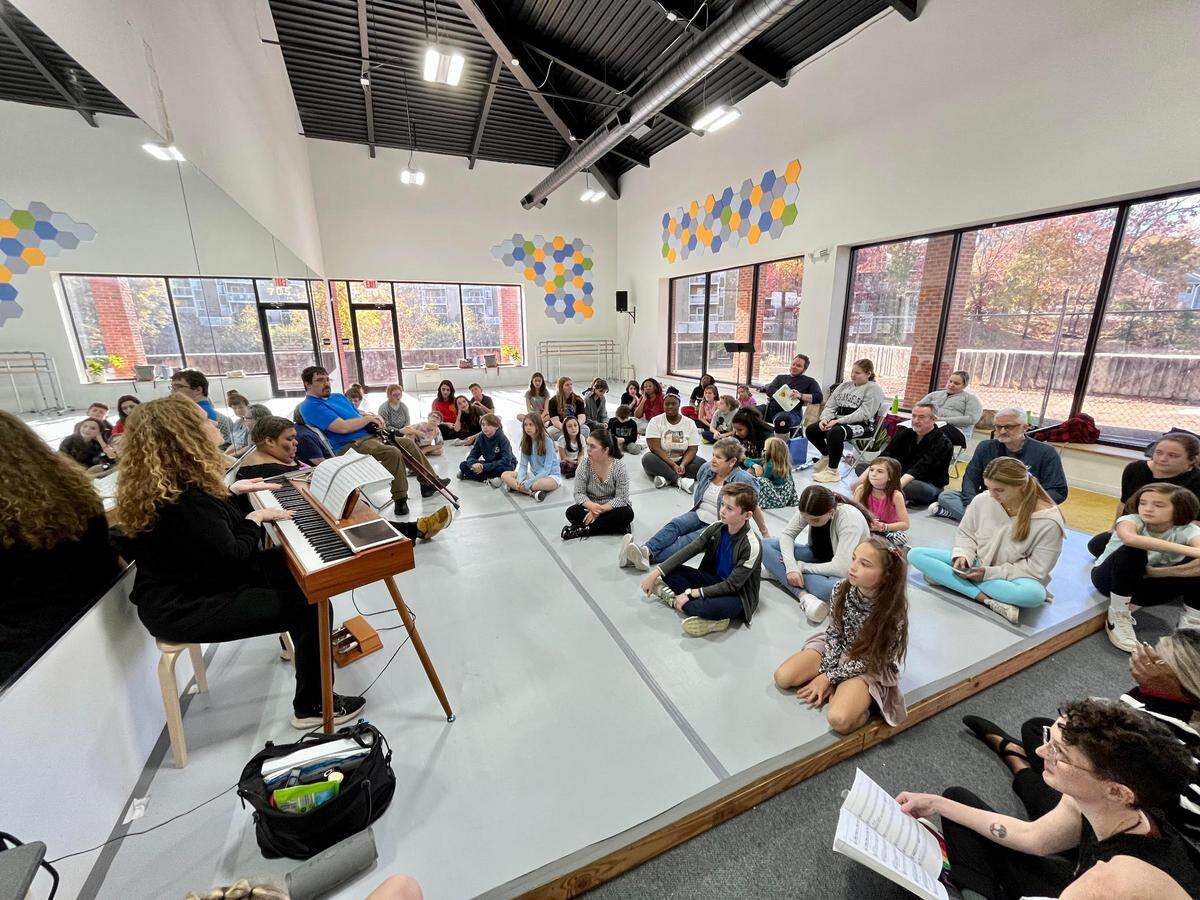
Every show also pairs with a community partner, an organization that has a mission that’s related to the show.
For “Spring Awakening,” the group partnered with Planned Parenthood South Atlantic — Teen Connections to provide resource materials at the theater and participate in a talkback with the cast following one of its performances.
Pamphlets at the theater included topics like “What you should know about consent,” “Considering abortion” and “Human sexuality: What children need to know and when they need to know It.”
Amplifying the voices of marginalized groups
Cherin said the group chooses material and productions with advocacy in mind to amplify the voices of marginalized groups, including LGBTQ+ community members. But she also sees other local groups pushing boundaries with their productions.
“I think Three Bone (Theatre) is a great example and a company that I look to even though they don’t do musicals,” she said. “They have a model of the community partner piece… that I was inspired by watching how they developed that and also participating in it myself as a performer.”
She noted that Actor’s Theater, before its demise, and Theatre Charlotte, have also been important trailblazers in bringing edgier shows to local audiences.
Another new Charlotte group, RAH! Theatre, which works exclusively with teen performers, recently produced the dark comedy “Heathers: The Musical,” which includes themes like bullying, suicide and sexual assault.
Taking more risks with programming seems to be happening nationally as well.
A survey released last spring by the American Association of Community Theatre of 342 companies across the country indicates there is a small but growing movement toward bolder, more adventurous programming.
In comparison to 2019, 16.3% of respondents reported they were “producing more titles that audiences might not know” and 18.2% said they chose “more risky shows than nearby professional theaters.”
Is there still a place for traditional shows?
The Lotus Project regularly experiments with casting across genders, even in traditional shows.
For example, in last year’s “Grease,” Danny Zuko and two of the T-Birds were played by female presenting performers and two male presenting performers played Pink Ladies. And in a youth production of “Junie B. Jones, The Musical,” the lead character was played by a boy.
Cherin said the objective is always finding the best actor for the role, and she still loves many of the classic musical scores.
“There are certain shows in that genre that still have a lot to say,” she added. But there are certain works Cherin would now avoid producing, like “Carousel,” which she said has misogynistic themes.
Timmons at Theatre Charlotte said there is still an audience for traditional musicals, but it’s an aging population, and that consumer habits have changed from what they were even a few years ago.
He also said too many of the old-style productions leave people out.
“What I’ve noticed in going back and listening to musicals and reading plays, from what you would call the classics, is sometimes they just don’t land,” he said. “They’re just not relevant. There are things in there that can sometimes be offensive in today’s environment or they don’t offer opportunities for a diverse group of artists.
“I mean, so many of the old plays were written by white men so that’s what you see represented on stage.”
Those days remain in the rearview for companies like Theatre Charlotte and The Lotus Project.
More arts coverage
Want to see more stories like this? Sign up here for our free, award-winning “Inside Charlotte Arts” newsletter: charlotteobserver.com/newsletters. And you can join our Facebook group, “Inside Charlotte Arts,” by going here: facebook.com/groups/insidecharlottearts.