
How Charlotte is rallying to help support out-of-work musicians during the pandemic
In January, longtime Charlotte musician Randy Franklin lost his day job as a purchasing agent for Parker Medical Associates.
Instead of looking for work, he decided to give full-time gigging a go. And with decades playing clubs and bars with his bands Crisis and the Sardines, it didn’t take him long to fill his calendar.
“I booked all these gigs,” says Franklin, a singer-songwriter, guitarist, and band leader in Charlotte since 1975. He hadn’t filed for unemployment from his former employer because he had plenty of work. “Then the pandemic hit.”
In March, he found himself applying for unemployment benefits after all.
But “it’s been eight weeks and I haven’t received any money yet,” Franklin says. As of early May, he was also still awaiting a stimulus check.
While he and his wife Cherri (who works for Charlotte Mecklenburg Schools) have been able to dip into retirement savings, many Charlotte musicians are surviving without a net.
The plight of local performers, players and venues hasn’t gone unnoticed. From the first week of quarantine, musicians and venues began streaming live shows and organizing fundraisers.
Almost as soon as live streams started, Music Everywhere CLT offered a portal to promote and link shows through its Virtual Concert Series. Last week, through a partnership with the Fair Play Music Equity Initiative and Tosco Music, it launched the Charlotte Music Community Covid-19 Relief Fund. Like the Arts and Science Council’s Mecklenburg Creatives Resiliency Fund (which aids artists across all disciplines), it offers one-time $500 grant to eligible applicants who have lost music-related incomes.
“We knew there was need based on research we did two years ago on the music economy in Charlotte,” says Center City Partners’ Rick Thurmond, who spearheaded the economic initiative to enhance Charlotte’s music scene. “Twenty-two percent have no other income. Fifty-nine percent make less than $10,000 a year on music. It painted a difficult picture. It’s a fragile economic community.”
Initially, he thought the money would aid in tweaking or jump-starting streaming operations. But he quickly realized the need was more basic.
“The feedback we got was, ‘I’d probably use that money to pay rent,’” says Thurmond, adding that the first checks are being mailed Friday and the next round will go out May 25. “The need is to pay bills, so that’s what we set out to create.”
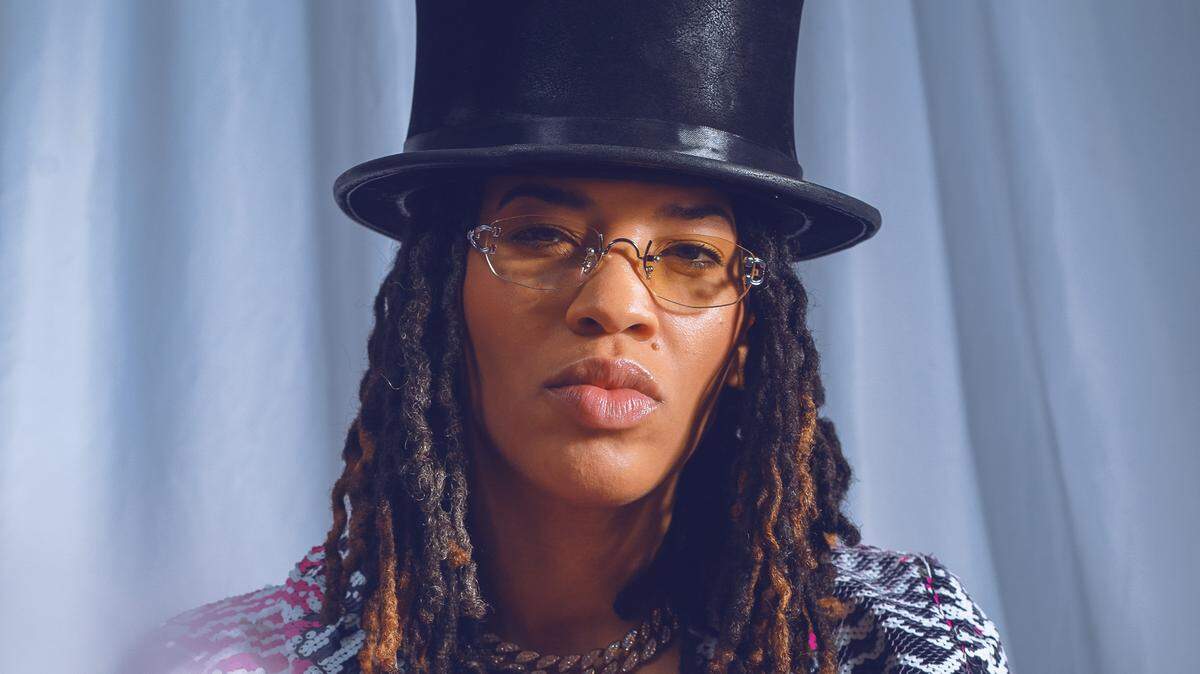
In February, DJ Fannie Mae — a member of Fair Play and an event planner — premiered Sainted: A Trap Choir Party, which sold out The Underground at the AvidXChange Music Factory. It was such a success that she had already booked parties in Raleigh and Charlotte. Then the cancellations started. While filing paperwork for financial assistance, she realized the scope of what she was missing out on.
“Putting it on pause after having it be an amazing event — that was a hard hit. When I had to monetize the loss, I could see it tangibly,” she says. “It shook my faith. Here I was feeling like I was on the brink of something amazing. I’d hit my stride, creating an event that was true to myself and vvvvwooop … the record backspins and it just stops.
“Thankfully, I had a little stash to get me through. If this had happened last year or the year before, circumstances would be very different for me.”
As with the ASC, some of the money will come from individual donations via GoFundMe (www.musiceverywhereclt.com/relieffund). Between its initial contribution, fundraising and proceeds from the virtual Tosco Music Party last weekend, the campaign had raised roughly $25,000.
“That’s before sending out the first round of relief grants,” Thurmond says.
“We want to help as many people as possible, hence the public campaign. We’re encouraging people — if you’re able — to consider donating what you would have spent going to concerts in the last couple of months.”
Bassist Stefan Kallander was set to spend the summer playing festivals and opening for Michael Franti and Spearhead and Galactic at amphitheaters including Red Rocks in Colorado with the reggae and hip-hop-influenced folk rock band Satsang. Instead, he’s delivering for PostMates.
“Not to sound melodramatic, but I went from a full calendar — my best earning year as a musician — to literally nothing,” says Kallander, who has worked as a professional musician since graduating from college in 2012.
“I do some side hustle. I flip shoes, reselling and trading. And I’ve started delivering for extra money,” explains Kallander, who says his side gigs kept him from getting full unemployment benefits. (“I only got approved for $137 a week.”)
“I’m not as scared as some (people) because of the Postmates situation. I don’t want to put my whole life on credit cards.”
Still, he’s applied to between 10 and 20 different relief programs since March; as with unemployment, applicants must be able to prove lost wages.
“I think it’s fantastic that people are trying to do these things for musicians,” Franklin says. “There’s a little bit of red tape. Some (jobs) are easier (to document) than others. With private functions, there are almost always contracts, but at Comet Grill or Thirsty Beaver, we just pass the hat.”
Singer-songwriter Taylor Winchester — who divides his time between playing mandolin in Elonzo Wesley and marketing and booking festivals and events — stresses that need isn’t solely financial.
“Your livelihood and energy is used to fueling itself by playing live shows and engaging with people,” Winchester says. “Outside the financial impact and maybe not talked about or touched upon, is that mental aspect.”
Mae has found solace in hosting a virtual gospel brunch each Sunday, where she can connect with some of the same crowd that supported Sainted.
“I’m having to cling to my faith to get me through hard times,” she says. “Why not do something that can be an inspiration?”
She’s found herself reflecting on the house fire she survived at 8 years old. She made it out first, then watched her mother drop her baby brother and two other siblings out of a third-story window to the waiting arms of firefighters below. Her mom jumped next.
“My mother landed on her feet. She has knee problems to this day,” Ma says. “In the midst of the fire, you take a deep breath and you just jump. That has been coming to my mind since I had that low moment. Things will get better. Keep an open mind and be smart in how you move ahead.”
This story was originally published May 14, 2020 at 4:27 PM.