She felt called by God to give a stranger her kidney. Then came a match made in Heaven.
Holly Armstrong didn’t know who was going to get her kidney, or how they would respond to the letter, or whether the two of them would ever meet.
But she figured the person would want to know why.
So on Oct. 16, less than a week before doing something most people would never, ever seriously consider — donating one of her two perfectly good kidneys to a complete stranger while expecting nothing in return — Holly sat at her laptop with joy and love emanating from her soul, clacking away at the keyboard as she composed an explanation.
“Why would I donate something like this,” the Lake Wylie, S.C., full-time homeschool parent wrote, “especially when I didn’t have a family member or close friend in dire need of one? Why would I just voluntarily give my kidney? Why subject my healthy body to unnecessary surgery? Why would I be willing to give up all of my sports, activities, exercise classes, running my miles, walking my dogs, swimming laps and coaching volleyball games ... to give them up for at least two months of recovery? Why the risk? Why???
“It’s simple. Since first praying, ‘Here I am Lord, send me,’ I have been given a brave, bold and fearless spirit.”
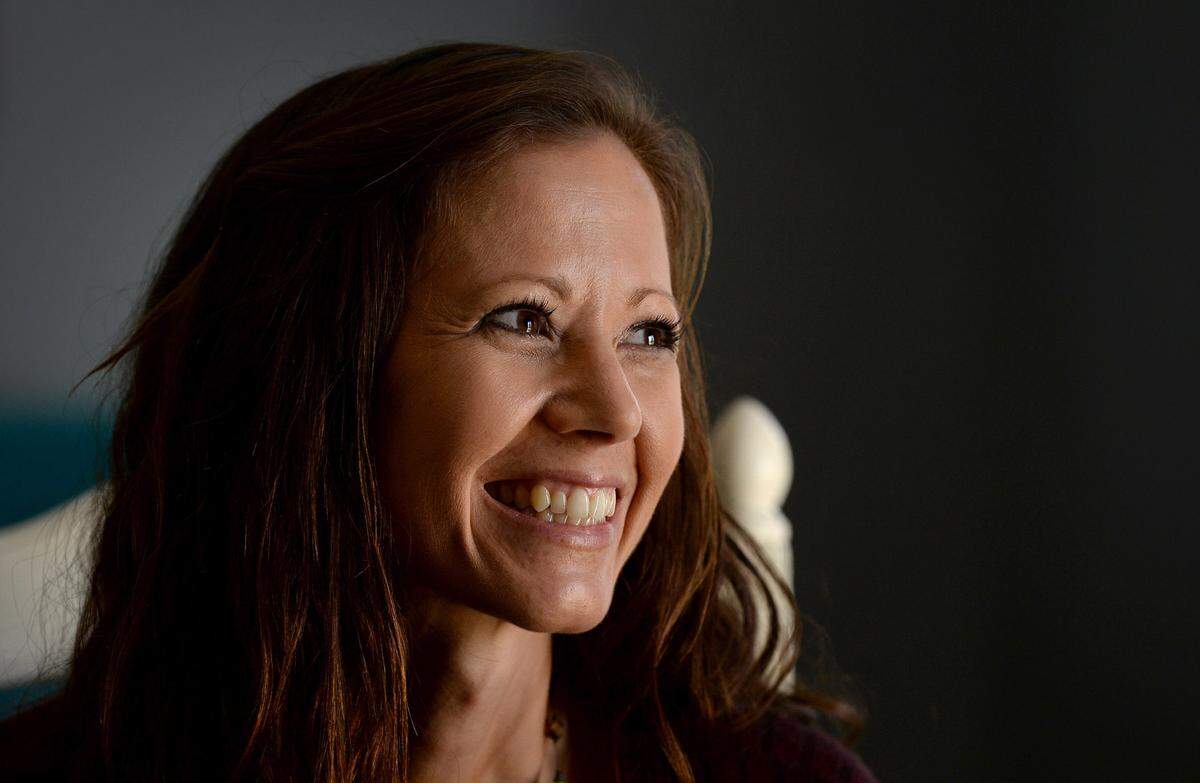
In this case, that brave, bold and fearless spirit had sent her on an uncommon journey over the previous 10 1/2 months. According to the U.S. Department of Health & Human Services, these non-directed (also called altruistic) gifts account for just 2% to 3% of all kidney donations.
Perhaps even more rare, however, is this: In the seven weeks since Holly’s kidney was transplanted into Kelley Rivera — a California CPA who says she is not religious — the two women have formed a friendship that has continued to grow, and both now feel so bonded that they end conversations by telling each other the same thing.
“Love you.”
‘That’s why it’s called faith’
It all started with an 8-year-old boy.
Holly read about his plight — a genetic disorder had left him with, among other ailments, a weakened kidney and suddenly in desperate need of a transplant — last November, in a Facebook post that went viral in the Charlotte area.
She noted that his blood type was AB, same as hers, and sent a message to his transplant coordinator to say she’d be willing to donate. Just like that. Never had considered being a living organ donor before. Her feeling, she says, was, Hey, “if I were in that need, or my husband were in that need, or my child needed a kidney, I would love for somebody else to step up.”
As it turned out, a whole lot of others had volunteered, too, so initially the only thing that came out of it was a kind “thank you” from the boy’s transplant coordinator. But the seed that had been planted inside Holly’s head — and heart — started growing.
Over the next several weeks, she says, Holly quietly did research about kidney donations and prayed about it, ultimately coming to the conclusion that God’s plan called for her to move forward with donating her kidney, even if it wasn’t necessarily going to that little boy. Even if there was a chance she’d never know who the recipient was at all.
On a date night in January, she brought the idea up to her husband for the first time. He needed a minute.
“Because I didn’t really know how common that was, or how dangerous that was, or what were the risks,” Kevin Armstrong says. “I mean, I knew you could live with one kidney, but I didn’t know what kind of life that meant for you.”
The answers were, generally, it’s uncommon, and it’s certainly not without risk (it is a major surgery, after all), but after fully recovering, donors have the same quality of life as before.
He also knew, though, that to some degree it didn’t matter what they were.
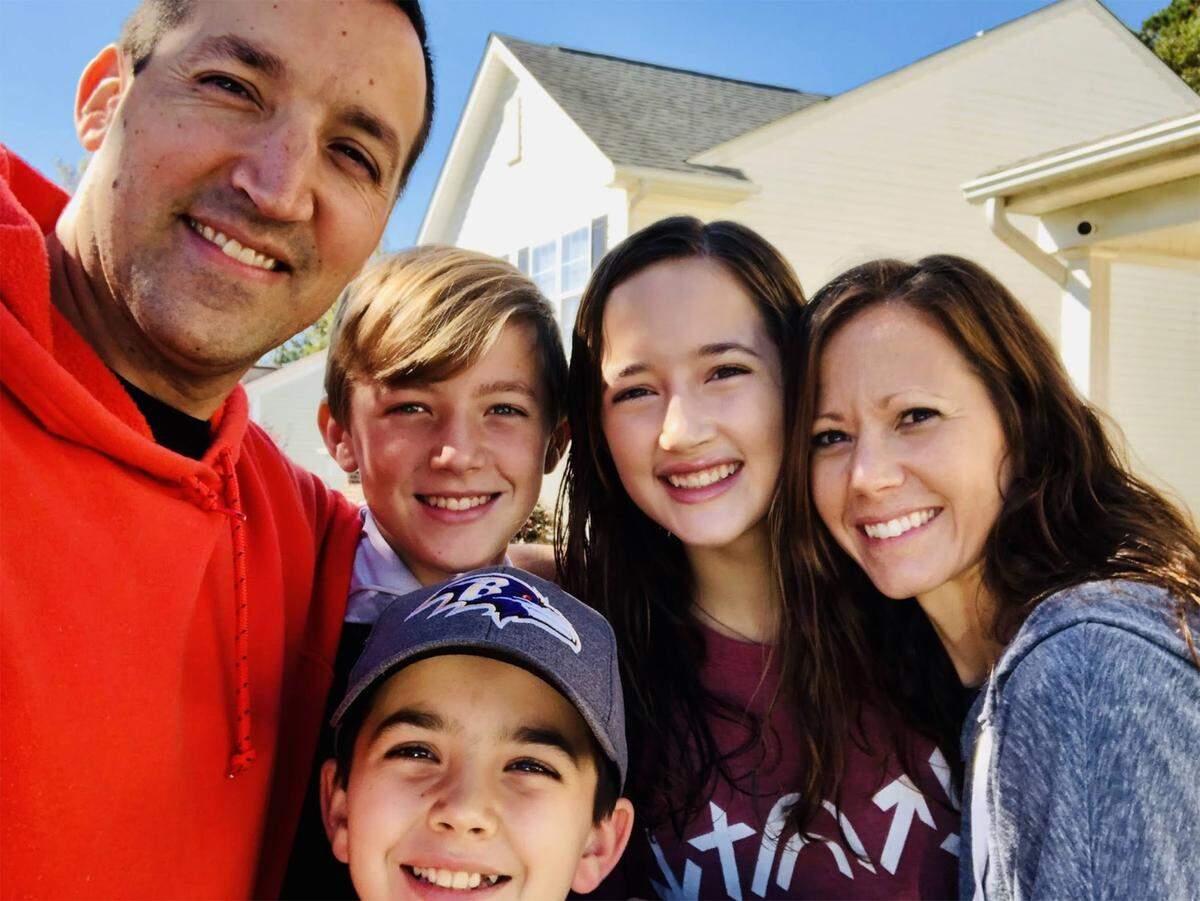
Holly, he knew, was someone who put a premium on generosity and empathy, and who had spent years answering other calls from God — whether that meant making lunches for the family to hand out to the homeless while on vacation in Washington, D.C., or taking seven mission trips (some with him and their boys, Sammy and Ben, all with daughter, Ellie) to Guatemala over the past five years through their church, Christ the King in Steele Creek.
His wife, he knew, after more than 18 years of marriage, wasn’t prone to whims.
“And the more we looked into it, and the more we prayed about it ... the more at peace with it I was,” he says, adding: “At the end of the day, it’s really about just being faithful to what you’re called to do. That’s why it’s called faith, I guess, is it’s not a guarantee. You don’t have the answers right in front of you. But you just have to keep walking forward to what you’re called to do.”
Before January was up, Holly had initiated the process of registering as a potential donor through the National Kidney Registry and designated the Emory Transplant Center in Atlanta as where she wanted to have the surgery done, if she were to be deemed eligible.
COVID-19 would slow things down in the spring, but she tried to keep the ball moving forward at every opportunity.
Why? Because she felt strongly that someone really needed her kidney.
In fact, by the time she finally had cleared all of the hurdles and was officially activated on the National Kidney Registry (in early September), she had already spent months focusing a great deal of her prayer energy on this someone. She prayed for this someone’s health, naturally, but she also kept praying for something that was — just like the success of the surgery itself — not a guarantee.
Holly kept praying that she and this someone would eventually be able to connect.
Organ was a ‘Disneyland Match’
Kelley Rivera has been using insulin therapy to treat her Type 1 diabetes since she was 6.
In recent years, as she navigated the first half of her 50s, her health-care providers had tracked a decrease in her kidney function, and then in August 2019, it was determined during a check-up that her blood work results were changing in the wrong direction.
Her doctor said one of two courses of action were going to be required. Either dialysis treatments for the rest of her life, or a transplant. And after consulting with a variety of medical professionals, Kelley decided she didn’t want to be hooked up to a machine for four hours a day three days a week.
She decided instead that a transplant was the way to go.
Of course, you can’t just snap your fingers and get a new kidney. At UCLA’s Kidney Transplant Center in Los Angeles — which is about 40 minutes from the home she shares in the San Fernando Valley with her husband, Peter — the average wait for a potential transplant recipient on the deceased donor list is five years.
Kelley didn’t want to wait that long, so she started exploring the possibility of having a family member donate directly to her, kicking off a several-months-long period that saw multiple blood relatives progress to various stages of the screening process.
Long story short: “We thought my brother would be the best match,” Kelley says, “and it ended up at the very end that he had one great kidney and one kidney wasn’t as good, so they didn’t want to put that kidney in me. When he called and he said that his kidney wasn’t gonna work, my husband and I just looked at each other and nodded.”
Peter had been through months of screening as well, and though he wasn’t a match for his wife, he and his kidneys were determined to be healthy enough for him to qualify as a living donor.
It basically works like this. Though Peter’s kidney was incompatible with Kelley’s body, the donor exchange program that UCLA Health would allow Peter to donate his kidney to a stranger on the transplant waiting list and, in exchange, he could designate someone of his choosing — Kelley — to be moved to the top of that list.
So when Peter and Kelley nodded at each other that day over the summer, she says, “It was this unspoken thing. Thirty-two years we’ve been married, and if either one of us ever needed something, it’s an unspoken promise that we would do it.”
“It’s not really imaginable to me,” Peter adds, “that a spouse would say no to that.”
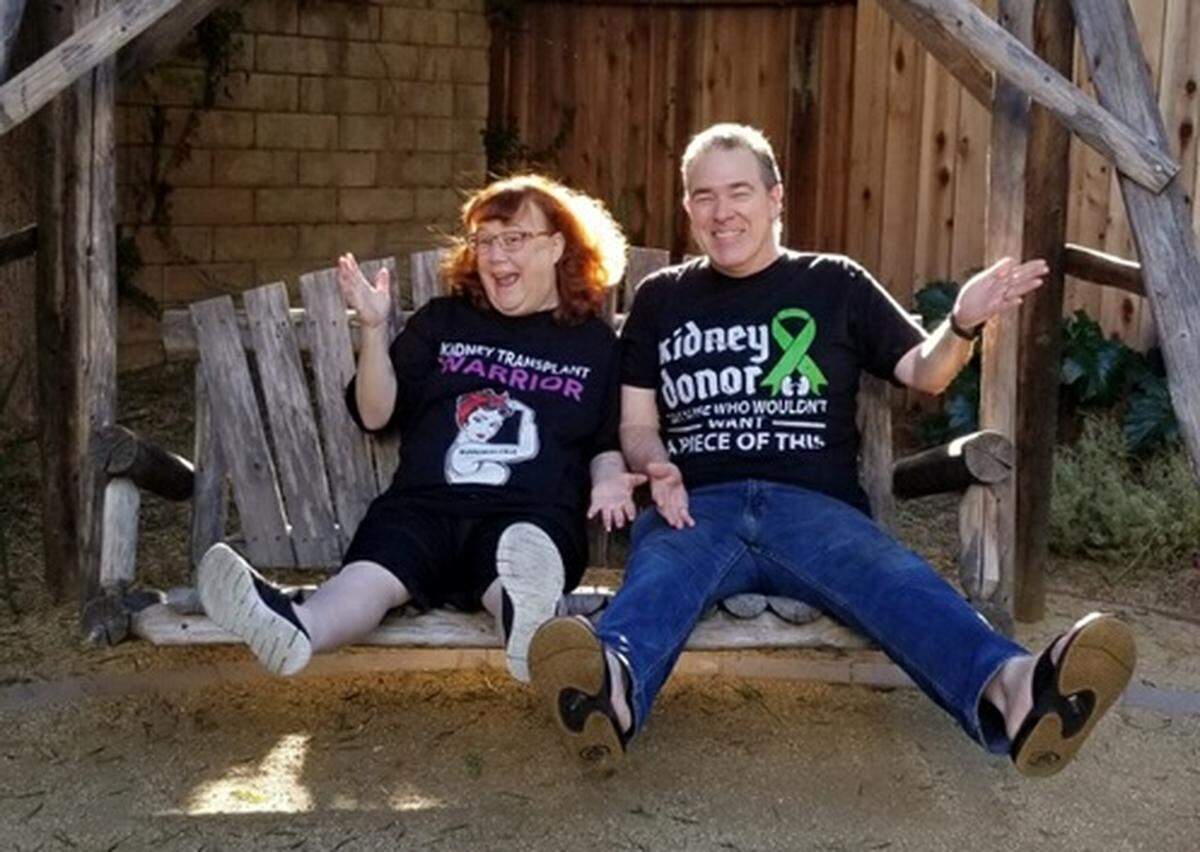
On Sept. 23, Peter had the surgery to remove his kidney.
Just two days later, Kelley’s transplant coordinator called her to say they’d found a match.
“She actually thought it was too good to be true,” Kelley recalls. “So she said, ‘Well, let me take the weekend and reevaluate it, and look at it Monday with fresh eyes.’ So she looked at it Monday and she’s like, ‘Kelley, this is a perfect match. The donor is AB-positive, like you, the donor is alive, the donor is young (Holly was 39 at the time). ... ’They called it ‘The Disneyland Match.’”
But she had no idea how fairy tale-like the story was about to become.
Special connection for both women
By default, living donors and their recipients remain anonymous to each other — unless both people indicate that they’re interested in connecting.
Holly, obviously, was eager to do so. As she explains it:
“God really started speaking to my heart about this person well before I even knew who they were. ... I describe it to people as kind of like when I had my babies, when I found out I was pregnant. I started loving that child growing inside of me before I knew if it was a boy or a girl, or blonde hair and blue eyes or brown hair and brown eyes. I just knew that I loved them.
“And I felt really connected to my recipient (in the same way). I just really felt that strong bond, so I wanted to be able to speak to them, to find out how they were doing.”
It doesn’t always work out. Or, as is sometimes the case, it’s just not a priority.
Peter Rivera, for instance, donated his kidney not for altruistic reasons, but as a means to an end. He says he provided limited information, and that he has received none about who his recipient is or how they’re doing. Plus, it’s always possible the recipient’s body rejected the transplant, in which case donors are sometimes better off not knowing anyway.
But Kelley, meanwhile, says she had to know. She had to thank her donor. She’d said yes, absolutely, I want to be in touch.
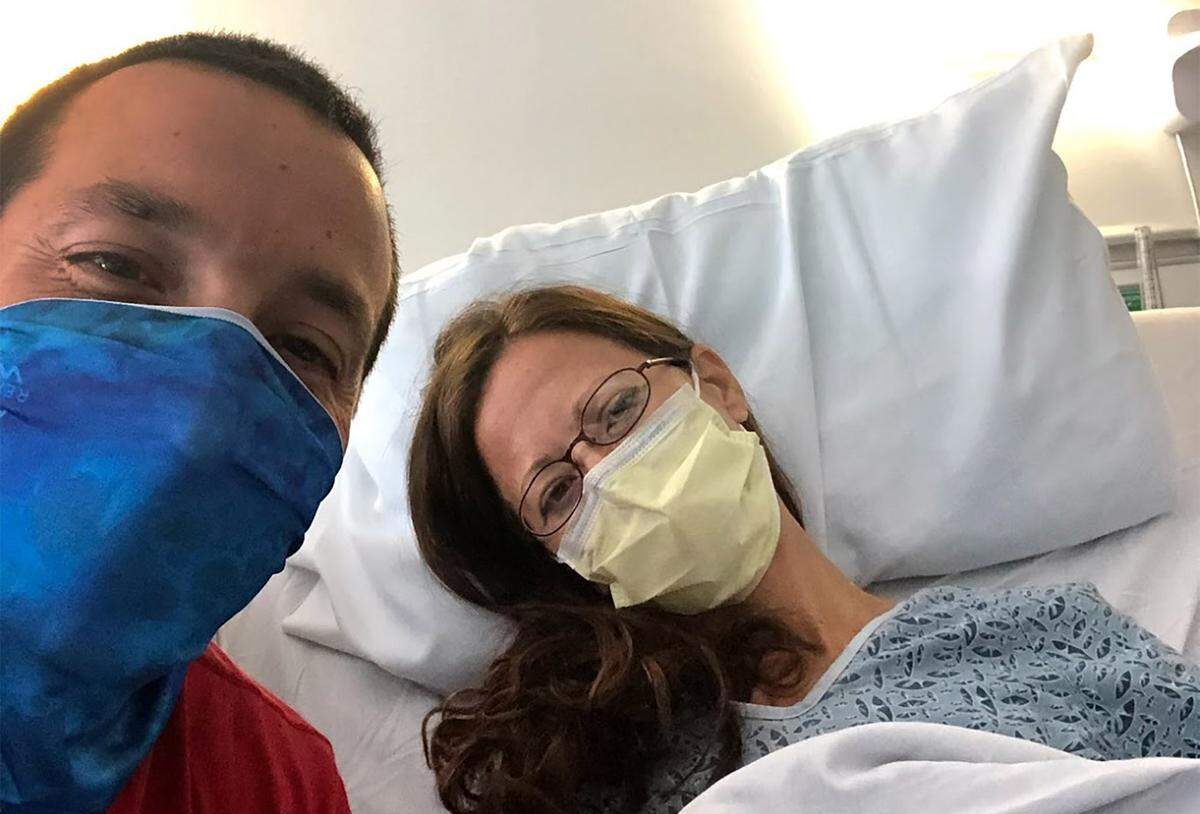
So the day after her new kidney was flown from Atlanta to L.A. and transplanted into her body, Kelley found herself in her recovery room at the hospital at UCLA after her surgery, reading Holly Armstrong’s letter. It explained everything — the little boy on Facebook and how God was pulling her toward donating a kidney, and the date-night conversation with her husband and all the prayers she’d been sending.
“There were, I don’t know, six to eight pages, single-spaced typed. Yeah, it was long,” she says, laughing. “But it just opened up as to who she was, why she was doing it. It answered a lot of questions. I just knew that I was lucky to have this person in my life.”
They weren’t immediately able to connect.
Though Kelley’s body had taken Holly’s kidney virtually without issue, Kelley had had a preexisting heart condition, and she says she suffered a mild heart attack two days after the transplant. But as she was recovering, they traded emails and connected on Facebook and stalked each other’s profiles, so when they finally got to meet face-to-face on Zoom, four weeks post-surgery, they were almost immediately chatting away like old friends.
.png "image (4).png")
Right before the end of the call, which lasted two hours, Holly said, “I love you” to Kelley.
“I am so glad you said that,” Kelley replied, “because I wanted to tell you that, but I didn’t know if I felt comfortable.”
Then she said “I love you” back.
That call, says Holly, who turned 40 a few weeks after making the donation, was the highlight of her year. “Being able to connect with her and see her, and see her laugh and smile, and know that she’s doing well, and that the kidney was a perfect match.”
Which brings us back to the little boy on Facebook.
What about that little boy?
Now 9 and still in need, he has yet to find his own perfect match, Holly says.
But Holly says she connected with the transplant coordinator of the little boy late last month — almost exactly one year after she saw the original Facebook post pleading for help for him — and asked her to pass along a message to his family. Please tell them, she said, “that I truly believe God has a bigger plan than we can imagine ... and that the ripple effects of (their son’s) story are just gonna be bigger than they could probably imagine.”
Because of their son, Holly found a higher calling that moved her to donate a kidney to a complete stranger.
Because of their son, Holly connected with that stranger, who became a friend, and her relationship with Kelley has put more love and hope into the world.
Because of their son, Holly has this uplifting story about her journey, one she’s sharing with others whenever she can, and one she uses to try to plant seeds in the heads of anyone who will listen to it: “You want to give your kidney now, right?,” she says, smiling, after telling it to a guest in her home last week.
And because of their son, who knows? Maybe someone she shares her story with will feel the same pull she did, and donate a kidney, and save another life.
Just like Holly saved Kelley’s.
‘Because of her, I get to live’
“Because of her donation, I’ll get to see my daughter get married,” says Kelley, 56. “I’ll get to hold my grandchildren. I’ll get to continue working. I’ll get to see my family at holidays.” Not this year, of course — due to the pandemic and her current risk factors, she’ll have to stay isolated into 2021 — but what she means, generally speaking, is this:
“Because of her, I get to live.”
Kelley, as it turns out, is not religious, so she views everything that’s transpired over the course of the year and the forces that have driven the chain of events through a different lens than Holly.
But while she doesn’t pray for Holly every night, the way Holly continues to pray for her, she does have a new ritual that almost anyone, religious or not, should be able to appreciate.
Every night, Kelley pats the scar above her kidney and says, “Good night, Holly.”
Then she closes her eyes and smiles, comforted by a feeling inside of her that’s best described as absolutely, positively good.
.
For more on the National Kidney Registry, including information for anyone interested in learning more about how to become a living donor, visit kidneyregistry.org.
This story was originally published December 9, 2020 at 6:05 AM.