2020 shut down his club, then he was burglarized — twice. Is there a silver lining?
Alright, Universe, Joe Kuhlmann wrote in his journal that night. What am I missing here? What are you trying to tell me here?
Is this your idea of a joke? If so, I don’t quite get the punchline.
A few hours earlier, on the evening of Jan. 26, Kuhlmann says he returned from making a grocery store run for a homebound friend — after being gone just 45 minutes — to find his ranch-style home in the Windsor Park neighborhood of Charlotte had been burglarized. TV and soundbar, gone. Computers and monitors, gone. Headphones, microphones, preamps and a mixing console from his home recording studio, all gone.
Kuhlmann realizes there are people right now who have it way worse. He knows it’s all just stuff. Still, it does feel, more than a little bit, like the universe is kicking the guy while he’s down.
Just 5 1/2 weeks earlier, he was awakened in the middle of the night by Don Koster, one of Kuhlmann’s partners in the group that owns The Evening Muse, who was calling to tell Kuhlmann that someone had busted through the window of their NoDa music club and stolen the cash register.
The register, incidentally, didn’t have a nickel in its drawer. In fact, it had been empty for nine months, thanks to COVID-19.
And that, of course, has been the real punch in the gut. As it has with every single live-music venue in every corner of the country, the pandemic served to completely cripple Kuhlmann’s business. So pile on the break-in at the Muse in December and then the break-in at his home last month, and it’s a clear addition of insult to injury.
But although his recent misfortunes have proven a pain in the neck, the 46-year-old Kuhlmann is trying to take them in stride. He’s trying not to let them get him down.
Because he’s been down before — and being down, he knows, can be a very dangerous thing.
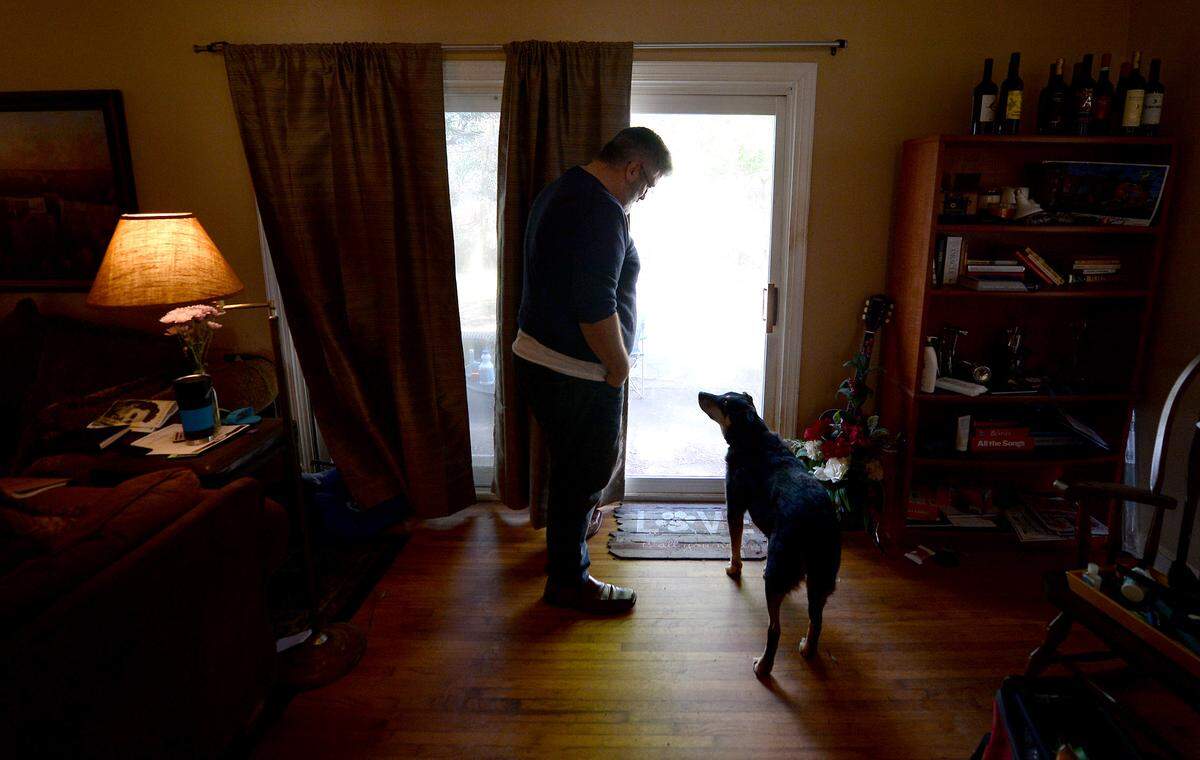
A sometimes-fragile existence
“If there was a clinical workaholic,” Kuhlmann says, “I used to be one.”
For most of this century, he has been in almost-constant go-mode, playing an instrumental role in the daily operations of The Evening Muse — which he and a pair of (now-former) partners opened in April 2001 — as it cranked out hundreds of shows a year featuring live bands with virtually no pauses in its schedule.
Kuhlmann guided the club along at a frenetic pace even as he continued to produce albums for local musicians out of his 36th Street Studio; and, after the studio closed in 2012, even when he and his wife separated, even through his divorce in 2016, even as he went slightly unhealthily overboard by becoming a workout-aholic in an effort to lose weight. (At one point, he blew out his knees due to too much powerlifting; at another, his liver and kidneys started failing.)
He also was quietly battling depression — in part, he says, because while he was pouring all of his time and energy into his work, he paid little to no attention to his own well-being in general or, specifically, his own mental health.
Therapy helped. And in recent years, Kuhlmann has become more open about his struggles.
Most notably, he and his friend Kelli Raulerson, a member of the board for Mental Health America of Central Carolinas, started a series called R U OK, CLT? in February 2019 at The Evening Muse; the idea was for the events to feature different forms of live entertainment followed by a frank group conversation about mental health.
That, again, was mainly something he worked hard to develop and promote and execute for others. But in January 2020, he started up with a men’s group in Charlotte to do more hard work on himself.
The group, Kuhlmann says, was teaching him about “being vulnerable and being open and honest, and really discovering what a positive force masculinity can be when it’s healthy, when it’s purposeful.”
He felt like his mental health was improving tremendously. On top of that, the Muse got off to a strong start in 2020.
“We thought we had a really good year on our hands. Had a lot of really great bookings,” he recalls. “And we had been building a really great program for (a special R U OK, CLT? show in April), with some really great artists lined up, and it was all about resiliency. So I was really stoked. Plus, it was right around what would have been our 19th anniversary show for the Muse. It was like, awesome, this is gonna be great.”
Then COVID hit.
‘You gotta love yourself’
From virtually the start of the pandemic, he was a leader of efforts to shine a light on the impact it was having on independent music venues in Charlotte.
Almost immediately, he joined forces with the Charlotte Independent Venue Alliance (CIVA), which originally was designed to help venues create safe ways to reopen.
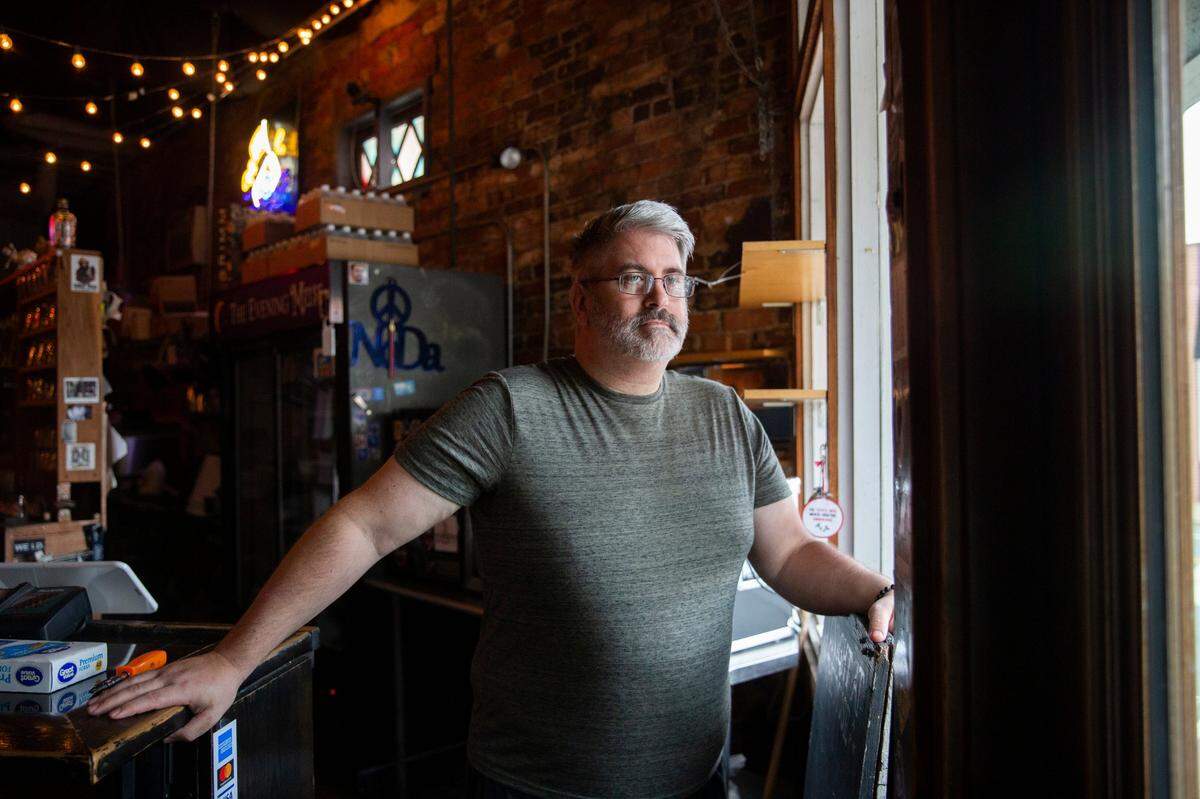
But Kuhlmann — a guy who hadn’t had more than four or five consecutive nights off and who was almost never home — was stuck working on CIVA from home. And there was only so much he could do to make things happen when nothing was happening for anyone. Only so much he could do from within an 1,100-square-foot house that offered him company only from his dog Wolfgang, a TV, the Internet, and his thoughts.
That triggered depression, while the constant and drawn-out uncertainty about his business and its future was creating a lot of anxiety.
One of the worst parts, he says, was that “there were a lot of people in the music business that I know — not just here in Charlotte, but around the country — that were reaching out that were really desperate, and hearing their stories was really building up. I didn’t have a proper way of displacing it,” Kuhlmann says, his voice shaking, as he fights back tears.
In the long run, however, life slowing down turned out to be a good thing for him.
Once he came to grips with the fact that he was in a dark place, mentally, he was able to work on the problem. To work on caring for himself.
“I’d had the language kind of put into me (by the men’s group), like, ‘Oh yeah, you gotta love yourself,’” he says. But it didn’t click for him, he adds, until he actually started trying to interpret that language. Until he started, he says, “understanding and developing ... that idea of, you know what? You’re worthy of this self-care.”
Once his rehabilitation was on the upswing, then, he was able to work another problem.
“There’s a lot of people that would tell you around town, ‘Man, Joe, he’s just really busy,’” Kuhlmann says. He realized, during COVID, that “I don’t like it. I don’t want to be known as being busy. I want to be known as being productive or purposeful or intentional. I think that’s the gift that I’ve gotten from all of this.”
Moving ahead with purpose
Before the pandemic, to some extent, Kuhlmann was just trying to keep the Muse’s calendar full.
His new goal — to be more thoughtful about how he spent his time and efforts — bore quality fruit.
In July, in response to the social justice movement that had swept across the country, he organized a virtual event titled “We The People — Truth, Power, & Love,” which featured poets, comedians and musicians weaving those themes into their art, with donations benefiting Restorative Justice CLT and Fair Vote NC.
In September, he helped CIVA create a “Save Charlotte Stages” petition to urge city leaders to allocate funds from the federal Coronavirus Aid, Relief and Economic Security (CARES) Act to help keep local live-music venues afloat.
Later in the fall, he also recorded and produced the audiobook version of former WCNC investigative reporter Stuart Watson’s “What She Said & What I Heard” as well as Catawba College’s winter concert series.
Then in December, he would learn that the “Save Charlotte Stages” effort worked: The city of Charlotte that month handed out more than $730,000 in rent relief grants to 11 music venues, including the Muse.
Also in December, his club was one of 45 local small businesses that received a grant from the Charlotte Center City Small Business Innovation Fund, aimed at spurring and supporting innovation during the pandemic.
(One of the things the Muse is hoping to do with the grant, Kuhlmann says, is create “a virtual broadcast studio” that will be used to showcase collaborations with local media, local arts institutions and performers. “To provide some new tech — more-advanced cameras, better lighting, better computers — and more ideas, more ways to keep people interested and involved,” he says, “especially considering we don’t know when we’ll be able to return to live music.”)
2020 was actually ending on a hopeful note for Kuhlmann. Not even the Dec. 19 break-in at the club could get him down.
But his home being broken into, that did give him pause.
‘Maybe this is part of a recipe’
While he was walking into the grocery store on Jan. 26, while making the food run for his housebound friend, Kuhlmann says a homeless woman in the parking lot flagged him down.
“She was like, ‘Could you help me out?’” he says. “I said, ‘I don’t have any cash on me, but I’m gonna get you a sandwich or two, OK?’ And I came back out with a couple sandwiches and some water ... and she was really grateful. Then I went and I dropped off those items to my friend and came home and saw this,” he says, gesturing at the piece of furniture that used to hold his TV and soundbar.
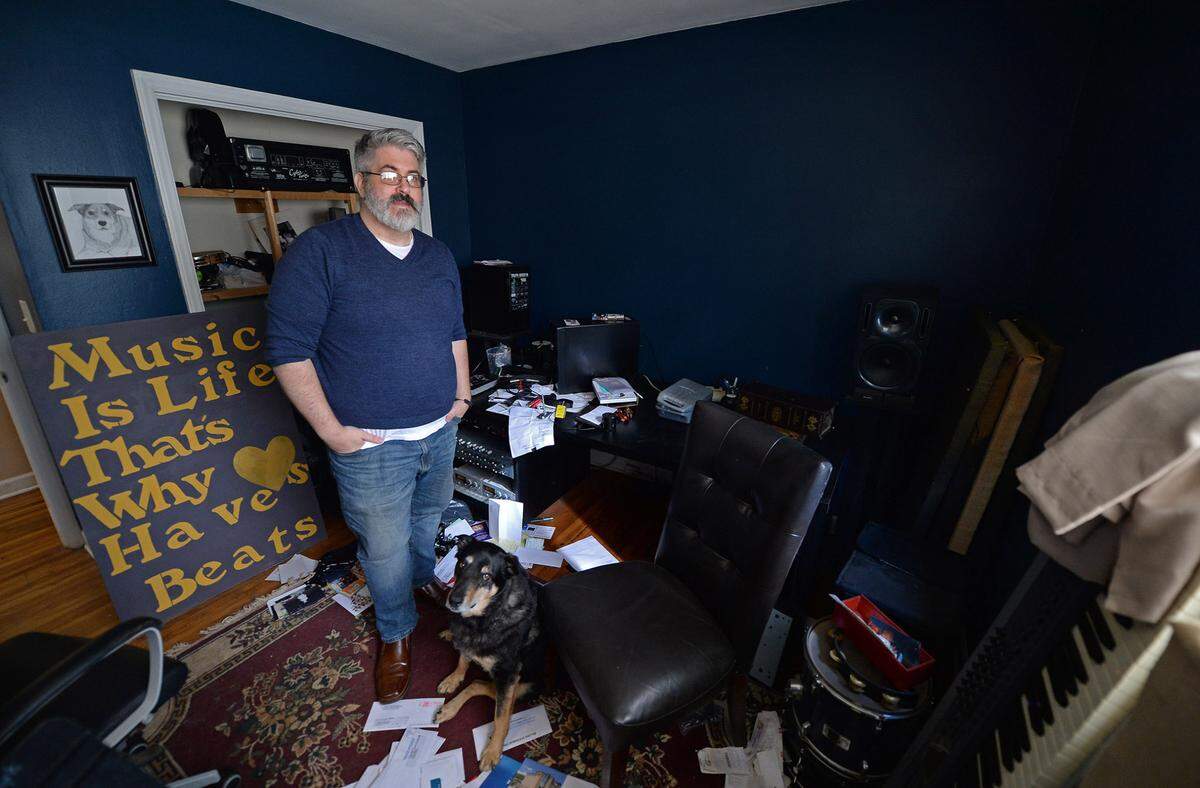
And that’s why he wrote in his journal that night, Alright, Universe. What am I missing here? What are you trying to tell me here?
Kuhlmann says these aren’t his first experiences, by the way, with being the victim of a burglary.
Back in 2010, he points out, his studio in NoDa was broken into and says the losses were much greater then: $60,000 worth of instruments and audio equipment was stolen, he says, including a ’65 Höfner “Beatle bass” — “just like what McCartney played, except the right-hand version.”
That particular moment, he says, may have altered the course of his life.
“I was heartbroken. ... There was definitely like a sense of, you know, am I supposed to be making records? Is this trying to tell me something?” Kuhlmann says. “Lo and behold, less than three years later, I’m not making records. ... That’s where that path of thinking emerged from, was that (break-in).”
But while he initially had similarly grandiose questions in the immediate aftermath, he isn’t obsessing about them this time. He’s also looking at the bright side, which is something he’s too frequently in the past not been able to do.
In the past, “I would have felt pitiful,” he says, if someone had broken into his house and taken the things they took, which included computers containing writing projects he’d started but hadn’t backed up anywhere.
But now? “Everybody’s like, ‘Oh man, all your stuff got stolen. That sucks.’ And I was like, ‘Sure it does.’ But the way I’m choosing to look at it is it makes room for something better that’s supposed to happen. I try not to have a woe-is-me kind of mindset about anything anymore.
“I appreciate the sentiment of when it rains it pours,” Kuhlmann says. “But I’m trying to live so that when it rains, it pours on the positive side.”
When he’s asked, having had some time to ponder, what he thinks the universe might be trying to tell him, he stays quiet for several seconds. Then he shrugs.
And he smiles.
“I think maybe this is a part of a recipe,” he says, “and I don’t necessarily know what the meal is going to turn out to be.”
This story was originally published February 5, 2021 at 3:11 PM.