What it’s like to be 21 years old, 3 feet tall, and inextricably tied to your parents
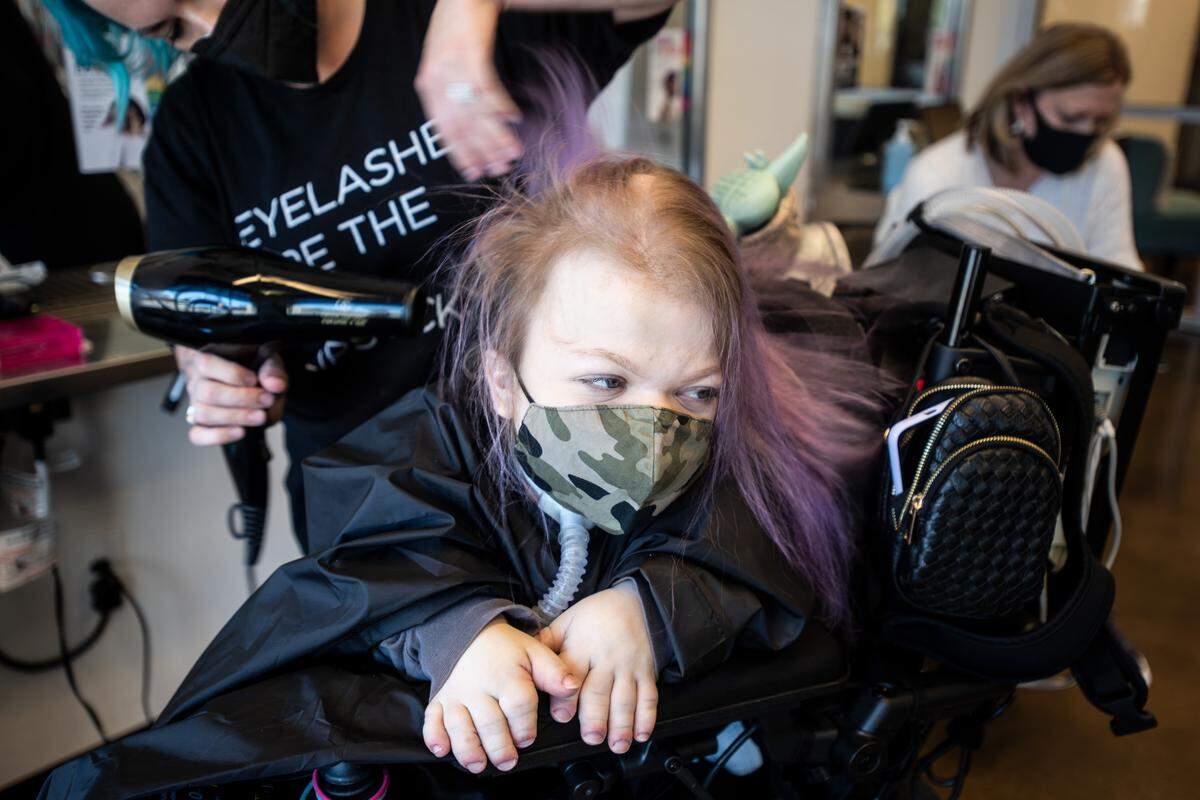
If there’s one thing Abby Wright hated more than anything as a teenager, it’s when people — and often they were older women, apparently — treated her like a baby.
When they took one look at her and blurted out some variation of “Ohhhhh, what a cute little girl!” When in doing so they pitched their voices a couple of octaves higher than normal. When they couldn’t stop grinning at her because, well, gosh, did they mention she was just so stinkin’ precious?
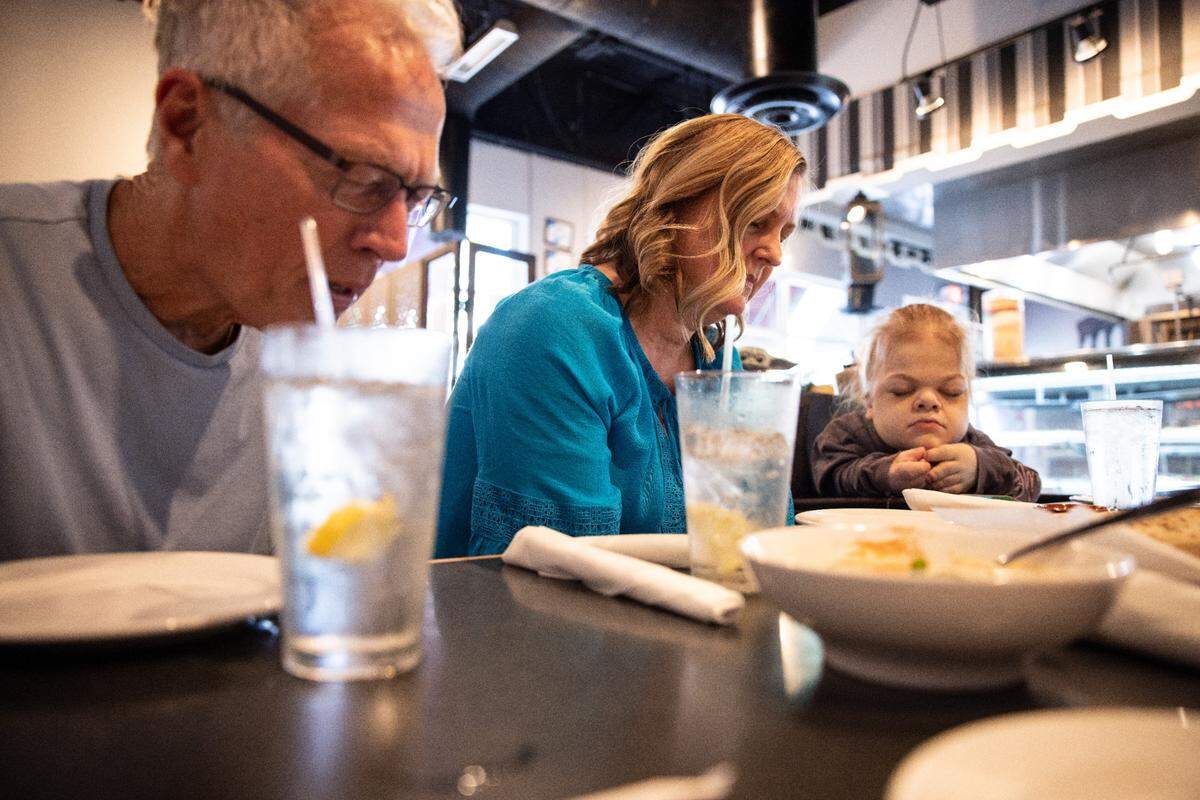
“Because of her size,” explains her mom, Lisa Wright, as she sits in the living room of the family’s Indian Trail home between her husband Jim, on a sofa, and Abby, in a wheelchair.
“And after they would walk off,” Jim adds, “Abby would look at us, grab her cheek, shake it and go, ‘I got on makeup! I got my hair done! I don’t look like a baby anymore!’”
He pauses. “Even now people still sometimes think she’s a baby.”
Abby is, in fact, far from a baby: This past spring, she celebrated her 21st birthday. She’s also far from being helpless intellectually: Although she opted not to go to college, she was home-schooled and has a high school education.
Yet, because she has a rare form of dwarfism, she is fully grown at about 3 feet tall and 48 pounds. And because her form of dwarfism has had severe health consequences, she relies entirely on a wheelchair to get around and needs to be on a ventilator 24-7 to breathe properly.
As a result, Abby is not anywhere near capable of being an independent adult. At least one of her parents has to always be nearby; or, in lieu of them, a nurse must be on watch. Even at night, while she sleeps.
From a logistical standpoint, it’s an exceedingly difficult reality for everyone.
From a practical standpoint, though, Jim and Lisa Wright have never lost sight of this simple truth: Abby is lucky to be alive at all right now.
‘We didn’t know how much time we had’
They knew before their second child was born that she was going to be a little person. Beyond that, for the first several years of Abby’s life, much was unclear.
According to the advocacy group Little People of America, there are approximately 400 diagnosed types of dwarfism, and some individuals who have dwarfism never receive a definitive diagnosis. Abby got hers when she was 3.
She’d been suffering from a series of respiratory issues, her parents say, and doctors in Charlotte didn’t have answers for what was causing them.
So Jim and Lisa took Abby across the country to Cedars-Sinai Medical Center in Los Angeles, where physicians diagnosed Abby with opsismodysplasia, a rare type of skeletal dysplasia that — among other symptoms — leads to increased risk for respiratory infections and respiratory failure as well as musculoskeletal issues that can make walking difficult or impossible.
The prognosis was that she would live maybe another couple of years.
At that point, Jim and Lisa prepared for the worst by trying to give Abby the best: They applied to the Make-A-Wish Foundation on her behalf, and when she was 3-1/2, Abby was granted her wish to meet The Wiggles, a top band among the preschool set, at a show in Providence, R.I. Says Jim: “We didn’t know how much time we had.”
In the first five years that followed, long-term oxygen therapy treatments helped moderate her condition.
But when Abby was 8 years old, she came down with a case of the flu that caused such respiratory distress that doctors in Charlotte had to perform a tracheotomy to get oxygen to her lungs and put her on a ventilator to keep her breathing properly.
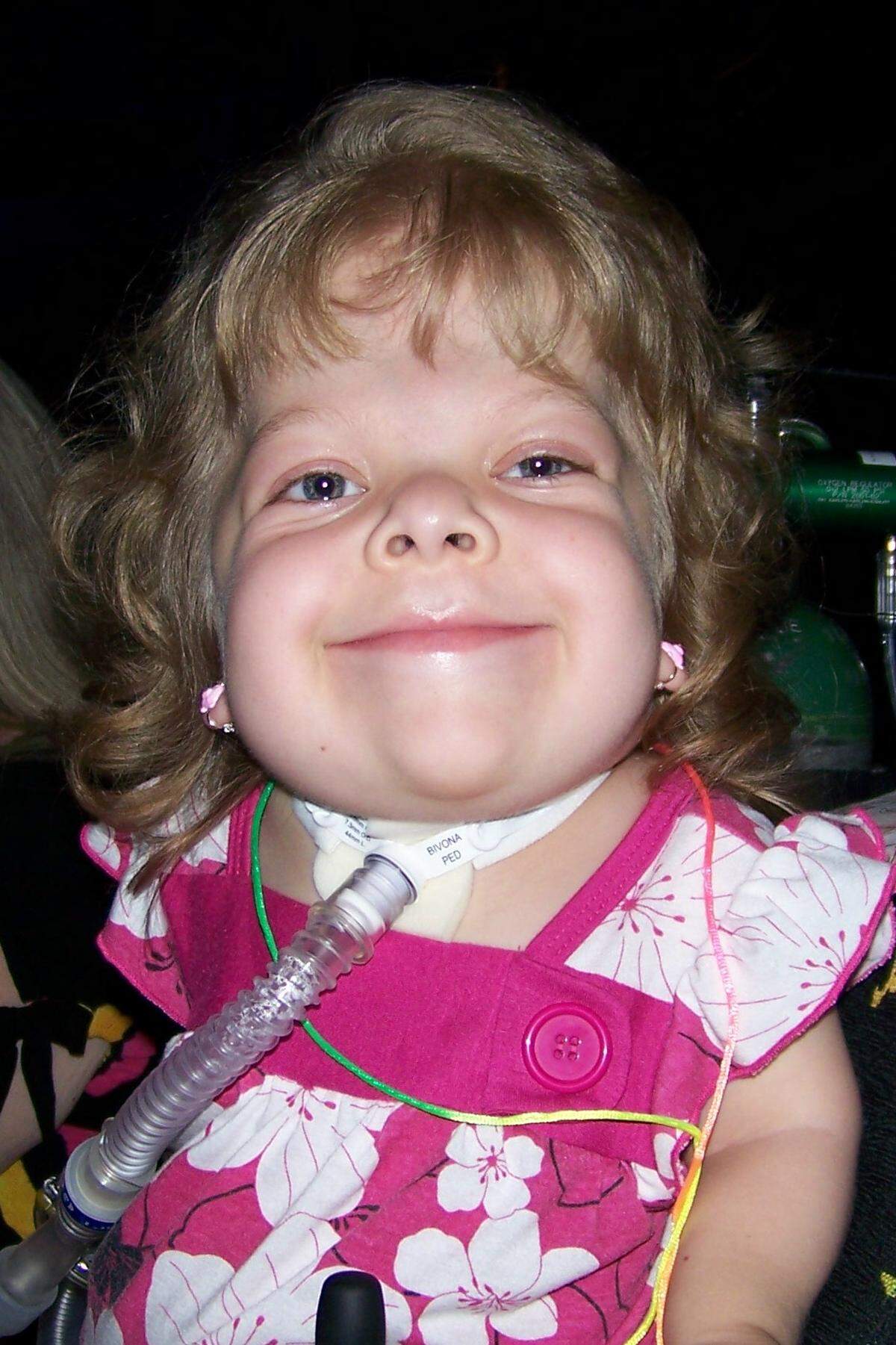
Even when she was finally well enough to go home, Abby was told she’d need to continue to rely on her tracheotomy and a ventilator — 24 hours a day, seven days a week.
Jim and Lisa say they were told at the time that Abby might live another six months to a year.
“And I mean, nobody wants to get a diagnosis that says, ‘Oh, you have this much time,’” Lisa says. “But with her condition, it’s so rare, they were just basing it on past information that they had. So we just decided we weren’t gonna go down that rabbit hole and get bogged down with that. We just kind of brushed it to the back of our minds.”
A year later, she was doing better, not worse. Two years later, Lisa took her to see her old doctors at Levine Children’s Hospital in Charlotte just to smile at them and say, ‘Look, we’re still here!’”
She and Jim both laugh at that memory.
“The doctors there,” Lisa says, “they absolutely loved that they were wrong in that case. And since then, none of the doctors will even give us a prognosis now, they’re just like —”
Jim jumps in to finish her sentence: “‘Who knows?’”
Longing for her independence
It would be natural to wonder what Abby thinks about how her life has turned out.
What it was like to grow up with her condition, physically, mentally, emotionally. What it was like to wonder how much time she had left. What it was like the year of her 18th birthday, when she got a surprise experience every month, from taking a ride in a single-engine airplane to meeting Mike Krzyzewski, coach of her beloved Duke men’s basketball team.
.jpg "image (1).jpg")
What it’s like having a nurse sleep in her bedroom every night. What it’s like to virtually never get a break from her parents. What turning 21 meant to her.
What she hopes the future holds.
But it takes Abby some time to feel comfortable talking to older adults she’s just met, and as a child actually went through a period of dealing with selective mutism, where she would talk to grown-up strangers only through her parents (and in certain social situations would say nothing at all).
These days, while Abby can easily let the words flow if the conversation leans toward her passion for video games or her tips for shopping for Squishmallows, she is extremely reticent about heavier subjects.
Most often, she’ll simply respond to a question from an older adult about her feelings by saying, timidly, “I don’t know.”
What seems clear from talking to her parents, though, is that she is yearning for a level of independence that she might never be able to achieve because of her special needs: That is, Abby needs to constantly be under the supervision of someone certified to care for patients on ventilators and with tracheotomies.
It was frustrating when she was a teenager, to be so dependent on so strict a care plan. It’s even more so now that she’s an adult, knowing that “normal” adults have so much more freedom.
“I’m with her through the day,” says Lisa, who stays at home to tend to Abby if necessary, while Jim works full-time in the tree-removal business. “And she gets mad sometimes because if she wants to do something — if she gets her mind set that ‘I want to go to Target today,’ and I’m like, ‘Today’s really not a good day. Can we go tomorrow?’ She’ll say, ‘Well, if I were a normal girl, I could drive myself there.’ So sometimes I think she throws that to try to get her way. And I’ll say, ‘Well, this is what we are. This is just how it is.’ ...
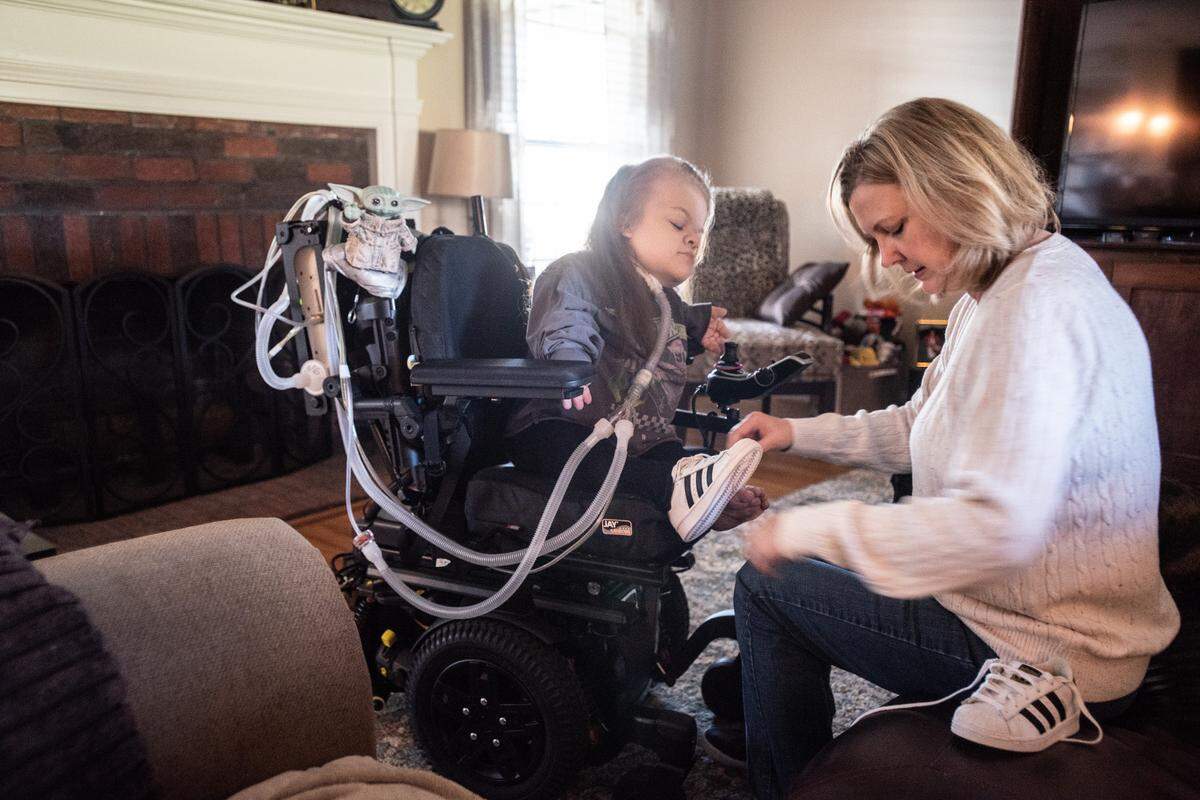
“But we try to be available to take her where she wants when we can. We’ll take her somewhere to meet friends, in a restaurant or something. They’ll sit in one spot and we’ll just go over in a little corner. Just so we’re nearby. To give her a little bit of freedom.”
In fact, the chattiest Abby got over the course of several visits lasting at least a couple hours each time was whenever the conversation turned toward letting her spend more time with her friends — and less time with her parents.
One such example:
“A bunch of my friends, they’re all in Kentucky. I met them online,” Abby says. “They’re coming here to visit.”
“And the ‘cool’ nurse, Sierra, will go with them,” Lisa says, “so Jim and I will just probably be at the other end of the mall doing something mom-and-dad-like.”
“No, why don’t you just go home and have a dinner date?” Abby says, grimacing and raising her eyebrows.
“Or,” Lisa replies, with a mom joke: “I could start a flash mob for your friends!”
“Or you could go home and have a dinner date!” Abby repeats. “I mean, really, I want to have just one or two days just by myself with them.”
It’s something Jim, Lisa and Abby all have no doubt fantasized about.
‘She has to depend on us a lot’
The reality is, Abby will always have to be tethered to one or both of her parents, or to a skilled nurse.
That’s a certainty.
What is unknown is whether her life will be any different in, say, five years. Right now, she spends much of her time playing video games online, decorating and re-decorating her bedroom, and experimenting with hair and beauty products. There’s not much else to do except when Mom or Dad take her somewhere to eat or shop or sightsee.
But a career of some sort isn’t completely outside of the realm of possibility. Abby has developed graphic design and video editing skills in her free time over the years, and Lisa thinks her daughter might be able to do remote work for a company or start her own business in one of those areas.
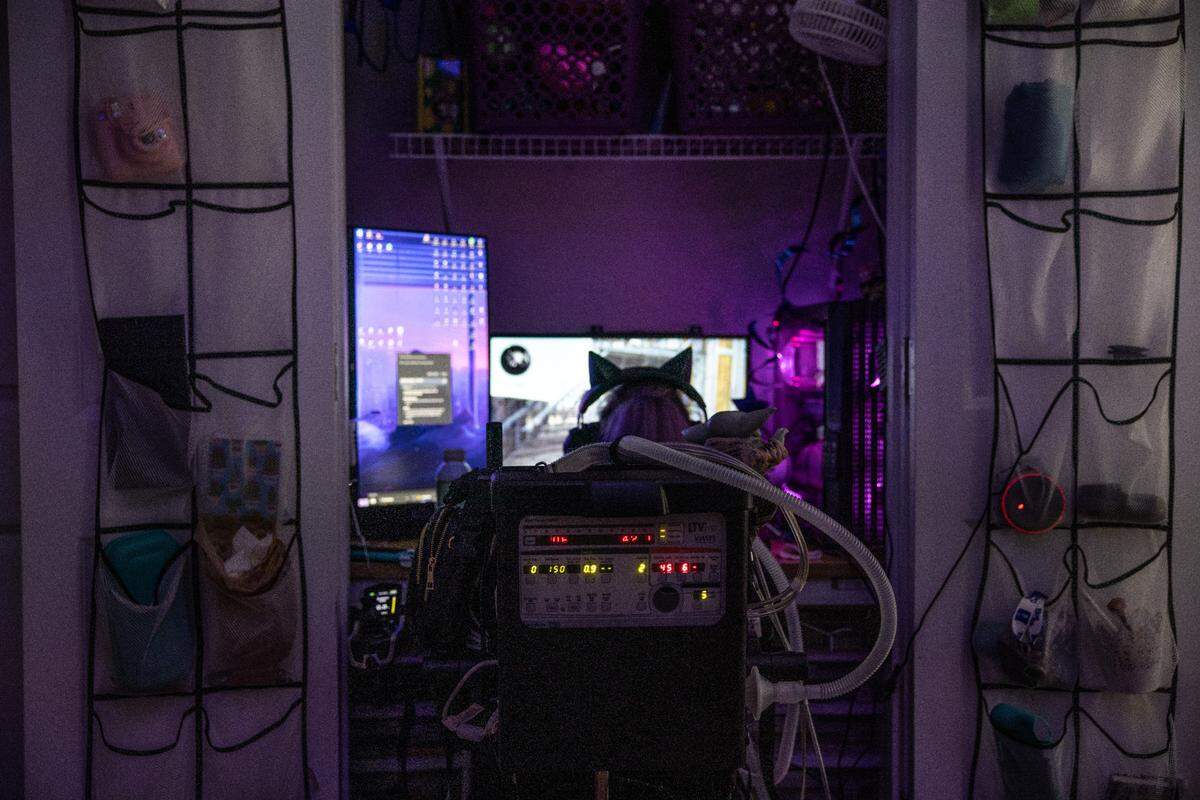
It’s an exciting prospect that could give Abby, if nothing else, a taste of financial independence and a greater sense of individual fulfillment.
Potentially standing in the way of this scenario long-term, however, is the idea that at some point down the road she’ll become ineligible for health-care coverage under her father’s private insurance plan — at which point she’d need to go on Medicaid via SSI in order to afford the steep costs of her medical needs.
If she went on SSI and collected that benefit, she’d have Medicaid coverage but would be able to take a job that paid at most the equivalent of about $16,000 a year. If her income went over the pre-determined limit, she would be disqualified from Medicaid coverage and could conceivably go broke trying to pay for her own care.
That said, fortunately for the family, Jim and Lisa are in a comfortable enough financial place to bail her out in that scenario. And if something were to happen to them, they’ve assigned a cousin of Lisa’s to assume guardianship and have a special needs trust set up for health-care expenses.
They’re always thinking ahead, because they have to.
From big decisions to little ones, almost everything in the Wright household revolves around making sure Abby will be properly cared for, right down to making sure the closet is stocked with all the medical supplies she needs and keeping nurse’s schedules straight.
“She has to depend on us a lot,” Lisa says. “But she’s gotten old enough now where she realizes that even though she doesn’t have a car and can’t get out there and go, at the same time, we’re limited, too. I can’t just say, ‘Oh, I’ll be back in 20 minutes, I’m going down to the store.’ Because if I have to leave, she has to come with me.
“So I try to remember that she does have a lot more limitations than others. And I’m conscious of the fact that Jim and I do, too.
“That’s just who we are.”
Touching others’ lives on her own terms
But they don’t view Abby as a burden. They see her as an inspiration.
Jim, in particular, sweetly brags about his daughter almost incessantly. Within minutes of meeting him, he’s liable to pull out his phone to show you a video of a dance number that was choreographed around Abby and her wheelchair several years ago at Ovens Auditorium.
He’ll also tell you about how, when she was a young girl coping with selective mutism, she asked her parents if she could go up in front of the crowd of 2,000 people at their church to present the sign-language version of a song during a worship service.
“I said, ‘OK, we can do that,’” Jim recalls. “So she got a video of the song. She learned the song. Got up on the stage. Did the song. Didn’t flinch. Didn’t bother her. She didn’t have to talk to anybody. ... She still signs songs now. For church, and sometimes in different places other than that.
“A crowd doesn’t bother her. She’s as calm as a cucumber when she gets up there.”
And if you want to see two proud parents, ask the Wrights about their daughter’s involvement with The Sandbox, a nonprofit in Charlotte that provides support and services to those with cancer and other life-altering, rare or terminal illnesses.
Abby went through the program for the first time herself in 2012, when she was named “prom queen” at The Sandbox’s annual “An Evening of Believing Prom,” and was invited back as an honored guest in 2013 and 2014. She declined the invitation to be an honoree in 2014.
She asked instead if she could serve as a mentor to another child.
Since then, she’s been guiding sick children and their families through the prom process every year it’s been held and is now the program’s most veteran — and most popular — mentor.
“Even though she’s quiet at times, she does love to be around people,” Lisa says.
“And Abby can engage and touch people in a way that I can’t, and he can’t,” she continues, gesturing to Jim. “I had a man come up to me at church a couple years ago and he said, ‘There’s some mornings I might not feel like getting up and doing anything ... but I think about Abby, and how she always is ready to go, has a smile on her face. It encourages me.’”
Lisa pauses and turns to look at Abby, before adding: “She really seems to bring out the best in people.”
Abby doesn’t say anything.
She just smiles.
This story was originally published June 8, 2021 at 6:00 AM.