‘Something you never thought possible’: NC girl keeps 99-year Eagle Scout legacy alive
Myree Kromer is reading aloud from a letter — one she wrote back when she was a seventh-grader at Carmel Middle School — that pleaded with the leaders of her older brother’s Boy Scout troop to allow her to join the group.
It’s a more painful exercise than she’d expected, and her face crinkles into a wince as she points out a sentence that reads awkwardly.
“Middle-school stream of conscious(ness),” is how Myree describes the letter, laughing. “English,” she admits, “is not my favorite subject.”
But “she’s improved,” chimes her father, Andrew Kromer.
It’s not only her writing skills that have gotten better, by the way; so have her first-aid skills, her communication skills, her cooking skills, her personal fitness skills, her personal management skills, her camping skills ... we could keep going, but we’d be here awhile. Just know that the list of skills she’s developed over the past three years is long and impressive.
In fact, the girl behind that impassioned letter is now a 17-year-old South Mecklenburg High School senior who recently became just the 11th young woman to earn the ranking of Eagle Scout — the highest achievement possible in the Boy Scouts of America (aka Scouts BSA) — from the Mecklenburg County Council.
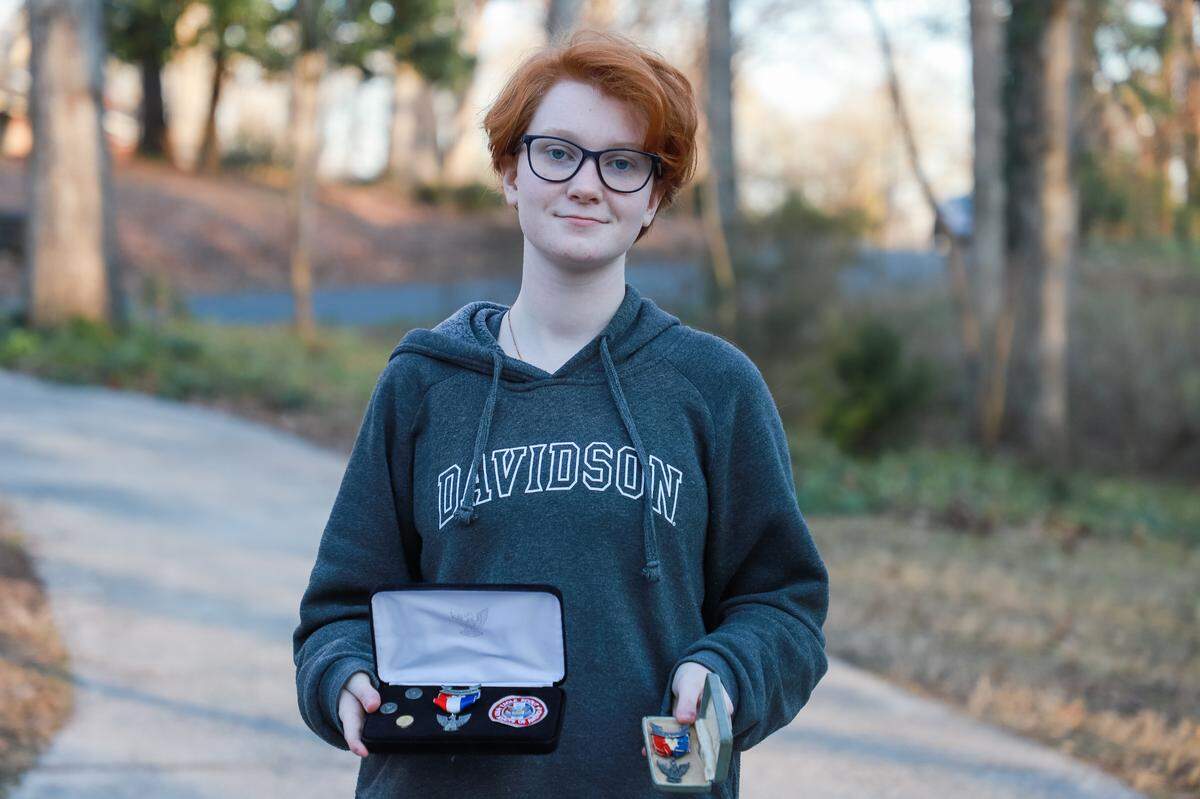
Perhaps just as noteworthy? Myree is now the ninth Kromer in her family to have become an Eagle Scout.
And she was determined to do it, at least in part, in honor of the first: her great-grandfather, Philip Kromer, who earned his Eagle Scout award in 1923, just shy of 100 years ago.
The two who set the tone for things
The Boy Scouts of America was founded in 1910. The first Eagle Scout medal was awarded two years later.
According to Scouts BSA, since then, more than 2.5 million youths have become Eagle Scouts. But when Philip Kromer earned his, that all-time number was closer to just 6,000. So he was something of a pioneer himself.
His wife, Frances Kromer, was a bit of one, too. She attended law school at Ohio State University in the late 1920s, at a time when many law firms were automatically rejecting female applicants. Andrew Kromer says she dropped out only because she wanted to marry Philip, who was graduating from West Point in New York and had a nomadic military career ahead.
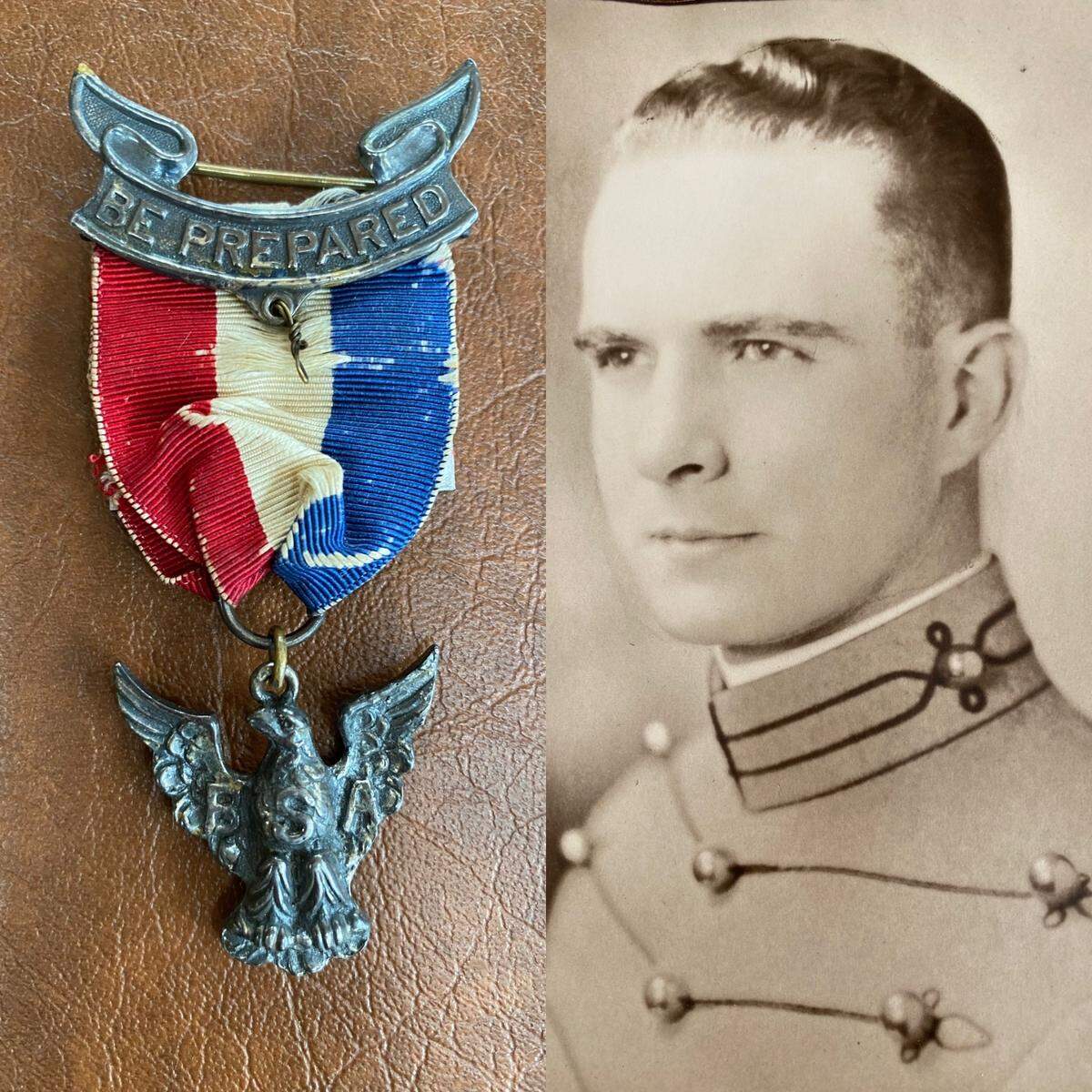
After multiple moves and the end of World War II, the family settled in Oak Ridge, Tenn., where Philip started a Boy Scouts troop and developed a strong Scouting tradition. Andrew Kromer says “there was even for awhile a Scout camp in Tennessee named Camp Kromer, named after him for all the things that he had done for scouting in that area.”
Philip’s Eagle Scout medal eventually wound up in Andrew’s possession.
Frances wound up being Myree’s middle name.
‘Why do I have to stay behind?’
Myree grew up in a house full of Scouts, with not much that inspired her when it came to extracurricular activities.
“I was involved in the musical at my school, but that was about it,” she says. “So I didn’t really have that much on my plate growing up.”
Meanwhile, she watched from afar as her dad — an Eagle Scout himself — led troops that included all three of her older brothers: Drew, now 24, who became an Eagle Scout in 2015; Lee, now 22, who became one in 2017; and Jonathan, now 19, who did it in 2020.
Her only exposure to Scouting was the one time a year when families were invited to join on a camping trip. Myree loved that trip.
And she always tried to soak up the entire experience. On the one in April of 2017, for example, she was unfazed by a torrential overnight rainstorm that left everyone cold and wet; then on the second afternoon, after the boys had all given up on fly-fishing, she went into the river with just the fishing guide and wound up reeling in a two-foot-long rainbow trout as the rest of the campers cheered.
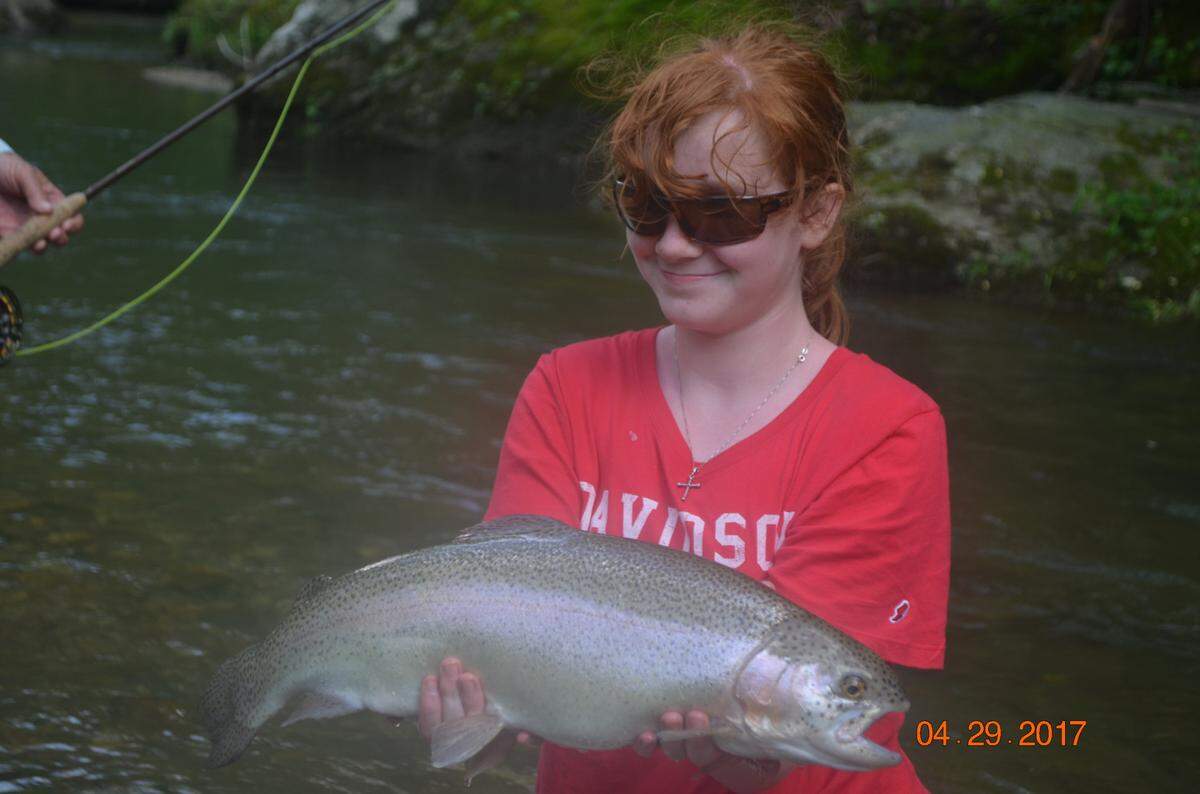
She was on top of the world after that trip. But she felt like she was on the bottom of it later that year, when her brothers’ troop was preparing to go on a caving trip in Tennessee.
“I was like, ‘Hey, can I go ... ?’” she recalls asking the leaders of the troop. “And they’re like, ‘No.’
“(I said) ‘I went on the last trip!’ (They said) ‘You can’t, you’re a girl. You’re not part of the troop.’ That was the real big point where I’m like, ‘Well, that’s not fair at all. Why just because I’m a girl can I not go on these trips? And why can’t I go camping? Why do I have to stay behind?’”
Not long after that, she fired off her letter.
Mecklenburg County Council Scout Executive/CEO Mark Turner does recall getting a letter, says the Council’s development officer Dave Ritchie, “but (he) did not characterize it as complaining but maybe more questioning and encouraging?”
Myree was pretty clear, though: “This weekend I was not able to go on the BSA caving trip, which I was very mad about,” she wrote.
“To be the one left at home while my friends are caving and getting life lessons on how to act makes me feel like a rock has just fallen on top of me.”
She recalls not expecting much. But her father, Andrew, says the Scouts’ CEO sent her a handwritten reply saying “thanks for your interest, your passion — and be patient, ’cause there’s talk” of a change coming.
Before the end of the year, that change was announced.
An Eagle-eyed young woman
The BSA announced in October of 2017 — after years of requests from families and girls themselves — that it would allow girls into the Cub Scouts program, which would eventually allow them to earn the prestigious Eagle Scout ranking. The BSA’s Mecklenburg County Council served as a pilot in integrating girls the following spring.
BSA programs officially opened to girls on Feb. 1, 2019.
That night, Myree became a charter member of a troop that was formed at Sardis Presbyterian Church with 25 girls.
Since Eagle Scout candidates typically must meet all of the standards before turning 18 in order to earn their medal, she had a little over 3-1/2 years to accomplish the feat, which requires Scouts to earn a minimum of 21 merit badges.
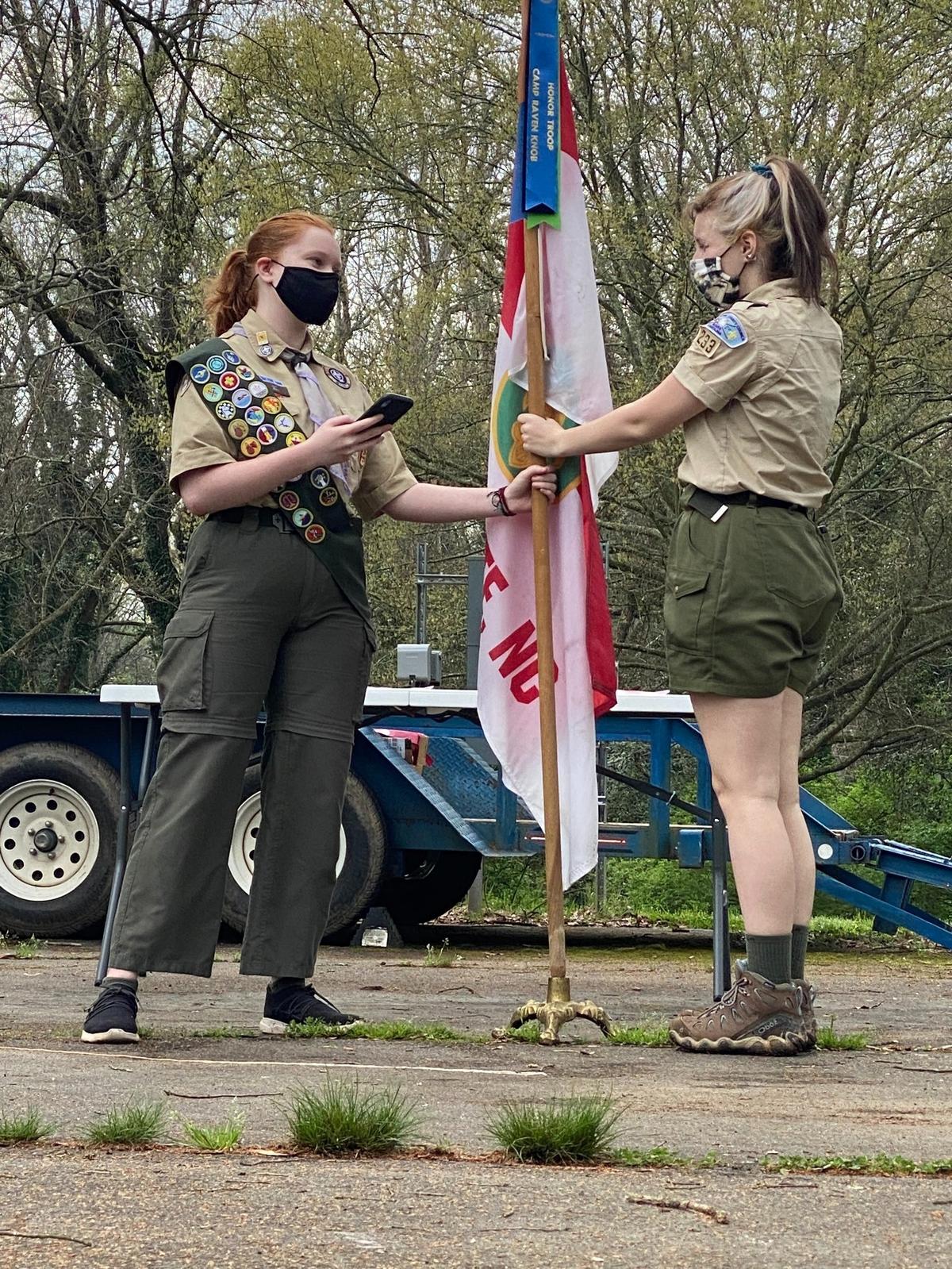
She wound up earning 48 — and doing it in just over 2-1/2 years, less than half the time it took her three older brothers.
(A quick note: Two other girls in Myree’s troop, Hannah Todd and Josie Anderson, made Eagle Scout in November 2020 and January 2021, respectively. They’re older than Myree and both took accelerated paths to meet the requirements before their 18th birthdays. Myree turns 18 in August.)
‘The change of society over time’
Myree thought of her grandfather often as she worked her way up the ranks, earning badges for skills ranging from welding to shotgun shooting.
“When I was talking during one of my board of reviews,” she says, “one of my things was: I want to get Eagle Scout almost a hundred years after my great-grandfather did. Something that you never thought possible was a great-grandfather, then a great-granddaughter, which just shows the change of society over time. And especially something so important like this, that it is rooted with America, and is seen as a good thing in America. Now it has changed to include everybody, not just one specific gender or orientation.”
She actually completed her Eagle Scout requirements in October and has had her medal since last month, but she was honored at her family’s church, Sharon Presbyterian, on Sunday afternoon — in a ceremony that saw her awarded with her father’s Eagle Scout badge and her grandfather’s Eagle Scout ribbon.
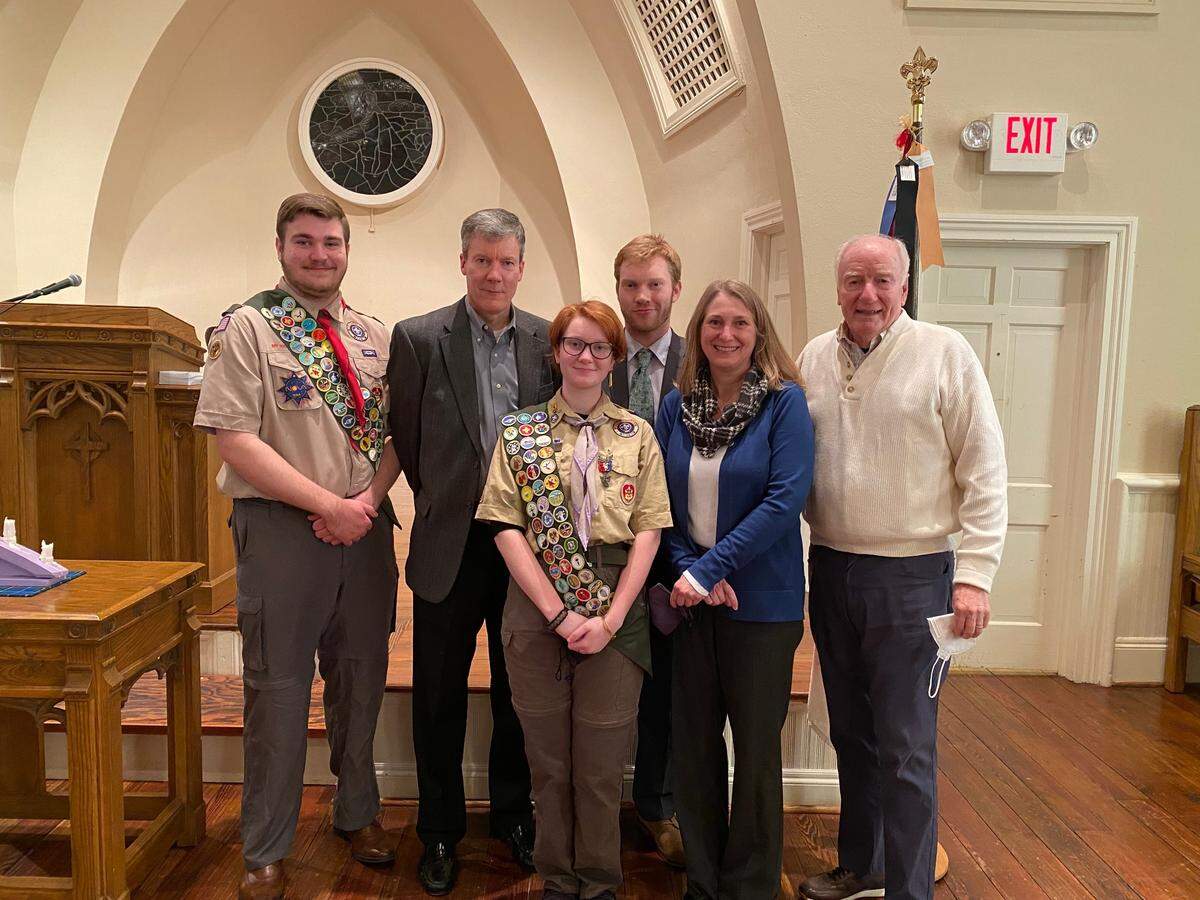
It’s a prize she had quite literally kept her eye on.
“Sometimes ... as I was (progressing through the ranks), I would — I don’t know if he knows this, but — I would sneak into his room and just look at the pin,” Myree says, smiling as she nods at her dad, “and be like, ‘I’m gonna get that. I’m gonna get that. I’m gonna get Eagle. Which is kind of another motivator. I could see that. I could touch it. I could feel it. Like, this is what my great-grandfather got. This is what my great-grandmother Frances would have gotten if she was around in my time. This is something I can get, too.’”
She smiles again.
“And now I have it.”
Myree hopes to continue to be involved with her troop while studying chemistry next year at Davidson College, since it’s not far from home. Her long-term plan is to go to medical school and someday work as a neurologist or a chemical researcher.
“My main goal is to find the cause slash cure for multiple sclerosis, since my grandma is afflicted by it, and it means a lot to me that she’s in pain all the time. ... I really want to help people like her who are just in pain and need help. The first step of that is being a leader. That’s how I’ll get the research done ... which,” she says, “is what scouting teaches me.”
This story was originally published January 31, 2022 at 6:00 AM.