Ukrainian refugees tried to buy a car in Charlotte. When the deal went bad, neighbors stepped in.
Ihor Bludov had helped his family navigate a harrowing escape from their war-torn hometown of Kharkiv, Ukraine, in February, and then over the course of the next two months through a nomadic existence that included stays at refugee encampments in four different countries.
So maybe, by the time he arrived in Charlotte in April with his wife, Olga, and their young son, Misha, there was a part of him that felt like there was nothing he couldn’t deal with himself.
And maybe that’s why, when he decided to buy a car, he didn’t ask for much help from the Americans his family has been staying with.
But it was clear from the moment the white 2011 Dodge Grand Caravan was dropped at Ihor’s feet, in the middle of the street in front of their host family’s Madison Park home last month, that he could have used a little guidance on this one. That there were more questions he should have asked before spending the majority of his family’s savings on it.
That, without question, this minivan was a hunk of junk.
“They wrote it’s just run and drive,” Olga says, in heavily Russian-accented English, referring to the online listing for the car her husband responded to.
“But it does not run and drive,” chimes Ihor, in a thick accent of his own.
Adds Marina Krcmar, the Wake Forest University professor who’s been putting the Bludovs up in a room in her basement for the past 2-1/2 months: “It doesn’t run, it doesn’t drive. It couldn’t even be moved.”
Ihor had had the right idea. Getting a car would enable him and Olga to more easily commute to jobs once they were able to obtain work permits, and being able to get to and from jobs would enable them to earn the money they’d need to move out of Marina’s house and into an apartment. The trouble was in the execution.
As the guy driving the car hauler disappeared down the street, Ihor was left standing along on the curb, confused and frustrated, worried about the financial implications, homesick for a culture he understood, missing his friends and his family.
In relatively short order, however, a group of total strangers showed up eager to help.
‘We have no other way to save our life’
Just five months ago, the Bludovs lived normal, stable lives in Ukraine.
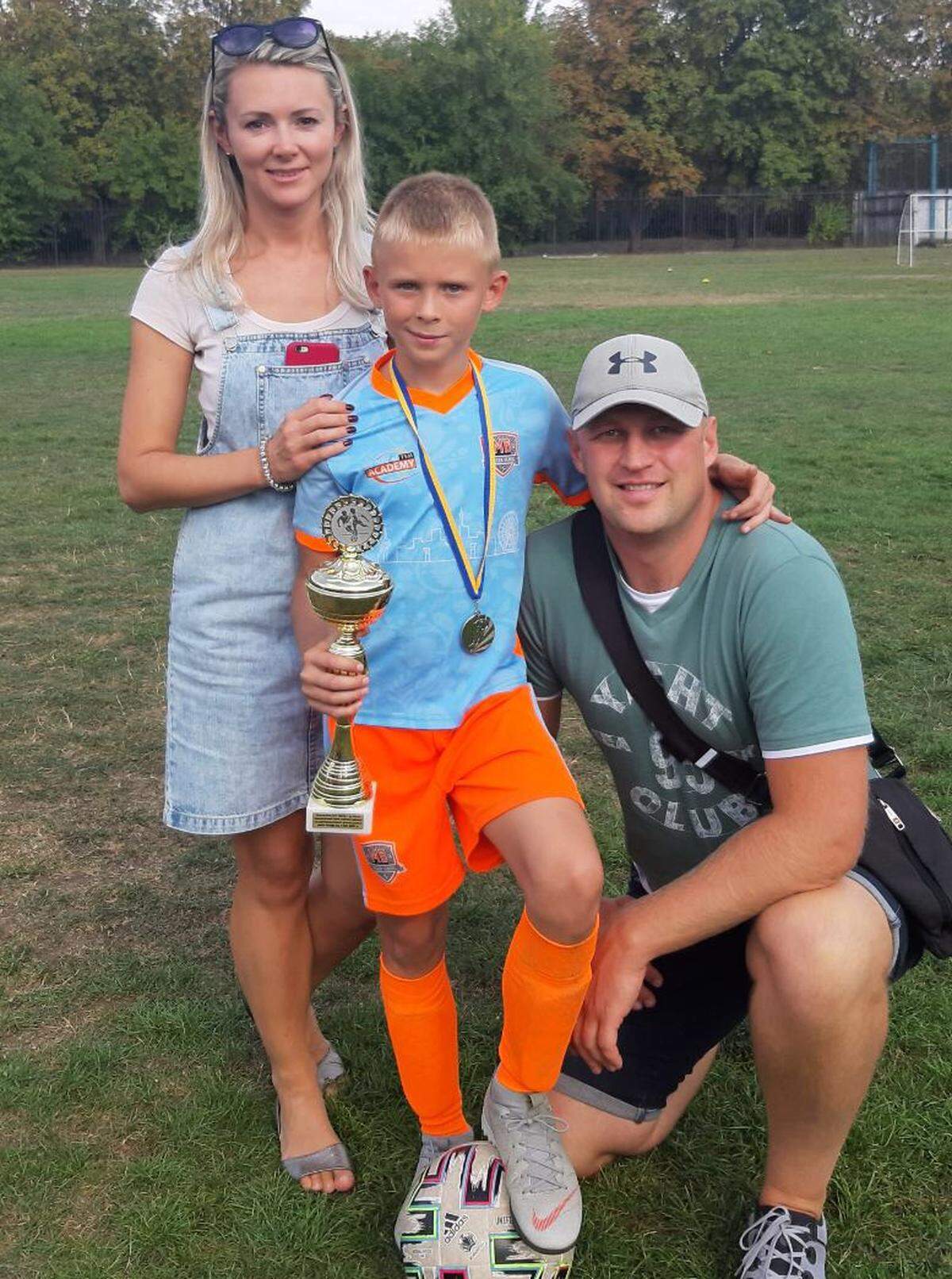
Ihor was the sales manager at a jewelry store, Olga the head of a marketing department, Misha a 10-year-old budding soccer star. Together, they lived in a high-rise apartment building in Kharkiv, a northeastern Ukrainian city about 30 miles from the border with Russia.
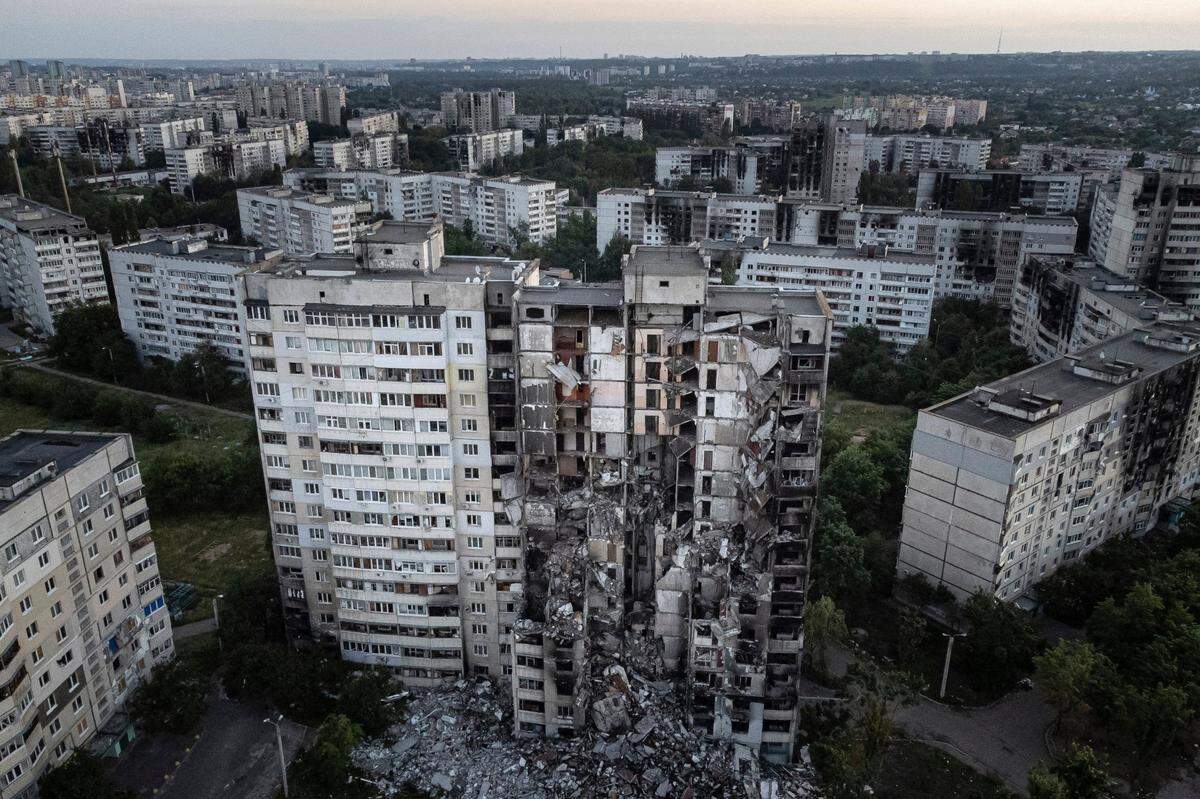
Russian President Vladimir Putin’s threats of war seemed empty until early in the morning on Feb. 24, when the family woke to the sound of explosions as Russian forces rained cruise and ballistic missiles down on the outskirts of the city.
In anticipation of supply shortages, Ihor went out a few hours later to stock up on food at the grocery store, which was packed with others doing the same. Then he tried to fill his car up with fuel at the gas station, where he had to wait in line for half an hour. When he returned to their apartment, he moved a mattress into the hallway so they could sleep as far away as possible from any windows. They also filled backpacks with belongings and food so that, as Olga explains, “We were ready to move in any time if something happen — terrible something.”
The situation deteriorated quickly, and two days later, the Bludov family decided to abandon their apartment.
They lingered in Kharkiv hoping for some sort of miracle, spending a night in the car, a night in a shelter at a church, a night in an abandoned house, and a night at the home of one of Olga’s colleagues.
After all, trying to flee the city had its own potential risks; they’d heard Russian forces had been targeting and killing civilians who had made a run for it. But staying in Kharkiv and living out of their car — in the middle of winter, with gas to keep it running increasingly scarce — was clearly not a longterm solution.
“Of course it was not so easy,” Olga says. “It is difficult. But we understood that we have no other way to save our life.”
So with just three backpacks full of things and a car to their name, they headed southwest toward Olga’s birth country of Moldova, unsure of whether they’d ever see Kharkiv again.
Taking the long way to America
It took them three full days to drive just 500 miles, because of historic traffic snarls leading toward the borders.
Though most Ukrainian men ages 18 to 60 are prohibited from leaving the country because they may be called upon to serve in the military, Ihor, who is 38, was allowed to pass into Moldova because he had sufficient documentation from his physician stating that he suffers from severe back problems.
They eventually wound up in Hungary, and hunkered down there for a month. But they struggled with its famously challenging-to-learn language. So when a friend told them about a program for Ukrainian refugees in the U.S., the English-speakers jumped.
The itinerary was staggering: a train from Budapest to Krakow, Poland; a flight from Krakow to Amsterdam in the Netherlands; a night at a shelter in Utrecht (also in the Netherlands); a flight from Amsterdam to Bogota, Colombia; another from Bogota to Mexico City; yet another from Mexico City to Tijuana; a night at a shelter in Tijuana; then they were driven by a volunteer to the border, then across it, and then into San Diego.
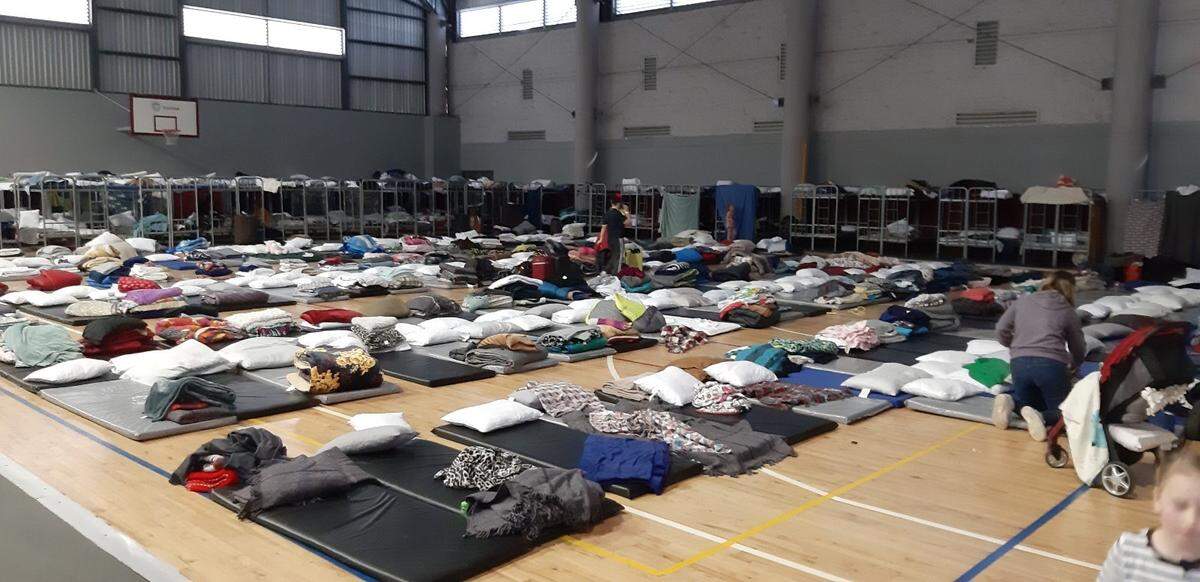
They stayed at a shelter at a church in San Diego for four nights while they figured out their next move. Without much else to inform their decision-making, they ultimately decided to follow Ihor’s cousin’s family to Charlotte, where his cousin had friends.
And where Marina Krcmar was waiting to help get them out of a tight situation one more time.
How two families’ lives changed overnight
Marina had signed up as a prospective host for Ukrainian refugees on the website UkraineTakesShelter.com in March.
She heard nothing, though, until around dinnertime on April 22, when out of the blue came an email from Olga asking if her family could stay with them for a few nights.
Marina replied to say she could help. Olga responded just before 8:30 the following morning — to ask if Marina could put up her, Ihor and Misha late that afternoon.
By nighttime, the room in Marina’s basement that normally served as her 14-year-old daughter Eve and 12-year-old son Henry’s art center had been converted into a space that could accommodate the Bludovs and the three backpacks they’d been living out of for two months.
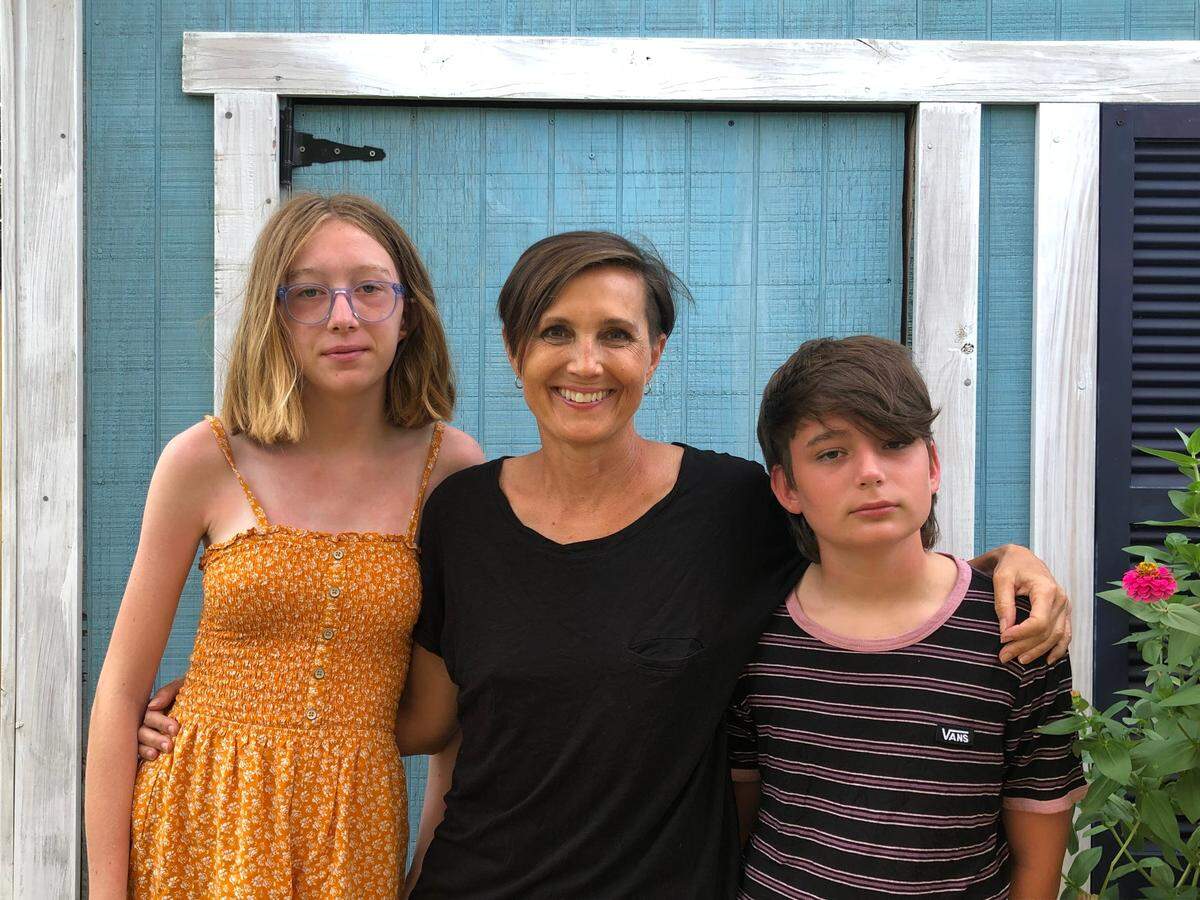
And the planned three-day stay has been extended through the summer thanks in large part to the fact that they’ve felt so cared for.
Since they moved in, Marina has helped them with the basics — food, clothing and shelter — but she’s also assisted them in navigating their journey through the immigration process, through other forms of uniquely American bureaucracy, as well as providing them with more-general-purpose guidance aimed at aiding in their acclimation.
If she doesn’t have work or kid obligations, she chauffeurs them to somewhere they needed to be.
If they’re having trouble communicating with someone on the phone, she’ll jump in to help slow the conversation down and clarify things.
But when it came to the minivan, Ihor never asked Marina for help ... until early on the morning of June 9, when she came out of the house to find him standing next to a vehicle that looked like it’d been through a war itself.
‘I didn’t know what to do’
At a glance, there were several obvious issues.
The front bumper was badly damaged, with the broken side of it touching the ground; and on the driver’s side, the front tire was flat, while the rear wheel was severely misaligned, indicating a broken axle. Most critically, though, was the fact that the minivan could be started but couldn’t be put into drive or reverse, so it wasn’t going anywhere. Which was a problem, since it had been dropped off several feet from the curb.
Marina’s first instinct was to crowd-source a solution, so she quickly penned an outline of the situation and posted it on the neighborhood-based social-media site Nextdoor along with a plea for repair-shop recommendations.
Dozens of people responded with suggestions and offers to help — including Paul Yantus, who for years has worked on cars as a hobby.
He showed up the very next day, helped them move the car to the side of the street, and gave the vehicle a more thorough inspection only to find the transmission needed to either be fixed, rebuilt, or completely replaced, at an estimated cost of upwards of $4,000.
Yantus also helped unravel the mystery of how this could have all gone so horribly wrong. Basically:
Ihor had found the minivan via an online salvage auction, meaning the vehicle was being sold off by an insurance company because it was damaged enough to have been deemed a total loss. It was listed as “run & drive,” although as he would later learn from Yantus — an experienced buyer of online-auction cars — that’s really just a term the auction companies use to indicate that its gears could be engaged and its steering wheel could rotate when it came into the company’s possession.
The website listed the minivan’s estimated retail value at $7,154, so Ihor thought he’d scored a good deal with his winning bid of $4,350 (just over $5,000 including fees), and that the damage to the bumper and the flat tire shown in the listing was within his ability to fix. What he apparently missed was that the listed estimated repair cost was also $7,154.
Then, the vehicle arrived with the rear-wheel problem, which was not evident in the listing’s original photos. (Yantus believes that damage — and possibly more — was sustained either while being loaded onto the hauler or in transit.) On top of that, due to the language barrier, Ihor had trouble effectively communicating with the person who delivered the minivan, and ultimately felt pressured into signing off on it without fully understanding the caveats.
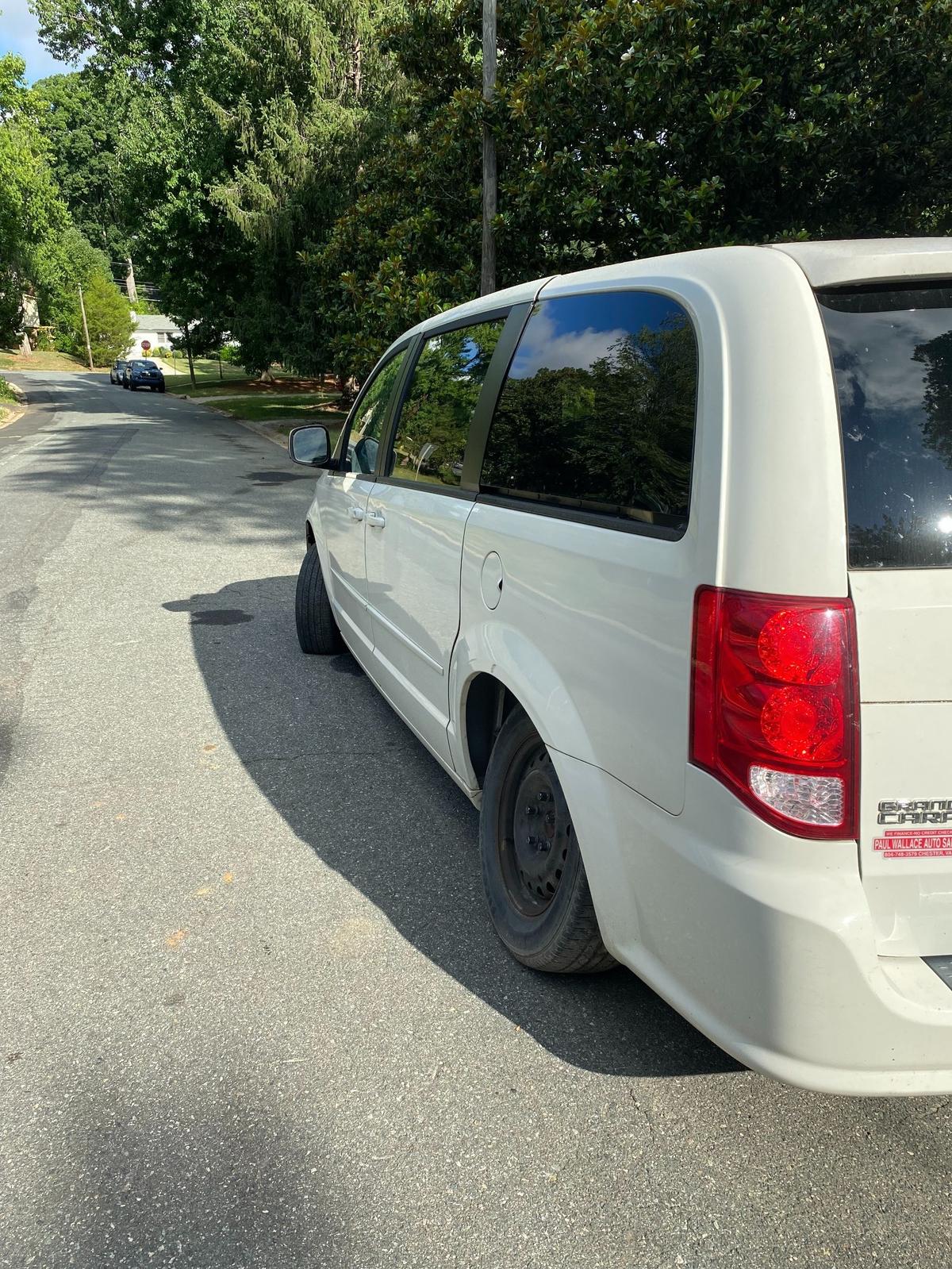
Although Ihor tried calling to complain, it almost immediately seemed clear to him that he was stuck. “I was frustrated,” he says. “I didn’t know what to do (except) earn the money to buy maybe another car, or do something with that one.”
But after all they’ve been through, that wasn’t going to work for their new neighbors.
‘To me, it’s just being a good human’
It wasn’t going to work for Braden Gracey, another local hobbyist mechanic who also responded to Marina’s post and has been leading efforts to help Ihor obtain some recourse against the online-auction company.
It also wasn’t going to work for the others who read about the Ukrainian family’s plight on Nextdoor and offered to donate their time and expertise as mechanics, or for Marina’s colleagues at Wake Forest, who pitched in with money to help cover Ihor and Olga’s $400-per-person application fee for their work permits.
Nor was it going to work Yantus, who started a GoFundMe for the Bludovs in the hopes of raising enough funds to have the beat-up Grand Caravan fully repaired or replaced.
“I can’t imagine,” Yantus says, “what it would be like to flee a situation like they fled in Ukraine, where literally your life is at risk, to come to a place and feel like you’re safe, and then have that done to you. ... So I’m willing to do whatever I can to help ’em. A lot of people sorta responded that way. To me, it’s just being a good human.”
The GoFundMe hasn’t quite reached its goal of $6,000 — it’s been stalled at $4,350 for more than a week — and there’s concern about what they’ll be able to get for that because used-car prices are at historic highs. (Since starting the GoFundMe, Yantus, Gracey, Marina and Ihor have agreed that the money would be best spent on something else, as opposed to putting it into the minivan.)
They’ve agreed, though, that if they exceed their goal, excess funds will be split between Ukrainian relief efforts and immigration-related financial assistance for the family. That this is just about getting the Bludovs back to square one.
After all, the most important thing to Ihor and Olga is not money, not possessions, but just being together and being safe.
“We understand that in this life, you can —” Ihor pauses, then speaks in Russian to a translator, who says on his behalf: “Sometimes in this life you have to pass through something very difficult to get something better.”
He continues, in his own words. “I lived in Ukraine all my life. But you couldn’t know what might happen next day. I even don’t say about the war. Because revolution, some problem of economics — every time happen some things. ...
“Then during the first two or three months (after the war started), everything changed very quickly. Every day we had one plan, but next day we had another plans. So we think about one country, but we went to another, and everything changed every day. But here, you feel stability. Here, you feel safety.”
And here, he now knows — even if you feel like there’s nothing you can’t deal with alone — it can never hurt to ask for a little help.
This story was originally published July 12, 2022 at 6:00 AM.