Rare spinal cord injury left NC boy paralyzed. He says ‘one day’ he’ll play again
Four-and-a-half-year-old Logan Reese has a slogan — one he delivers in a squeaky voice his parents say sounds like a cartoon character. The slogan is only two words, but it rarely stands alone.
“One day … I’ll play soccer again.”
“One day … I’ll jump rope again.”
“One day … I’ll eat popcorn with my own hands again.”
One day.
He’s happy when he says it. He’s happy a lot of the time, in fact — something his parents, Kevin and Stacy, cling to. They are grateful for his optimism. Relieved by it.
They’re just not sure if that “one day” will ever arrive.
Because right now, sitting on the sofa in their Richfield home in rural Stanly County, Logan cannot move his arms or legs on his own.
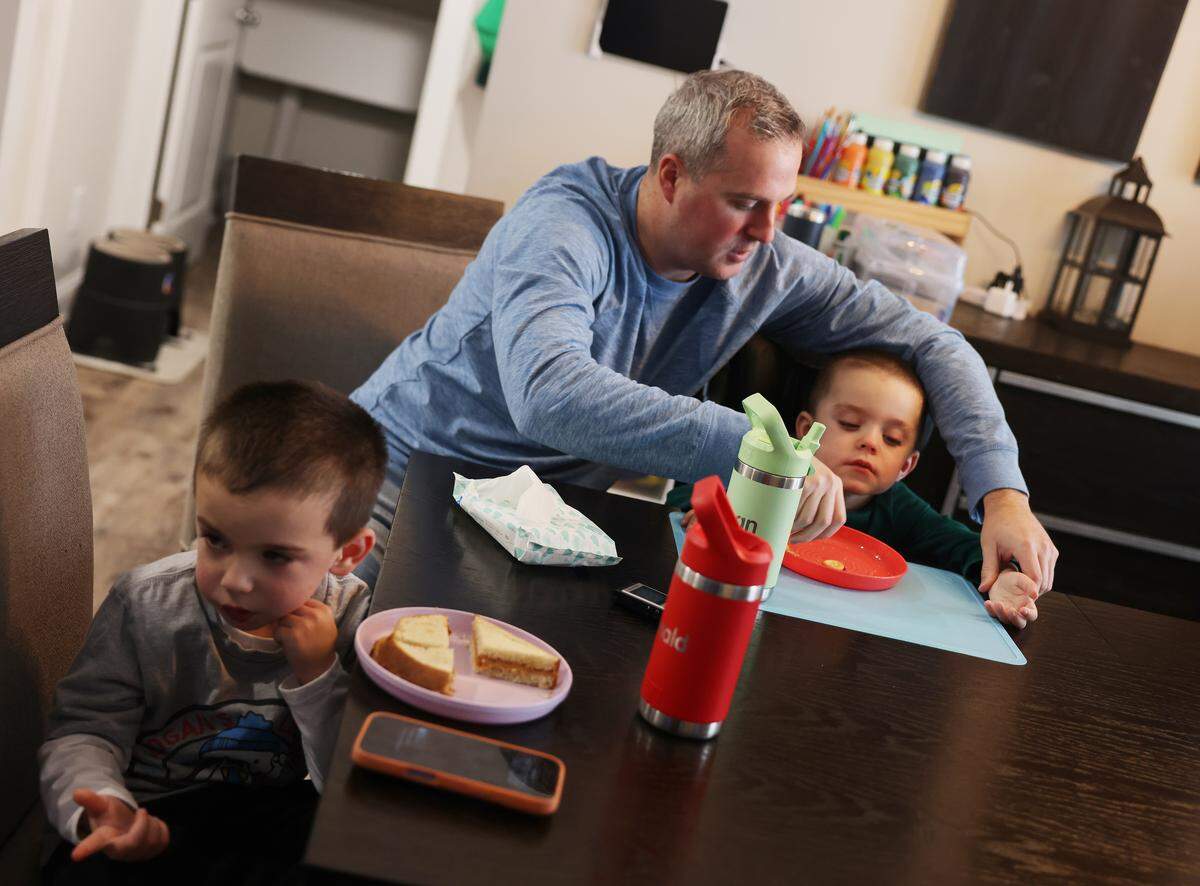
His mind and personality are intact — his speech clear, his humor sharp, his stubborn streak very much alive. But he cannot sit up without support. When he has an itch, someone else scratches it. When he and his fraternal-twin brother, RJ, play Logan’s favorite board game — the Candy Land-like Frosty the Snowman — he tells RJ what moves to make by using a laser pointer strapped to his head.
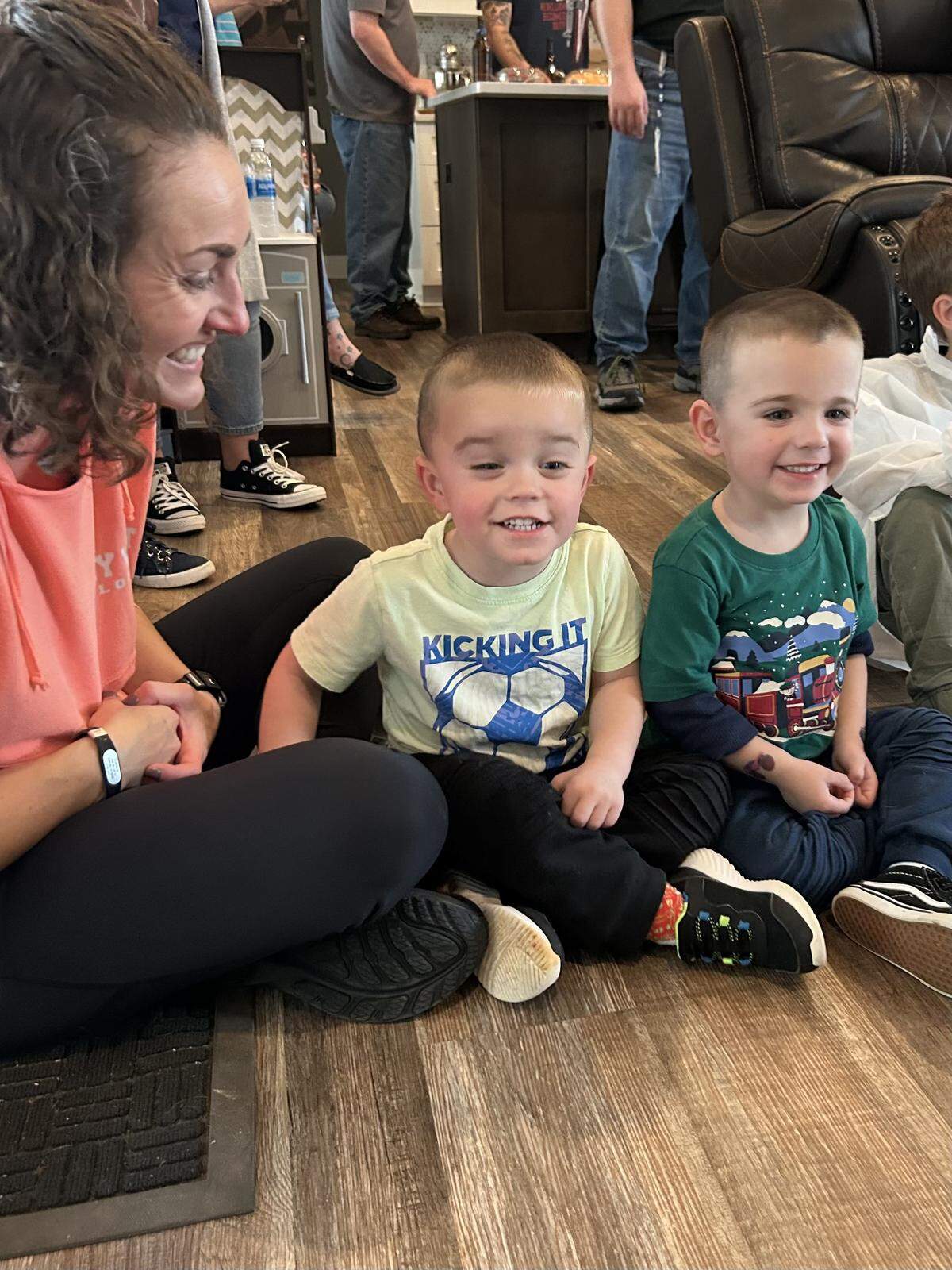
There is little about Logan’s body at this moment that suggests it will soon work the way it did a year ago, before his spinal cord was severely damaged in his neck.
Before March 17, 2025 — which had been a fairly normal day, followed by an entirely ordinary night. The boys took a bath, ate dinner, sat on the couch for a while, got ready for bed, had story time. Kevin and Stacy tucked them both in between 7:30 and 8, like usual.
“He went to bed a normal kid,” Kevin says. “And then everything was different.”
Before everything changed
Even before all of this happened, the Reeses had already endured their share of medical uncertainty.
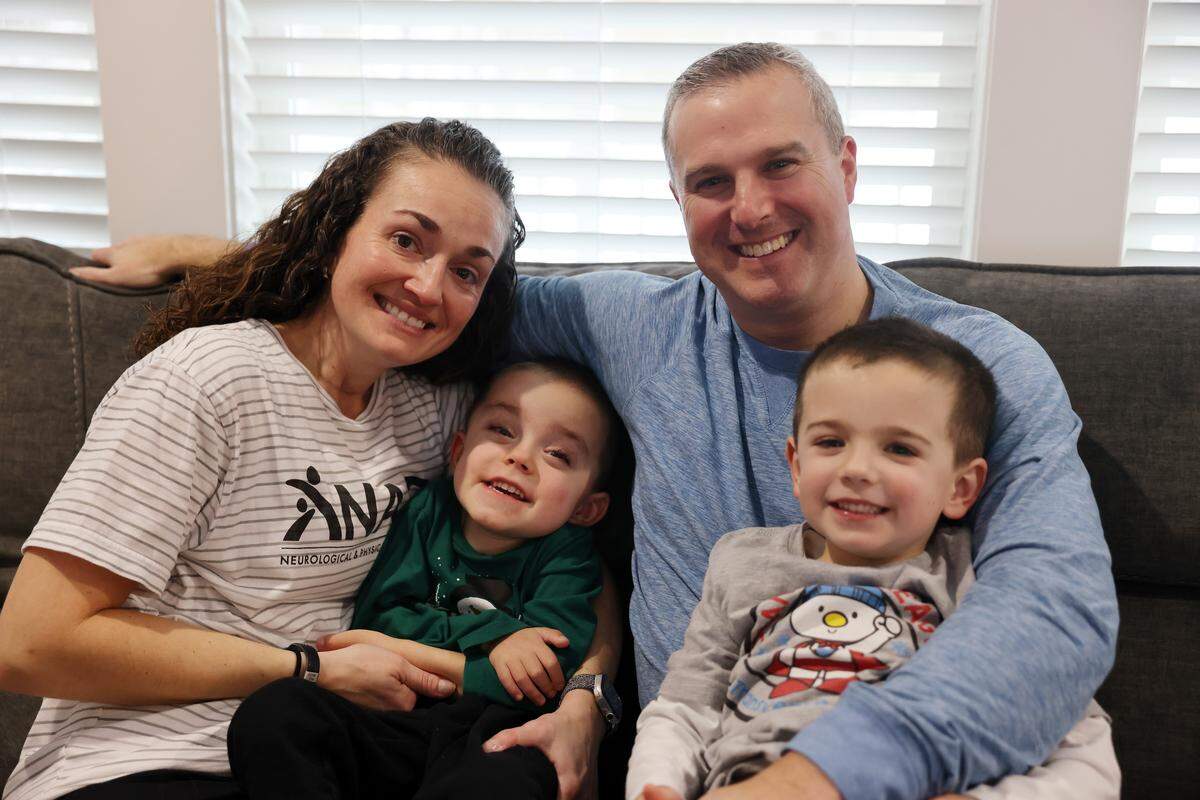
They moved to Concord from Long Island in 2018, when Lowe’s hired Kevin as a producer for its website. The couple got married the following fall, then doubled the size of their family with the arrival of their fraternal-twin boys on Aug. 8, 2021. Deciding not long afterward that they needed a house with more space, the couple found the perfect opportunity to build in Richfield — the tiny town between Albemarle and Salisbury (population: 937) that they moved out to in January 2023.
But just one month later, on Valentine’s Day, Stacy was thrust into her own medical crisis: a thyroid cancer diagnosis that would lead to paralysis in both vocal cords. The disability forced her to leave her longtime career as an elementary schoolteacher; she took a job as a postal carrier, one that didn’t require her to talk.
Eventually, she would participate in a case study that saw her implanted with a device — something like a pacemaker — to help her breathe and speak.
By 2025, the family was finally settling into its new rhythms. They allowed themselves to believe the worst of the medical scares might be behind them. The boys, who had taken time to grow into their twinhood, had begun moving more as a unit — seeking each other out, choosing to sit side by side.
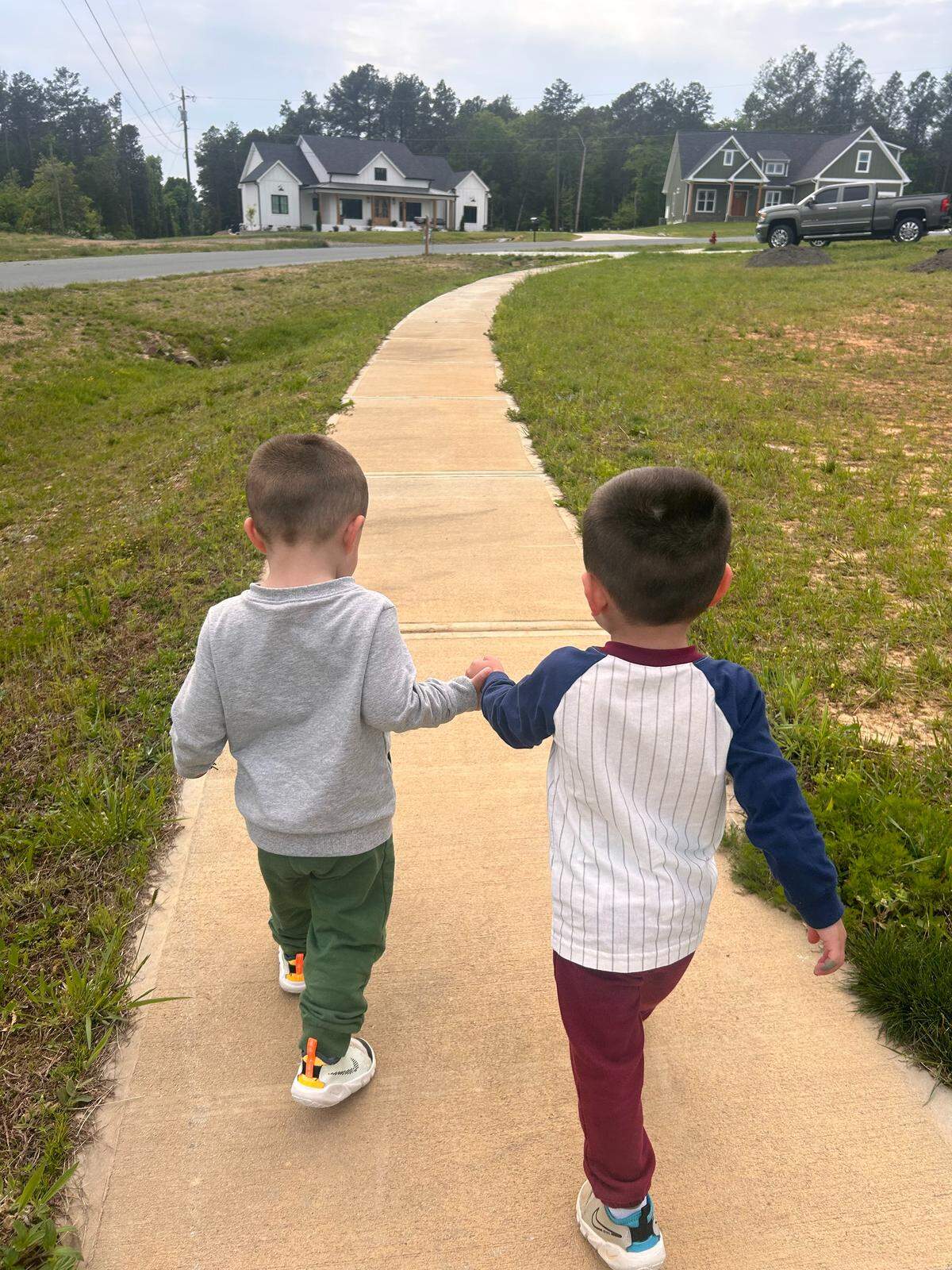
At the same time, Logan and RJ remained different in both appearance and temperament. RJ was skinnier, needier, more emotional, and more obsessed with “PAW Patrol.” Logan was a little chunkier, a lot chattier, and fixated on snowmen thanks in no small part to Frosty and “Frozen’s” Olaf, so that on the rare occasions when snow was in the forecast for Stanly County, Logan would press his face to the window, asking if it would stick long enough to build one.
Logan was also the one who preferred to do things himself rather than accept help.
In fact, every night before preschool, he insisted on choosing his clothes for the next day and laying them out carefully. It was a small ritual, but control and independence clearly mattered to him.
But a few hours after that ordinary routine, just after midnight, his parents heard him cry out from his bedroom.
‘We don’t know what it is’
Stacy thought he might just be having a bad dream.
Instead, she found him on the floor beside his bed, his right arm hanging awkwardly at his side. He immediately complained that it was hurting, though he couldn’t explain how.
After Kevin came in, they helped Logan up and tried to get him to the bathroom. But he wobbled as he walked, dragging his right foot behind him, and at the toilet, he said he couldn’t go. He also started, Kevin recalls, “talking real funny.”
Within minutes, they were bundling him into the car and driving to a nearby emergency room in Stanly County, replaying the previous day in their heads. Just hours earlier, he had been at a birthday party — cake, noise, kids running everywhere. Was he just exhausted? Or was he acting out for some reason?
At the hospital, an X-ray of Logan’s arm showed nothing abnormal, and the doctor who examined him raised no alarms. He suggested it could be a tantrum, that simply taking him home and letting him sleep it off might work. They heeded the advice.
But on the drive back, Logan began making a gurgling sound, as if he couldn’t clear his throat.
By the time they pulled into their driveway, around 3:30 in the morning, his body had gone limp.
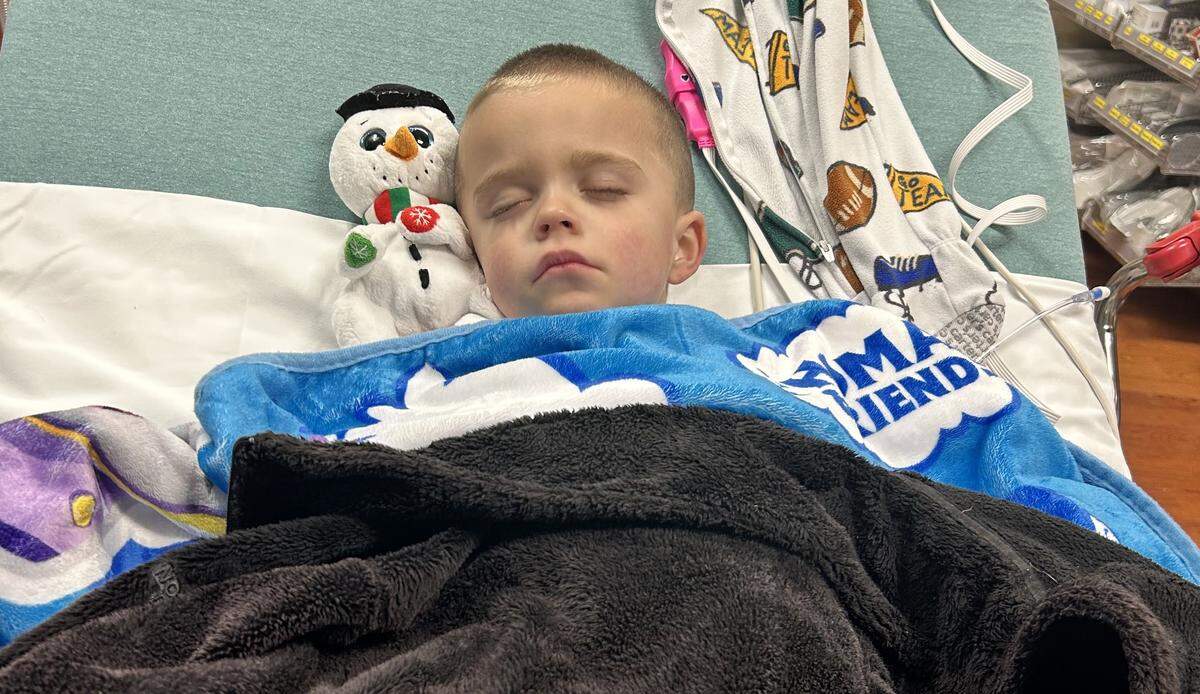
Kevin called 911, and responding paramedics transported him, this time, to Atrium Health’s Jeff Gordon Children’s Center in Concord — where the tone shifted immediately. “We don’t know what it is,” the Reeses were told, “but something serious is going on.”
As Logan’s breathing grew more labored, doctors secured his airway and placed him on a ventilator before transferring him by helicopter to Levine Children’s Hospital in Charlotte. Kevin and Stacy headed toward the same destination by car, scanning the sky for the aircraft carrying their son.
They arrived hoping mainly that he was still alive.
A surprising — and confounding — diagnosis
He was.
In the pediatric intensive care unit, however, Dr. Michael Wilson didn’t sugarcoat the situation. The speed with which Logan’s weakness had appeared and was progressing caused him grave concern. “We’re going to do everything we can,” he told them. “But you have to be prepared for the worst.”
“Can you give me some odds?” Kevin asked. “Is he going to survive?”
Wilson said it matter-of-factly: “We just don’t know.”
It wasn’t until they had the results of an MRI of Logan’s brain and spine that answers started to emerge.
The scan revealed severe inflammation of his spinal cord and abnormalities consistent with transverse myelitis of the medulla and brain stem, Wilson says. In simple terms: Transverse myelitis is an autoimmune disorder in which the body mistakenly attacks cells in the spinal cord, often after a viral infection; and as it turned out, Logan tested positive for influenza A while hospitalized.
“The spinal cord is a big cable that lets the brain talk to the rest of the body,” said Tobias Tsai, the pediatric rehabilitation physician who later oversaw Logan’s inpatient recovery. When that cable becomes inflamed or damaged, Tsai says, the brain’s signals struggle to reach the muscles. The result can be sudden paralysis. It can also affect sensation, bladder and bowel control — even breathing, since the muscles that expand the chest rely on the same pathway.
Logan was experiencing all of those things.
What doctors could not determine was why it happened to him. In most cases of transverse myelitis — an exceptionally rare condition that affects fewer than 10 children per million each year — the cause remains unknown. (Worth noting: Doctors say there is no indication RJ faces any heightened risk, since genetic testing revealed no inherited cause.)
And as with any spinal cord injury, there was no way to predict how much function Logan might be able to eventually regain.
‘It was the best to see his smile’
It was the word paralysis that landed hardest, the possibility of permanent quadriplegia that felt most brutal.
Kevin remembers having dark thoughts as he allowed that concept to wash over him: “I was thinking, He’s just going to be ... a head. Just laying there. Not moving. What kind of life is that?” But Logan also had been out pretty much since the helicopter ride, so there was another fear layered on top of that.
“The one thing we didn’t know until they took him off the sedation,” Stacy says, “was, Did he have any cognitive issues?”
“True,” Kevin says. “We did not know if he was brain dead.”
They wouldn’t know for sure until he woke up — if he woke up. But when the sedation finally started to wear off, Logan finally started to stir. His eyes started to flutter. Almost without even thinking, Stacy asked him to smile.
And he did.
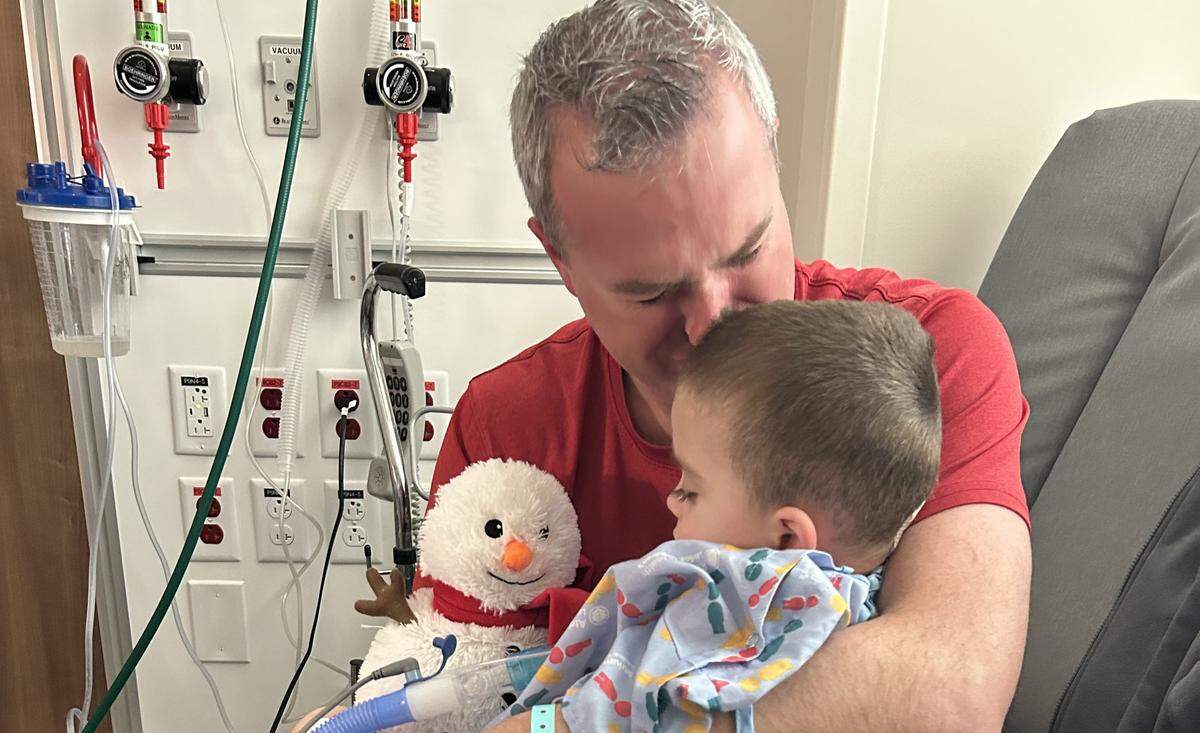
“So we knew —” she says.
“— that he was at least somewhat functional,” Kevin adds.
They fall silent for a few seconds as they recall this moment. Their eyes glisten.
“It was the best,” Stacy says, “to see his smile.”
It was only one small positive sign. But they were going to have to get used to taking comfort in small positive signs.
Learning how to live again
Logan spent nearly 100 days in the hospital.
After the PICU team stabilized his breathing and blood pressure, he was transferred to Levine Children’s inpatient rehabilitation unit. There, he received roughly 20 hours a week of therapy — physical therapy to strengthen muscles, occupational therapy to relearn movement and coordination, speech therapy to help rebuild respiratory control.
The goal was not a miracle. The goal was function. And at first, progress was difficult to see.
Then came small things. A breath taken without mechanical assistance. A slight activation in his left bicep. A flicker of movement in a leg. Eventually, with therapists holding him upright and equipment supporting most of his weight, he could stand for 10 or 15 seconds at a time.
Even so, upon finally returning home in June, it felt like the work was just beginning. Home, they’d all learn, did not mean easy.
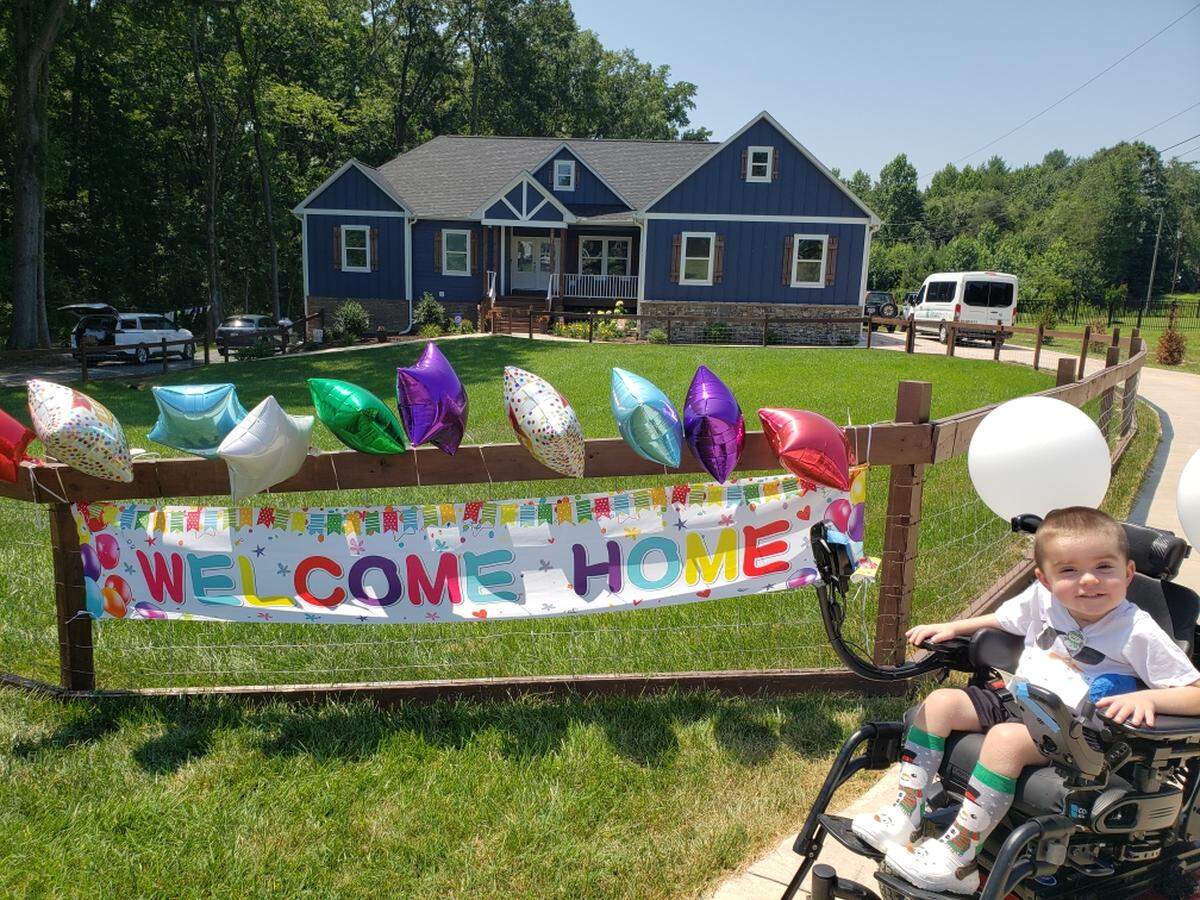
Logan still required round-the-clock care. He needed help eating, bathing, repositioning in bed. He had come home with breathing support to use at night. His follow-up schedule included a web of appointments with pulmonologists, neurologists, cardiologists, orthopedists and rehab specialists.
The financial impact on the family has been enormous.
Medicaid covered much of Logan’s hospital care. But intensive therapy, specialized equipment, home modifications and travel quickly added up. In the first year alone, the family spent roughly $67,000 out of pocket, Stacy says — on items ranging from a manual wheelchair and therapy equipment to home renovations, medical supplies and uncovered therapy sessions.
Stacy wound up having to relinquish her postal job to become his full-time caregiver. Kevin, now an online manager at Lowe’s, works remotely and helps when he can.
Eleven months later, every day revolves around attending to Logan’s needs, and every week is organized around therapy, with Logan attending PT sessions twice a week at a practice in southeast Charlotte — a two-hour round-trip drive from Richfield.
The family also has taken multiple trips to Baltimore for intensive programs at The Johns Hopkins University School of Medicine’s Kennedy Krieger Institute.
It was there that doctors told the Reeses Logan’s injury might actually have been a rare spinal cord stroke rather than transverse myelitis. They explained that, based on his imaging and clinical course, everything pointed in that direction — though they also told the family the distinction didn’t change the treatment.
Therapy, they said, was still the path forward. Certainty, however, might never come.
“We don’t have a crystal ball,” says Tsai, his rehab physician. “A lot of the data on spinal cord injuries is derived from people who get a traumatic spinal cord injury, that get into car accidents or have diving injuries or that sort of thing. Logan’s case is very different.”
For now, the reality in front of them was simple and stark: Logan could not move, and whatever recovery might come would depend on what his body — and brain — could relearn.
In practical terms, that meant constant therapy. Constant stimulation. Constant repetition.
Without it, nerves do not relearn. With it, they do — sometimes.
_2.jpg "Therapy_at_Kennedy_Krieger_(MD)_2.jpg")
So the Reeses keep going. Logan, in particular, keeps going.
And the smile he flashed when he first woke up seems to find his face just as often as it did before all this happened.
“I don’t know how you could be happy with what he has,” Stacy says. “Yet he is happy all the time — singing, laughing, trying to make us laugh.”
Adds Kevin: “That’s why we say it’s so inspiring. … He’ll have his normal, age-appropriate things, you know, that bother him. But he’s so happy all the time, which makes us happy.”
“We’ve been questioned a lot about, ‘Does he need to see a therapist?’” Stacy continues. “We’re like, ‘I don’t think so.’ I mean, maybe one day, he’ll be more resentful.”
But then again, maybe not. Maybe, one day, instead, he’ll be more recovered.
‘We hope that continues to motivate him’
Even now, moments of possibility still arrive unexpectedly.
Last month, after the big January snowstorm dusted their yard in Stanly County, Logan wanted to build a snowman in the front yard. His parents took him and RJ out there, and, for obvious reasons, he was relegated to observing, and supervising, and giving directions.
But he would eventually find a way to become a more active participant on this snowy weekend.
Some neighbors paved the way for it, coming by in a Gator side by side vehicle, picking up the Reeses, and chauffeuring them to a nearby snow-covered hill.
There were kids. There were sleds. RJ joined them and was on one headed down the slope in no time.
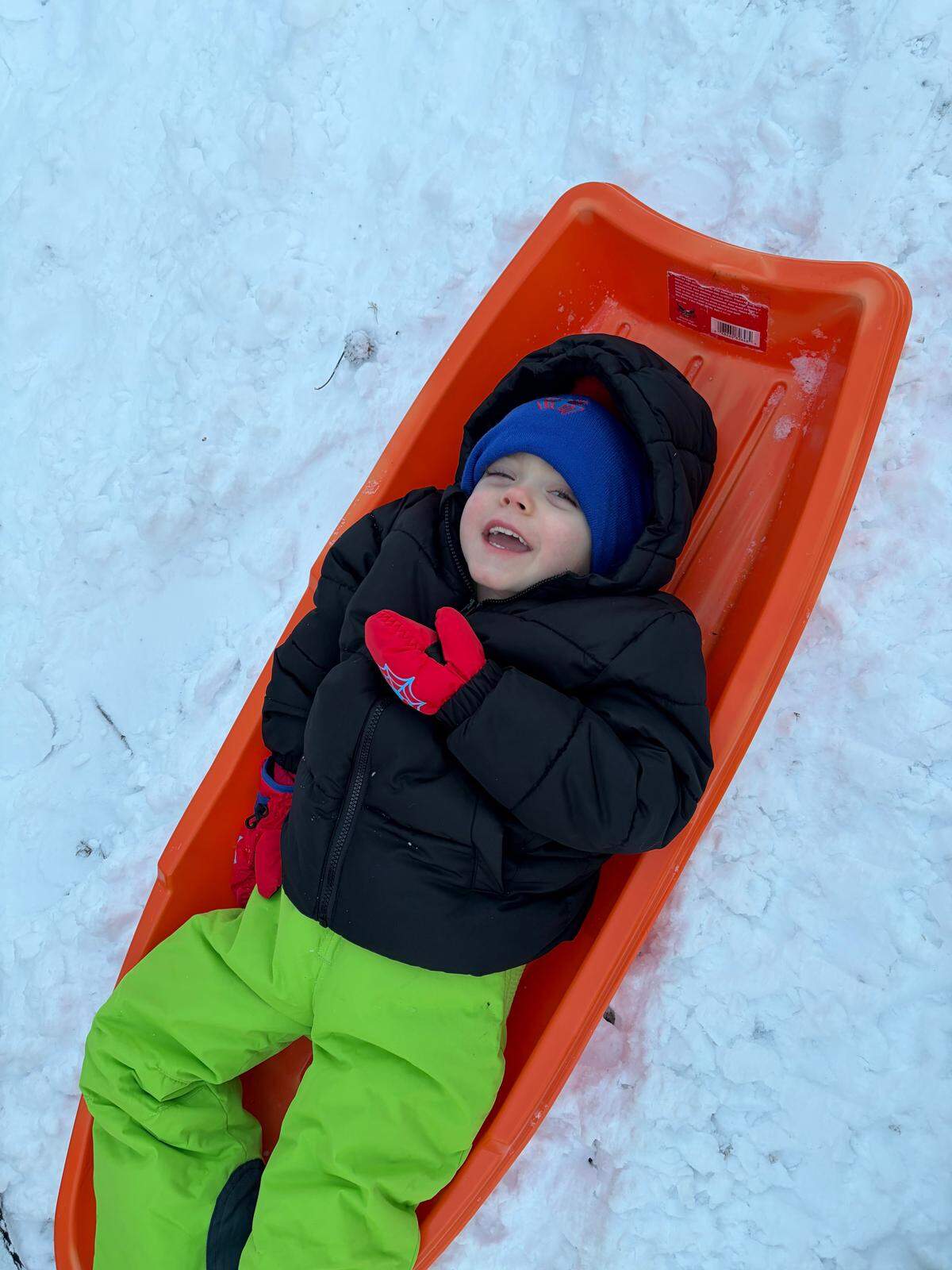
Meanwhile, Stacy climbed into another sled, positioned Logan between her legs, and gently escorted him down the slope. But as soon as they reached the bottom, he told her he wanted to “do it all by himself.”
She and Kevin hesitated. He persisted. They caved.
Next thing they knew, they were laying him in the sled alone, as several people stationed themselves every few feet or so along the path he was about to travel — ready to steady him if he started tipping over, to slow him if he went too fast, to give him a push if he stalled.
“‘OK, see ya!’” Stacy remembers saying. Then they took a deep breath and let him go.
“That was soo fast!” Logan exclaimed when he reached the bottom. “I told you I could do it by myself!”
He asked to go again, then again, then again. In the end, “We did it 10 times in a row,” Kevin recalls. “And this wasn’t just a bunny hill; this was, like, a big hill. It gave me a little heart attack.” But, he says, they had to do it. They want “to let him experience as much as he can, within reason. And we hope that continues to motivate him, because you just never know.”
You never know, for instance, whether one day — as Logan would say — he’ll be able to do things like this entirely on his own.
“I think there’s joy in the future, right?” Stacy says. “Because this is where technology and the day and age we live in is great. There’s so much coming out about stem cells or just different things that we’ve been reading up about for, hopefully, spinal cord recovery. It might not be until he’s later in his adult life, but if he could maybe at some point get something back, that would be amazing.”
But on that particular snow day, amid all the uncertainty, Kevin and Stacy knew one thing for sure:
As he glided on his sled, Logan felt the hill beneath him.
For now, that is enough.
-
A fundraising campaign has been established to help cover Logan’s ongoing therapy, medical equipment and care needs. More information is available at Help Hope Live.