She found love overseas. Now a visa freeze stands between her and an NC homecoming
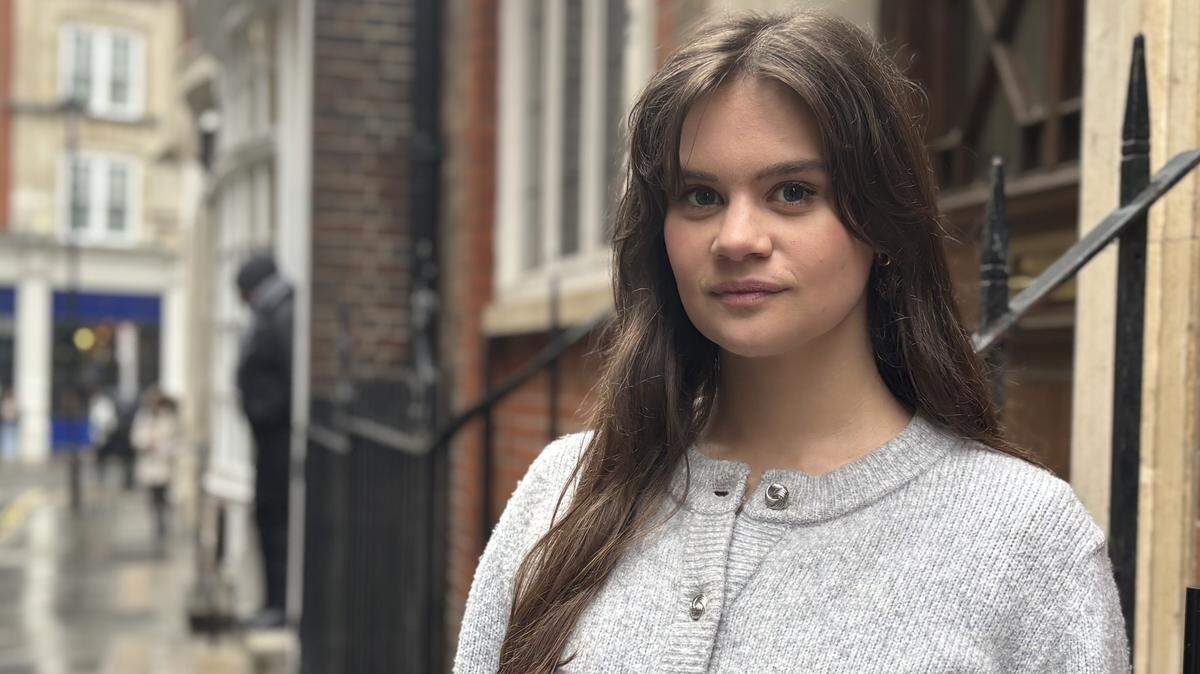
Gabby was among a throng riding the London tube toward Stamford Bridge stadium on Jan. 14 when she glanced down at her phone.
Does this affect you?, a friend back home in Charlotte had texted her.
Then there was a link to a news story.
At first, she figured it would be nothing. “People send me wacky stuff all the time,” Gabby says — policy rumors, visa chatter, half-baked headlines. They were almost never relevant to her life, as a 28-year-old North Carolina native working in international development and living in the U.K. with her fiancé — finally — after a frustrating false alarm involving their visa application.
She couldn’t get the article to load on the crowded train. But after she and her fiancé and their friend Rachel came up out of the tube station and through the turnstiles — as they filed with other football fans into London’s Stamford Bridge stadium for Chelsea’s big Wednesday-night match against Arsenal — it finally appeared.
It wasn’t very long. It said, flatly, that the U.S. was indefinitely freezing immigrant visa processing for nationals of 75 countries.
She started scrolling through the alphabetical list. Past Iran, Iraq. Past Nicaragua, Nigeria. Past all the countries she had expected might be there.
Tanzania, Thailand, Togo ... and then there it was: Tunisia.
Tunisia hasn’t typically been grouped with countries subject to sweeping U.S. travel bans; although the threat of terrorist activity makes the inland border fraught with risk, the coastline has many beaches popular with European-vacationers and is generally considered safe. But the bigger deal, for her: It’s where she’d worked for more than two years — where she’d met her fiancé, and where he was from.
A few countries later, the article just abruptly ended, without any sort of country-by-country reasoning for the visa freeze. Gabby frantically scrolled back up to the top, she says, “because I was like, OK, so that’s got to be for H-1Bs. They’ve been making changes to H1B. Or, That must be for — I was waiting to see the caveat. But there was nothing. It was a very short article. There was very little to say. Bam. Total freeze.”
She suddenly felt like she couldn’t breathe.
A love that started far from home
Gabby — who asked The Charlotte Observer to withhold her last name because she fears speaking out could have repercussions — grew up in Waxhaw. “Really rural Waxhaw, not Weddington, in the middle of nowhere,” she says.
The world opened up for her after she started pursuing a public policy degree at the University of North Carolina at Chapel Hill in 2017. She studied abroad in Denmark as a sophomore and then interned as a rising senior in Southeast Asia, where she knew no one and was basically on her own, much to her mother’s chagrin. (“You know what my first thought was?” her mom, Tina, said, recalling that internship, with a laugh. “Why did I work so hard to raise a free-spirited, independent, confident woman? ... I should have made her clingy and risk-averse.”)
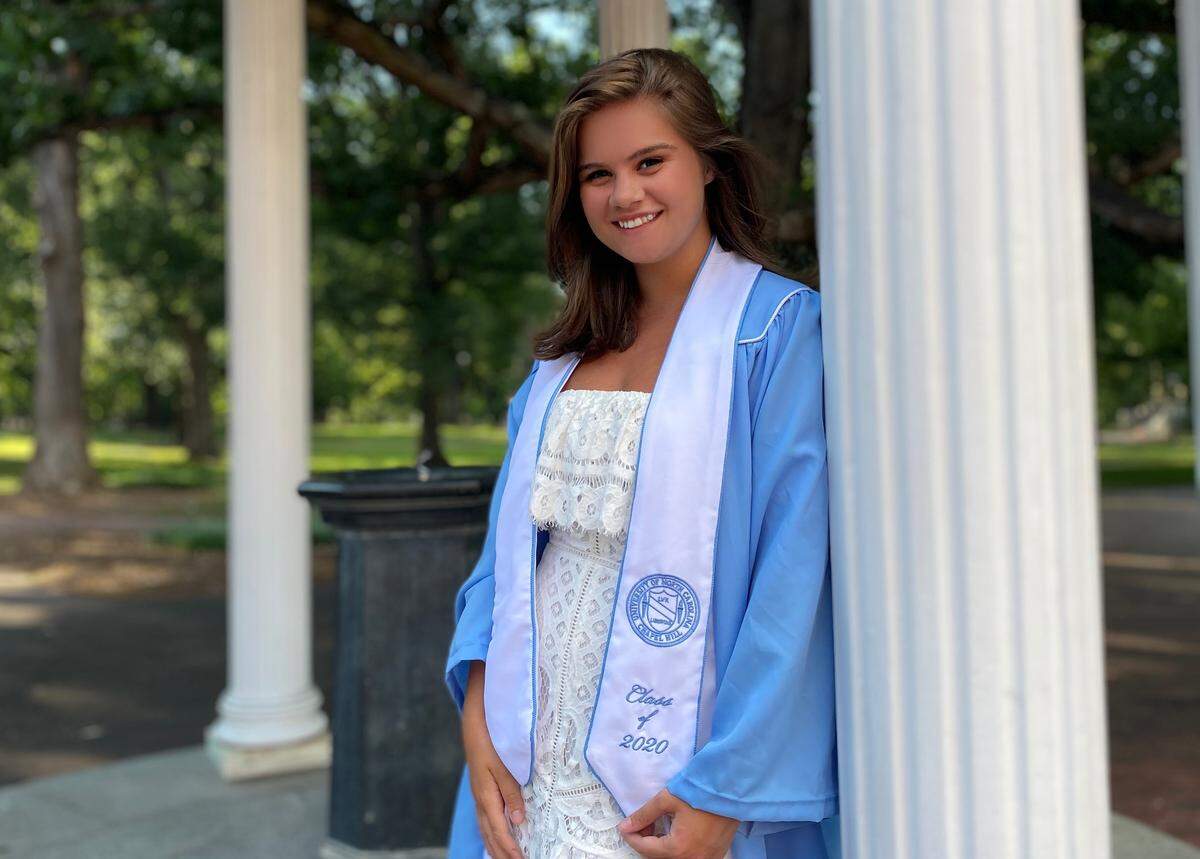
Then less than a year after graduating, in late winter of 2021, Gabby landed a job as an analyst in Tunisia.
Just like she did in college — just like she did everywhere she went — she made friends quickly, and that October she went with a group of them a couple hours outside Tunis to a music festival. That’s where she met him, and gave him her number. They went on their first date not long after that.
Within a year, she knew.
The relationship did face a major test two years in, when she moved to London for a master’s program in 2023 and they had to hold it together long-distance. They spent a year taking cheap flights to visit each other before he was able to join her.
But once reunited in London, they were practically inseparable. They settled into stable jobs that allowed them both to work from home, and started having lunch together almost every day. She originally worried they might spend too much time together; now she can’t imagine it any other way. “He’s making us lunch right now, actually,” she says, smiling, at one point during a recent interview.
They’re even at each other’s side when doing different things — while he watches football matches, she crochets while bingeing reality TV beside him, headphones in, laptop open.
And this past October, having taken yet another cheap flight to this time visit Lake Como in Italy, he reached into his pocket and — Oh my gosh, it’s happening, Gabby thought — pulled out a cigarette.
You need to chill, Gabby, she told herself. Put it out of your mind.
Five minutes later, he offered her a ring.
‘I knew we were going to get it’
She — of course — said yes.

It felt like the beginning of the rest of their life, and made the dreams she had about returning home to the U.S., with him, feel much closer. Closer to sunsets after family dinners in the Lake Norman area, where her parents moved about a year ago. Closer to beach and mountain weekends, and to big, noisy holiday gatherings, and to raising children who got to see their grandparents all the time.
She has now lived outside the U.S. for nearly five years. But she still describes herself as “ride-or-die North Carolina,” and the wedding in Tunisia this October was supposed to be the first concrete step toward a homecoming.
In fact, Gabby thought the worst was behind them.
She thought the low point had come and gone already, in 2024, when the U.K. visa application to allow him to join her in London was initially rejected. Gabby in particular was furious. But a week later officials reversed the decision and claimed they’d made a mistake. Her fiancé got the visa stamp.
She exhaled. “Hearing that news — even though it wasn’t a U.S. visa — meant we had a place to live while we applied for the U.S. visa,” Gabby says. “And I knew we were going to get it. I knew we were never going to have to do long-distance again.”
Which is why what she saw outside Stamford Bridge didn’t feel like just another setback.
It felt like her whole future was collapsing.
Planning a wedding in limbo
Rachel had known Gabby since the two met in 2021 in Tunisia. They’d hit it off immediately, but in recent months they had grown even closer — both planning fall weddings, both navigating guest lists and venues and all the small, mostly joyful stresses that come with it.
But Rachel had never seen her friend like this before.
“She normally approaches things with a high degree of humor, even a little bit of dark humor. I mean, she handles stress really quite well and relativizes things very well, in a way that I wish I could implement. So to see her kind of immediately break at that point was jarring.”
Listen, we can leave, Rachel told her. It’s completely fine.
Gabby shook her head. She didn’t want to ruin the evening. Maybe the game would distract her.
It didn’t.
She’d spent so much time in the past couple of months looking forward to getting married, in a blended ceremony in Tunisia this fall — one that would blend Arabic and American traditions, with guests flying in from North Carolina and taking buses from Tunis. Guests who didn’t share a language but would share a dance floor.
She’d laughed picturing her dad in a jebba — “with the little elf shoes you wear with it,” she liked to say. She’d marveled at how seriously her fiancé took the planning, how often he was on the phone with caterers and relatives, in part because she doesn’t speak Tunisian Arabic. She was excited for her friends from America to get a taste of Tunisia that went beyond, say, the harissa they used to spice up their Cava bowls.
And she couldn’t wait till the morning after the wedding, either, when she intended to click “send” on the spousal visa application she had already begun drafting. Completing that task would begin a 14-month countdown toward her ultimate goal: moving with him back to the Charlotte area, where they could be near her parents and try to start their own family.
Those thoughts had made her beam. But now, the joy felt fragile.
Now, this announcement put all of that into question.
So as kickoff neared, the game was now an afterthought. She leaned up against a column while searching for other stories, looking for answers to the million questions flooding her brain. She found nothing but more uncertainty.
As her fiancé tried to comfort her, she continued to weep.

“And to see that spark diminish even just a little bit,” Rachel says, “was hard.”
By halftime, Gabby was huddled against her fiancé, barely watching the match. The thoughts kept circling: What if this meant we’d have to move to yet another country? Or endure yet another delay, or yet another stretch of long-distance?
She decided, finally, that it was better if they left. So they did, the roar from inside the stadium fading as they put it behind them.
They rode the tube home mostly in silence.
A decision made in Washington
To her, the freeze felt deeply personal. “I’d really had this feeling of like, Well, now it’s all set. I was ready to go. It was gonna take some time. It wasn’t imminent. But I knew exactly what the plan was,” Gabby says. “Then suddenly, I didn’t anymore.”
But it wasn’t personal at all.
The freeze was announced by the Trump administration as part of a broader immigration overhaul. According to a statement from the State Department, the pause on issuing immigrant visas to nationals of 75 countries is intended to allow officials to review vetting procedures and assess whether applicants are likely to become a “public charge” — someone dependent on government assistance.
Administration officials have framed the move as a national-security and economic-protection measure, saying it is necessary to “restore integrity” to the immigration system. The policy applies to immigrant visas issued abroad — including spousal visas — though applications may still be filed and interviews conducted while the pause remains in place.
President Trump has repeatedly campaigned on tightening legal as well as unauthorized immigration, arguing that existing screening standards are insufficient. But immigration attorneys and advocacy groups have criticized the policy as sweeping and disruptive, noting that it affects couples and families already deep into legally compliant processes. Several organizations have said they are exploring legal challenges.
It went into effect Jan. 21. There is still no indication of when, or if, the freeze will be thawed.
And while Gabby’s immigration story is not the version of immigration that usually leads the evening news, in January, it became a reality for this young, educated American — who had fallen in love overseas and was just trying to bring her fiancé home by the book.
Why she decided to speak
Although Gabby agreed to speak with The Charlotte Observer about her situation, she asked that her last name not be published and that her fiancé not be identified. She worries that once immigrant visa processing resumes — whenever that may be — their application will be scrutinized, and she does not want this story to complicate it.

“I would never forgive myself,” she says, “if there were even the tiniest chance it affected the decision.”
But she also felt like she couldn’t stay silent, because “no one’s even talking about it. It’s not even on people’s radar.
“That’s how it goes from being a pause to being the next three years. I mean, who cares about this, other than the people who are in the process, right? I think everyone just assumes when you read something like this, that it is justified. But I just felt like people should know what these families actually look like.”
For Gabby, this isn’t about politics. It’s about geography. It’s about whether she and the man she plans to marry will be able to live in the same country — specifically, in the state she loves. It’s about whether her future children will grow up knowing their grandparents.
It’s about the timeline they built their lives around — the jobs they chose, the countries they lived in, the lease agreements they signed — no longer feeling predictable.
“It’s the lack of warning, the lack of clarity — having absolutely no idea when the pause will be lifted — that’s so disruptive to families,” Gabby says.
Yet there’s one thing that hasn’t been disrupted by all of this: They still plan to marry in front of their families Oct. 3, 2026, at a historic venue on the eastern shore of the Cap Bon in Tunisia.
So while she waits for that clarity, she is choosing flowers.
‘That would be a really good day’
Gabby jokes that she has been a one-woman PR team for North Carolina everywhere she’s traveled.
She says she can’t resist telling anyone who will listen about Cookout and Krispy Kreme and Kitty Hawk, and that there are people in Southeast Asia and East Africa (where her current work team is based) who are wearing Jordan jerseys because of her. She says anytime she’s at an airport and arrives at a gate where a plane is headed to Charlotte, the mood is just different. Warmer. Friendlier.
There’s another, much-more-serious reason, though, that she’s eager to get back to the Tar Heel State.
About 10 years ago, her mom was diagnosed with multiple sclerosis. It is currently manageable, but it is progressive. She will get weaker. Travel will get harder. What once felt open-ended now feels finite.
Tina, of course, doesn’t want this to be about her. She doesn’t need or want people to feel sorry for her. All she wants is for people who read her daughter’s story “to understand that these are just two young people who are in love and want to get married,” Tina says. “Very simply. Just like every other couple that has that right.
“This decision has taken what should be this beautiful, joyous time for our family and made it really stressful and sad.”
But for Gabby, how her mother’s health may change in the coming years “adds,” she says, “a sooner-rather-than-later kind of urgency” to all this.
And it means that when the freeze lifts — if it lifts — her tears of frustration will become tears of relief: “Ohhh,” she says. She’s quiet for a moment. Then her voice breaks as she continues: “That would be a really good day.”
Meanwhile, she is doing the best she can.
She is combing through Reddit forums. She is calling Senate offices. She is choosing flowers. She is continuing to plan for a future she still believes in — even if she no longer knows when it will begin.
And she is hoping that her phone will buzz again, any moment now, this time with the news that finally lets them come home.