What Planets Are Visible on Feb. 28? A Guide to This Year’s Six-Planet Alignment
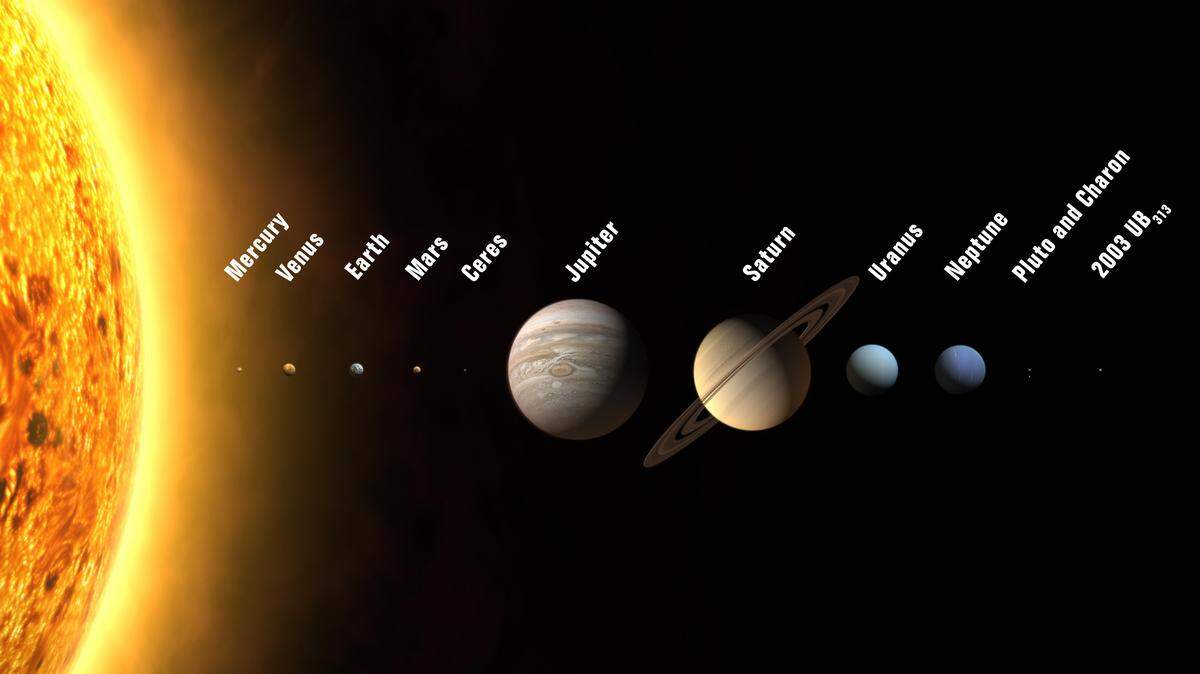
Six planets will stretch across the sky after sunset on Feb. 28, and the internet is buzzing about a cosmic “conga line.” But the gap between what’s happening and what you’ll actually see with your own eyes is wide.
Most people, under most conditions, will spot one planet easily, maybe two with binoculars, and struggle with the rest.
That’s not a reason to skip it. It’s a reason to go in with a plan.
What a Planetary Parade Actually Looks Like
A planetary parade occurs when multiple planets appear along the same general line in the sky as seen from Earth.
This February’s alignment spreads Mercury, Venus, Neptune, Saturn, Uranus and Jupiter across the western to eastern sky after sunset on Feb. 28. All six will appear shortly after sunset, according to NASA.
The problem is proximity to the Sun.
According to Space.com, four of those planets — Mercury, Venus, Saturn and Neptune — are very close to the Sun, meaning they sit low on the horizon and are visible only briefly in bright twilight.
“Four of those planets will be visible to the unaided eye, weather permitting, but only those with optical assistance will be able to view Uranus and Neptune (Mercury can sometimes be harder to spot, too),” writes Alyssa Lee of NASA.
What to Expect During This Year’s Planetary Alignment
The six planets vary dramatically in how easy they are to find. Here’s what to expect, ranked from simplest to most difficult.
Jupiter (magnitude –2.3) will be the easiest to see — and possibly the only one you spot without equipment. It reached peak visibility in January but will still be bright. By sunset, look for it high in the eastern sky, higher than the Moon and close to bright stars Castor and Pollux in Gemini.
Uranus (magnitude 5.7) may be the second-easiest target with binoculars. Look for it below the Pleiades star cluster in Taurus.
Venus (magnitude –3.8) and Mercury (magnitude 0.3) both sit between Earth and the Sun and will require binoculars on Feb. 28. Mercury will actually be easier to see on Feb. 19 and 20, though Venus will be lower in the sky at that time. Feb. 28 is a compromise date where both are somewhat visible.
Saturn (magnitude 1) will be past its best by Feb. 28. Its peak visibility was in early February, and it’ll be barely visible to the naked eye — likely appearing in a cluster with Venus and Mercury.
Neptune (magnitude 8) requires a small telescope and will be the toughest to spot. The most distant planet in the solar system, Neptune will be low on the western horizon by sunset, close to Saturn.
Of course, the planets won’t be alone.
A 92%-illuminated waxing gibbous Moon will be high in the eastern sky. With binoculars, you may also catch the Beehive Cluster (M44) below the Moon.
This all happens just days before a total lunar eclipse on March 3, making late February into early March a packed stretch for sky watchers.
Having the Right Gear and Conditions Is Key
To have a real chance at this, you need a clear view due west, clear skies and binoculars or a telescope.
A small telescope opens up Neptune as a possibility. Binoculars alone should handle Uranus and help with Mercury and Venus in the twilight.
Timing matters as much as gear. The window is tight: you’re working with the brief stretch after sunset when the sky is dark enough to reveal faint planets but before they dip below the horizon.
Start scanning west immediately after sunset, then work your way east toward Jupiter.
How Rare Is a Planetary Alignment?
The next five-planet parade won’t happen until late October 2028, and another one follows in February 2034.
This February’s six-planet alignment is uncommon — but some people won’t get to see it due to conditions, location or lack of equipment.
If you’re hoping to walk outside with no equipment and see six planets in a clean line, you’ll be disappointed.
The honest assessment: most people will see Jupiter easily, possibly spot Uranus with binoculars and struggle with everything else in the twilight glare.
A Practical Plan If You Want to Try
Start watching Mercury on Feb. 19 and 20, when it’s easier to spot, to get your bearings on where to look near the western horizon.
On Feb. 28, find a location with a completely unobstructed view to the west. Buildings, trees, even gentle hills will block the low-hanging planets. Bring binoculars at minimum — a small telescope gives you a shot at Neptune.
Begin scanning west right after sunset. Venus, Mercury and Saturn will be in a tight cluster low on the horizon. Work quickly; they won’t be visible for long in the bright twilight.
Then shift your gaze upward and east to find Uranus below the Pleiades, and continue to Jupiter near Castor and Pollux in Gemini.
While you’re at it, look for that bright waxing gibbous Moon high in the east, and sweep your binoculars below it to catch the Beehive Cluster.
The real value here isn’t checking six planets off a list. It’s knowing what’s happening in the sky on a specific evening and catching even a few of these objects under the right conditions.
For anyone with a pair of binoculars and a clear western horizon, Feb. 28 is worth stepping outside.
Production of this article included the use of AI. It was reviewed and edited by a team of content specialists.