Scientists Discover Strange, Bulging-Eyed Creature Scaling Iranian Canyon Walls After Dark
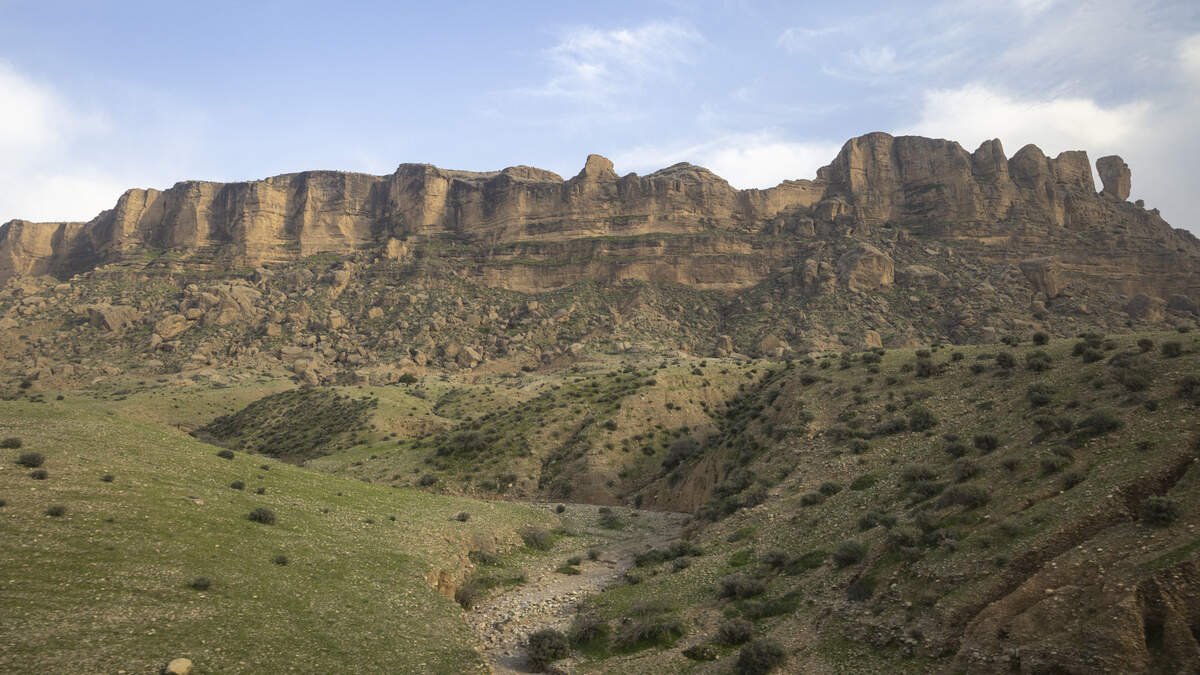
A nighttime field survey in a dry Iranian canyon has produced a new species of leaf-toed gecko — one that pushes the known species count of the Asaccus genus to 20 and extends its geographic range to the easternmost limit recorded in Iran.
For anyone who tracks gecko taxonomy or follows herpetological discoveries, Asaccus authenticus is a find worth examining closely.
New Species Found Clinging to Cliff in Bandar-e Jask
Researchers first spotted a group of these geckos on the walls of a sandstone cliff inside a dry river canyon in Bandar-e Jask, a city in southern Iran, in 2018.
The species was formally described in a 2024 study published in the peer-reviewed journal Zootaxa, entering the scientific record after years of analysis.
Beyond the cliff-face observations, specimens turned up “on the ground under the Acacia trees and bushes,” per the study. The geckos appear to occupy multiple microhabitats within the same canyon ecosystem, splitting their activity between vertical rock surfaces and ground-level vegetation.
The habitat itself tells a story. A dry river canyon with sandstone geology and scattered Acacia cover is arid, rugged terrain — the kind that rewards patient nighttime surveying. That these geckos were spotted during a nocturnal survey fits with the broadly nocturnal behavior associated with many leaf-toed gecko species.
The 20th Known Species in its Genus
Before this find, 19 species existed in the Asaccus genus, distributed throughout Iran, Arabia and the United Arab Emirates (UAE). Asaccus authenticus is now the 20th.
What makes this species especially interesting from a taxonomic standpoint is its geographic isolation. The locality lies away from the Zagros Range and distant from all other known Iranian Asaccus species, representing the easternmost distribution limit of the genus in Iran.
That geographic distance directly inspired the species’ name.
DNA analysis found the new species had at least 23% genetic divergence from other related geckos. That figure speaks to a long period of independent evolution from its nearest relatives.
For those familiar with genus-level molecular work in squamates, 23% divergence is the kind of number that makes a species description relatively unambiguous.
What the Bandar-e Jask Leaf-Toed Gecko Looks Like
The lizard now formally known as Asaccus authenticus, or the Bandar-e Jask leaf-toed gecko, has a distinctive morphological profile. Researchers characterized the species by their “big” eyes, “slender” bodies covered in white spikes and “elongated limbs” with claws.
They are medium-sized geckos, growing to about 4.5 inches in length. That places them within the typical size range for a leaf-toed gecko, but the combination of physical traits — particularly prominent white spikes across a slender body frame — sets them apart visually.
The elongated limbs and claws are consistent with a lifestyle that involves gripping vertical rock faces.
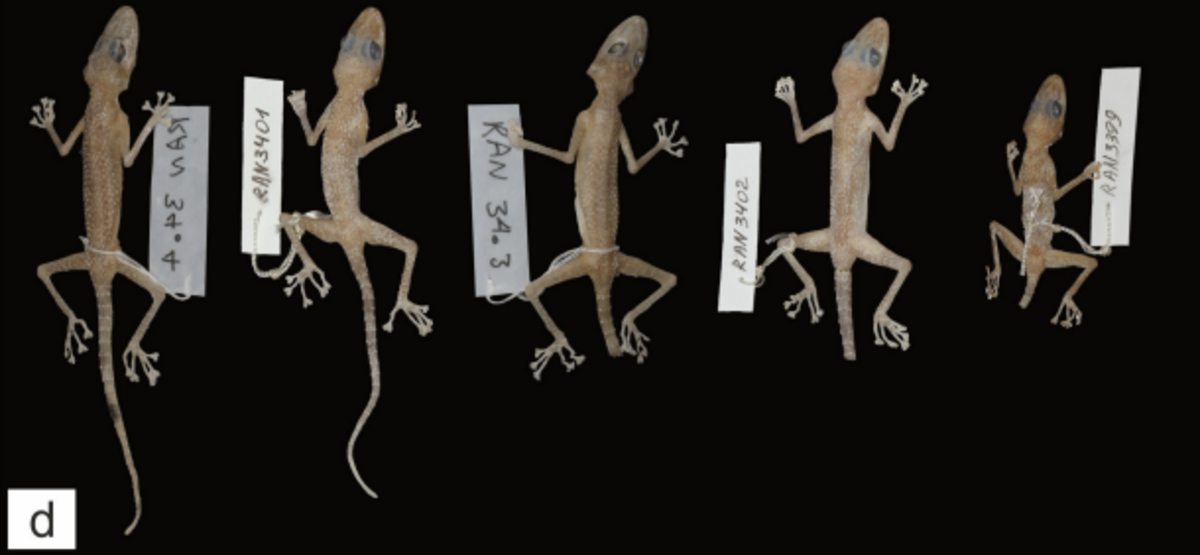
Specimens clinging to sandstone cliff walls make those morphological adaptations easy to contextualize: these geckos are built for navigating rugged, vertical terrain in arid canyon environments.
The physical description evokes a compact, spiny, wide-eyed animal — the kind of species that would stand out immediately in a field encounter.
The species name comes from the Latin word “authenticus,” meaning “genuine” or “authentic,” due to its distant genetic relationship to other Iranian leaf-toed geckos.
With at least 23% genetic divergence from its closest relatives and a distribution far removed from the Zagros Range populations, A. authenticus stands on its own. The name signals that this gecko is unmistakably its own entity.
A seven-member research team conducted the study: Roman Nazarov, Hossein Nabizadeh, Mehdi Rajabizadeh, Daniel Melnikov, Valentina Volkova, Nikolay Poyarkov and Eskandar Rastegar-Pouyani.
Their work combined field observation with molecular analysis to build the case for species-level recognition.
What the Discovery Means for Conservation
The researchers pointed to broader implications for conservation and further taxonomic work within the genus.
“Further studies on the diversity and evolutionary relationships of Asaccus geckos is important both for achieving a better understanding of speciation and phylogeography patterns in the region, as well as for the environmental and conservation issues,” they wrote in the study.
They also flagged a deeper concern about what remains undiscovered.
“The high level of endemism in the genus Asaccus indicates the existence of yet underestimated diversity and lineages that need to be protected,” they concluded.
Those statements carry real weight for the herping community. If the Asaccus genus, already at 20 described species, still harbors undiscovered diversity, the taxonomy of this group is actively evolving.
The discovery of A. authenticus at the easternmost edge of the genus’s Iranian range suggests that surveying in underexplored areas — particularly in regions far from the Zagros Range — could turn up more.
A Genus With More to Reveal
Asaccus authenticus extends the known geographic range of the genus within Iran.
It demonstrates 23% or greater genetic divergence from previously described species. And it was found in a habitat type — a dry river canyon with sandstone cliffs and Acacia cover — that may guide future field surveys in similar terrain.
The full study is available in Zootaxa for those who want to dig into the morphological and molecular data behind the description. At 20 species and counting, the Asaccus genus clearly has more to reveal.
Production of this article included the use of AI. It was reviewed and edited by a team of content specialists.