A 10-Inch Lizard With Dagger-Like Spines Hid In Plain Sight In a Vietnamese Forest
A species of lizard hiding in the forests of central Vietnam went undetected until researchers conducting nighttime biodiversity surveys stumbled across it clinging to branches and shrubs. They thought they were looking at a known species. DNA analysis and “detailed” physical examinations proved them wrong.
The species now carries the name Acanthosaura grismeri — Grismer’s pricklenape lizard — and it was formally described in a study published Aug. 28, 2025 in the peer-reviewed journal Zootaxa.
A Lizard Built for a Nature Documentary
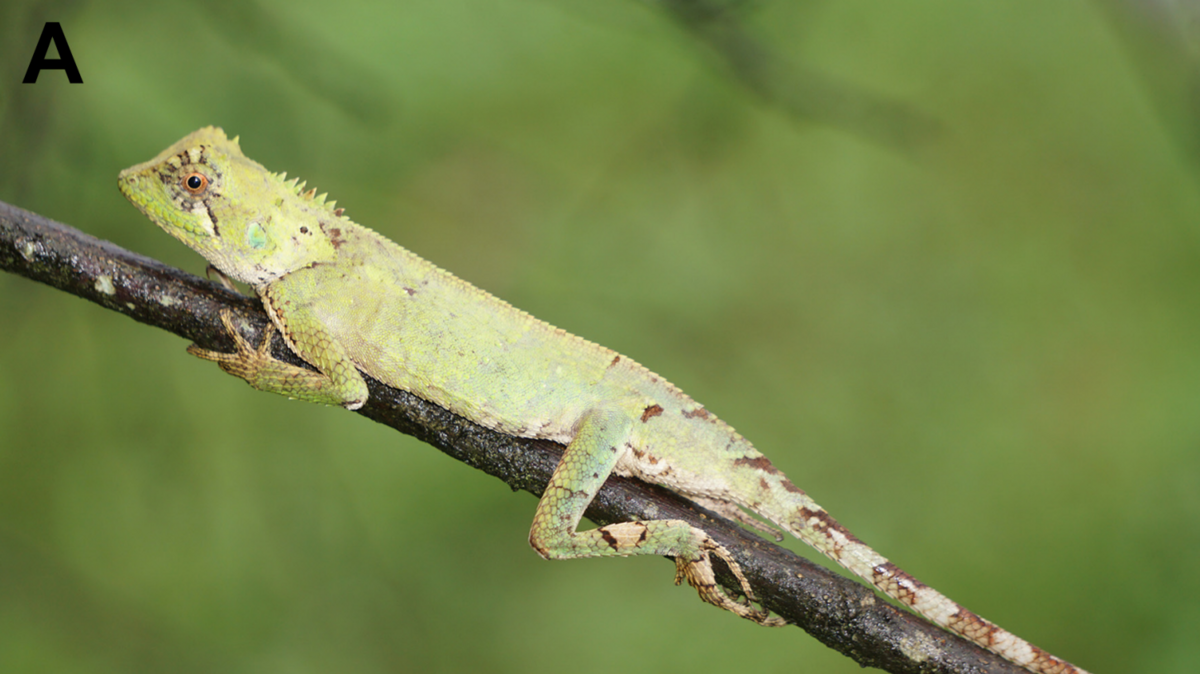
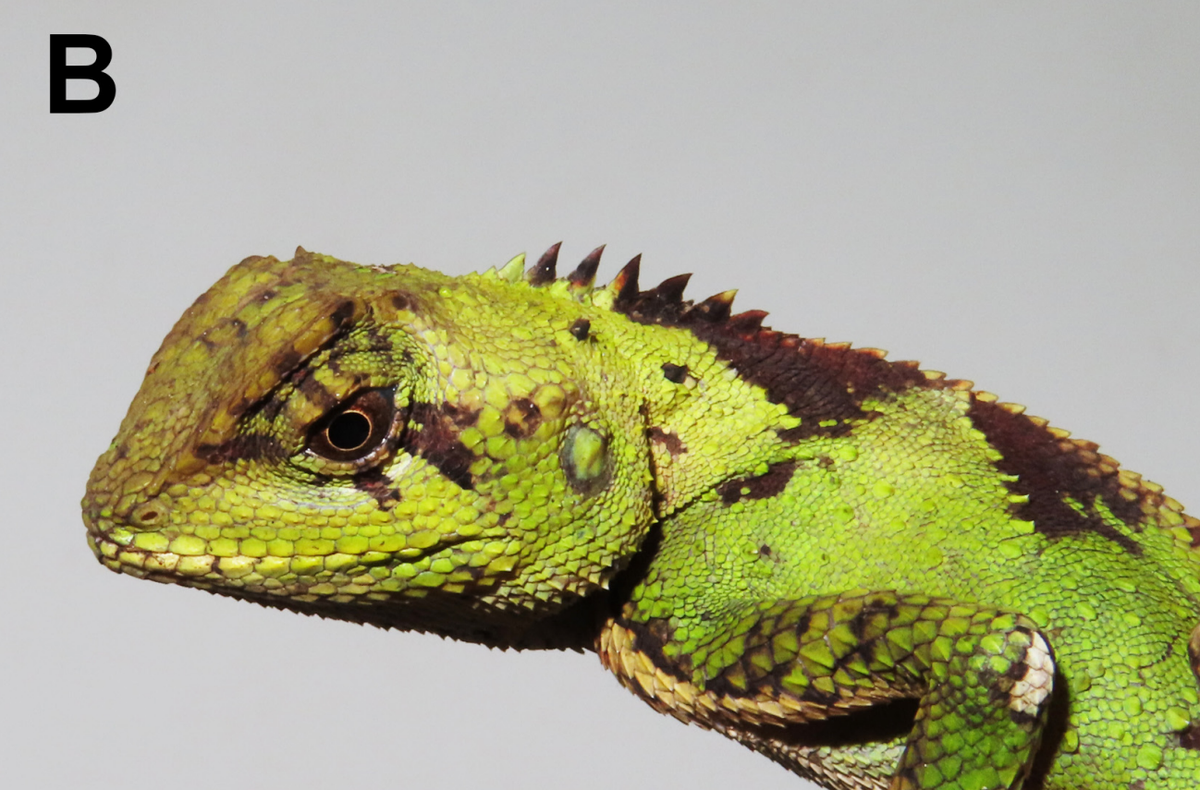
The study described Grismer’s pricklenape lizards as “moderately sized,” reaching about 10 inches in length, with “triangular” heads, “large” eyes and a “light orange” tongue. A row of spines runs down their backs, including “elongated, dagger-like scales.” Their limbs and tail are “relatively long.”
The color differences between males and females are where it gets striking. Males are “light-lime green with four brownish black rhomboidal bands” on their backs and white elbow and knee patches, according to the study. Their eyes are “dark brown,” and their throats are “pearl white.”
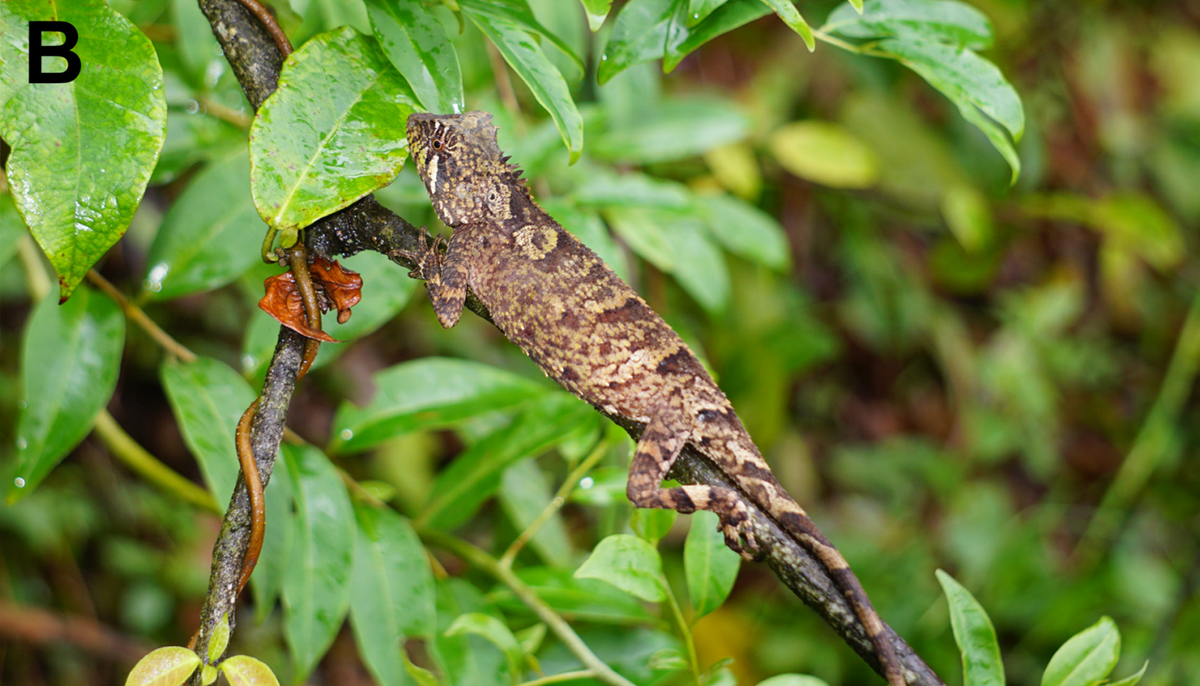
Females tell a different story. They’re “significantly larger” than males and “predominantly dark brown with scattered black or green mottling,” the study said. Their eyes are “light orange,” and their throats range from “light brown” to “dark orange.” Bright green with geometric banding on one side, dark mottled brown on the other.
How Researchers Almost Missed It
The discovery came out of biodiversity surveys in a forest in Dak Lak Province, Vietnam, during multiple visits in 2023 and 2024. Researchers found the lizards during nighttime searches, spotting them on branches and shrubs. The team initially believed the animals belonged to a species already cataloged.
That assumption didn’t survive lab work. The new species was identified based on body proportions, spines, scale pattern, coloring and other physical features, the study said. DNA analysis sealed the case, showing at least 7% genetic divergence from other lizard species. In taxonomy, that’s a clear signal of a distinct organism rather than a regional variation.
The lizards were found “clinging to, and sleeping in shrubs or on thin trunks of small trees beneath dense forest canopy” at night, according to the study. Researchers noted the animals were “frequently encountered” during the rainy season but “rarely observed” in the dry season. If you’re only surveying during dry months, you’d barely cross paths with them — a behavioral pattern that may have helped the species go unrecognized for so long.
One Forest, One Species
According to the study, the species has only been found in one forest in Dak Lak Province, located in central Vietnam approximately 220 miles northeast of Ho Chi Minh City. That’s the entire known range.
Single-site species discoveries tend to draw attention from conservation researchers, since such limited distribution can make a species vulnerable. The study itself doesn’t make conservation recommendations, but the geographic constraint is a detail worth watching as more research follows.
The researchers combined traditional physical examination — body proportions, scale patterns, coloring — with DNA analysis to make the call. That 7% genetic divergence figure provided molecular confirmation backing up what the physical differences suggested. This dual-method approach has become the standard for species descriptions, and it means discoveries like this one carry stronger scientific weight than descriptions based on physical traits alone.
The fact that a 10-inch lizard with bright green coloring and rows of dagger-like spines went unrecognized in a forest that researchers were actively surveying speaks to how much remains undocumented in Southeast Asia’s dense canopy environments.
The Team Behind the Find
The research team included Linh Tu Hoang Le, Tao Thien Nguyen, Truong Quang Nguyen, Thomas Ziegler, Dang Trong Do and Hai Ngoc Ngo. They named the species after L. Lee Grismer “in recognition of his great contributions to herpetological research in Southeast Asia,” the study said.
The case follows a pattern worth tracking for anyone interested in how biodiversity science works: field surveys in remote habitat, initial misidentification, lab analysis that overturns assumptions, and a formal description in a peer-reviewed journal. The full study is available through Zootaxa.
Production of this article included the use of AI. It was reviewed and edited by a team of content specialists.