Scientists Find 91 New Species From Ancient Extinction Aftermath
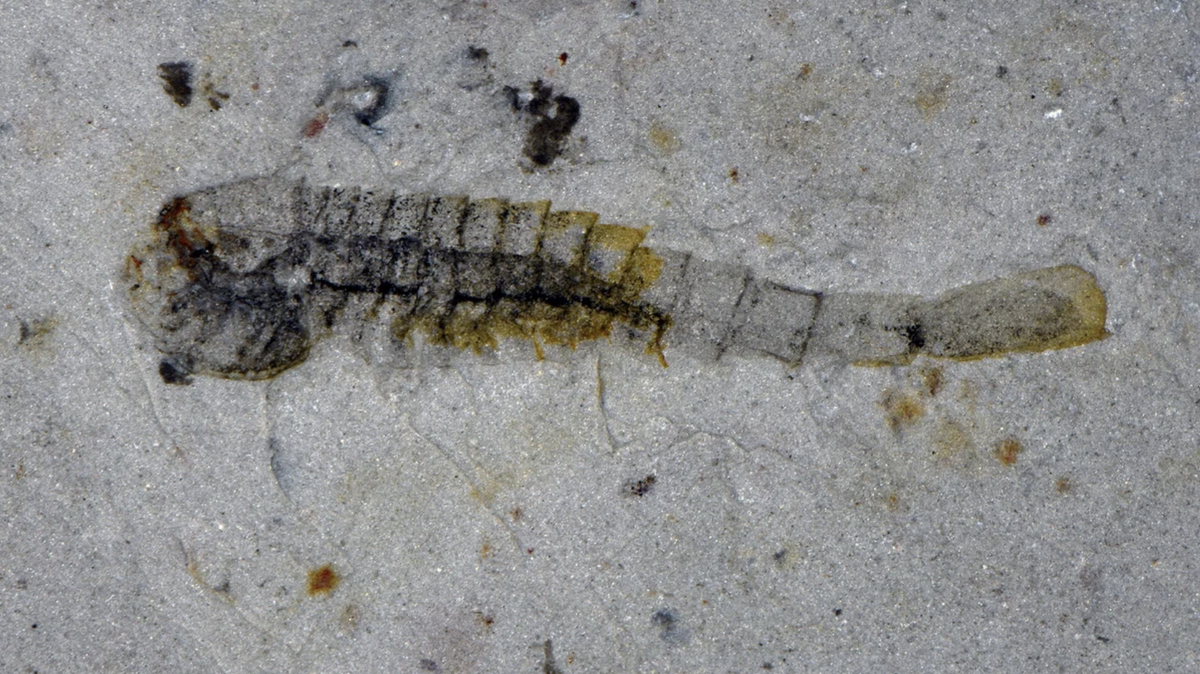
A single stone quarry in China’s Hunan province — roughly the footprint of a modest house — has yielded more than 50,000 fossils and rewritten our understanding of what happened after one of Earth’s ancient mass extinctions.
Researchers identified 91 previously unknown species among more than 150 species discovered at the site, dating to approximately 512 million years ago. The findings, published in the journal Nature, reveal a world recovering from devastation and teeming with strange, soft-bodied creatures whose delicate features were frozen in stone with astonishing detail. The collection has been named the Huayuan biota, after the county where it was found.
An Enormous Haul From a Compact Space
The numbers alone are striking: over 50,000 individual fossil specimens, pulled from one quarry measuring just 12 meters high, 30 meters long and eight meters wide.
Han Zeng of the Chinese Academy of Sciences described the site as “extraordinary,” telling AFP: “We have collected over 50,000 fossil specimens from a single quarry that is 12 meters high, 30 meters long and eight meters wide.”
The fossils were collected between 2021 and 2024 — years of meticulous excavation and study. Of the more than 150 different species uncovered, 91 are entirely new to science. No human being had ever seen or described them before they emerged from one rocky outcrop in rural China.
Han spoke of the “wonderful experiences when we realized that those animals were right there on the rock.”
Soft Tissues That Almost Never Survive
What sets this discovery apart isn’t just the sheer number of fossils. It’s what those fossils preserved.
Most fossils in museums are hard parts: bones, shells, teeth. Soft tissues like skin, internal organs and nerves almost never survive the fossilization process because they decay too quickly. The Huayuan biota fossils broke that pattern.
Han said: “Many fossils show soft parts including gills, guts, eyes and even nerves.”
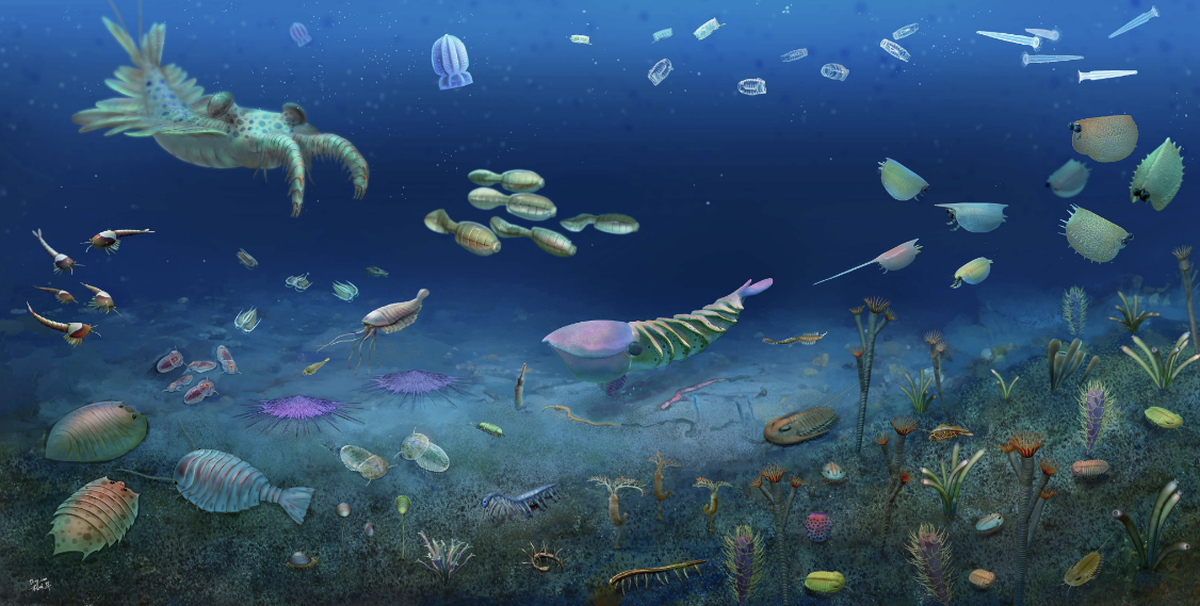
The delicate structure of a gill, or the faint tracing of a nerve pathway — features that existed in living animals more than half a billion years ago — preserved with enough clarity for scientists to study them today. This level of preservation gives researchers a look at these ancient organisms beyond their outward shapes, offering evidence of how their bodies actually functioned.
The species discovered include ancient relatives of worms, sponges and jellyfish. Researchers also identified numerous arthropods, including radiodonts, described as apex predators of the time — the top hunters of their underwater world, their soft tissues now laid open for examination half a billion years later.
Recovery From Catastrophe
The timing of these fossils places them at a pivotal moment. They date to around 512 million years ago, shortly after a mass extinction called the Sinsk event, which occurred approximately 513 million years ago and is associated with declining oxygen levels.
The Sinsk event brought a brutal end to a period known as the Cambrian explosion, which began roughly 540 million years ago and marked a rapid diversification of animal life. During that explosion, life went from relatively simple forms to an extraordinary range of complex body plans in a geologically short span. Then the Sinsk event struck, and many of those newly diversified creatures were wiped out.
The Sinsk event is not classified among the “Big Five” mass extinctions in Earth’s history, but its consequences were clearly profound. Han said there is evidence of 18 or more mass extinctions over the past 540 million years.
What makes the Huayuan biota so valuable to science is that it captures the world immediately after one of those catastrophes. According to Han, the fossils represent the first major discovery of soft-bodied organisms that lived directly after the Sinsk event.
Han said the fossils “open a new window into what happened.”
Why Deep-Water Creatures Survived
One of the most compelling threads in this discovery is the question of who survived the Sinsk event — and why.
Michael Lee, an evolutionary biologist at the South Australian Museum who was not involved in the research, offered a vivid explanation. He said: “the new fossils from China demonstrate that the Sinsk event affected shallow water forms most severely.”
Lee compared the survival patterns to the coelacanth, a deep-water fish that survived the mass extinction that eliminated non-avian dinosaurs. The coelacanth’s deep-ocean habitat essentially shielded it from the chaos happening at the surface.
His analogy is memorable. He told AFP: “The deep ocean is one of the most stable environments through geological time, in a similar way to how the cellar of a house is buffered from daily and seasonal changes and has less temperature fluctuations than the attic.”
When a heat wave strikes or a cold snap sets in, a basement stays relatively comfortable compared to an upstairs room. The deep ocean works the same way over geological time. Creatures living in those dark, stable depths were insulated from the oxygen decline and environmental upheaval that devastated species in shallower waters.
A Surprising Link to Canada’s Burgess Shale
Perhaps the most unexpected twist involves a famous fossil site thousands of miles away: Canada’s Burgess Shale, which dates to an earlier phase of the Cambrian explosion.
Han said that some species found in the Chinese quarry had previously been identified only at the Burgess Shale site. The overlap stunned the research team.
“It surprised us when we found the Huayuan biota shared various animals with the Burgess Shale, including the arthropods Helmetia and Surusicaris that were previously only known from the Burgess Shale,” Zeng told Reuters.
How could the same creatures show up at sites on opposite sides of what would become the Pacific Ocean? Zeng offered an explanation rooted in ocean currents and larval dispersal: “As larval stages are common in extant marine invertebrates, the best explanation of these shared taxa shall be that the larvae of early animals were capable of spreading by ocean currents since the early days of animals in the Cambrian.”
Even half a billion years ago, the ocean was connecting distant communities of life. Tiny larvae drifted on ancient currents, colonized faraway shores and established populations that would eventually turn to stone — and wait for us to find them.
Production of this article included the use of AI. It was reviewed and edited by a team of content specialists.