NC woman lost her hearing at 28. It was only one part of what she had to survive
Four years ago, McKinnon Galloway stood at the counter in a CVS, holding a bottle of Gatorade and trying to explain something to the cashier that — at 29 years old — she’d never had to explain before.
“I’m deaf,” the Cornelius native said, the words coming out unconfidently, almost clumsily.
Her mind was moving faster than her ability to communicate, and she was aware of the line forming behind her. “I really panicked at first,” she recalls now.
She might have even said something to the effect of “I’m so sorry about this.”
The cashier responded by extending his thumb, index finger, and pinky finger while keeping his middle and ring fingers curled against his palm. The sign language gesture for “I love you.”
It was a small, imperfect exchange, one that didn’t fix the problem so much as reveal it, clarifying in a single interaction what the rest of her life was about to require.
But in the four years since she lost her hearing during brain surgery to treat her rare genetic disorder, years shaped by not just illness but also personal tragedy, McKinnon has done more than simply adapt to being deaf. She also started documenting that adaptation — the process of figuring out how to communicate and stay in conversations — as it was happening, for the benefit of others.
And over time, that grew into a social media following of nearly a million people built on her ability to explain, in vivid practical terms, what life without hearing actually looks and feels like.
Roy Strowd, one of her doctors, may put it best: “As a human being and as a patient ... faced with life’s most significant adversity, what do you do in that situation?” says the Wake Forest University School of Medicine neuro-oncologist, who’s been treating her for more than five years now.
“What McKinnon did was totally lean into that and just say, ‘I’m going to dominate being deaf. And that’s what she’s done.’”
‘We drove home in complete silence’
Long before that CVS moment — before the surgeries, before the erosion of her hearing, before she had any real sense of what living without it would look like — a diagnosis arrived at an age when most people are still just beginning to sketch out their lives.
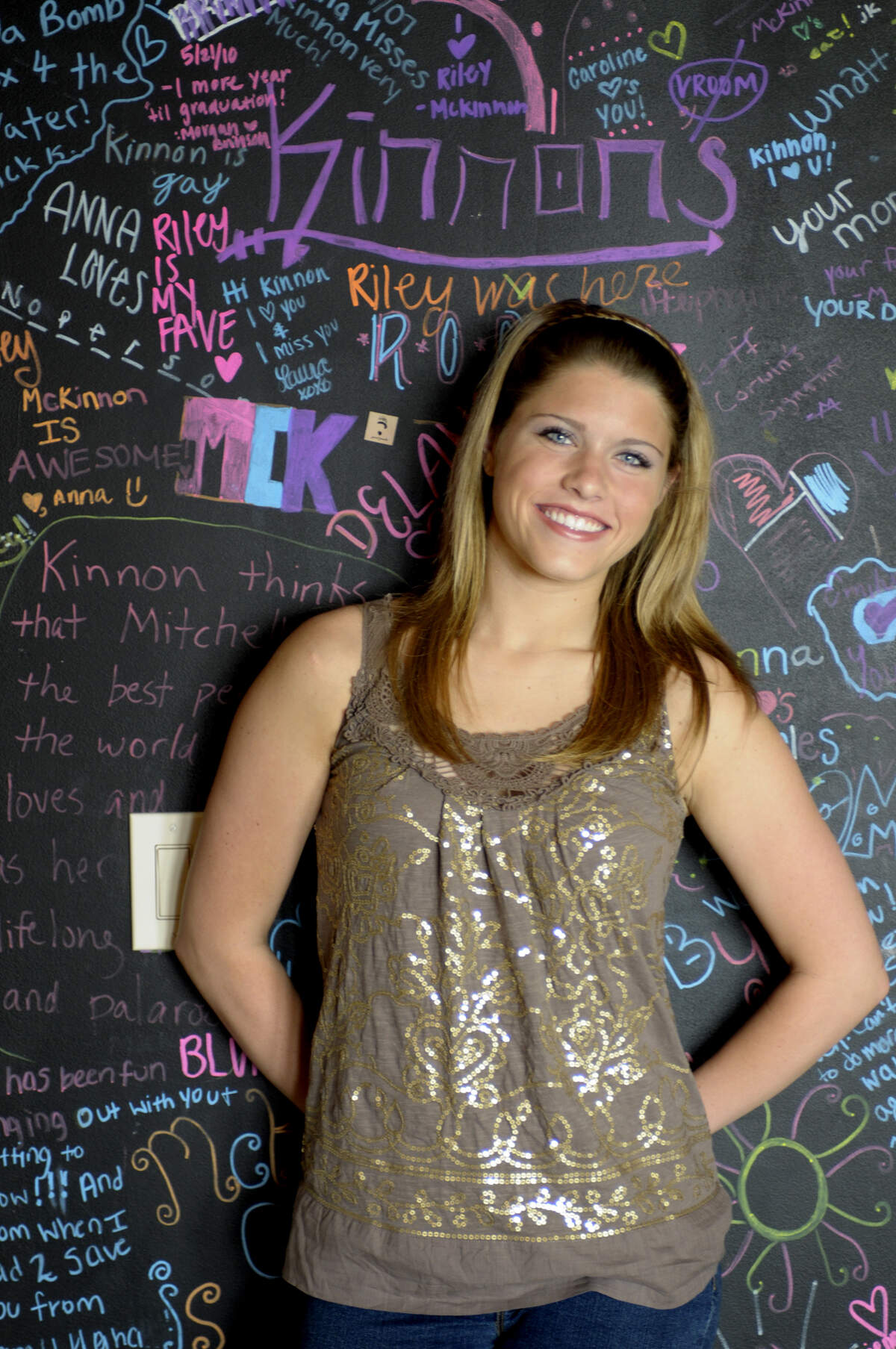
A few days before her 16th birthday, McKinnon woke up with a crushing headache after hitting her head diving for a volleyball. Doctors initially suspected a concussion.
But when the symptoms refused to fade, an MRI revealed something far worse.
Her mother still shudders when she thinks about what the doctor told them: McKinnon likely will be deaf by the time she graduates from high school.
“We drove home in complete silence. We just were so in shock,” Tracy Galloway recalls. “I remember going straight to the computer and looking it up, and it said it was ‘life spoiling’ what she had. That just crushed me. ... I was like, WHAT??”
She had neurofibromatosis type 2, or NF2, a rare genetic disorder that causes tumors to grow on nerves in the skull and spine — often affecting vision, balance, facial movement and, almost inevitably, hearing. Almost all people with NF2 eventually become completely deaf.
Once the initial shock wore off, though, McKinnon and her parents set out to try to stave off what was believed to be inevitable.
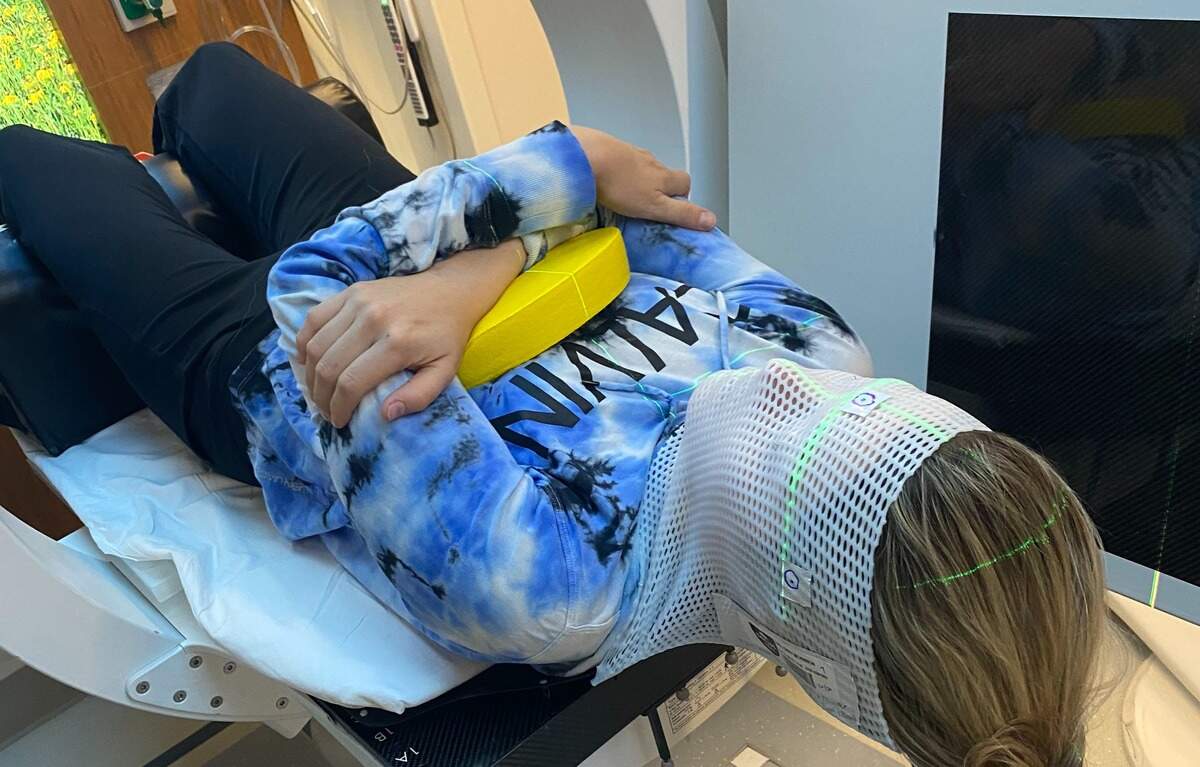
They turned to a specialist at Johns Hopkins and began an experimental treatment meant to slow the tumors’ growth. Every two weeks, McKinnon sat in an infusion chair with an IV in her arm, watching medicine drip into her body for hours, hoping it would slow something she couldn’t feel but knew was there. When she wasn’t in treatment or keeping up her straight As, she and her parents were raising awareness and support for NF2 research.
Then, during the final semester of her senior year at Hopewell High, came the next escalation: her first brain surgery.
And when she made it to graduation with her hearing intact, it felt like a victory. But there were some devastating losses looming on the horizon.
By all appearances, she was thriving
In 2014, at age 21, McKinnon had her second brain surgery, which permanently robbed her of the hearing in her right ear.
Then, over the next few years, she endured a series of challenges and setbacks: more chemotherapy, a grand mal seizure that led to an epilepsy diagnosis, an allergic reaction to her new epilepsy medication that she says changed her personality for a year, and bottled-up feelings of anxiety, depression and self-consciousness.
Outwardly, however, she seemed to be thriving.
By late October 2018, at age 25, she was being feted as the new ambassador for the Children’s Tumor Foundation, and was mere weeks away from earning a bachelor’s degree in liberal studies from Arizona State University (having transferred from UNC Charlotte). And alongside everything else, she was more than 3-1/2 years into a relationship — with a guy she’d started dating in Charlotte named Brandon — that felt like it might be a forever one.
Then just two weeks later, her father died by suicide after a long, largely unseen struggle with alcoholism and depression.
It was more immediate and more devastating than anything her diagnosis had brought to that point — a rupture that changed the emotional baseline of her life. And as she continued navigating a disease that was slowly taking something from her, she was also carrying a kind of grief that does not move in a straight line, resurfacing in quiet moments and unexpected ones.
The next few years were a fog.
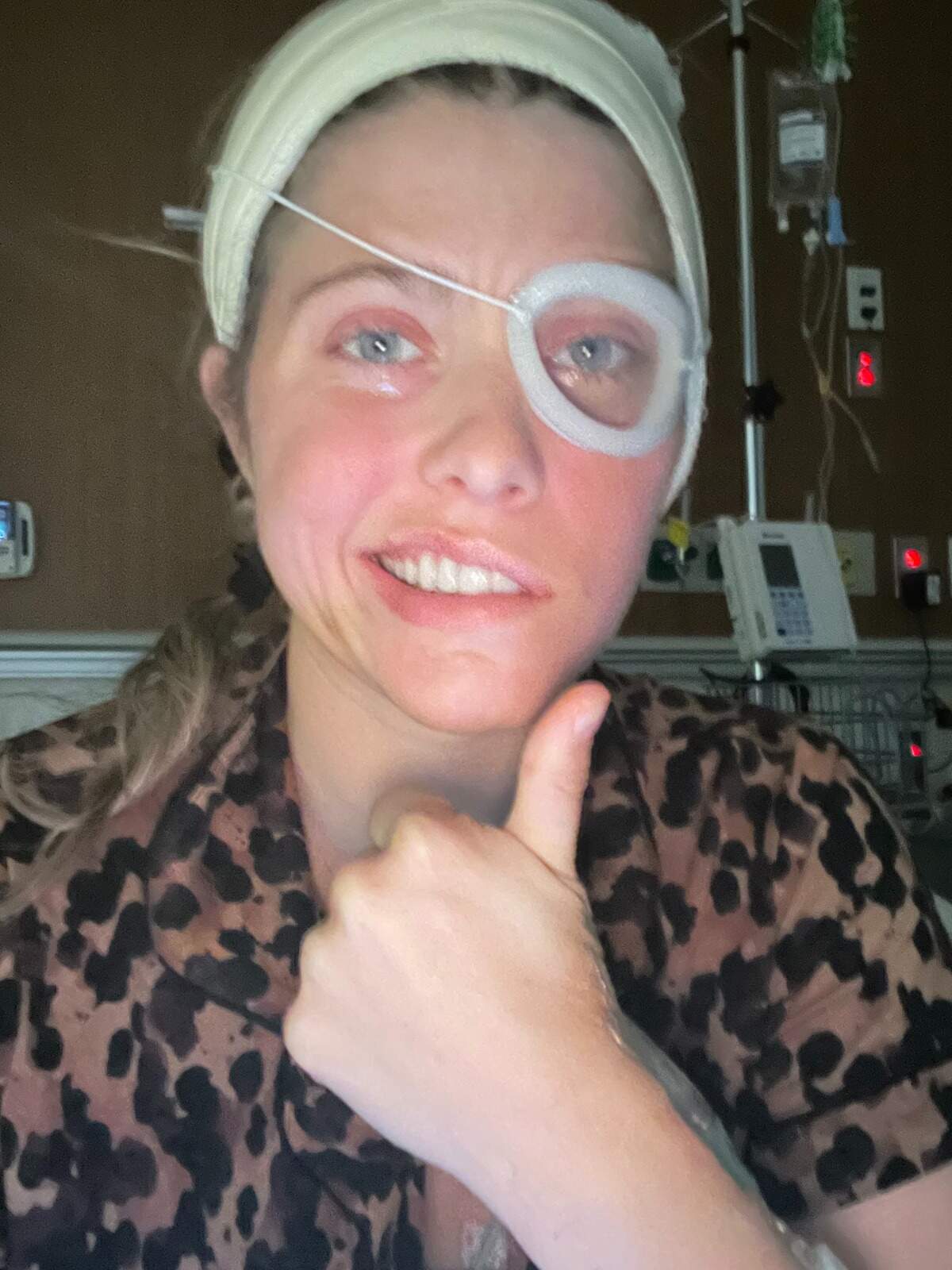
McKinnon finally went completely deaf on March 18, 2022, at age 29. For 2-1/2 months leading up to that day, it had become clear that she would need yet another brain surgery. She’d been living with about 20% of her hearing in her remaining good ear. She knew that the tumors were becoming increasingly aggressive.
So on that particular day, McKinnon was being prepped for what would be her third brain surgery.
But when doctors asked what song she wanted to hear before the operation — and she picked one that was a favorite of her dad’s — she didn’t realize it would be the last thing she’d ever hear.

‘I felt like I was free-falling for 10 years’
McKinnon chose “Somewhere Over the Rainbow” by Israel Kamakawiwoʻole.
It was an emotional choice. But it didn’t register, for her, as a weighty or historic one. Although she knew she’d wake up deaf, she also believed she would be eligible within a few months for an Auditory Brainstem Implant, a device that can restore a sense of sound for some people with NF2. She had no idea, at the time, that it wouldn’t be possible in her case.
At the time, she just thought it would give her a sense of peace as she drifted off to sleep. Which it did:
Someday I’ll wish upon a star
Wake up where the clouds are far behind me
Where trouble melts like lemon drops...
Then it was gone.
Not just the song itself, but the ability to hear anything the way she once had — its texture, the emotion carried in a voice, the way sound can fill a space and stir something in your soul simultaneously.
Yet for all the grief tied to that loss, its arrival also brought an emotion she hadn’t expected.
“Think about it like you’re free-falling onto a planet, and you’re so scared of when you land if you’re gonna be OK, because you have no idea if the planet has oxygen. You have no idea if you’re gonna survive. I felt like I was free-falling for 10 years. And … in a weird way, it was a relief when I landed.”
At the same time, she remembers thinking: How am I going to do this?
Because even though she quickly confirmed that the planet had oxygen, she wasn’t immediately sure she was going to be OK.
Nothing felt automatic anymore
There were “deaf” moments early on that felt almost absurd.
For instance, she says one of her most vivid initial memories of coming to grips with her new reality was post-surgery, after her catheter came out, when she went into the bathroom to pee and she couldn’t hear the sound of hers hitting the water in the bowl.
And once she was out of the hospital, back at home, there were times she felt like she was living in a horror movie, like when she’d turn a corner and run into her boyfriend Brandon because she hadn’t heard him coming. Or, in another example, when he suddenly came into her field of vision while she was in what she assumed was an empty house — “and I thought somebody was ... about to murder me. I started sobbing, because it was so scary.
“There’s all these things that you just don’t realize that you kind of have to figure out how to adjust to.”
For months after surgery, she barely left the house — partly because the operation that took her hearing also left her with severe double vision, making even basic outings difficult.
Even being at home came with challenges. There were countless things people who can hear would never think about — details that seemed insignificant until they kept happening. Leaving a faucet running and not realizing it. Standing in a room with a hair dryer on, unsure if it was actually on or just something she remembered turning on. Losing track of whether something was making noise at all, because there was no way to check.
Over time, something else began to happen: If she could see something — water running from a faucet, a hand tapping against a surface — she could almost hear it.
That wasn’t always a bad thing. She found comfort in watching old, familiar TV shows because her memory would fill in the sounds.
But even with those small comforts, the adjustment was brutal.
For those first six months post-surgery, McKinnon spent much of the time lying in bed feeling depressed — until her vision cleared up, and she finally realized she had to get back out into the world.
‘There for a good time, not for a long time’
That CVS moment had been just the beginning.
Every trip to a store — any public place requiring interaction with a stranger — became complicated. Once she made it clear she was deaf, people would raise their voices, assuming volume might bridge the gap. Others would grow impatient. Many assumed she could read lips, which “everyone thinks is, like, some super-power you get when you go deaf,” she says. “It is absolutely not.”
In her once-easy-to-navigate social circles, communication was often even harder.
The conversations that once required no effort suddenly demanded all of it. In groups, there were too many voices, too much movement, too much happening at once. She would find herself nodding along, trying to stay inside a moment she could feel slipping away, piecing together meaning from a facial expression here, a gesture there.
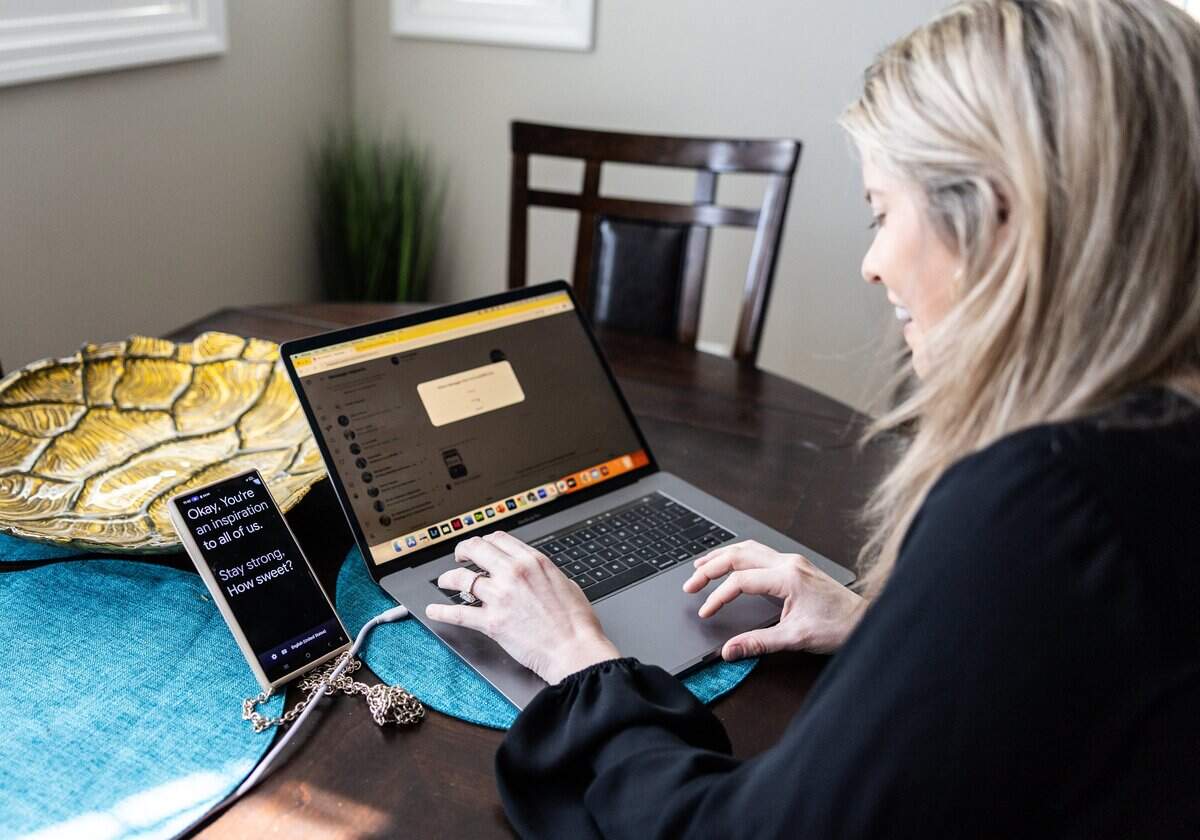
“Groups are exhausting, because ... people have to understand, I’m looking at this —” she holds up a phone that is performing live AI transcription “— but I’m also looking at your mouth, I’m looking at your facial expressions. I (can’t hear your) tone.”
She developed what she calls the “deaf nod” — the reflex to smile and signal understanding when you’re not entirely sure what’s being said.
As often as Brandon would let her get away with it, she’d try to make an excuse to leave. Her joke, as it related to parties she attended as a deaf person before she gained back her self-confidence: “‘I’m there for a good time, not for a long time,’” she recalls, laughing.
On top of that, the absence of auditory feedback gradually altered her own speech — just enough that, at moments, strangers struggle to understand her unless they know to listen closely.
There was a particular cruelty in having lived with her hearing for 28 years before losing it. But as the grief began to loosen its grip, another realization took hold:
Since no one had built a roadmap for this life, she might have to create one herself.
Teaching people how deafness feels
Her new philosophy was: “’I will figure it out. I don’t know what’s gonna happen, but somehow it’s gonna happen. I don’t care if it takes a thousand tries.’”
So she started trying to build what she couldn’t find.
At first, that meant reaching out directly to tech companies, pushing for better tools and faster timelines. She had always loved technology; now she needed it urgently.
What began as that kind of outreach started finding its way onto her social-media pages.
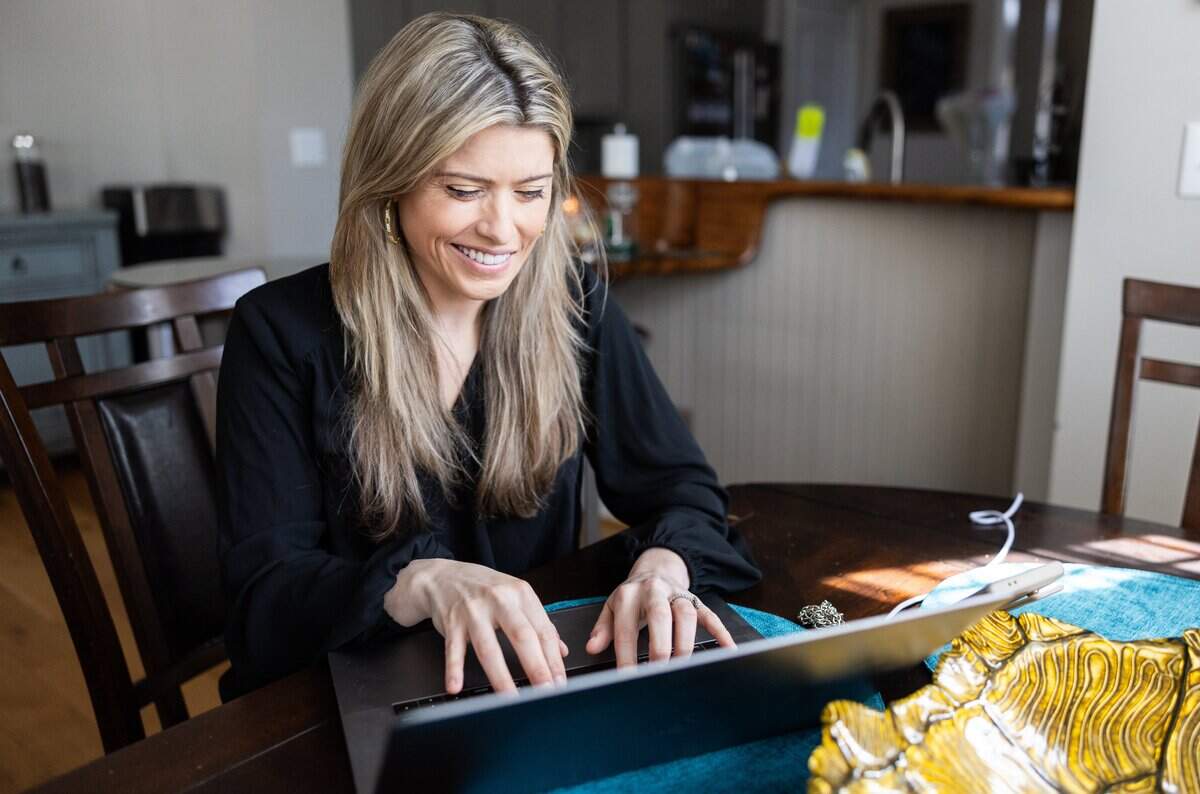
She started posting short videos of things that would have been invisible to her just months earlier: how transcription apps and other technology designed to help the deaf worked; the basics of sign language; tips related to the small, practical things that make it possible to function day to day after losing your hearing, like how to navigate social situations with old friends who’ve never had a deaf person in their lives.
What she was offering wasn’t inspiration so much as translation — a way for deaf and hard-of-hearing people to see themselves in her experience, and for hearing people to understand what daily life without sound actually looked like.
“To be able to turn her story into something that can really lift others, I think it’s just been phenomenal,” says Chad Jacobsen, a pediatric hematologist-oncologist at Atrium Health Levine Children’s Cancer, who was involved with McKinnon’s care for years starting around the time she was diagnosed at 16.
“She is truly one of the strongest individuals I’ve dealt with. And I deal with very strong young adults all the time.”
She had always been outgoing, someone who thrived on connection, which made the idea of losing her hearing especially hard to imagine. But as she began to talk openly about what she was going through — in a voice that was equal parts honest and irreverent — people started to respond.
And something took shape: not just a way for McKinnon to move forward, but a role she hadn’t known was possible.
‘Lord, is she going to have a purpose?’
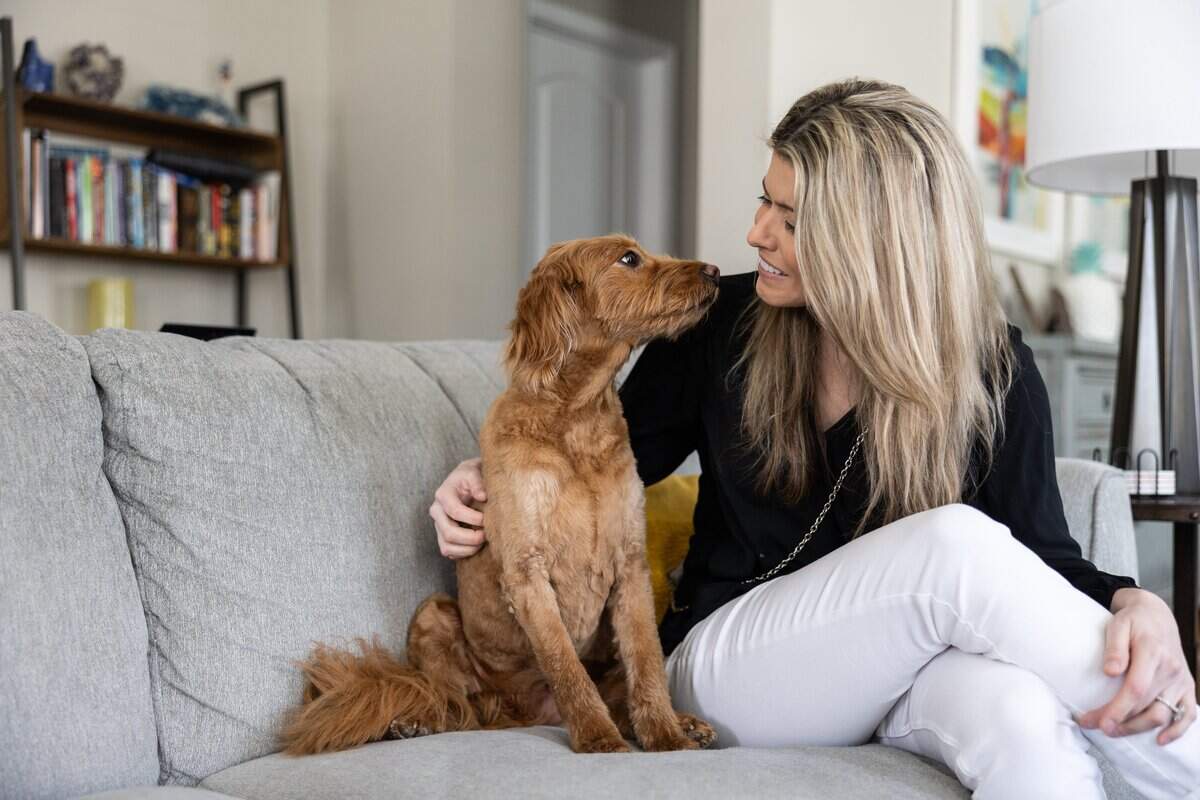
These days, McKinnon is as comfortable in her own new skin as she’s ever been, and the technology has caught up.
She can walk into a store, put on a pair of captioning glasses, and watch a conversation unfold in front of her, with the words appearing in real time as someone speaks, allowing her to ask questions and clarify details.
It still takes effort. But she knows how to do it.
In the process, she has become one of the most prominent voices in the online deaf-advocacy space. Early on, she launched Deaf District, an effort to create more intentional space for deaf and hard-of-hearing people. Her following grew because she documented what most people would instinctively keep private — the practical frustrations of sudden deafness, the ugly details of brain surgeries and chemotherapy, and the emotional aftermath of both. In 2024, Google invited her to mentor a cohort of emerging creators with disabilities.
She now reaches close to a million followers across social media, making her collective platform financially viable.
Says her mom, Tracy Galloway: “It’s hard for her to keep a full-time, regular job ... because the NF gets in the way. So for a long time, I thought, Lord, is she going to have a purpose? Because I think people need a purpose to be happy. But she apparently has found hers.”
None of it was part of a plan. It emerged from the same process that had defined everything else: trying, adjusting, trying again, until what she built for herself became something others could use, too.
“Going deaf,” McKinnon says, “taught me how to reconnect with the world — and because I got through that challenge, it made me realize how many more I could get through.
“It made my life so much larger than I had planned it to be.”
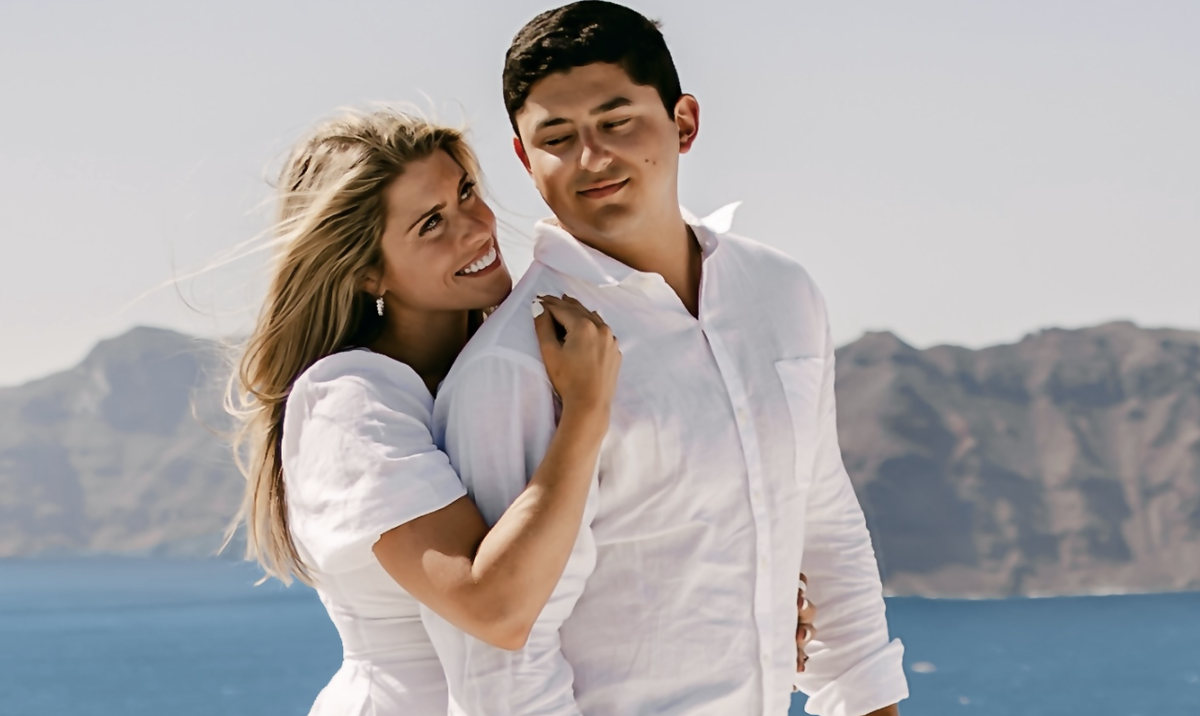
And the future she once feared might narrow has only widened: Less than a year after she went completely deaf, she and Brandon got engaged — and on June 25, in Charlotte, they will marry.
This story was originally published April 28, 2026 at 5:02 AM.