A Dallas Startup Says It ‘De-Extincted’ the Dire Wolf. Scientists Aren’t So Sure.
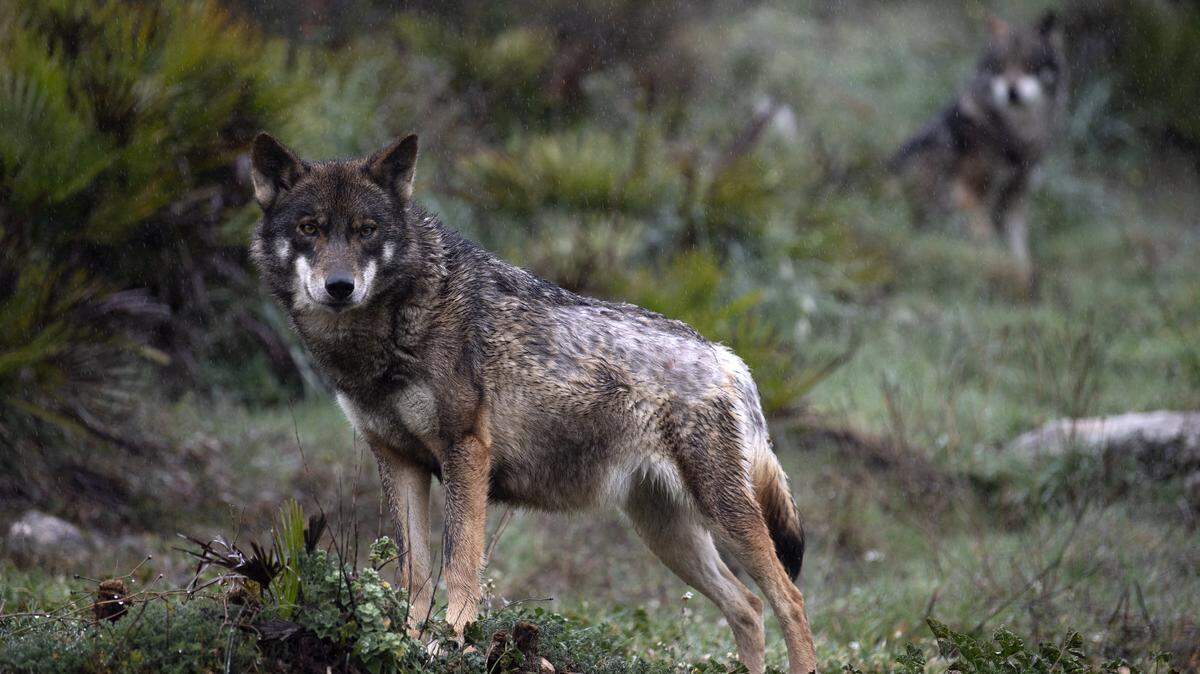
A Dallas-based startup says it has produced three “de-extinct” dire wolf pups using gene-editing technology — and the dodo and woolly mammoth are next. But the gap between the company’s marketing and what the science actually delivered has sparked a sharp debate among biologists about what “de-extinction” really means.
The Company Making the Claim
Colossal Biosciences, valued at $10.2 billion after raising hundreds of millions of dollars from investors including Tiger Woods and Paris Hilton, announced in 2024 that it had produced three pups it described as “de-extinct” dire wolves. That species is believed to have disappeared more than 10,000 years ago.
The dire wolf is just the start. Colossal says it is also working to revive the woolly mammoth, the dodo and the thylacine (also known as the Tasmanian tiger).
According to an article posted by The Guardian on March 15, Colossal’s research takes place at a 55,000-square-foot facility in northwest Dallas. There, scientists extract ancient DNA from fossils and use CRISPR gene-editing technology to modify the genomes of closely related living species.
CRISPR allows scientists to make precise edits to DNA sequences, functioning like molecular scissors that can cut, remove or replace specific genetic code. Colossal’s researchers use it to alter the DNA of living animals so offspring express traits associated with their extinct relatives.
What 14 Genes Out of 19,000 Actually Gets You
For the dire wolf pups, scientists edited 14 out of roughly 19,000 genes in Gray wolf DNA. Those edits produced hybrid offspring with traits associated with dire wolves: lighter fur color, larger size and greater cold resistance.
That leaves the remaining genome — the vast majority of it — as Gray wolf. This distinction sits at the center of the scientific debate.
Vincent Lynch, an evolutionary developmental biologist at the University at Buffalo, was blunt in his criticism.
“They made genetically modified gray wolves, not dire wolves – to say they are dire wolves is entirely arrogant,” Lynch said. “You can’t put a mutation into a related species and call that thing the extinct thing. You can’t bring things back in the way Colossal are doing it.”
Lynch also challenged how the company defines species identity: “They say if it looks like the thing then it’s the thing, but we haven’t used that definition for a long time.”
The Dodo and Other Projects in the Pipeline
The dodo, a flightless bird driven to extinction by human activity roughly 400 years ago, is one of Colossal’s active projects. Scientists at the company have cultivated primordial germ cells — early precursors to sperm and egg cells — from the pigeon, the dodo’s closest living relative. No hybrid offspring have been announced.
Researchers are also working with emu eggs in efforts related to reviving the moa, another extinct flightless bird once native to New Zealand. Because birds reproduce through eggs rather than live birth, the dodo and moa projects involve a different set of biological challenges than the dire wolf work.
Colossal has said it hopes revived species such as the woolly mammoth, created using gene-edited Asian elephant DNA, could eventually be released into the wild to restore ecological roles such as seed dispersal, predation and carbon storage.
The Jurassic Park Comparison
The comparison comes up constantly, and Colossal’s chief executive Ben Lamm doesn’t dodge it.
“I don’t mind the Jurassic Park comparison because we get it a lot,” he said during his interview with The Guardian. “Jurassic Park taught a large population of people, including non-scientists, that there’s this thing called DNA and humans now can change it.”
“Now, the movie goes terribly wrong because it’s a dystopian movie about hubris,” Lamm added. “But at the end of the day, I think it did a lot more right than did wrong.”
Lamm framed the company’s work as a response to biodiversity loss, describing a “moral obligation” to explore technological responses to extinction. “Parents in middle America care about conservation and also get excited about science,” he told the outlet.
Where the Scientific Debate Actually Lands
The debate isn’t about whether CRISPR works. It does. The question is whether editing a handful of genes in one species and calling the result a different, extinct species is scientifically honest.
Lynch’s critique centers on the gap between Colossal’s marketing language and what the science produced. Editing 14 out of 19,000 genes leaves the resulting animal sharing most of its DNA with the living species, not the extinct one.
Colossal’s chief scientist Beth Shapiro responded by arguing the debate over definitions misses the broader conservation potential.
“I was surprised by some of the pushback, but if you don’t want to call them a dire wolf, that’s fine, I don’t care,” Shapiro said.
She went further: “If you’re not controversial, you’re not pushing hard enough, right? If we just stick with what everybody is comfortable with, then we’re just going to keep it with the status quo and we know that the status quo is not good enough.”
This article was created by content specialists using various tools, including AI.