Fossilized Bone Reveals Taiwan Was Once Home to Giant Pythons, Mammoths and Saber-Toothed Cats
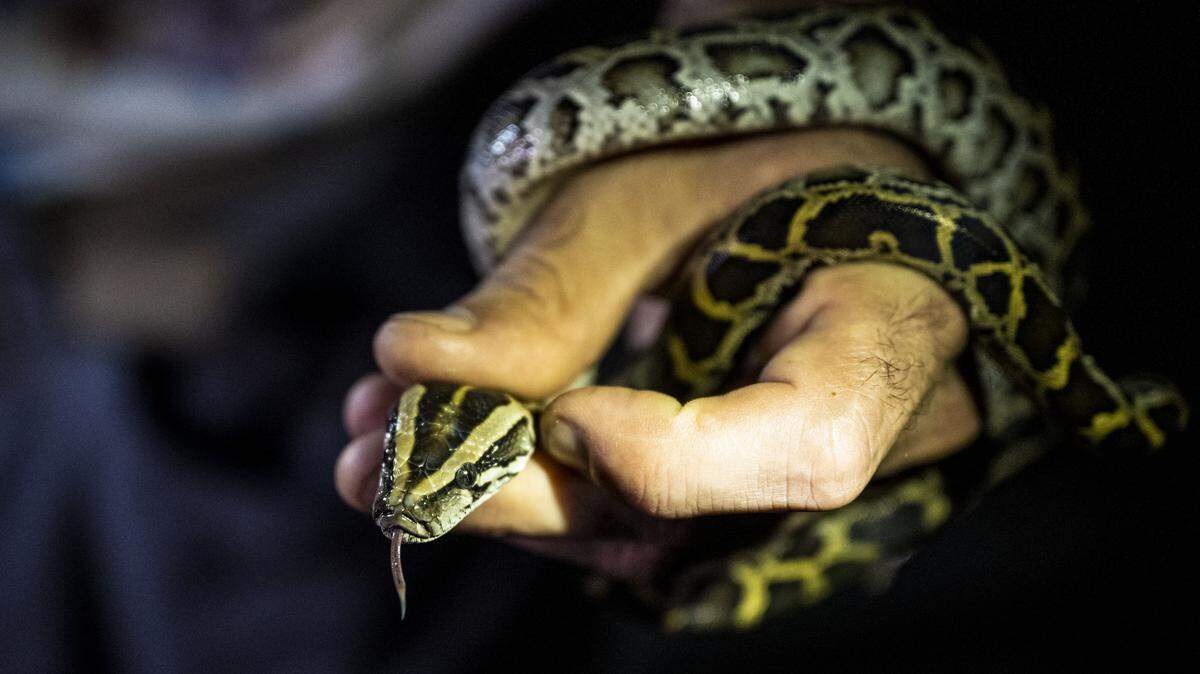
A 13-foot python. A 23-foot crocodile. Saber-toothed cats and mammoths. These aren’t creatures from some far-flung corner of prehistoric Africa or South America. They once lived on Taiwan — the same island known today for dense subtropical forests and bustling cities.
That picture is emerging from a fossil discovery near the city of Tainan in southwestern Taiwan, where scientists identified the remains of a giant python species unlike anything living on the island today. The find, based on a single vertebra pulled from ancient sediments, is reshaping what researchers know about Taiwan’s prehistoric past.
One Vertebra, One Big Story
Cheng-Hsiu Tsai of National Taiwan University and colleagues analyzed the fossil and identified it as belonging to a python based on its structural features. The vertebra was recovered from the Chiting Formation, a geological deposit formed roughly 800,000 to 400,000 years ago during the Pleistocene epoch.
Using that vertebra, the research team modeled the snake at approximately 13 feet in length. Modern Taiwan is home to more than 50 snake species, but none come close to the size of this prehistoric python. The team ruled out other large snake species by comparing the vertebra’s shape and structure to known python fossils from around the world.
“This fossil represents the largest and most unexpected fossil snake from Taiwan,” wrote Tsai.
No python species live on Taiwan today. The discovery of one that once thrived there, at such a size, changes the understanding of what the island’s wildlife once looked like.
An Island of Giants
The giant python wasn’t alone. Fossils from the same region paint a picture of an island that supported a dramatically different ecosystem — and a far more dangerous one.
Among the most striking finds: the remains of a 23-foot crocodile, identified as Toyotamaphimeia taiwanicus. That’s roughly the length of a large pickup truck, dwarfing most crocodilian species alive today. Crocodiles are no longer present on the island at all.
Evidence of a saber-toothed cat likely belonging to the genus Homotherium has also turned up in the regional fossil record. Mammoth remains round out the picture. Apex predators and massive herbivores shared a landscape that would be virtually unrecognizable to anyone walking through modern Taiwan.
Today’s island, while rich in biodiversity with its dozens of snake species and varied wildlife, has nothing remotely comparable to these ancient giants.
How Did They Get There?
How does a 13-foot python — along with mammoths, saber-toothed cats and enormous crocodiles — end up on an island?
The answer lies in the ocean itself. During the Pleistocene epoch, fluctuating sea levels sometimes reduced the distance between Taiwan and mainland Asia. When seas dropped low enough, land bridges or narrow crossings would have made it possible for large animals to walk, slither or swim their way to what is now Taiwan.
The giant python may not have evolved on the island in isolation. It may have arrived as part of a broader wave of large animals moving from mainland Asia during periods when the sea retreated. Researchers note that further discoveries from the same formation could clarify whether giant pythons were long-term inhabitants of Taiwan or only occasional arrivals. That question remains unanswered.
A Predator Gap That Persists Today
What happened to all these massive creatures? The fossil record suggests they disappeared during the sweeping extinctions that marked the end of the Pleistocene.
According to Tsai, their absence may still be felt.
“We propose that the niche of top predators in the modern ecosystem may have been vacant since the Pleistocene extinction,” wrote Tsai.
When these giant snakes, crocodiles and saber-toothed cats vanished, nothing else stepped in to fill their role at the top of the food chain. The island’s ecology shifted, and the loss of those apex predators left a gap that persists to this day. The shape of Taiwan’s modern wildlife is still defined, in part, by what disappeared hundreds of thousands of years ago.
A Rare Find on the World Stage
Python fossils from the late Pleistocene are rare globally, with comparable finds reported in only a few regions, including India and Eritrea. That makes this vertebra from the Chiting Formation an exceptionally valuable piece of the paleontological puzzle.
Before being studied, the fossil was held by local collector Li-Ren Hou, who later donated it to National Taiwan University, where it was formally analyzed and preserved. The discovery started not in a laboratory but in the hands of a community member who recognized something extraordinary.
The study, published in Historical Biology in January 2026, opens the door to further investigation. The Chiting Formation, with its rich fossil-bearing sediments, may yet yield more clues about the creatures that inhabited Taiwan during the Pleistocene.
This article was created by content specialists using various tools, including AI.