Scientists Find Something Inside Platypus Hair That Has Never Been Seen in Any Mammal
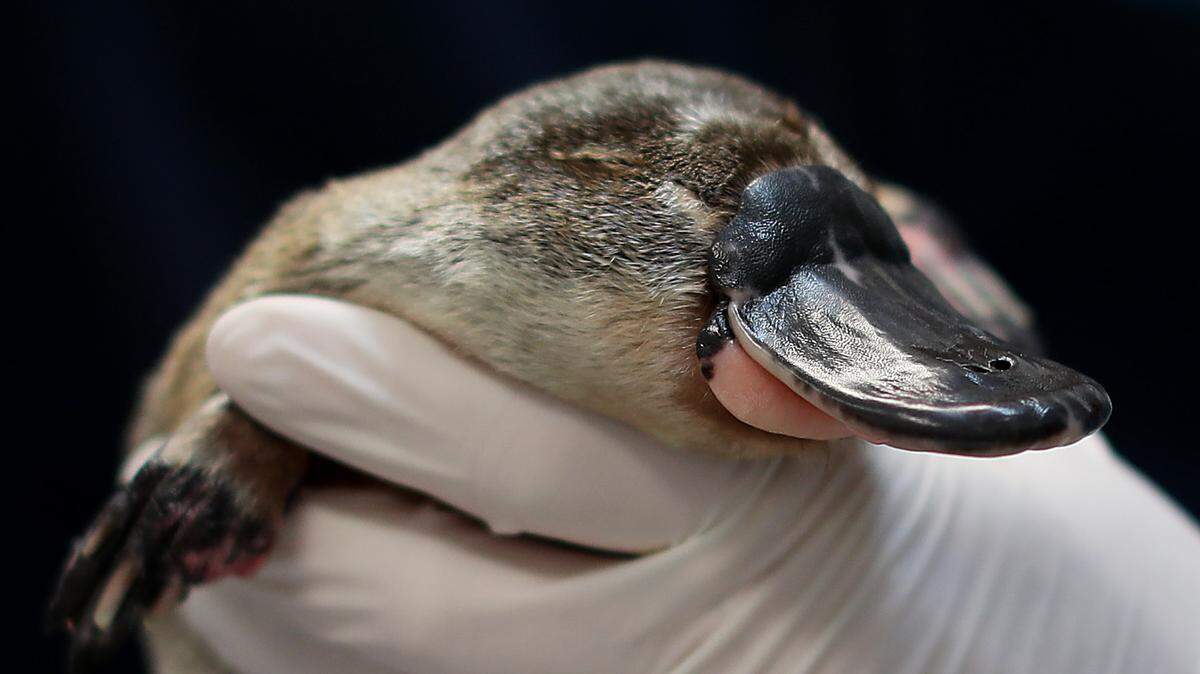
For more than half a century, a tidy consensus held in comparative biology: hollow melanosomes — the tiny, pigment-producing organelles found inside cells — were exclusive to birds.
Mammals, the thinking went, produced only solid melanosomes.
That assumption has now been upended by a study of one of nature’s most confounding creatures, and the findings raise questions that researchers are only beginning to answer.
A study published March 18, 2026, in the journal Biology Letters reports that the platypus possesses hollow melanosomes in its hair — a trait never before documented in any mammal.
More striking still, these melanosomes are both hollow and spherical, a combination the researchers say has not been observed in any known species.
“This was totally unexpected,” researcher Jessica Leigh Dobson said, per Discover Wildlife. “Hollow melanosomes have never been found in mammals before, and the combination of hollow and spherical is not seen anywhere else as far as we know.”
An Already Remarkable Animal Gets Stranger
The platypus has long occupied a singular place in the biological catalog. After all, it is an egg-laying mammal with a duck-bill and beaver-like body.
Females produce milk but have no nipples. Males carry venomous spurs on their hind legs. The animal can sense electricity, using electroreception to hunt underwater. It glows under UV light — for reasons scientists still cannot explain — and has five times more sex chromosomes than most other mammals.
When European naturalists first encountered the platypus, the animal was so unusual that scientists thought it was a hoax or prank.
Now, nearly 230 years after its initial discovery, the platypus continues to defy scientific expectations. This latest finding only deepens its mystery.
Inside the Discovery That Baffled Scientists
Understanding the significance of this discovery requires knowing what melanosomes are and why their structure matters.
Melanosomes are tiny structures, roughly one-thousandth of a millimeter long, responsible for producing pigment. They can take different shapes — spherical or rod-shaped — and they can be either solid or hollow.
In birds, hollow melanosomes are well documented. They form nanostructures that create the iridescent, bright plumage seen in species such as peacocks and starlings.
The prevailing scientific view for more than 50 years held that this hollow architecture was a uniquely avian trait — a feature absent from the mammalian lineage entirely.
Dobson, a researcher at Ghent University, challenged that assumption using high-resolution microscopy to examine melanosomes in platypus hair. Her analysis revealed something no one had seen before: hollow, spherical melanosomes in a mammal.
The finding did not emerge in isolation. Dobson’s work was part of a broader comparative effort examining melanosome morphology across approximately 120 other mammal species.
None of those species — including the echidna, the platypus’s closest egg-laying relative — showed hollow melanosomes. The trait appears to be unique to the platypus among all studied mammals.
A Puzzling Function, Even for a Platypus
In birds, the link between hollow melanosomes and vivid coloration is well established. Those hollow structures scatter light in ways that produce shimmering, iridescent effects. But the platypus offers no such visual spectacle — it is simply brown.
This disconnect between structure and apparent function presents a genuine puzzle.
“This doesn’t really conform with what we currently know about how melanosome shape correlates with color,” Dobson added.

If the hollow melanosomes are not producing brilliant colors in the platypus, what purpose might they serve? Scientists do have a theory, though it is not concrete.
The common ancestor of platypuses and echidnas is believed to have been aquatic. Hollow melanosomes may have offered insulation suited to an aquatic lifestyle.
Under this hypothesis, when the echidna lineage later transitioned to a land-dwelling existence, the trait may have been lost. The platypus, which remained aquatic, may have retained these hollow structures.
This evolutionary framework offers an intriguing explanation, but it remains speculative.
For those who follow the slow, methodical work of evolutionary biology, the platypus melanosome discovery is a reminder that even well-established scientific consensus can be revised by careful observation.
Nearly 230 years after it was first described, the platypus remains a source of genuine surprise — and a testament to how much remains unknown about the natural world.
This article was created by content specialists using various tools, including AI.