Scientists Discover New Species in Cambodia’s Caves, Including a Turquoise Pit Viper and a Flying Snake
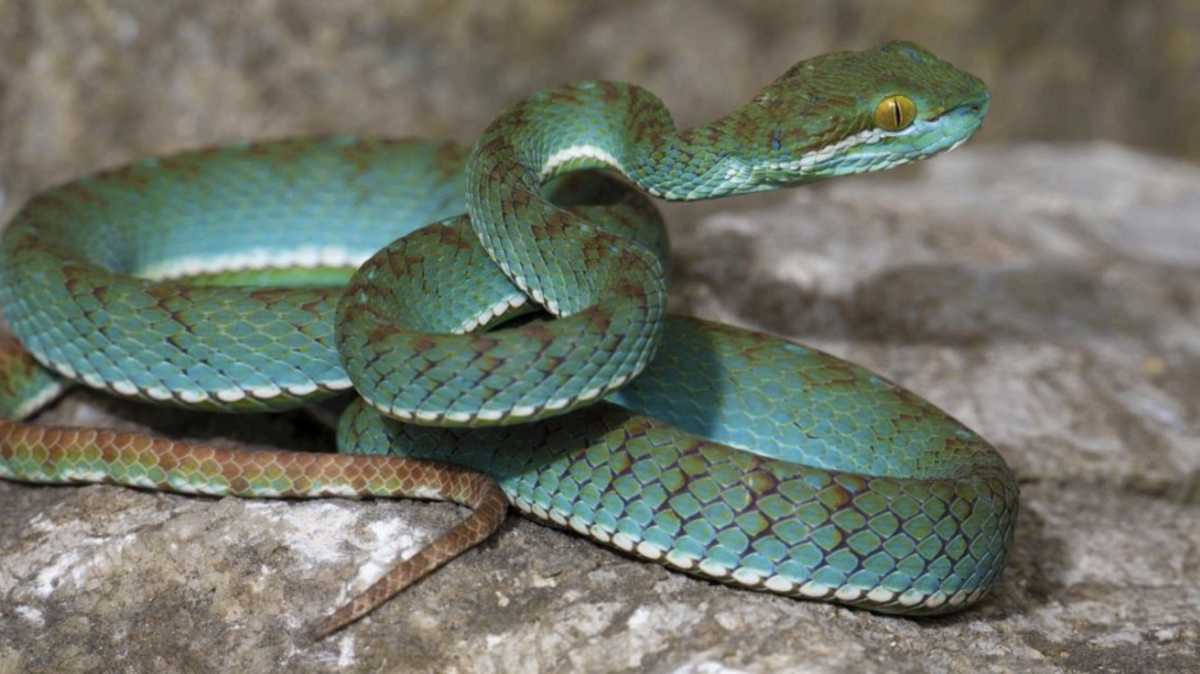
Deep inside Cambodia’s limestone caves, researchers have uncovered creatures never before known to science — including a turquoise pit viper, a flying snake, several geckos, two micro-snails and two millipedes.
The discoveries came from a survey of 64 caves spread across 10 hills in northwest Battambang province, conducted from November 2023 to July 2025. The viper and three of the geckos are still being formally named and characterized, while the other species have been officially recognized.
A report on the findings was published Monday.
Why Caves Matter for Discovery
The caves sit within a karst landscape — terrain shaped by dissolving limestone — where each hill and cave system is naturally isolated from the others. That isolation turns every cave into what researchers describe as an “island laboratory” of evolution, producing distinct life forms adapted to niche habitats found nowhere else on Earth.
UK-based conservation organization Fauna & Flora led the survey alongside Cambodia’s Ministry of Environment and local field experts.
Lee Grismer, an evolutionary biologist at La Sierra University, explained why that isolation matters.
“Think of it as their own vignette of biodiversity, where nature is performing the same experiment over and over again independently,” Grismer said.
“We go to these separate places and analyse the DNA of the species, and we see how the experiment has run. Some look alike, some look different, and by analysing this we can get an idea of what the driving forces are behind the way they evolve.”
One striking example: the striped Kamping Poi bent-toed gecko, Cyrtodactylus kampingpoiensis, found in 2024. Researchers identified four different populations of the gecko, each evolving differently from the others.
“If we are truly going to conserve the biodiversity on this planet, we need to understand what is there,” Grismer said. “We can’t protect something if we don’t know it exists.”
Searching by Torchlight
The Fauna & Flora team, led by Pablo Sinovas with help from local researchers, surveyed the caves day and night. Nighttime proved especially productive, when nocturnal creatures like snakes and geckos emerged from hiding.
“After sunset, spend hours traversing sharp, rocky terrain with torches, looking around every crevice, caves, rocks, branches, vegetation,” Sinovas told CNN. “Kind of a nice search party.”
Some of the caves hold up to 1 million bats. The research team did not enter large bat colonies due to health concerns.
Beyond new species, the survey also found globally threatened animals using the cave habitats, including the Sunda pangolin, green peafowl, long-tailed macaque and northern pig-tailed macaque.
Vast Territory Still Unexplored
Karst landscapes cover 9% of Cambodia — roughly 20,000 square kilometers (7,722 square miles) — and a large portion remains unknown to science. On just one karst hill in Banan district, researchers registered 14 caves that had never been previously surveyed.
“There is more exploration to be done,” Sinovas said. “Only scratched the surface in terms of biodiversity waiting to be discovered in Cambodia.”
The caves also hold cultural significance. Many are used as shrines for meditation and rituals and are visited by tourists and pilgrims.
A Race Against Threats
But the habitats face growing dangers, including poorly planned cement extraction, overtourism, wildlife hunting, logging and wildfires.
“Growing demand for cement and karst limestone is useful for making cement,” Sinovas said. “But if you destroy area where species live, and those species don’t live anywhere else, could lead to extinction, some species not even described yet.”
Sinovas said his team is “working with government to ensure important areas better protected,” adding that there are “ongoing discussions on giving this area protective status for future preservation.”
With thousands of miles of caves still largely unexplored, the findings suggest the real count of undiscovered species could be far higher — if the habitats survive long enough for scientists to find them.
This article was created by content specialists using various tools, including AI.