Seagulls Are Studying Your Movements Before They Steal Your Food, Research Shows
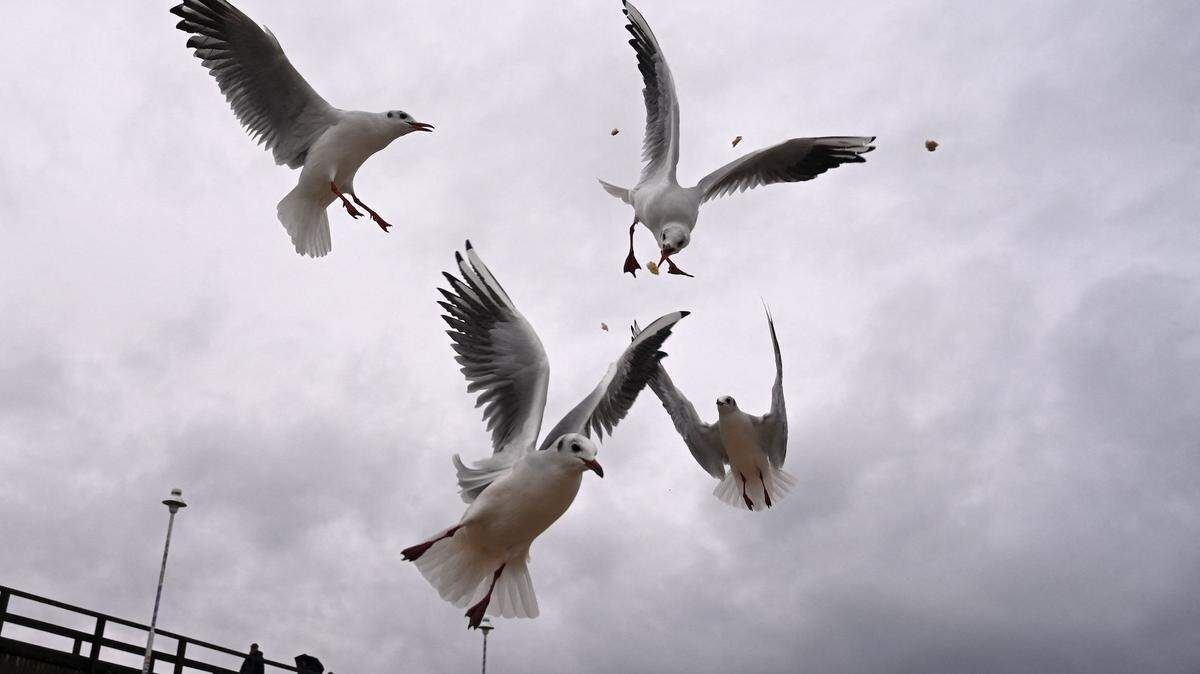
You’ve seen the viral videos. A seagull dives in, snatches a chip right off someone’s plate and vanishes before the victim can react. Those clips have racked up millions of views across social media platforms.
But the gull didn’t just get lucky. Research published over the past several years reveals that herring gulls — those bold birds haunting beaches, rooftops and picnic spots — actively observe and interpret human behavior to guide their own decisions. They track your eyes, note what you’ve touched and even copy your food choices.
Are Seagulls Tracking Where You Look?
One of the earliest studies to document this behavior was published in 2019. In “Herring gulls respond to human gaze direction,” researchers tested whether gulls pay attention to where humans are looking. Food was placed near a person who either stared directly at nearby gulls or deliberately looked away.
When the person made eye contact, gulls hesitated and took longer to approach the food. When the person looked away, gulls moved in more quickly. The birds are sensitive to human gaze and can use it as a cue for assessing risk.
So the next time you glance down at your phone on the boardwalk, they notice.
If You Touched It, A Seagull Wants It
A 2020 study investigated how gulls respond to objects humans have handled. Urban gulls were presented with identical food items — some touched by a human and some untouched. The gulls overwhelmingly chose the handled items but ignored non-food objects even when they had been touched.
Madeleine Goumas of the University of Exeter, one of the researchers on the study, explained: “We wanted to find out if gulls are simply attracted by the sight of food, or if people’s actions can draw gulls’ attention towards an item.” Her coauthor, Laura Kelley, added that gulls “may associate areas where people are eating with an easy meal.”
The finding suggests that human contact with a food item actually makes it more attractive to gulls — not less.
Seagulls Take Inspiration From Your Food Choices
Perhaps the most striking finding came from a 2023 study titled “Inter-species stimulus enhancement: herring gulls (Larus argentatus) mimic human food choice during foraging.” Researchers presented gulls with two food items that differed only in color, while a nearby human either ignored them or ate from one.
When the human ate, gulls became more attentive, approached more readily and overwhelmingly chose the item matching the human-handled food. This is a clear example of stimulus enhancement — a form of social learning in which observing another individual interact with an object increases attention to that object.
The gulls weren’t imitating human eating directly. They were using the human’s choice as a cue to guide their own foraging decisions.
How Urban Seagulls Differ From Others
Research has also mapped gull attention behaviors in detail, cataloging how they orient, scan and approach humans. Comparative studies suggest that urban gulls are particularly skilled at using these cues, though rural gulls also respond to human gaze and handling.
Taken together, these findings show that gulls combine multiple strategies: monitoring human attention to gauge risk, using human interactions to identify food and observing human choices to guide selection. That combination of vigilance, flexibility and strategic decision-making helps them thrive in urban environments.
What Should You Look Out for the Next Time You Eat Outside?
Herring gulls aren’t random scavengers grabbing whatever food falls within reach. They are observing, learning from and responding to human behavior in ways researchers have only recently begun to document. They read your gaze, they track what your hands touch and they watch what you eat.
So the next time a seagull locks eyes with you at the beach, know this: it’s not just hungry. It’s doing its own examination.
This article was created by content specialists using various tools, including AI.