Meet the 69-Year-Old Gorilla Who Has Outlived Nearly Every Other of Her Kind
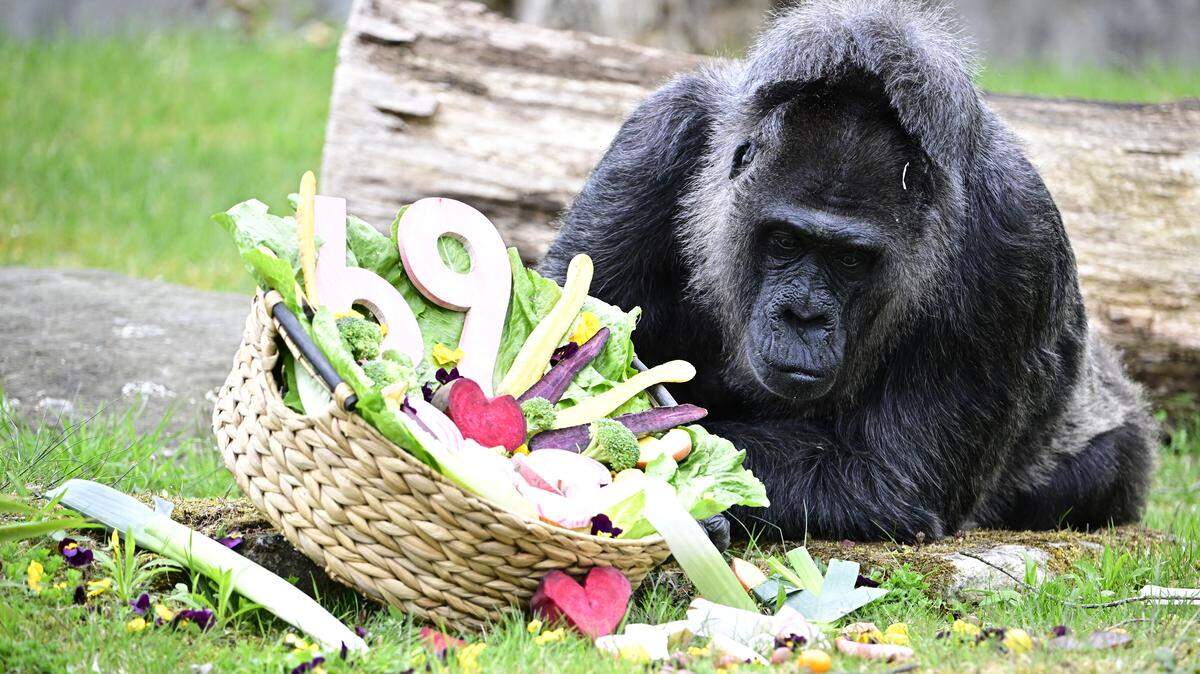
Fatou, the world’s oldest gorilla living in captivity, just turned 69 — and her birthday celebration at Berlin Zoo is a fascinating window into what modern animal care can achieve.
The western lowland gorilla marked the occasion on April 13 with a meal suited to her dietary needs: cherry tomatoes, beets, leeks and lettuce, via AP. No cake — her age demands careful attention to nutrition.
A Life That Nearly Doubled the Norm
Here’s the number that puts Fatou’s story in perspective: In the wild, western lowland gorillas typically live 35 to 40 years. Fatou has nearly doubled that upper range, making her an extraordinary outlier in primate longevity.
Believed to have been born in 1957 in West Africa, Fatou’s exact birthdate is unknown. April 13 has been designated as her official birthday. According to Guinness World Records, she arrived in Europe in 1959 via Marseille, France, after reportedly being taken from the wild by a French sailor and later sold to the zoo.
She has lived at the Berlin Zoo since 1959, making her its longest-residing animal. She claimed the title of the zoo’s oldest resident in 2024 following the death of Ingo the flamingo, which had lived at the zoo since 1955 and was believed to be at least 75 years old.
Five Generations and Counting
Fatou’s legacy extends well beyond her own remarkable lifespan. She gave birth to a daughter, Dufte, in 1974 — the first gorilla born at the Berlin Zoo. Although Dufte died in 2001, Fatou has living descendants, including her granddaughter M’penzi and at least three great-great-great-grandchildren as of 2026.
That’s five generations of gorillas traced back to a single individual — a lineage that speaks to both Fatou’s significance and the zoo’s long-term efforts.
What 69 Looks Like for a Gorilla
Age has taken a clear toll. Fatou has lost her teeth, experiences arthritis and hearing loss and generally avoids interaction with other gorillas. She lives in a separate enclosure and receives dedicated care from zoo staff.
Zoo director Andreas Knieriem said in a previous statement:
“We are very proud to have been able to accommodate an animal with us now for more than half a century. We are pleased that Fatou is in such good health despite her age.”
That “good health” is relative, but it speaks to how tailored care can extend life far beyond typical expectations for the species.
Why This Story Is Worth Watching
Fatou’s case sits at the intersection of several trends worth paying attention to. Advances in veterinary geriatric care, evolving approaches to animal welfare in captivity and growing public interest in longevity science across species are all part of the picture.
If you track how institutions adapt to aging populations — whether human or animal — Fatou’s story offers a compelling case study. The Berlin Zoo’s approach to managing her declining mobility, dietary restrictions and social needs mirrors conversations happening in human elder care: personalized nutrition, dedicated living spaces and quality of life as the priority.
The Quick Takeaway
Fatou is not just an old gorilla. She’s an outlier who has lived nearly twice the expected wild lifespan for her species, produced five generations of descendants and become a living benchmark for what captive animal care can achieve. Whether your curiosity leans toward biology, animal welfare or the broader science of aging, her story is one to follow.
Her 70th birthday is next.
This article was created by content specialists using various tools, including AI.