These Cockroaches Shockingly Eat Each Other’s Wings — Then They Decide to Mate for Life
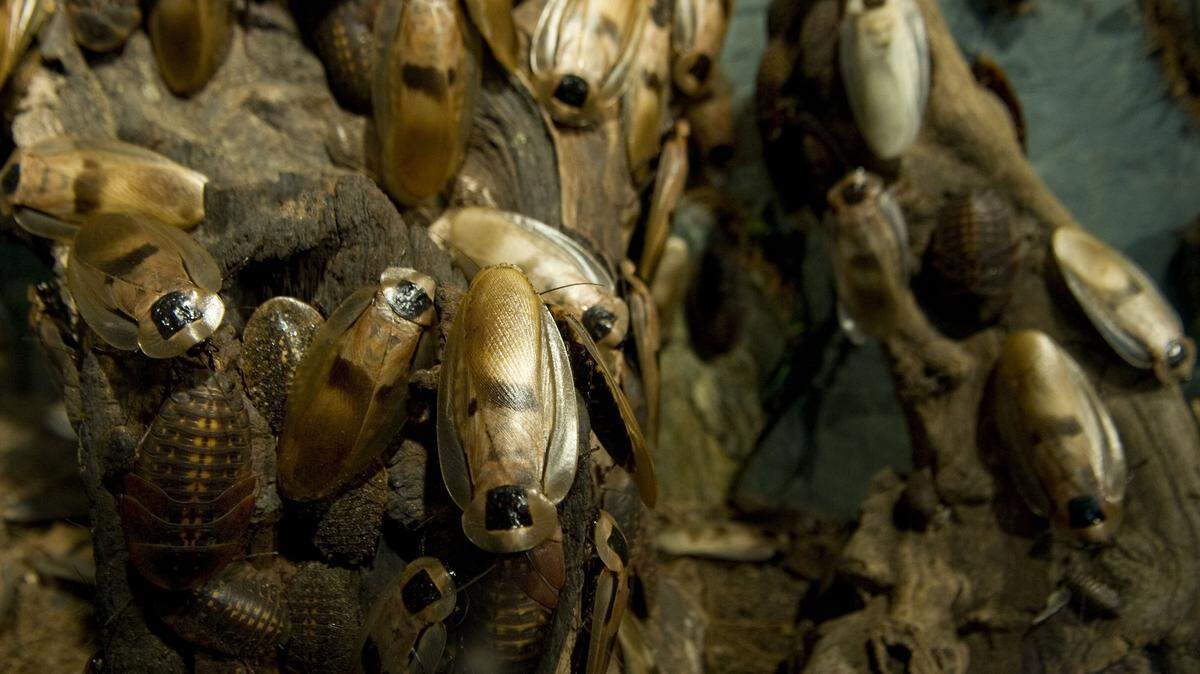
What if the creepiest critter in your house could teach your kids a lesson about love, loyalty and the scientific method? A new study reveals that a species of wood-eating cockroach may form lifelong partnerships — and the way they seal the deal is delightfully disgusting. It’s the kind of science story that could get even the most reluctant young learner leaning in.
Published in Royal Society Open Science, the research focuses on Salganea taiwanensis, a wood-eating cockroach species that appears to form what scientists call a pair bond — a close, long-term social connection between two individuals that goes beyond a single mating event. Think penguins waddling back to the same partner each breeding season.
“This just means that two individual organisms will spend an extended period of time with each other and will exclude other individuals from the bond,” says Nate Lo, an evolutionary biologist at the University of Sydney and an author of the new study, per NPR. “The two individuals know that the other member has their back.”
What Are the Benefits of Pair Bonding for Cockroaches?
The benefits include grooming, better nest protection and food sharing. But what makes this finding remarkable is that pair bonding is almost unheard of among insects.
“But we very rarely see it in invertebrates, so things like insects or crustaceans or other creepy crawlies,” says Lo.
How Salganea Taiwanensis Cockroaches Start Their Partnership
So how do these roaches kick off their relationship? This is the part kids will never forget. The male and female burrow into rotting wood and then spend hours chewing off each other’s wings — and eating them.
“The female eat[s] the male’s wings and the male eats [the] female’s wings,” says Haruka Osaki, a behavioral ecologist at the Museum of Nature and Human Activities in Hyogo, Japan. And when this one-time meal is complete, “it means they formed a pair.”
Only after this ritual do they begin nesting and mating. The wings serve as a protein source, which matters when your entire diet is decaying wood — a tough, low-nutrient food. About 20 percent of the roaches’ wood-digesting enzyme activity happens in the hindgut, often with help from symbiotic microbes that break down cellulose.
“The wings, they’re a protein source,” explains Lo, “and this seems to set them up for some kind of romance into the future.”
Haruka Osaki’s Cockroach Experiment Is a Perfect Lesson in Scientific Method
Here’s where this story becomes a goldmine for parents and teachers. The experiment is a textbook example of the scientific method in action — observation, hypothesis, controlled test and surprising results.
Osaki collected roaches from Okinawa. “Just go to forest and find a log on the ground and chop it with my hatchet,” she says. “So I destroy their house.”
Researchers paired the roaches in artificial nest boxes. Not all pairs ate each other’s wings, creating a natural control group and an experimental group. Then came the real test: an intruder was introduced to each pair.
The roaches that still had their wings showed no aggression toward the intruder. But the wing-eaten pairs? They fought back fiercely.
“Both the male and the female attack,” Lo said. “They also wiggle their butts and hit them with their butts. They’re quite aggressive little creatures.”
Lo said the intruder was “very worried” and was “trying to escape.”
“So that suggests they don’t want to have a third wheel. It’s like they’ve got this pact,” he continued.
What the Cockroach Study Teaches Kids About Tiny Brains and Big Surprises
The ability to recognize a specific partner and treat individuals differently can improve a pair’s chances of surviving and successfully reproducing. That kind of partner-specific tolerance combined with aggression toward outsiders strengthens cooperation and reduces competition.
But the real takeaway for young science lovers might be the most thought-provoking part.
“Invertebrates probably are more complex and have some form of cognition, more than we might expect,” says Lo. “Even though they’ve got tiny brains, they can develop quite human-like characteristics.”
Lo also notes that bonded pairs had spent an extra 24 hours together before the experiment — during which they ate each other’s wings. However, he says, “We’re not sure about how important that is,” and adds that more experiments are planned to figure it out.
Next time someone squashes a bug without a second thought, this study offers a great conversation starter: What else might these tiny creatures be capable of that we haven’t discovered yet?
This article was created by content specialists using various tools, including AI.