Viral Octopus Video Explained: The Real Study Behind Octopuses Throwing Objects Underwater
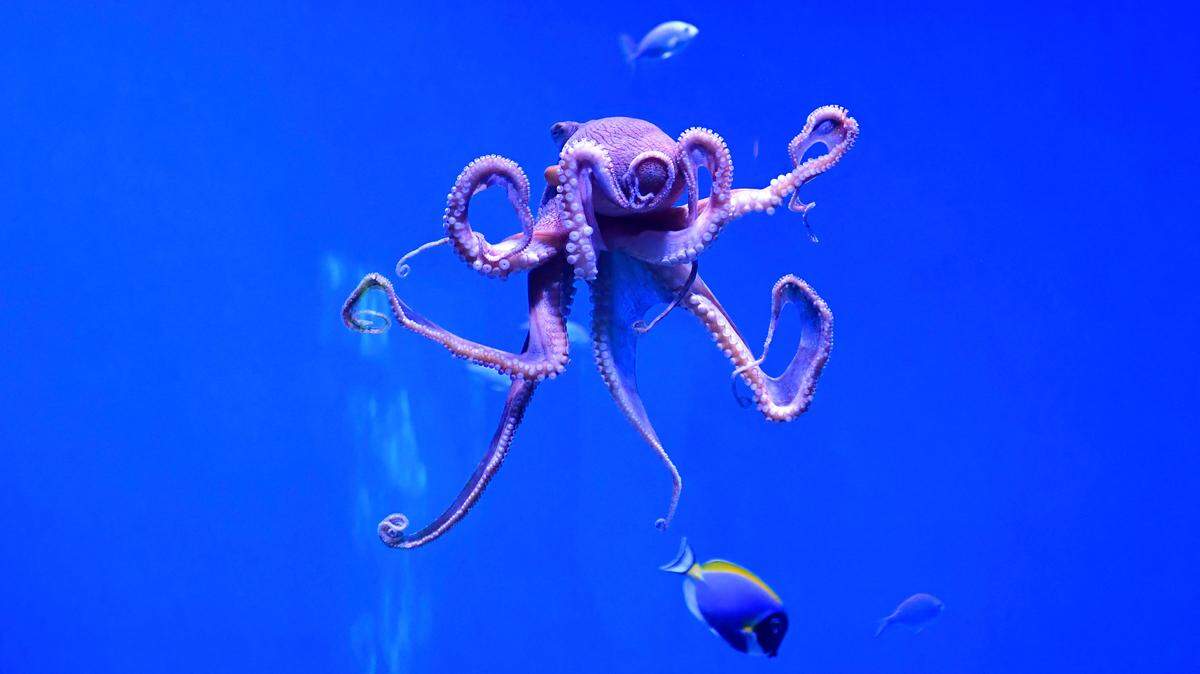
You’ve probably seen it by now — that Instagram video posted in April 2026 of an octopus hurling rocks at another octopus, paired with a claim that females throw stuff at males who won’t leave them alone. It racked up views. People lost their minds. And here’s the thing: the video is AI-generated, but the claim isn’t exactly false.
Before you dunk on anyone who shared it, there’s some real science worth knowing about.
The Actual Study
Back in 2022, researchers at the University of Sydney published findings in PLOS One that documented octopuses gathering debris and forcefully ejecting it underwater — sometimes hitting other octopuses in the process. The study was led by Prof Peter Godfrey-Smith, and the team filmed the common Sydney octopus, Octopus tetricus, in Jervis Bay, New South Wales, Australia using stationary underwater cameras.
They recorded over 21 hours of footage from 2015 field recordings, observing roughly 10 individual octopuses. Both males and females were caught on camera throwing material, but here’s where it gets interesting: the majority of throws were performed by females, with two females responsible for 66% of all throws.
How Octopuses Throw Things (Yes, Really)
The mechanics are wild. Octopuses collect debris — silt, algae, shells — in their arms and web, then expel the material using jet propulsion from their siphon, which they shift between their rear arms during the action. In some cases, arm extension was also used to propel objects. In one documented instance, “a shell was, at least in part, flung by straightening an arm, and hit another octopus.”
As Prof Godfrey-Smith put it: “The throwing – or propelling, or projecting – of objects that have been gathered and held is rare in the animal kingdom. To propel an object, even for a short distance, under water is especially unusual, and also quite hard to do.”
So Do Females Really Throw at Harassing Males?
This is the part you came for. Out of 102 total throws recorded, 53% occurred within two minutes of a social interaction with another octopus — fighting, mating or grappling. Of those interaction-related throws, 33% (17 instances) resulted in the material actually hitting another octopus.
And yes, some of those hits appeared targeted. Researchers noted unusual arm combinations used to hold material, higher force throws and darker body coloration during the throw — a color change previously associated with aggressive behavior. Some octopuses on the receiving end even appeared to react by raising their arms or ducking before being hit.
Prof Godfrey-Smith addressed the gender dynamics directly: “In quite a few cases, females have thrown material at male octopuses who have been attempting to mate with them … But in other cases, females throw and hit other females.”
He also described the behavior’s likely purpose: “I think quite a lot of it is a bit like an assertion of ‘personal space.’”
So it’s not as simple as “girl octopus pelts creepy boy octopus.” But it’s also not wrong.
This article was created by content specialists using various tools, including AI.