Stranded Whale ‘Timmy’ Sparks Global Debate as Dramatic Rescue Takes Shape in Baltic Sea
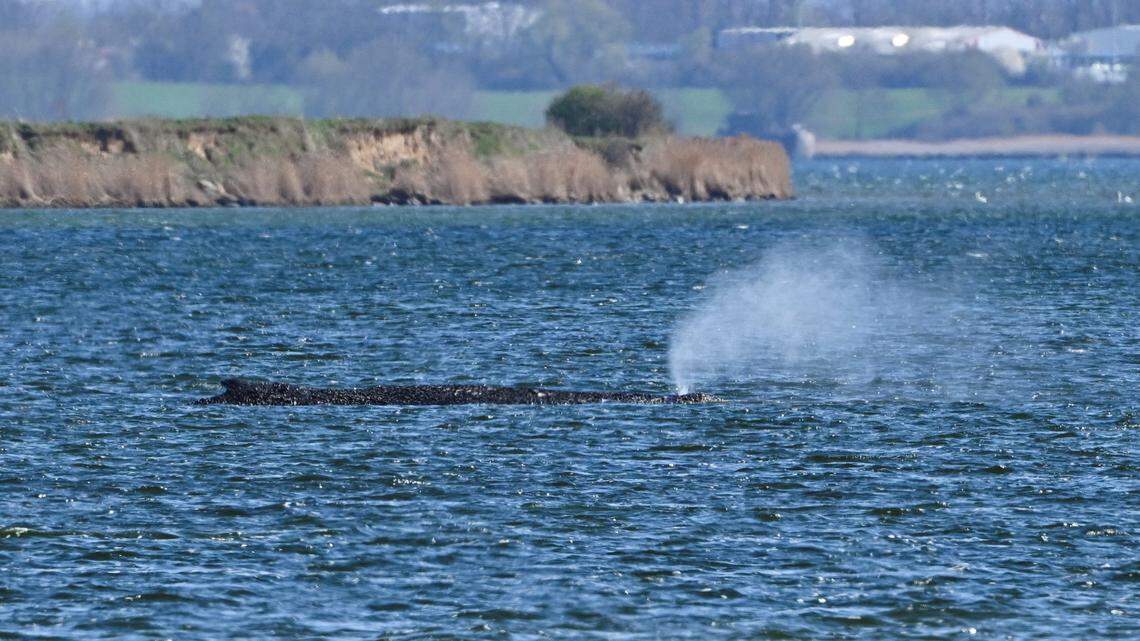
A humpback whale stranded in Germany’s Baltic Sea has become one of the most emotionally charged wildlife stories in recent memory, drawing international coverage and fierce debate over whether a last-ditch rescue effort can save its life.
The whale, estimated to be about 13.5 meters long, became trapped on a sandbank near Lübeck, Germany, in late March, far from its natural habitat in the Atlantic Ocean. It briefly freed itself before becoming stuck again in shallow waters near the island of Poel along the Baltic coast.
Local German media nicknamed the animal “Timmy,” and major outlets including the BBC and The Guardian quickly adopted the name. The nickname turned an anonymous marine animal into a global phenomenon, with public interest and emotional reactions surging worldwide as people followed the rescue efforts.
Emotional Response Draws Official Warnings Over Whale Rescue
The emotional investment grew intense. Officials warned about misinformation circulating online and established an exclusion zone around the animal to prevent interference. In one incident, a 67-year-old woman jumped from a boat in an attempt to approach the whale before being stopped.
Environment Minister Till Backhaus acknowledged the wave of feeling to BBC, saying, “The outpouring of sympathy shows how deeply the animal’s fate moves people,” while urging respect for emergency crews and safety measures.
Private Donors Fund Last-Minute Effort
As the whale’s condition worsened, regional authorities appeared ready to concede defeat. Officials had acknowledged it might be better to let the “majestic animal go in peace.” Rescue efforts were temporarily suspended due to the whale’s poor condition.
Then two wealthy private donors stepped in with funding for a last-minute rescue effort that ultimately received state approval, per The Guardian. Walter Gunz, founder of the MediaMarkt electronics chain, argued that without this intervention the whale would not survive. “At least if you try something you have a chance of saving it,” he told the German news agency dpa.
Backhaus, the same minister who had seemed prepared to let the whale go, changed course in support of what he described as a “unique” rescue operation, saying he was “quite happy” that there remained a final opportunity to succeed.
“The prognosis remains critical. But a chance of survival cannot be completely ruled out,” Backhaus said. “Against this background, it is justifiable to allow this attempt, and I thank the initiative for it.”
How ‘Operation Cushion’ Works
The rescue plan, sometimes referred to as “Operation Cushion,” involves using inflatable air cushions to lift the weakened whale from the seabed. Rescuers would then place it onto a reinforced tarpaulin attached to a tugboat and tow it gradually toward deeper waters, with the goal of guiding it around Denmark’s coastline into the North Sea and possibly back to the Atlantic.
Officials in Mecklenburg-Western Pomerania have described the approach as “minimally invasive,” per BBC, though wildlife experts warn that any intervention carries significant risk, especially after earlier rescue attempts were unsuccessful.
Describing the whale’s current state, Backhaus added, “It’s not active, and it’s certainly not agile, but it still showing there’s life in it.”
Why Experts Remain Divided Over the Whale Rescue
Not everyone shares the optimism. Greenpeace Germany, which participated in earlier rescue attempts, has said it does not support the latest plan because of the whale’s deteriorating health. Specialists from the German Oceanographic Museum and the Institute for Terrestrial and Aquatic Wildlife Research reported the whale is severely injured, with visible skin damage.
The whale is believed to have initially become entangled in fishing netting before running aground. It has also developed a skin condition due to the Baltic Sea’s lower salt levels, which are not suitable for the species. Experts believe the animal may also have significant internal injuries, likely caused by the pressure of its own body weight on its organs after being stranded for several days. Additional signs suggest it may have been struck by a ship’s propeller.
Earlier, rescuers dug a channel using excavators to help the whale swim free, but attempts to guide it back toward open waters failed when it turned into shallower areas again.
It remains unclear how the humpback whale ended up in the Baltic Sea in the first place, far outside its normal range and in conditions that have made survival increasingly difficult.
This article was created by content specialists using various tools, including AI.