Ariel Toucans Are Living Proof That Wildlife Can Thrive Again in the Heart of a Big City
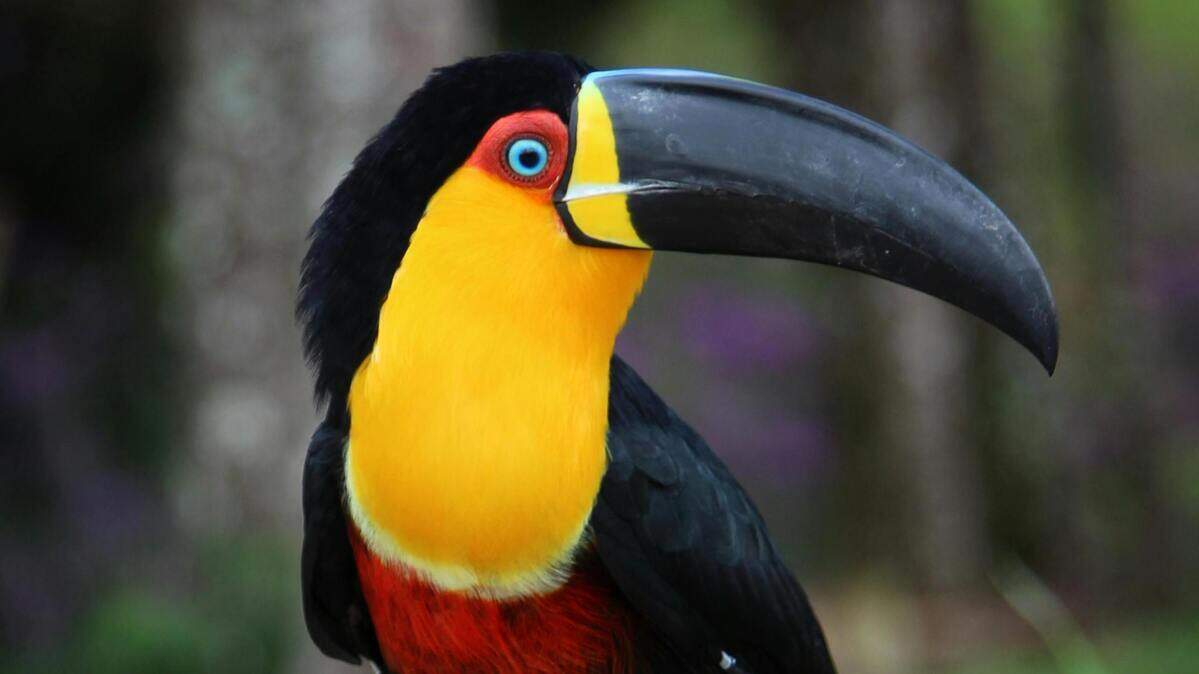
What if one of the strongest arguments for urban wildlife conservation wasn’t theoretical — but flying right over city streets?
In Rio de Janeiro, it is.
More than 50 years after 46 ariel toucans were released into a damaged forest inside the city, those birds are doing more than just surviving. They’re helping the ecosystem bounce back in a place most people wouldn’t expect: the middle of a major urban center.
Why Release 46 Ariel Toucans in Rio de Janeiro?
Tijuca National Park isn’t some remote wilderness. It’s one of the largest urban forests in the world, embedded directly within Rio de Janeiro — surrounded by roads, neighborhoods and daily city life.
By the 1960s, the ariel toucan (Ramphastos ariel) had disappeared from this landscape.
In 1970, primatologist Adelmar Coimbra Filho tried to change that. He released 46 toucans into the recovering forest, hoping they might help restore what had been lost.
Then, for decades, no one really followed up.
Coimbra Filho passed away in 2016, never fully seeing what became of that effort. Now, nearly 10 years later, researchers are finally piecing together the results — and they point to something bigger than just one species making a comeback.
They point to a city ecosystem quietly healing itself.
Ariel Toucans Are Thriving, Not Just Surviving
A study published in Nordic Society Oikos in February 2026 tracked the toucans over a 12-month period, with researchers often walking more than 20 kilometers a day to observe their behavior.
What they found challenges a common assumption about wildlife in cities.
The birds had reestablished feeding relationships with about 76% of the native plants they were historically known to eat. For plants with medium and large seeds — the hardest to disperse — that number climbed to nearly 90%.
That’s not the behavior of a struggling population. That’s a species fully reintegrating into its environment — and the reason it matters comes down to what toucans actually do.
The Role Only Ariel Toucans Can Fulfill
Ariel toucans are frugivores, meaning fruit makes up most of their diet. As they move through the forest, they consume fruit and spread seeds across long distances, helping plants regenerate.
But they’re not just any seed dispersers.
These birds can break open tough fruit casings that many other animals can’t, allowing them to transport larger seeds tied to some of the forest’s most vulnerable tree species.
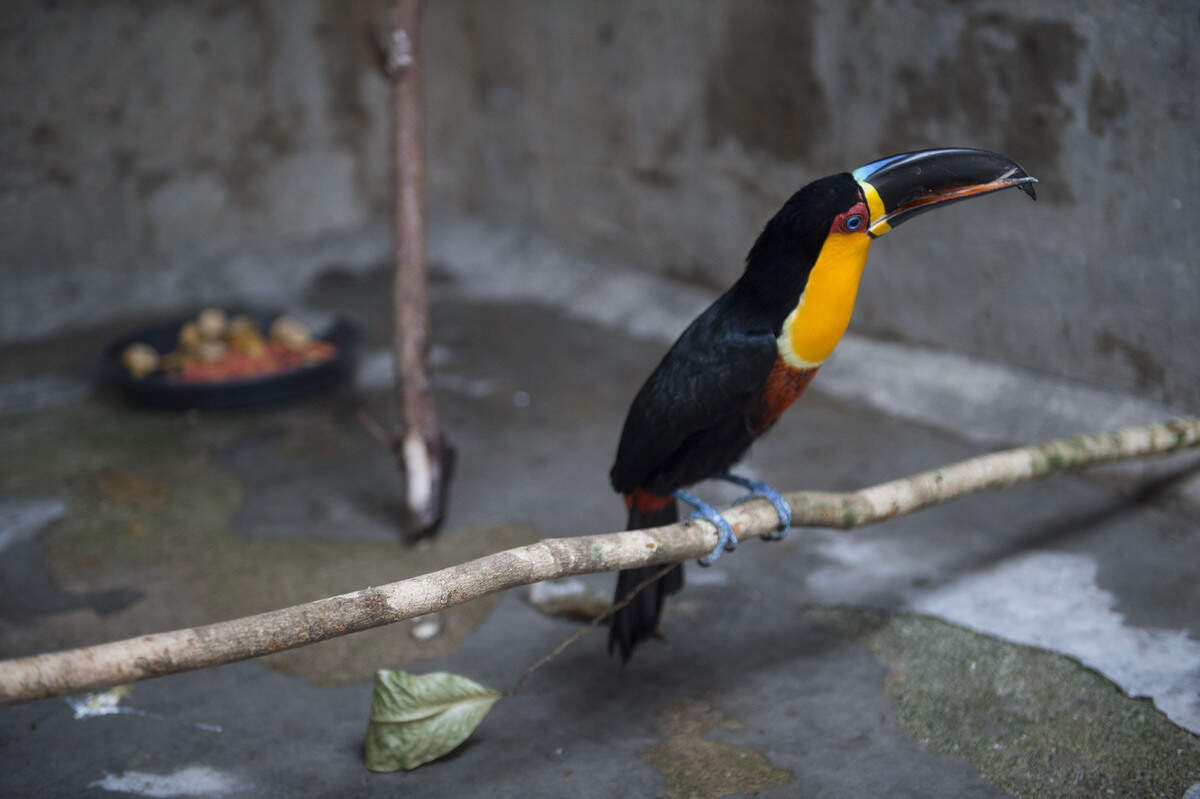
Lead researcher Flávia Zagury, an urban ecology specialist at the Federal University of Rio de Janeiro, described the birds as “sociable” and “intelligent beings” in an interview with Mongabay.
“The way they are able to handle fruits: Sometimes it has a hard capsule on the outside, and they hold it with their little feet and open it with their beaks,” Zagury said.
“They have an incredible ability to access these resources,” she added.
Other reintroduced animals — like red-rumped agoutis and brown howler monkeys — don’t overlap much with the toucans’ diet. That means the birds are filling a unique ecological role, especially when it comes to spreading those larger seeds.
And in a recovering forest, that role is critical.
Two threatened tree species stood out in the toucans’ diet: the jussara palm and the bicuíba-branca. Both have lost more than half of their natural habitat. Both depend on animals to move their seeds.
The jussara palm, in particular, showed up as the toucans’ most frequently consumed food source — a sign that the birds may be directly supporting the survival of species that are otherwise struggling.
Ariel Toucans’ Impact Goes Beyond Tijuca
The story doesn’t stop inside Tijuca National Park.
A separate long-term observation at the Rio de Janeiro Botanical Garden — another urban green space — revealed just how adaptable these birds are in city environments.
The findings were published online by Cambridge University Press on March 3, 2026.
Over nearly six years, researchers recorded 850 feeding events across 91 plant species. They also tracked 29 young birds across 10 nests, finding that nesting sites were reused year after year.
In other words, this isn’t a temporary presence.
The toucans are building stable, reproducing populations within urban spaces — using city green areas as reliable sources of food and shelter.
What Ariel Toucans Prove About Urban Wildlife Conservation
There are still open questions. Scientists are continuing to study exactly how much the toucans are driving seed dispersal and long-term forest regrowth.
But one thing is already clear. Wildlife doesn’t just need untouched wilderness to succeed.
Given the right conditions — and sometimes just a second chance — species can return, adapt and even thrive in places as busy and human-dominated as a major city.
More than 50 years after their release, the ariel toucans of Rio aren’t just a conservation success story. They’re proof that nature can find its way back — even in the heart of it all.
This article was created by content specialists using various tools, including AI.