What Is GatorWise? A North Carolina Drive-Thru Alligator Incident Explains Wildlife Program
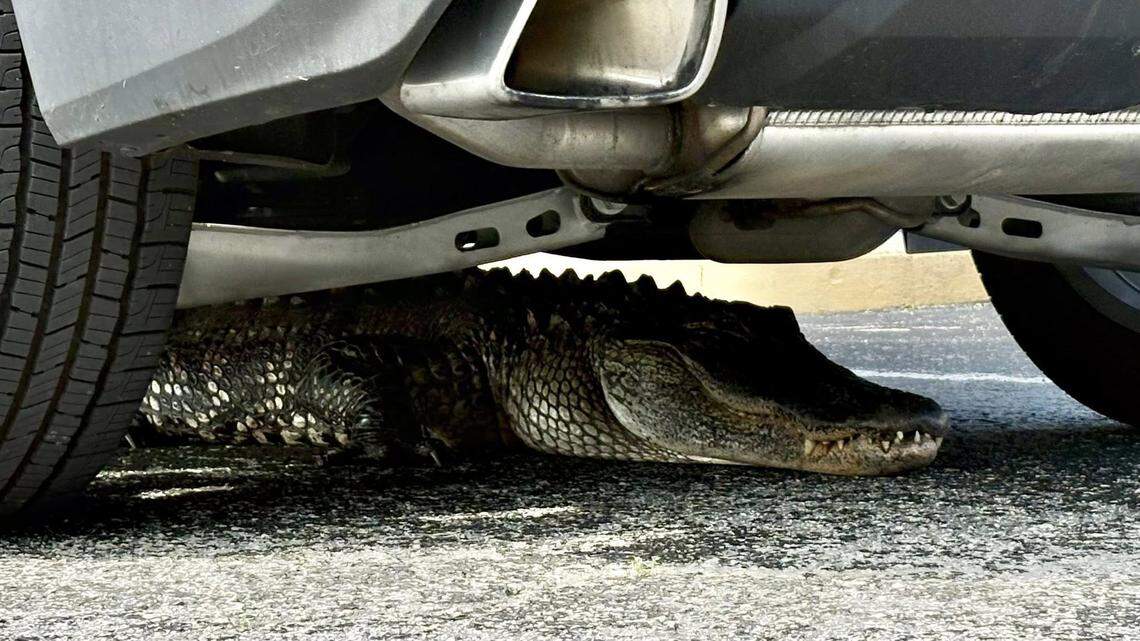
A bank run took a wild turn in Southport, North Carolina, when a vehicle struck a large alligator in the drive-thru lane of a Truist Bank — and wildlife officials say encounters like this one are only going to become more common.
The Southport Police Department reported the incident on April 16 in a Facebook post, describing how officers responded after the large alligator was hit by a car on the bank’s property. The animal ended up lodged underneath the vehicle.
A Multi-Agency Response for One Gator
The scene required a coordinated effort. The Southport Police Department, Southport Animal Protective Services and the Brunswick County Sheriff’s Office all responded, establishing a perimeter around the vehicle while crews worked to safely remove the alligator from beneath it.
The North Carolina Wildlife Resources Commission then arrived to evaluate the animal on-site. Their conclusion: the gator needed a new home.
“NC Wildlife arrived and determined the gator would need to be relocated,” the police department wrote. “The gator was loaded and transported away to a safer location.”
Why Encounters Like This Are Increasing
The Southport Police Department used the incident as an opportunity to issue safety guidance, warning that alligator activity is expected to increase during warmer months. Their advice: avoid feeding alligators, do not dispose of fish or food scraps in water, supervise people and pets, keep a safe distance and remain vigilant near water.
The warning aligns with a broader push from state wildlife officials. The NCWRC launched its “GatorWise” program in 2025 to educate the public on coexisting with alligators, according to a press release from the agency.
The need for that program is backed by a striking data point: the NCWRC reported that the majority of its public calls concern alligators.
Development Is Pushing People and Gators Together
NCWRC Wildlife Biologist Alicia Wassmer pointed to North Carolina’s population growth and expanding development as key factors driving more frequent human-alligator encounters.
“As development continues to expand into once-remote areas where alligators live, we need to become GatorWise in order to safely share the land with this species,” Wassmer said at the time of the program’s launch.
She framed the challenge in even more urgent terms, noting that the overlap between human communities and alligator habitat is accelerating.
“Urbanization is projected to increase at exponential rates in areas where alligator habitat occurs,” Wassmer said. “This continuous conversion of natural spaces, coupled with a constant influx of newcomers who may not know that alligators are here or aren’t familiar with alligator behavior, has amplified the need for state wildlife resource agencies to proactively connect residents and visitors with vital information on how to coexist responsibly with the alligators that live in these communities.”
In Southport, at least, one gator is now settled in a safer location — far from the nearest ATM.
This article was created by content specialists using various tools, including AI.