Historic New York Cemetery Becomes Unlikely Star of Groundbreaking Bee Research Study
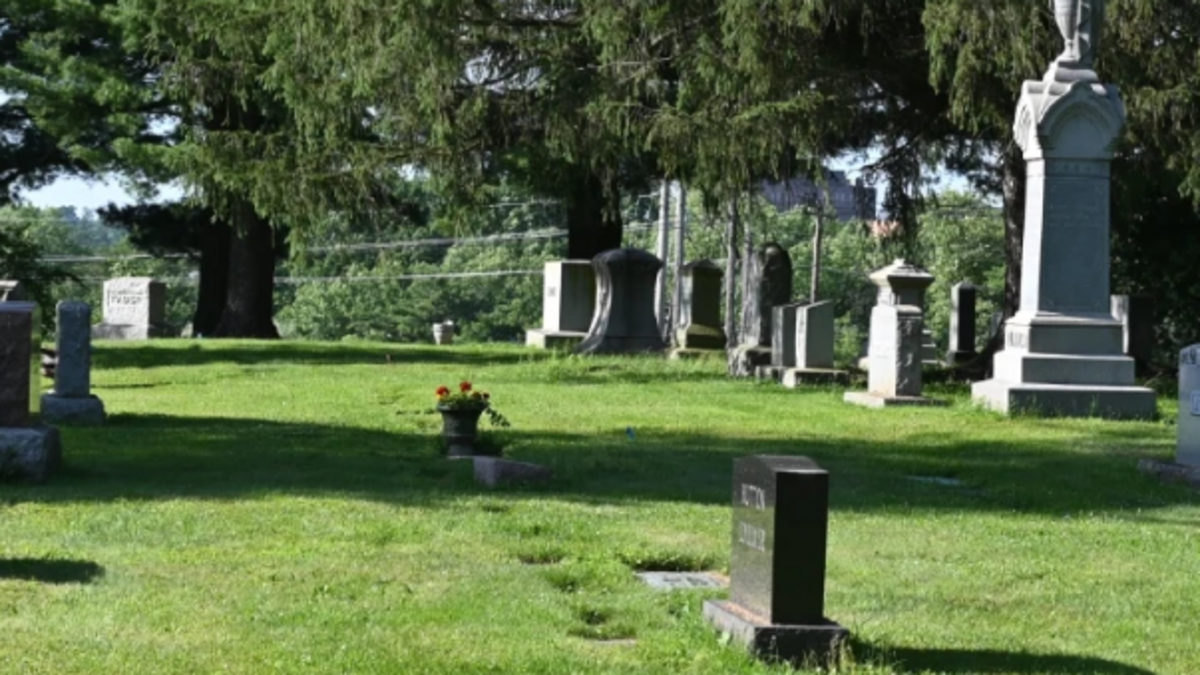
Cemeteries aren’t usually thought of as ecological hotspots.
But beneath the quiet grounds of East Lawn Cemetery in Ithaca, New York, researchers uncovered something extraordinary: an estimated 5.5 million ground-nesting bees living just below the surface.
The discovery quickly turned a historic burial site into one of the most significant pollinator habitats ever documented.
Why Cemeteries Are Surprisingly Perfect for Bees
At first glance, a cemetery might seem like an unlikely place for thriving wildlife. In reality, it checks nearly every box for ground-nesting bees.
These spaces are typically quiet, protected from heavy foot traffic and free from frequent landscaping disruptions. Unlike parks or residential lawns, cemeteries are rarely dug up, tilled or redeveloped — which means the soil remains stable year after year.
They also tend to avoid pesticide use, creating a safer environment for insects that are highly sensitive to chemicals.
For species like Andrena regularis — commonly known as the regular mining bee — that combination is ideal. These bees don’t build hives. They dig tunnels underground, relying on undisturbed soil to raise their young.
A Giant Bee Discovery Hiding in Plain Sight
The East Lawn Cemetery aggregation may have never been studied if not for one observant passerby.
Rachel Fordyce, a technician in an entomology lab at Cornell University, noticed an unusually high number of bees while walking through the cemetery. Instead of avoiding them, she collected a sample and brought it to professor Bryan Danforth for identification.
That moment sparked a deeper investigation — one that would reveal the sheer scale of what was happening beneath the surface.
Millions of Bees, One Small Plot of Land
To understand the population, researchers conducted a study published April 13 in the journal Apidologie. They used emergence traps — small mesh tents placed over the ground — to capture bees as they surfaced from their underground nests.
Over several weeks in spring 2023, the team collected thousands of specimens and used that data to estimate the total population across the cemetery’s roughly 6,000 square meters (about 1.5 acres).
The result: between 3 million and 8 million bees, with an average estimate of 5.5 million.
“I was completely floored when we did the calculations,” Danforth told Scientific American. “I have seen published estimates of bee aggregations in the hundreds of thousands. But I never really imagined that it would be 5.56 million bees.”
The Kind of Bees Most People Never Notice
Part of what makes this discovery so striking is how invisible these bees are.
Roughly 75% of bee species are solitary ground nesters. They don’t live in hives or produce honey. Instead, they quietly dig individual tunnels underground.
They’re also far less aggressive than many people assume. These bees rarely sting and play a crucial role in pollination, especially for early-season crops and wildflowers.
Despite their importance, they’ve historically received far less attention than honey bees.
Location Matters, Too
East Lawn Cemetery’s location adds another layer to its appeal.
It sits about one-third of a mile from Cornell Orchards, providing a steady supply of early spring blooms. The bees’ emergence in April aligns perfectly with apple blossoms and other flowering plants, giving them immediate access to food sources.
That combination — stable nesting ground and nearby nutrition — helps explain how such a massive population could thrive in one place.
A Bigger Lesson About Conservation
Beyond the staggering numbers, the study highlights something more important: places we overlook can play a major role in supporting biodiversity.
Cemeteries, in particular, may serve as critical refuges for pollinators at a time when many natural habitats are disappearing.
“The research elevates the value of solitary ground-nesting bees and shows just how abundant these bees are, how important they are as crop pollinators, and that we need to be aware of these nest sites and preserve them,” Danforth told the Cornell Chronicle.
The stakes are significant.
“These populations are huge, and they need protection,” he added. “If we don’t preserve nest sites and someone paves over them, we could lose — in an instant — 5.5 million bees that are important pollinators.”
In this case, a quiet cemetery became more than a resting place for the past.
It became a powerful reminder that the right conditions — even in the most unexpected places — can support life on a massive scale.
This article was created by content specialists using various tools, including AI.
This story was originally published April 23, 2026 at 12:30 PM.