Rare Axolotl Found in a U.K. River for the First Time — and a 10-Year-Old Rescued It
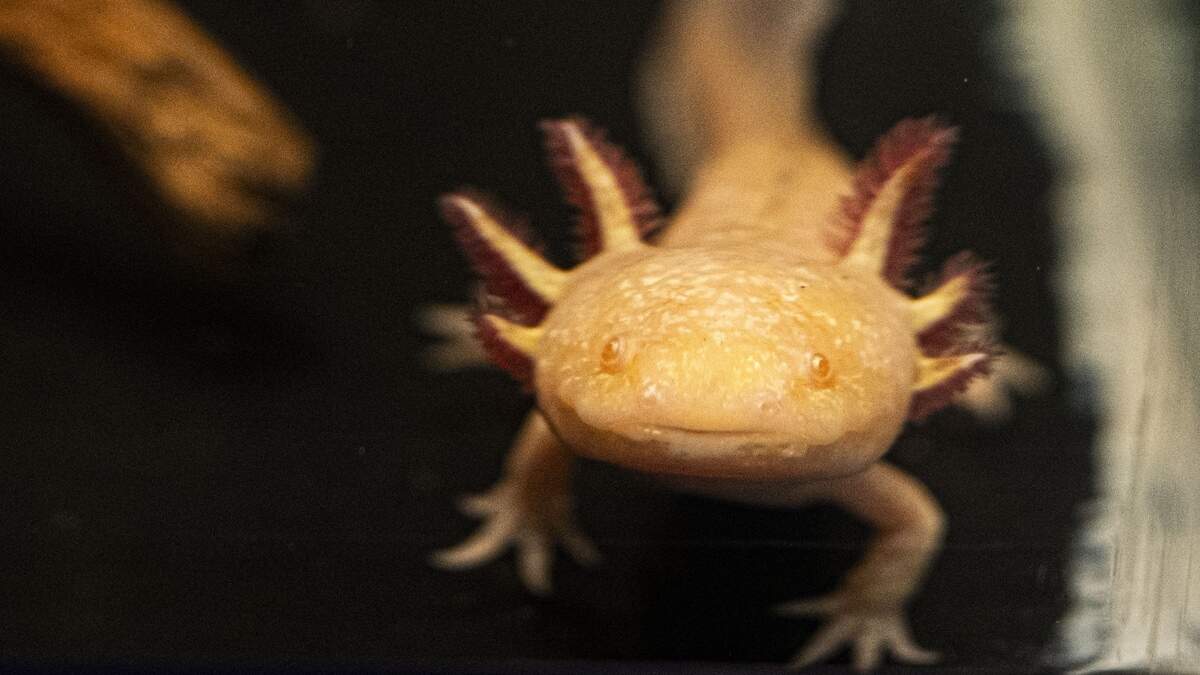
A Mexican axolotl has been found in a U.K. river for the first time ever in recorded history — and the person who spotted it was a 10-year-old girl on holiday with her family.
Evie Hill discovered the 9-inch creature beneath the Dipping Bridge on the River Ogmore near Bridgend, South Wales. The axolotl was pale with speckles and had injuries to its tail and stomach. This indicated he may have been attacked by a predator before the rescue.
It marked the first documented discovery of an axolotl in the wild in the U.K., as there are about 50 to 1,000 left globally, per BBC. The family named him Dippy, brought him to their Leicester home after cutting their vacation short and started sharing videos of him via TikTok.
How Evie Made the Catch
“I went down to the bank and there was this thing with gills on its head. I was like: ‘That’s an axolotl.’ I was: ‘Mum, there’s an axolotl in the river.’ She went: ‘There’s not. You’re not going back in the water.’ So I went back in the water anyway, because I’d seen it. And then I caught it and brought it back,” Evie told the outlet.
Her mother, Melanie Hill, told the BBC Evie was always exploring and pointing out creatures in the wild.
“The kids were down at the water having a nose and suddenly everything changed,” she recalled. “You can imagine my surprise, I couldn’t believe it.”
The rescue was the last thing Melanie expected to bring home from the trip.
“I’ve been telling Evie all this time that those creatures she watches on YouTube, they’re not real,” she remarked. “Here I am with one in my kitchen.”
Getting Dippy Settled Into His New Home
The family researched how to rehabilitate the animal and said they have “no regrets” about bringing him home. They are even going to give him more space to move around.
“We’ve got a much bigger tank and we plan to get that set up so it can be transferred,” Melanie said, adding that they sought advice from an expert.
Why Experts Say Evie Saved His Life
Chris Newman, director of the National Centre for Reptile Welfare, credited Evie with playing a crucial role in saving Dippy’s life.
He said the situation was fairly unusual and praised the young girl’s sharp observation skills and “keen eye” for spotting the animal, noting that she had done exceptionally well to notice him.
Newman added that rescuing Dippy likely saved him, as he probably wouldn’t have survived much longer on his own.
He also highlighted that catching the animal was an impressive effort in itself, explaining that they are “quite slippery” and difficult to handle, and said she did a very good job.
What Makes Axolotls So Extraordinary
Mexican axolotl salamanders are amphibians that spend their whole lives underwater, per National Geographic. They live in the lake complex of Xochimilco, a network of artificial channels, small lakes and temporary wetlands.
Axolotls are unusual because they show a trait called neoteny, meaning they keep juvenile characteristics for their entire lives. Unlike most amphibians, which start life in water and then move onto land as adults — such as a tadpole transforming into a frog — axolotls never go through that full change. Instead, they remain aquatic and keep their fins, external feathery gills, and overall larval appearance, essentially staying in a “permanent young” stage.
They are also well known in science for their remarkable regenerative abilities. If they lose a limb, they can grow it back in roughly a month. This skill is especially useful in their environment, where aggressive encounters can happen; an axolotl may even bite off the gills or limbs of another if provoked or crowded. Because of their regenerative powers, researchers study them closely to better understand whether similar tissue regrowth could one day be possible in humans.
A Species Under Pressure
The growth of Mexico City has caused the nearby lake network to shrink and become partly contaminated, which has contributed to a drop in axolotl populations. This decline has been made worse by non-native fish such as carp and tilapia that both outcompete axolotls for food and prey on their eggs.
For now, Dippy is safe in Leicester — and gaining followers one TikTok at a time.
This article was created by content specialists using various tools, including AI.