People are copying Barack Obama and Steve Jobs to fix the ‘nothing to wear’ paradox. Here’s why
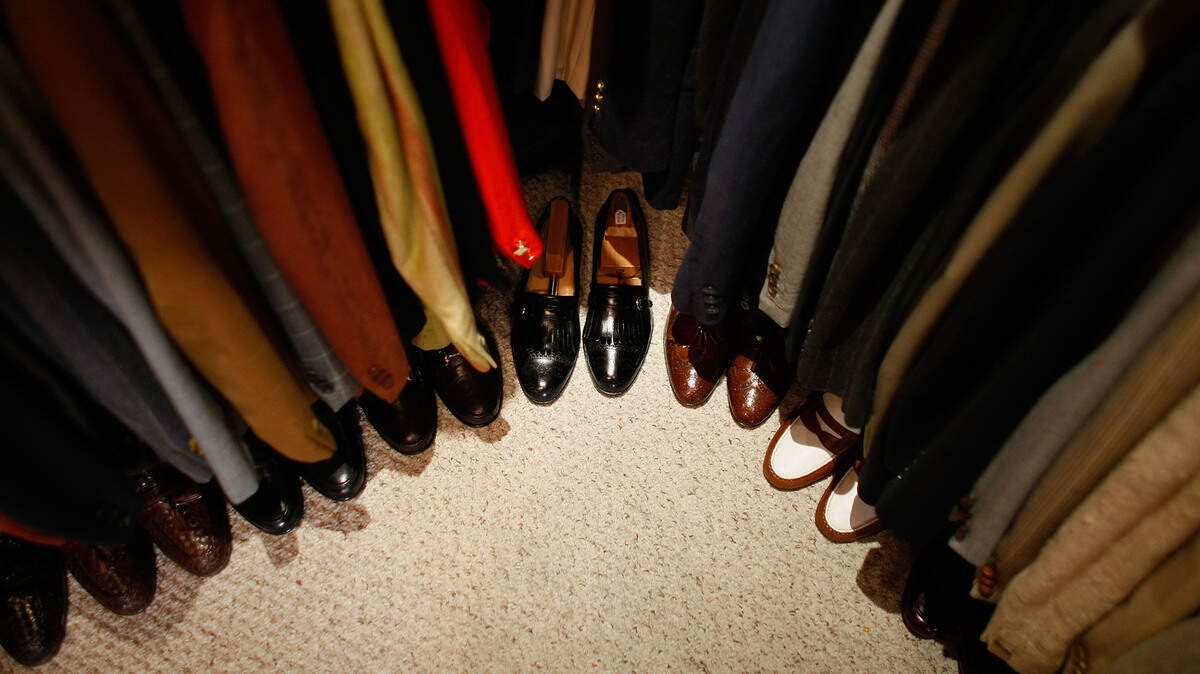
You stand in front of a closet packed with clothes and announce, to no one in particular, that you have nothing to wear. The shirts are right there. The dresses are right there. And yet your brain refuses to commit. This is the paradox of choice in action and it explains why a full wardrobe so often produces an empty-handed morning.
It is also why figures like Barack Obama and Steve Jobs cut the decision out entirely, leaning on the same few outfits day after day.
It is the same mental gridlock you feel staring at a wall of cereal boxes or scrolling through a streaming service without picking anything. In fashion, though, it has a daily cost stress before work, regret on the way out the door and a quiet drain on your energy for the rest of the day. Here is what the paradox of choice actually is, why your closet is one of its purest examples and what to do about it.
What the paradox of choice really means
The paradox of choice is the idea that while more options sound like a good thing, past a certain point they make us less satisfied, more anxious and more prone to second-guessing. Freedom of choice is genuinely valuable but there is a tipping point where it flips from liberating to paralyzing.
The phrase was popularized by American psychologist Barry Schwartz in his 2004 book The Paradox of Choice Why More Is Less. His core argument is that abundance carries hidden costs the effort of evaluating options, the fear of picking wrong and the nagging sense that some other choice might have been better.
Schwartz leaned on a now-famous piece of research often called the jam study, conducted by psychologists Sheena Iyengar and Mark Lepper and published in 2000.
They set up a tasting booth at a grocery store, sometimes displaying 24 varieties of jam and sometimes only six. The larger display attracted more browsers but shoppers facing the six-jam display were far more likely to actually buy (around 30%) than those facing the 24-jam display (about 3%).
More options drew people in, then made them less likely to commit.
Why “I have nothing to wear” is rarely literally true
Your closet is the jam booth, except you are standing in front of it every single morning. There are dozens, maybe hundreds, of options, and no single right answer a dozen outfits would technically work.
That is exactly why “I have nothing to wear” is rarely literally true. You have plenty to wear. The feeling is not a shortage of clothes it is the mental gridlock of too many options with no easy way to choose between them.
The more you have invested in your wardrobe, the worse this can get. More pieces means more combinations to evaluate, more what-ifs and more chances to wonder whether the other shirt would have been better.
“Women often feel like they have nothing to wear because they have too many options and not enough staple pieces,” fashion stylist Rianna Faye said in an interview with Harper’s Bazaar.
Anna Cascarina, a former fashion editor and stylist, told the same outlet: “When it comes to getting dressed, nothing feels cohesive. The biggest mistake is building a wardrobe in pieces rather than as a system.”
Analysis paralysis vs. decision fatigue
When too many options collide with a morning deadline, the strain shows up in two distinct ways. One hits you instantly at the closet. The other builds quietly across your whole day. Psychologists have names for both, and understanding the difference is the key to fixing it.
- Analysis paralysis is the in-the-moment freeze. Faced with 40 shirts and no obvious winner, your brain stalls out trying to weigh them all. You either burn 10 minutes you did not have, or you give up and default to the same three things you always wear. It is the immediate cost of too many choices not a shortage of options, but an inability to commit to one.
- Decision fatigue is the long-term drain. Every choice you make spends a little of a finite mental reserve, and that reserve does not refill until you rest. A draining outfit decision at 7 a.m. does not just cost you those minutes it leaves you with less mental energy for every choice that follows, from what to eat to how to handle a tough email at 4 p.m.
This is why figures like Steve Jobs and former President Barack Obama often wore the same outfits. “You’ll see I wear only gray or blue suits. I’m trying to pare down decisions. I don’t want to make decisions about what I’m eating or wearing. Because I have too many other decisions to make,” Obama told Vanity Fair in 2012.
How to overcome the closet paradox
The fix is not more willpower it is less to decide. Every strategy below works the same way it shrinks the number of choices you face at 7 a.m., or removes the decision from the table entirely. You do not need to do all of them. Start with one, see how your mornings change and build from there.
- Prep the night before. Pick tomorrow’s outfit tonight, when you are not racing a clock. You wake up to a decision that is already made.
- Set a uniform for busy days. Take a page from Obama and Jobs choose one reliable outfit formula and repeat it. A go-to combination turns a daily decision into a non-decision.
- Cull what you don’t wear. Most people wear a small fraction of what they own, yet every unworn piece adds to the visual noise you sort through each morning. Clear out what you never reach for, and the options that remain are ones you would actually choose.
- Organize so you can see everything. Hidden clothes create phantom what-ifs. When everything is visible and grouped by type, color or occasion, your brain stops second-guessing whether a better option is buried in the back.
- Build a capsule wardrobe. This is the most complete fix because it tackles the root cause. A capsule wardrobe is a small, intentional collection of pieces chosen to work together as a system rather than a pile of one-off items. Fewer choices, every one of them good.
A full closet was never the goal an easy morning was. The paradox of choice means piling on more options does not get you there past a certain point, it does the opposite. Build a little structure into your wardrobe and the decision gets smaller, easier and eventually almost automatic.
This article was created by content specialists using various tools, including AI.