
Mahjong Is More Popular Than Ever. Here’s Why So Many Americans Are Playing Again.
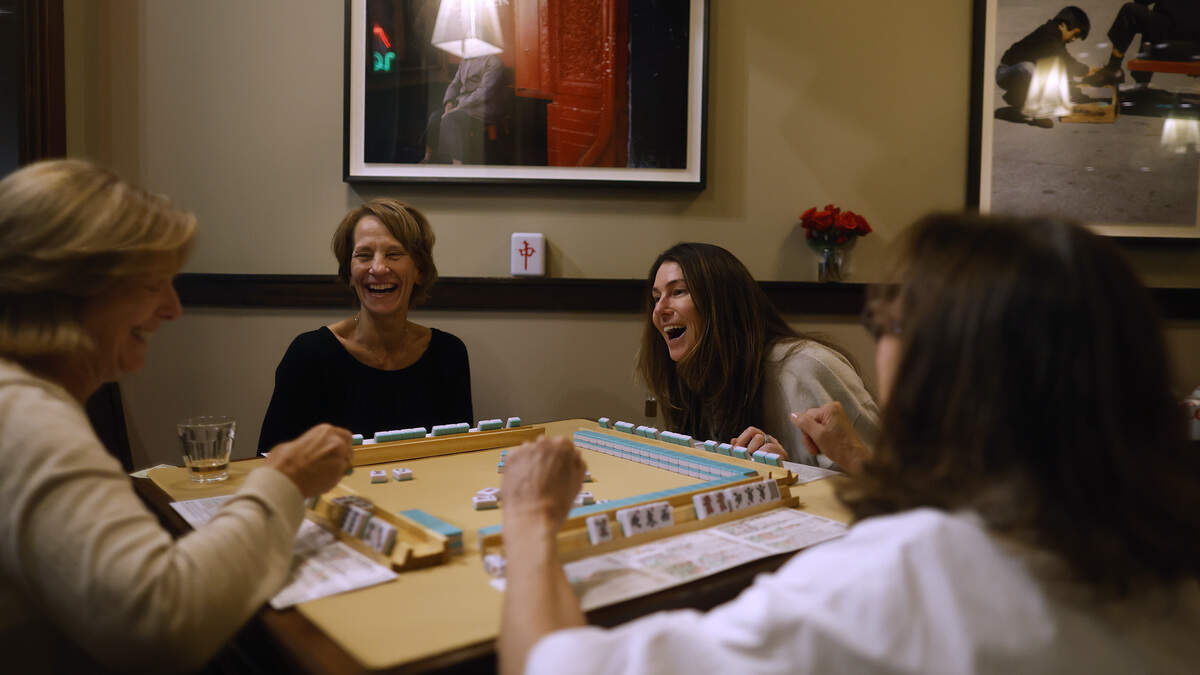
Mahjong is having a major moment in the United States, with tile games popping up at bars, community centers and friends’ kitchen tables across the country. Here is what is driving the resurgence and why the centuries-old game is connecting with a new generation of players.
Why is everyone playing mahjong in 2026?
Mahjong events in the U.S. jumped 179% between 2023 and 2024, according to Eventbrite, as players look for low-pressure ways to gather offline.
“Mahjong has had multiple waves of popularity in America over the past century. What we’re seeing now feels different because it’s being driven by a genuine need for connection and community. Those needs aren’t going away,” Annelise Heinz, a University of Oregon historian and author of Mahjong, A Chinese Game and the Making of Modern American Culture, told Good Housekeeping. The shift also tracks with post-pandemic loneliness reporting from the New York Times and Gallup data showing young adults are drinking less than previous generations.
What are the different styles of mahjong?
Mahjong is played in several regional traditions, including Chinese, Taiwanese, Japanese, Filipino and American versions, each with distinct tiles, rules and rituals. The variety of spellings, including mahjong, mah jong and mah-jongg, reflects that diversity of histories.
Nicole Wong, founder of The Mahjong Project and author of Mahjong, House Rules From Across the Asian Diaspora, told Good Housekeeping that immigrants from various countries and cultures brought their own iterations of the game with them to the U.S., which led to the range of styles people can find and play here today.
Does playing mahjong have brain benefits?
A study in the Journal of Cognitive Enhancement found that older adults with mild cognitive impairment who participated in cognitively stimulating hobbies showed better memory, attention and processing speed than those who did not. Mahjong, which is strategic, social and mentally engaging, fits squarely into that category.
The appeal also taps into something more universal. “Games go back thousands and thousands of years. The earliest tombs that they’ve found have dice in them. They very rarely find any kind of archaeological excavation without some kind of game playing. It’s really just part of the human experience,” Geoff Engelstein, an award-winning table-top game designer, told the New York Times.
This article was created by content specialists using various tools, including AI.
.jpeg)