You can add a sauna to almost any home for less time and money than you might think — Here’s how
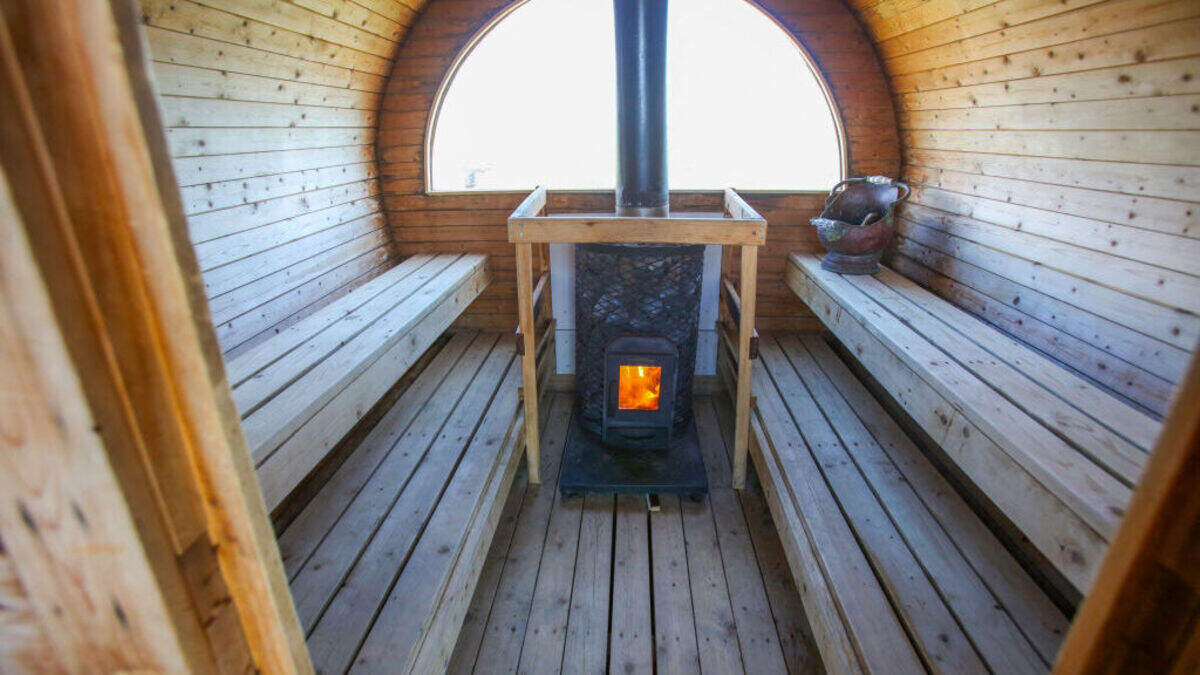
Adding a sauna to your home has become a real consideration for a much wider range of buyers. Prefab kits and plug-in infrared units have brought entry prices lower than most people expect, though hidden costs like electrical upgrades and ventilation still catch buyers off guard. Here’s what the process actually involves.
Can Any Home Support a Sauna?
Most homes can fit some type of sauna with the right planning. You’ll need roughly 16 to 24 square feet for a two-person model, plus 2 to 3 feet of clearance on each side.
Ceiling height shapes your options more than most buyers realize: below 7 feet, compact infrared is the only realistic fit; 7 to 7.5 feet handles most standard models; above 7.5 feet, full two-tier bench configurations become possible.
Basements tend to work well because concrete floors manage heat and moisture, the electrical panel is usually nearby and cooler ambient temps reduce heat-up time. Renters and condo owners face more friction since HOA rules and shared panels often rule out 240V installs, making plug-in infrared the most practical option in those cases.
What Types of In-Home Saunas Are Available?
The type you choose drives every decision about cost, electrical work and how long the project takes.
- Plug-and-play infrared (1-2 person): Runs on a 120V outlet, needs no electrician, assembles in about an hour and costs $0.15 to $0.50 per session. All-in price: $1,500 to $4,000. The lowest-barrier entry point for renters and first-time buyers.
- Prefab infrared kit (2-4 person): 120V or 240V depending on size. Unit cost $2,500 to $7,000 plus $300 to $1,500 in labor. Assembles in 3 to 8 hours.
- Traditional electric (Finnish-style): Heats to 160 to 200 degrees, requires a 240V circuit and proper ventilation. Higher cost and longer timeline than infrared.
- Wood-burning: Off-grid, suits outdoor installs. Firewood runs $4 to $8 per session.
- Barrel sauna (outdoor): Round design sheds moisture and heats faster than square rooms. Sits on gravel or a deck with no interior modifications needed.
- Custom build: Glass walls, red light therapy panels, cold plunge adjacency. Highest cost and longest timeline.
How Much Does In-Home Sauna Installation Cost?
Most homeowners spend between $1,500 and $10,000 for a home sauna installed, according to Angi. Infrared saunas run $1,500 to $7,000, with an average around $4,200. Prefab kits land between $2,500 and $7,000. Custom builds start around $4,000 and can climb past $10,000. Indoor installs typically run $3,000 to $9,000. Labor accounts for 30 to 50 percent of total cost.
The costs that routinely catch buyers off guard:
- Electrician work to hardwire an indoor heater: $400 to $800
- Dedicated circuit for an outdoor install including trenching: $500 to $1,500
- Panel upgrade for older homes with 100-amp service: $1,000 to $2,500
- Basic ventilation for an indoor install: $100 to $600
- Foundation for an outdoor install: $300 to $800 for a gravel or concrete pad; $600 to $2,000 for a poured slab
- Permit fees: $100 to $500 in most U.S. cities, per homesauna.com
What Does the Installation Process Look Like?
Choose your type and location first since that determines everything downstream. An electrical capacity check follows. Site prep comes next, then permits before any work begins, then electrical rough-in by a licensed electrician. Steam saunas needing drainage also require a plumber.
Timelines: same-day for plug-in infrared; 1 to 3 days for a prefab kit with electrical work; 1 to 2 weeks for an indoor room conversion; 4 to 10 weeks for a custom build.
How Much Does a Home Sauna Cost to Run Each Month?
Monthly costs are lower than most buyers expect, as broken down by the Haven of Heat and Angi data. Infrared units run about $10 a month. Traditional electric saunas cost $20 to $30 monthly. Wood-burning units run $30 to $60 in firewood for frequent use. Annual maintenance adds $100 to $200.
One thing worth knowing before you commit: with a Letter of Medical Necessity from a licensed provider, a sauna may qualify as an HSA or FSA eligible medical expense, cutting the cost by a noteworthy percent depending on your tax bracket. Eligibility varies by condition and provider, so it’s worth checking with your HSA administrator or a tax advisor before purchase.
Buyers already weighing the long-term health case for sauna use will find the financial math even easier to justify.
This article was created by content specialists using various tools, including AI.