
Your guide to perfect grilled chicken
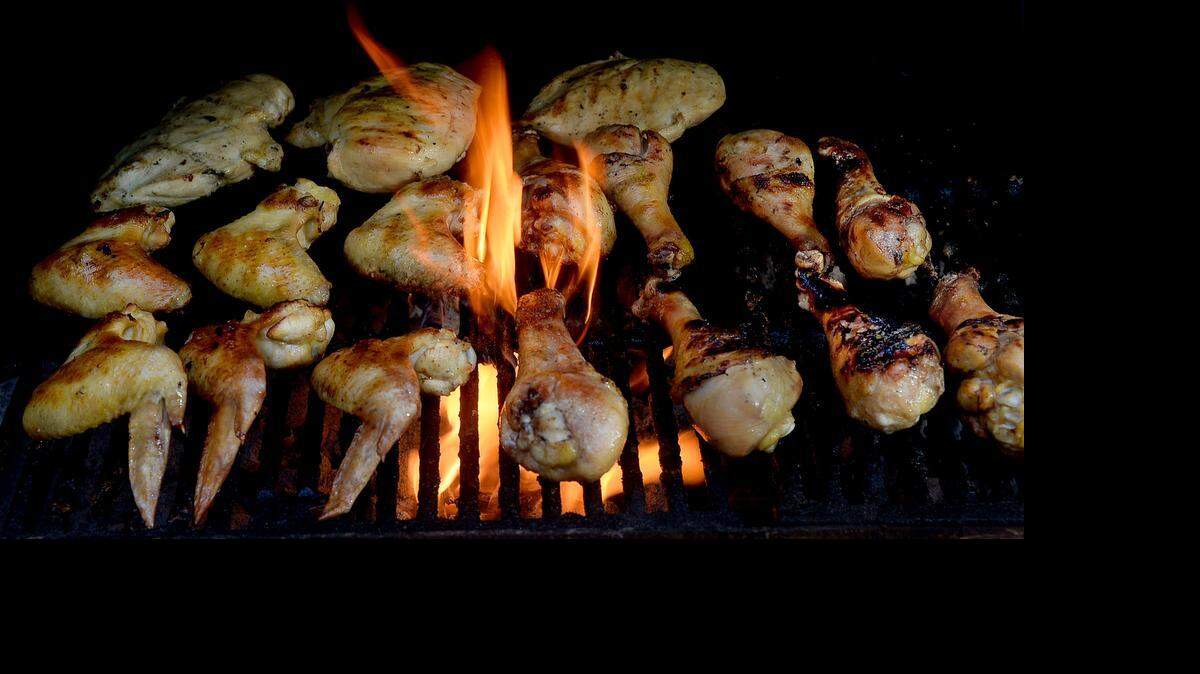
It sounds like the simplest cooking plan of summer:
Let’s just throw some chicken on the grill.
Too bad the chicken doesn’t always cooperate. Beef usually comes to us conveniently sliced or ground. Pork gives us our pick of the pig. But chicken, well, chicken is a little complicated.
Poultry is actually two kinds of meat – richer-but-tougher dark meat and mild-but-dry white meat – that often coexist in the same cuts. It has bumpy bones and stubborn strands of cartilage that can be hard to expose evenly to heat. It has fat pockets that drip and cause flares. You want browned, crisped skin, not charred rubber.
Before you crank up those Memorial Day cookouts, let’s break the chicken into its parts and make a plan.
Best techniques to know
Direct vs. indirect: Novice grillers just turn on the jets or dump lit coals in a pile, put food over them and hope for the best. Veterans know better: Build your fire in zones. Have a pile of hot coals on one side, a few scattered coals for a cooler zone, and a side with no heat. Start most chicken pieces over the hot area to crisp the skin, then pull them to a cooler area to cook slower, so the interior gets done without charring.
Standing time: Yes, you should let meat stand for 5 to 10 minutes after it comes off the grill to finish cooking. But you also should let all meats, particularly bone-in chicken, stand at room temperature for 30 minutes before you grill it. Chicken that is straight from the refrigerator will take longer to cook through.
Brining: Marinades add flavor but not moisture, and their higher acidity can break down protein fibers, making cottony chicken. For grilled chicken, particularly white meat, brining adds flavor and moisture. It takes as little as 30 minutes for skinless, boneless chicken breasts and an hour for drumsticks or thighs. Mix 6 cups water and 1/4 cup each sugar and salt in a saucepan, heat it briefly so everything dissolves, then cool it. Put it in a resealable bag, add chicken parts and refrigerate.
Vertical roasting: Whole chickens are hard to grill evenly, but standing them lets hot air circulate around them. This is popularly known as beer-can chicken – sliding a beer can with several holes punched in the top into the cavity of a bird and pulling out the legs to balance it like a tripod. But it doesn’t have to be beer. Kitchen stores sell gadgets, or you can use another canned beverage. You can pour your own liquid into a clean, empty food can. Great trick: Place a lime wedge over the neck cavity to plug it and hold in the steam.
Spatchcocking: The other great method for whole chickens is to flatten them, exposing more surface to heat. Use strong kitchen shears to cut out the backbone, then press down on the breast bone. Optional: Start the chicken skin-down with a weight on top (a brick or heavy skillet wrapped in foil), then remove the weight, turn the chicken and finish cooking over indirect heat.
Minion method: A new phrase has popped up in grilling circles. Larger cuts (whole chickens, or larger/tough pork cuts) take longer, but charcoal generally lasts about an hour. Solution: Fill a charcoal chimney with coals and crumpled newspaper, then place it in the bottom of the grill. Pour more unlit coals around it. Light the newspaper and wait 20 minutes for the coals to get hot. Then remove the chimney and pour the hot coals in the empty circle. They’ll slowly light the unlit coals nearby, creating a fire that lasts longer.
Best way to cook . . .
Drumsticks: Dark meat with a lot of cartilage. Start them over direct heat, turning every 5 to 10 minutes until they’re browning, then pull them over to indirect heat for about 20 minutes, turning, until they’re done. Don’t glaze or brush on sauce until the final 10 minutes.
Thighs: Chicken connoisseurs love the skin and dark meat. Start thighs skin-down over direct heat for about 2 minutes per side, then move to indirect heat for 16 to 20 minutes, turning several times.
Wings: You get white and dark meat in one piece, along with succulent skin. Cut off the pointed wing tip and discard, then grill them whole or separated into sections. Cook them over direct heat for 20 minutes, turning often. Move to indirect heat before adding glaze or a sauce.
Skinless, boneless chicken breasts: With no skin or fat, they can be dry. Brine them for 30 minutes, rinse and pat dry. Cook 3 minutes per side over direct heat, then move to indirect heat for 6 to 10 minutes to finish cooking. Variation: Refrigerate them in plain yogurt flavored with herbs and spices for up to 2 hours, then grill them the same way for a tandoori variation.
Whole chickens: Vertical over indirect heat, rotating about every 20 minutes. Or spatchcock, start skin-down over a medium-hot area, then turn over and move to indirect heat. Both take about 1 hour 15 minutes to 1 1/2 hours.
Other poultry: Cornish hens – spatchcock and cook about 45 minutes. Bone-in turkey breast (4 to 7 pounds): Indirect heat for 1 3/4 to 2 hours, until 170 degrees in the center. Duck: The fat can make grilling tricky. For breasts, cut away part of the skin, leaving a 2-inch strip down the middle. Start skin down over direct heat for 5 to 8 minutes to crisp the skin, then turn and cook about 4 to 5 minutes for medium-rare.
Lime-Garlic Chicken With Honey-Mustard Glaze
Adapted from “Brazilian Barbecue & Beyond,” by David Ponte, Jamie Barber and Lizzy Barber (Sterling Epicure, 2014). We used this with a whole chicken, spatchcock-style, but it also would be terrific with chicken thighs.
1 whole chicken, about 4 pounds
Lime-Garlic Marinade:
1 large onion, peeled and chopped
5 large cloves garlic, peeled
6 tablespoons lime juice (about 2 limes)
4 tablespoons vegetable oil
4 tablespoons mirin (sweetened Japanese rice wine)
2 tablespoons each chopped flat-leaf parsley and cilantro
Salt and pepper to taste
Honey-Mustard Glaze:
2 tablespoons honey
1 tablespoon cider vinegar
1 teaspoon Dijon mustard
Pull away and discard fat deposits from around the cavity. Place breast-down and use strong kitchen shears to cut along both sides of the backbone. Discard or save for chicken broth. Turn the chicken breast-up and press down to flatten the sternum. Tuck the wing tips behind the back and turn the leg quarters in.
Place all the marinade ingredients in a small food processor or blender and process into a paste. Rub all over the chicken and under the skin, then add any extra to a 1-gallon resealable bag. Add the chicken and refrigerate, turning occasionally, for 2 to 4 hours.
Prepare a grill with direct and indirect grilling areas. Remove the chicken from the bag, discarding the marinade, and place on the grill, skin down, with the legs toward the hotter area. Optional: Wrap a brick in foil and place on top. Cover the grill and cook about 30 minutes. Using heavy gloves, remove the brick and turn the chicken skin-up over indirect heat. Cover and cook about 30 minutes.
Combine the glaze ingredients, brush over the top of the chicken and continue grilling about 15 minutes, until the breast reaches 165 degrees. Remove and let stand about 10 minutes before cutting into quarters.
Yield: 4 to 5 servings.
Dirty Martini-Marinated Chicken Wings
Adapted from “The Barbecue Lover’s Big Book of BBQ Sauces,” by Cheryl and Bill Jamison (Harvard Common Press, 2015). This would be fantastic served with a little olive tapenade on the side. Alcohol is flammable, so drain the wings well and pat them dry before grilling.
12 to 16 whole chicken wings
3/4 cup brine from a 12- to 16-ounce jar of green olives
3/4 cup vodka
1/4 cup dry vermouth
1/4 cup water
1 tablespoon olive oil
Remove the pointed wing tips and discard (or save for your next batch of chicken stock).
Combine the olive brine, vodka, vermouth, water and olive oil. Pour into a 1-gallon resealable bag and add the chicken wings. Seal and refrigerate 2 to 4 hours.
Prepare a grill with medium-hot coals or jets lit on one side. Remove the wings and discard the marinade. Pat the wings dry with paper towels.
Grill skin-down over direct heat about 8 minutes, covered, until golden brown. Turn and continue grilling until cooked through (the two sections should wiggle easily), moving to the cooler side if they get too dark.
Yield: 3 to 4 servings.
Alabama White Barbecue Drumsticks
Adapted from “Grill Nation,” by David Guas (Oxmoor House, 2015). If you’ve tried Alabama’s distinctive mayonnaise-based barbecue sauce, it has a tang that is made for grilled chicken.
8 to 12 chicken legs
Chicken brine (see note)
1 cup mayonnaise
1/3 cup apple cider vinegar
1 teaspoon Worcestershire sauce
1/2 teaspoon kosher salt
1/2 teaspoon garlic powder
1/2 teaspoon onion powder
1/2 teaspoon freshly ground black pepper
1/4 teaspoon hot sauce, such as Tabasco
Place the legs in a resealable 1-gallon bag and add the cooled brine. Seal and refrigerate 1 hour. Remove legs and discard brine.
Prepare a grill with direct and indirect grilling zones. Place the legs over direct heat, cover and grill, turning every 5 minutes, about 15 minutes, until starting to brown.
Whisk together the mayonnaise, vinegar, Worcestershire, salt, garlic and onion powder, black pepper and hot sauce. Set aside about 1/2 cup.
Dip each leg in the sauce and return to the grill over indirect heat. Cover and continue grilling about 15 minutes, turning the legs until cooked through. Serve with the extra sauce on the side.
Note: For the brine, combine 1/4 cup each sugar and salt in a saucepan with 6 cups water. Bring to a simmer, stirring until clear. Remove from heat and cool before using.
Yield: 4 to 6 servings.
Grilled Lemon Chicken Thighs
From “The Cook’s Illustrated Complete Book of Poultry” (Clarkson Potter, 1999).
8 chicken thighs, skin-on and bone-in
3/4 cup kosher or 6 tablespoons table salt
2 tablespoons olive oil
2 large cloves garlic, peeled and minced
1/2 cup fresh lemon juice (from about 3 lemons)
1 1/2 to 2 teaspoons chopped fresh oregano or thyme leaves
Dissolve the salt in 4 cups water in a 1-gallon resealable bag. Add the thighs, seal bag and refrigerate about 90 minutes. Remove from bag and discard marinade.
Prepare a grill for direct and indirect grilling zones. Place the thighs over direct heat and cover grill. Cook skin down for about 2 to 4 minutes, until beginning to brown. Turn and move to a cooler area. Cover and continue grilling about 16 minutes.
Place the olive oil in a small saucepan over low heat. Add the garlic and cook just until the garlic starts to sizzle. Place the lemon juice in a shallow baking dish or bowl, then add the warmed oil and garlic and the herbs.
Remove each piece of chicken from the grill and place in the lemon mixture, turning to coat. Return to the grill and cook 5 minutes longer, turning and brushing with more lemon mixture.
Yield: 4 servings.
Chicken Breast With Lebanese Garlic Sauce
Warning: This sauce is for serious garlic lovers. Toum is a Lebanese version of aioli. In Diana Henry’s new cookbook “A Bird in the Hand,” it’s served with chicken kebabs, but we found it a great sauce to balance the blandness of skinless, boneless chicken breasts.
Chicken brine (see note)
4 to 6 skinless, boneless chicken breasts
Toum:
4 heads garlic
1 1/2 cups mixed peanut and olive oils
1/2 teaspoon coarse sea salt or kosher salt
Juice of 2 large lemons
1/2 cup ice water
Place the breasts in a resealable 1-gallon bag. Add the brine, seal and refrigerate 30 minutes. Discard brine.
Prepare a grill with direct and indirect grilling zones. Place the breasts over direct heat, cover and cook 3 minutes. Turn, cover and cook 3 minutes, then move to indirect heat, cover and cook 6 to 10 minutes. Remove and let stand, then cut into wide slices and serve with the sauce if desired.
Toum: Place the garlic heads on a cutting board with the point down, then press with your hand to break into individual cloves. Peel cloves (you can try placing them in a metal bowl, cover and shake hard, or press several at a time with the flat side of a wide kitchen knife to break the skins.)
Place the garlic in a food process and process, stopping to scrape down the sides, until they’re very finely ground. Slowly start drizzling in oil a little at a time with the motor running, to make a fluffy mixture like mayonnaise. Add the salt, then add the lemon juice and ice water with the motor running. You should end up with a creamy sauce with a powerful hit of garlic. Refrigerate up to 2 days.
Note: For the brine, combine 1/4 cup each sugar and salt in a saucepan with 6 cups water. Bring to a simmer, stirring until clear. Remove from heat and cool before using.
Yield: 4 to 6 servings.
This story was originally published May 19, 2015 at 7:11 AM with the headline "Your guide to perfect grilled chicken."