
For 80 years, these women have been as close as sisters
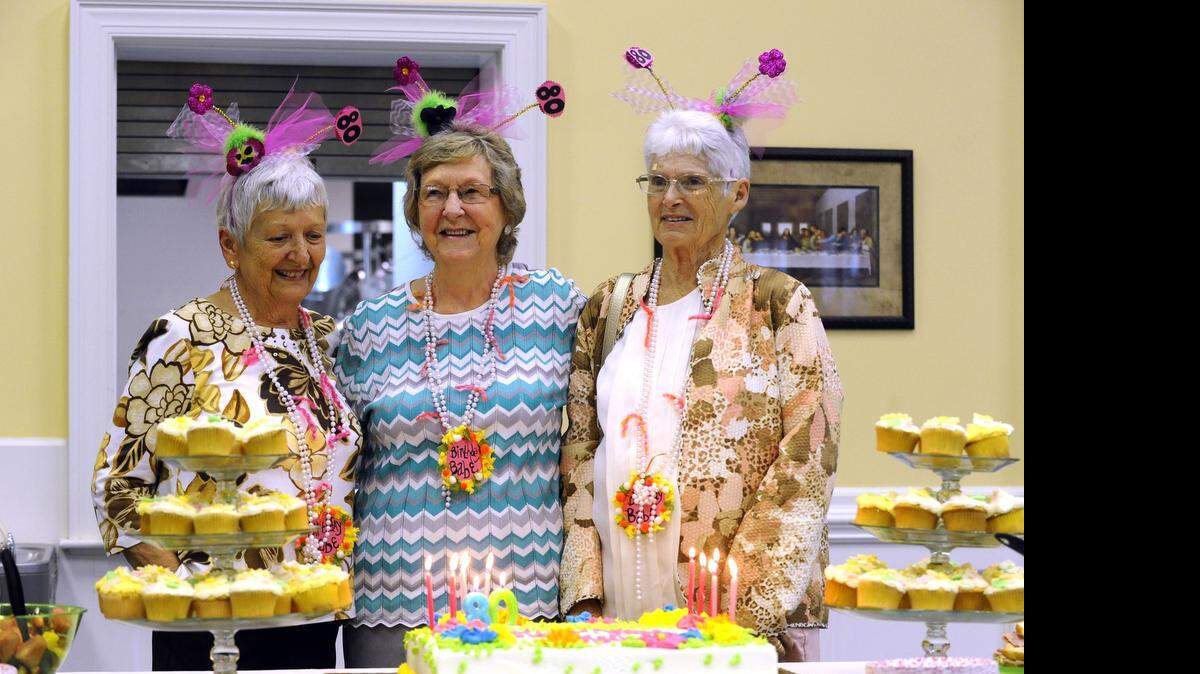
Wilba Helms and Jibby Keels were born friends.
Both entered the world in April of 1935. Their parents were close friends.
Helms used to stand on one side of the creek that separated their rural Union County homes, longing to play with Jibby but terrified to cross the rickety bridge alone.
“Jibby! Jibby! Jibby!” she’d scream at the top of her 6-year-old lungs until Jibby and her big brother came to escort her across.
Today, Helms lives less than a mile from Keels. A mile on the other side lives Rachel Lemmond, who met them in high school and became part of their circle.
Their story is a testament to friendship – not with strangers on Facebook who “like” us, or the office pals we meet for happy hour, or even the friends we love but lose touch with when circumstances change. Theirs is a true, lifelong friendship, a working friendship.
They’ve celebrated births and birthdays together and shared countless meals and vacations. They attend the same church. They’ve battled illness and buried loved ones. They’ve seen the farms of their Wesley Chapel community disappear, and shopping centers and new houses pop up.
As the world changed around them, their lives remained intertwined.
“I have a few close friends, but nothing like this,” said Helms’ grandson, Patrick Harrell, 30. “They share their feelings more than a lot of men do. And it’s their generation – they grew up in hard times they had to help each other through.”
“They are sisters without being sisters, they’re an example of how to keep and maintain friendship,” said Rev. Bruce Powell, their pastor at Siler Presbyterian Church. “They live for each other, not just themselves. They are the role model of friendship.”
Like brothers and sisters
Wilba Alexander and Jibby McGuirt were inseparable as kids.
Except at school, where teachers kept them apart because they talked too much.
But they spent most of their free time together, climbing trees, playing hopscotch and swimming in a pond. They picked cotton for spending money. Their families ate many meals together – their dads cooking dishes such as “cooter stew’’ (snapping turtle) and barbecued goat.
The girls wore pretty, matching sack-cloth dresses sewn by Wilba’s mom.
They tussled occasionally (Wilba was a hair-puller) but never stayed angry at each other.
They separated briefly after high school. Wilba went off to college; Jibby married Pat Keels and had a son, Wesley. After graduation, Wilba came home and married Donald Helms. They bought the house she grew up in, making her permanent neighbors with her oldest friend.
When Wilba gave birth to her daughter, Melody, she packed up her maternity clothes for Jibby, who was pregnant with her second son, Kevin. A few years later, Wilba had a second daughter, Jill, and sent maternity clothes back to Jibby, who was pregnant with her third son, Joey.
“We became even closer when we both had children, my sons and her girls were like brothers and sisters,” Jibby Keels said.
“Everyone thought they’d grow up and date, but they’d said say ‘No, I could not possibly kiss my brothers,’” Wilba Helms said of her daughters.
Helms was an elementary school teacher, Keels, a teaching assistant. Their husbands were good friends. In the tradition of their parents, the families shared hundreds of happy times over the years.
The Helmses also vacationed with the Lemmonds and they all socialized at church functions. There were fish fries, oyster roasts and “bring what you’ve got” potlucks. Camping in the mountains and on the coast, fishing at the beach. Parents always looking out for each other’s kids.
“These ladies were like my extra moms growing up,” said Melody Helms Plyler. “I don’t know life without them.”
They’ve shared each other’s sorrows and hardships. First they lost parents. More recently, Rachel Lemmond grieved the deaths of her son, Steve, and her husband, Ray. Donald Helms has dementia and Wilba takes care of him. Jibby Keels is a breast cancer survivor.
“I’m just glad to have lived this many years, and be friends with people like that,” Rachel Lemmond said. “Through tough times, you need a friend.”
The women credit their friendship to proximity, similar values and interests, faith and fun.
“We trust and know that we will be there for each other,” Helms said. “We love each other.”
And many love them.
Surprise!
Last month their families and friends surprised them with an 80th birthday party. Helms’ daughter, Melody, organized the operation.
Each woman thought she was going to another’s surprise birthday party. As they arrived in the church fellowship hall, about 100 people stood and yelled, “Surprise!” to each of them.
The crowd included children, grandchildren and lifelong friends.
Keels’ son, Joey, flew in the day before from Pennsylvania and hid out with his brothers, who live near their parents. They laughed with their “sisters” Plyler and Jill Helms Ammons about their childhood exploits.
“We had such great times,” Joey Keels said. “I want my kids to find and nurture those lifelong friendships.”
Wilba Helms’ grandson, Patrick Harrell, says many in his generation aren’t getting to experience such deep friendship because they’re too entrenched in their electronic devices: “They can’t put their phones down or they’ll feel disconnected.
“That’s not the same as being face to face.”
His grandmother and her friends don’t email, tweet or text. They don’t own computers or smartphones. When they need to talk, they call or visit. And when life throws its punches at one of them, the others show up with ice packs (and a casserole or two).
“A good friend is somebody who has your back, who you can count on, who you respect,” Keels said. “You support each other thoughtfully. I am blessed with good friends.”
WilbaJibby, JibbyWilba
Which brings us back to her longest friendship, with Helms.
Despite their different hair colors, heights and looks, people always confused them as kids. Some still do.
When Keels was diagnosed with breast cancer in 2011, some sent sympathetic cards of encouragement to Helms. And when Helms broke an ankle last year, people sent get-well cards to Keels.
They thanked people graciously, then passed along the cards to each other.
“We get called each others’ names all the time – at church, in town and at different events – and we just answer to them,” Helms said.
They understand how it happens:
“One of us can start a sentence and the other can finish it,” Keels said. “We can laugh with each other or at each other, and it’s OK.”
As Helms says:
“We do what we want except we’re 80 years old and we’re a little slower at it.”
This story was originally published May 3, 2015 at 2:01 AM with the headline "For 80 years, these women have been as close as sisters."