The fear — and satisfaction — of being a hospital janitor in these times
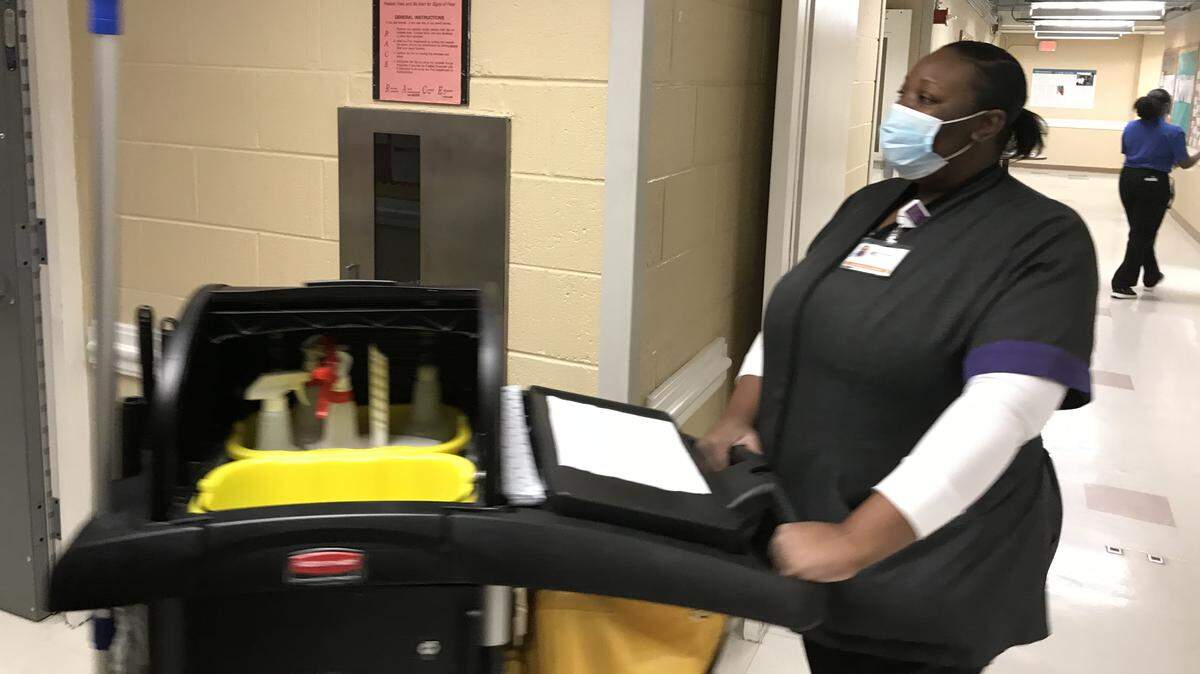
Tyresha Thompson isn’t one to say something she doesn’t mean, and — even though it may be hard to believe that someone could actually enjoy spending a day wiping away germs, especially in the midst of a pandemic — you can tell she means it when she says this:
“I take pride in my job. I mean, I love cleaning. I even clean a lot at home,” says Thompson, a 27-year-old mother of two who works in Atrium Health Carolinas Medical Center’s environmental services department, which is basically a euphemism for the janitorial staff.
At the same time, it’s also clear she’s being honest when she says this:
“Since this is going on, yes — I would be lying if I said I’m not a little bit scared.”
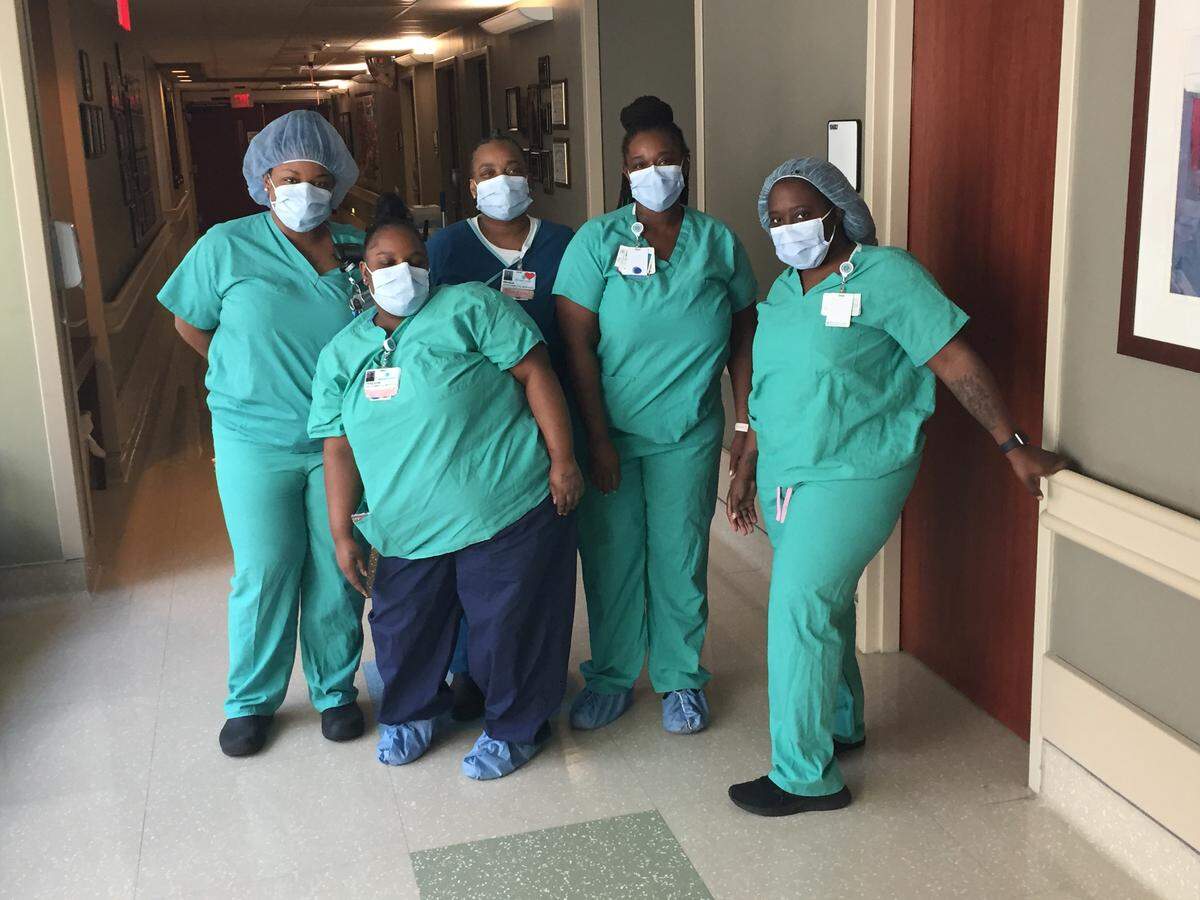
Thompson is just one of the hundreds of individuals responsible for cleaning millions of square feet of hospitals in the Charlotte area every day, part of an unsung class of worker positioned squarely on the front lines of the battle against COVID-19, and often overlooked as doctors, nurses, teachers and food service workers are heaped with praise.
Here, she shies away from trying to call her and her colleagues’ contributions equally significant. Her boss’s boss’s boss doesn’t, however.
“These guys are absolutely my heroes,” says Don Richards, Atrium Health’s director of operations. “(They’re) cleaning toilets and bathrooms, and (they’re) cleaning things that a lot of people don’t like to clean. ... They’re putting themselves in harm’s way. They’re nervous and anxious, just like every other healthcare worker working in a patient area is.
“And still, they come in here every day ... to perform the sanitizing operation all over the building, so that the patients can heal and the direct caregivers can operate.”
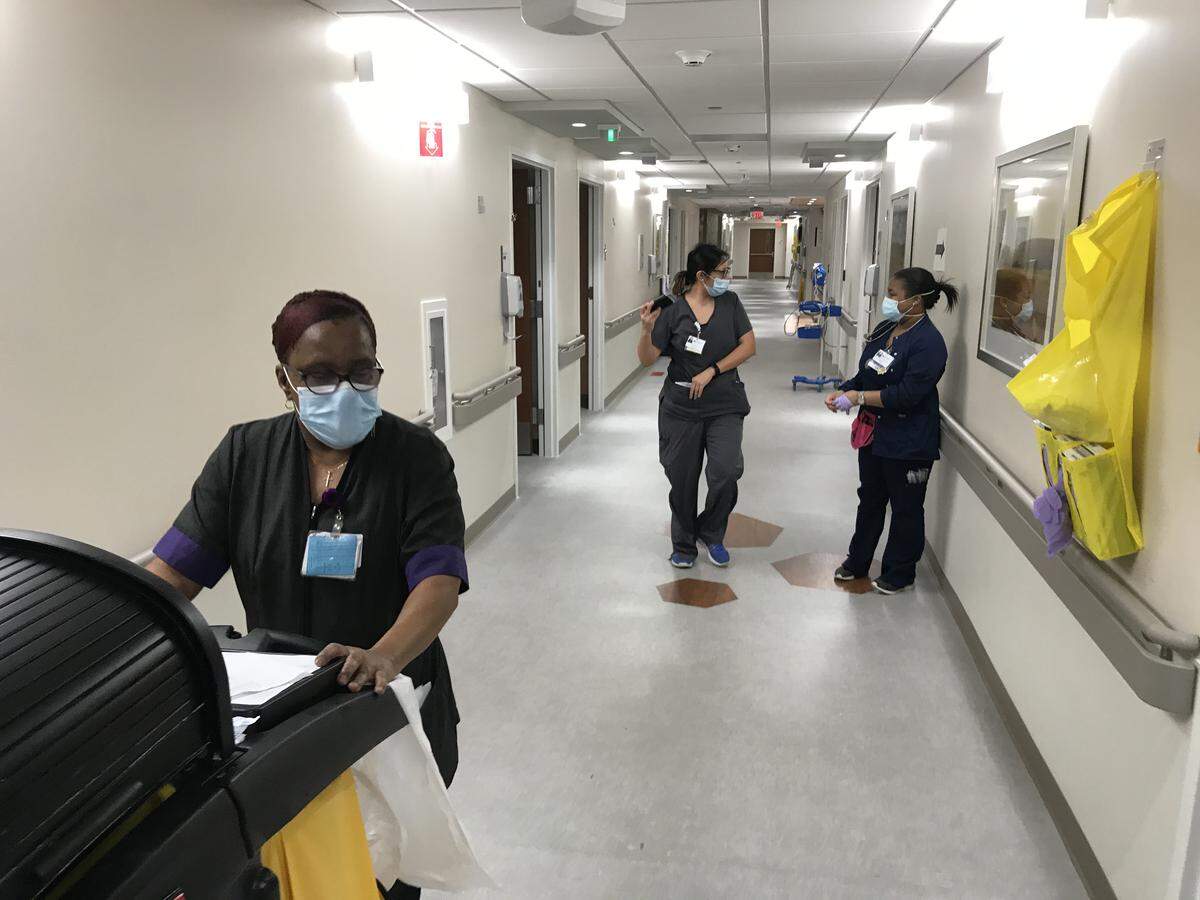
(Neither Atrium Health nor Novant Health would disclose how much money their cleaning crews make; but according to the most recent U.S. Bureau of Labor statistics, the national average for hospital janitors and cleaners is just over $30,000 a year. North Carolina typically falls well below the national average.)
The Observer pieced together interviews with several of these front-line workers as well as people in supervisory roles to create a snapshot of what life is like for members of these cleaning crews.
Some remarks have been edited for clarity and brevity.
Jessica Barrett, 33, environmental services staffer for Novant Health Presbyterian Medical Center: “My mom, who is 70, she’s always worried about me when I go to work. But I put God first, I pray every day, I keep my hands washed, I stay away from people — six feet — and just continue to do my job like normal.”
Tyresha Thompson, Atrium Health: “On a typical day, I come in, set up my cart, make sure I have all my PPE next to me — which is my mask, and my gloves, and my booties that go over my shoes — and I do my outside areas, and then I start on my rooms.”
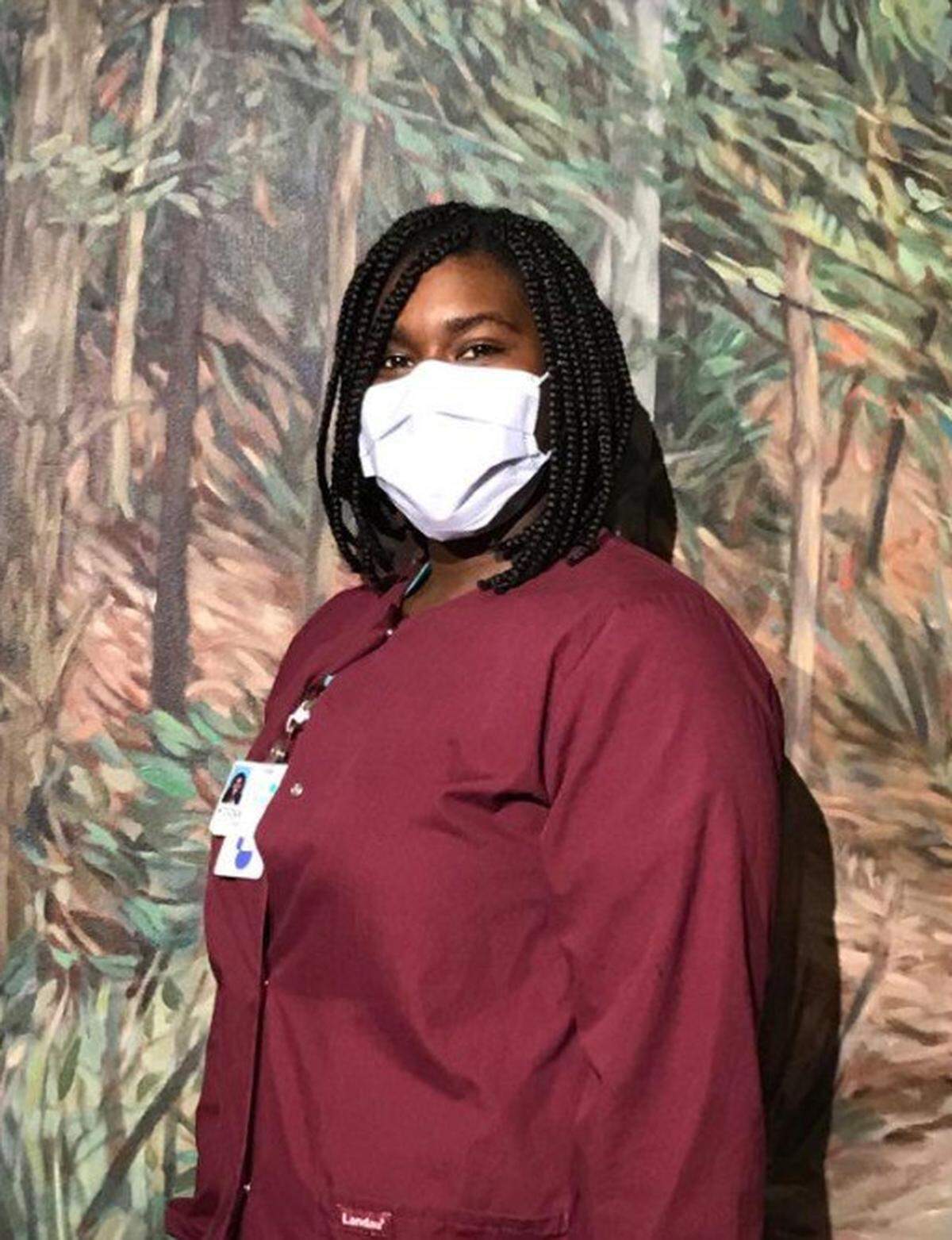
K’dyza Sibby, 26, EVS staffer at Levine Children’s Hospital: “I come in the room and disinfect all areas that are high-touch surfaces. Their tables, their refrigerators, their sinks, their handrails. I make sure that the back of the door is wiped. I make sure that even their personal cellphones are wiped. When a new patient is coming in, I make sure they have a clean gown, clean sheets, clean bedspread. I make sure that when they enter the room, it doesn’t have any dust in there. I want them to think, ‘OK, we’re coming into a clean area that could help us improve from being sick to better.’ And I want them to feel that regardless of if they have the coronavirus, or if they’re somebody that’s pregnant, or a child that needs a heart. I’m still gonna treat each patient — and each member of their family — as if they were my own.”
Tyresha Thompson: “I have like a good 18 rooms to do Monday through Friday, but every other weekend, I have the whole tower — which is 36 rooms in total. Each room usually takes me 15 to 20 minutes because I like to make sure I get every surface as possible. If I’m doing a room that somebody has just been discharged from, it takes me about 45 minutes.”
Don Richards, vice president of operations at Atrium Health: “We treat every room as though it’s potentially positive for a communicable disease. And we did that before COVID-19. The disinfectant that we use, Oxycide, kills the COVID-19 virus as well as VRE, and MRSA, and C. diff and many others — even other germs that are actually harder to kill — and we use that throughout all the hospitals in the system. What is different with this pandemic is the frequency by which we’re cleaning public areas. We’re cleaning waiting rooms every hour. Restrooms every hour. Any high-touch area that people tend to touch — stairwells, elevator buttons — we’re wiping off with Oxycide on a much more frequent basis than we would under quote-unquote normal times.”
K’dyza Sibby: “We also have a rule now where we all have to wear facial masks, which I’m kind of happy about — because I think it just makes the patient feel a little bit more secure. As far as cleaning around them I just try to stay as far back and utilize my arms and my mop stick. My mop stick is pretty long. It’s probably like six feet, maybe. So I can stretch it out. And I actually wouldn’t say I’m scared of what’s going on, because, I mean, I’ve heard the stories about H1N1 and the swine flu, and MRSA. So it could be worse.”
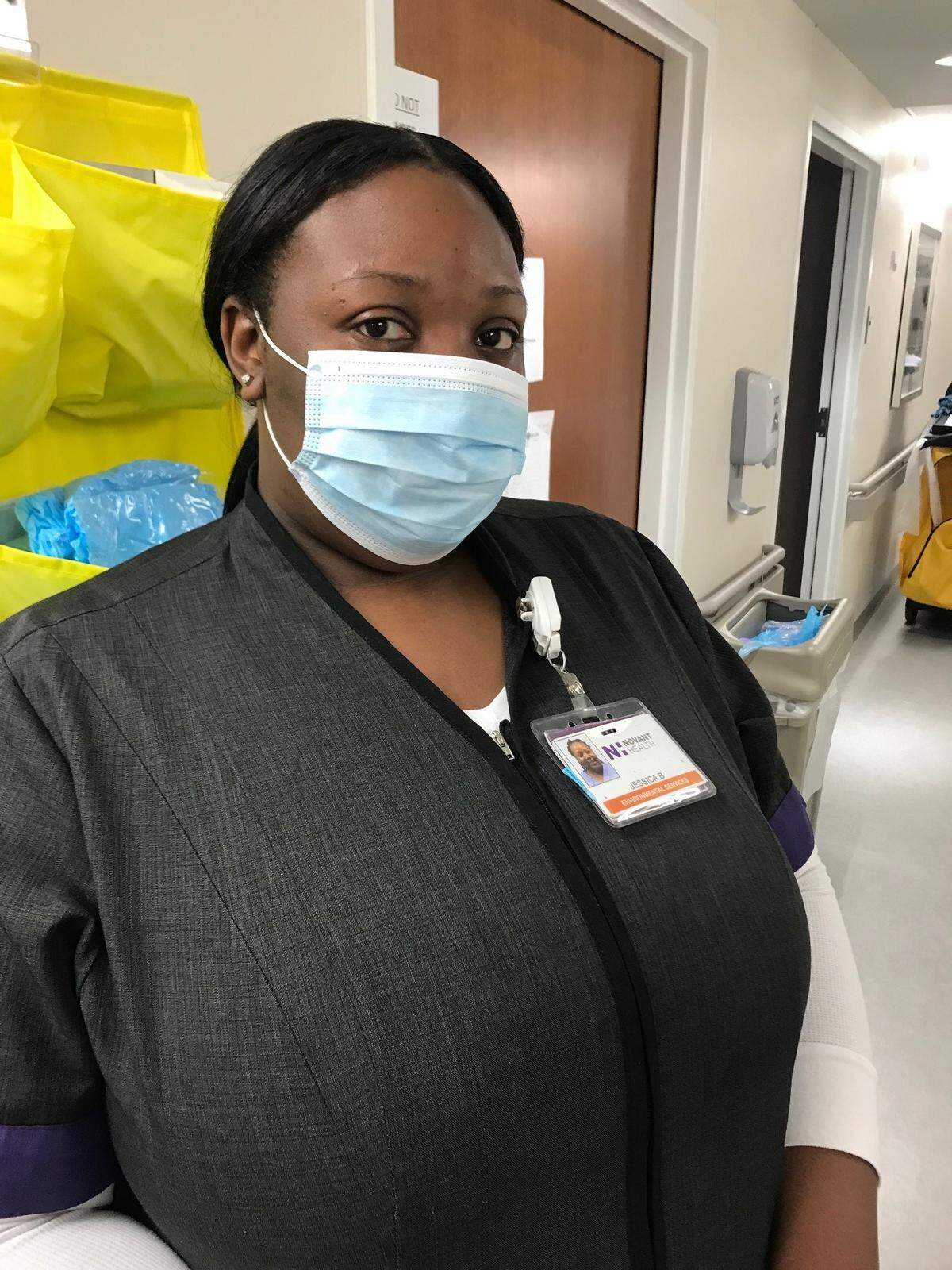
Jessica Barrett: “I’ve definitely become a germophobe since this happened. I don’t think I’ve ever washed my hands so much. See how ashy my hands are?”
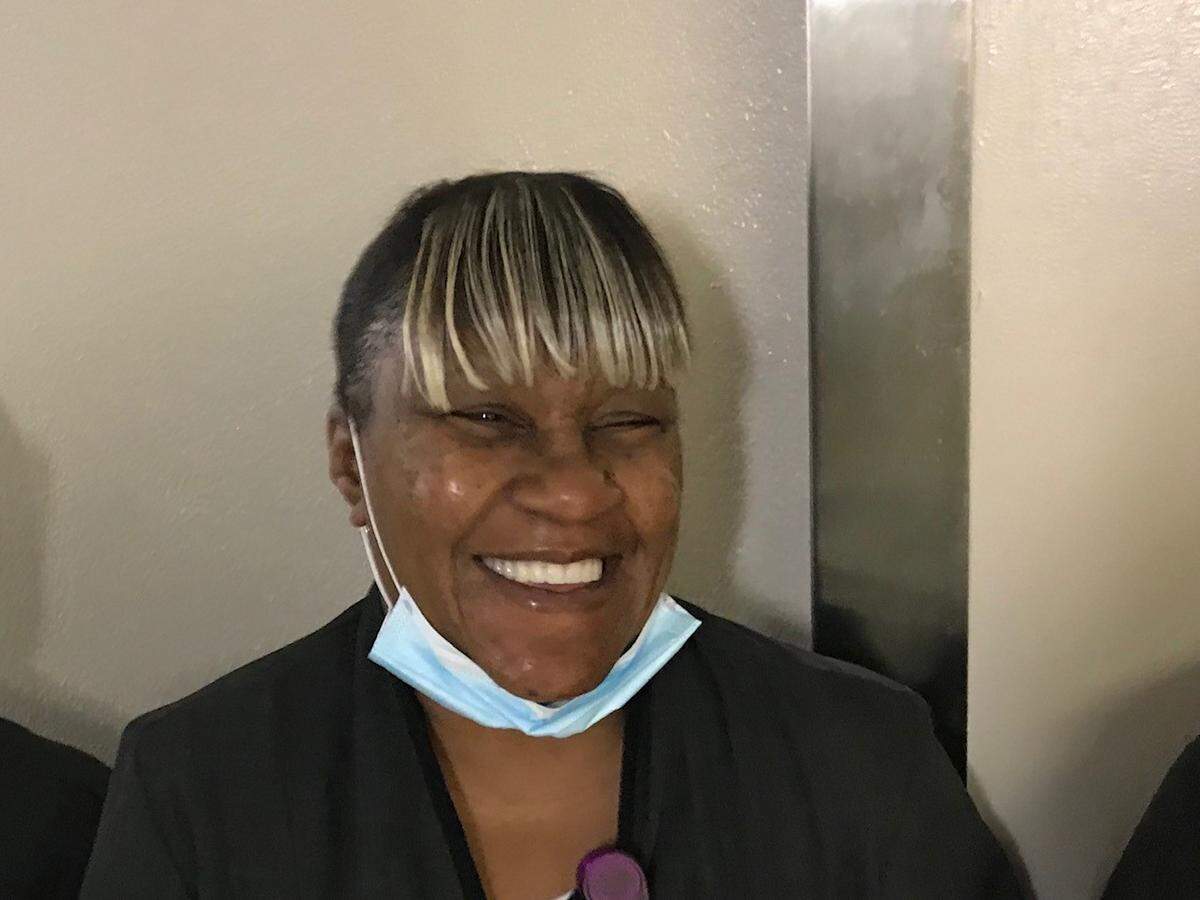
Jackie Clarke, 59, EVS staffer at Novant: “At first, it was so stressful getting up in the morning and coming here. Because you didn’t know much. You’d be stressed out before you even made it to work. But now — I don’t know, I’ve just been praying about it. And God said, ‘Just go in there and do your best.’ So I don’t have as much anxiety as I did when it first started.”
Tyresha Thompson: “Yeah, as time goes on, it kind of gets a little bit easier. And, I mean, this is the job. This is what I signed up for. So yeah, I’m a little nervous because I have two kids at home. But the rooms have to be done regardless.”
Jackie Clarke: “Instead of being scared, I’m more about being safe and conscious of it. You know what I’m saying? I know it’s going on, so I know I have to do extra wipings. I’ll even wipe down picture frames. Let’s do a little bit more than what we did before. So it keeps away from me and everybody else. Everybody wants to be safe right about now. I think of it like it might be me one day, or one of my family members. So I just clean like I would do at home or anywhere else. I mean, if I could help just one person keep the virus away, that’s good.”
Tyresha Thomspon: “And I do feel appreciated by the people around me. On staff, but I’ve had a couple of patients tell me, ‘This hospital wouldn’t be nothing without you guys.’ So yeah, that makes me feel good.”
Kelly Gunby, director of environmental services at Novant: “We’ve also gotten a lot of community support during this time, including a couple folks who donated meals to us. And a family out in Mooresville, they have a 16-year-old daughter — who had an aunt who worked in hospital housekeeping — and she wanted to extend her gratitude to the housekeeping department just to show thanks for what we do. So she created a basket for our team members; it had a drink in it, it had a bag of Cheetos and a couple candy bars, and a little note of appreciation inside each basket. Last week she delivered 60 baskets for the team, and then her father reached back out and said she wanted to bring by an additional 50 or 60 baskets. It was really, really special to know that someone was thinking about us.”
K’dyza Sibby: “At the end of the day, I go to to the 12th floor and get some fresh scrubs out of a Ziploc bag in my locker. I’ll change and then I’ll go straight down to 1, to clock out. I don’t have any interaction with any patients after I change. I don’t want to bring home any germs.”
Jessica Barrett: “When I get home, I go straight through the back door, ’cause the laundry room is right there. I put my stuff in the washing machine and then I go straight in the shower. Like, normally my mother, who’s 70, and my son, who turns 2 this month, they don’t even see me until I get out the shower. And every day I think to myself, ‘When is it gonna be over?’ ‘How long is it gonna take?’ ‘Is everybody gonna get it together and stay away from each other and take this time to really be at home?’ Because this coronavirus is no joke. It’s no joke at all.”
Jackie Clarke: “I just stay prayed up. Ooo, I’m praying that it’ll be over with soon.”
This story was originally published April 13, 2020 at 5:09 PM.