Great Plains Bucket List: 6 Iconic Landmarks Worth the Road Trip From Charlotte
Charlotte’s trail crew knows the Blue Ridge intimately, but the Great Plains offer a different kind of outdoor reset — wide-open skies, fossil-rich badlands and prairie ecosystems that stretch the legs and the imagination. If your next adventure pulls you west of the Mississippi, here are six landmarks worth building a road trip around.
Mount Rushmore, South Dakota
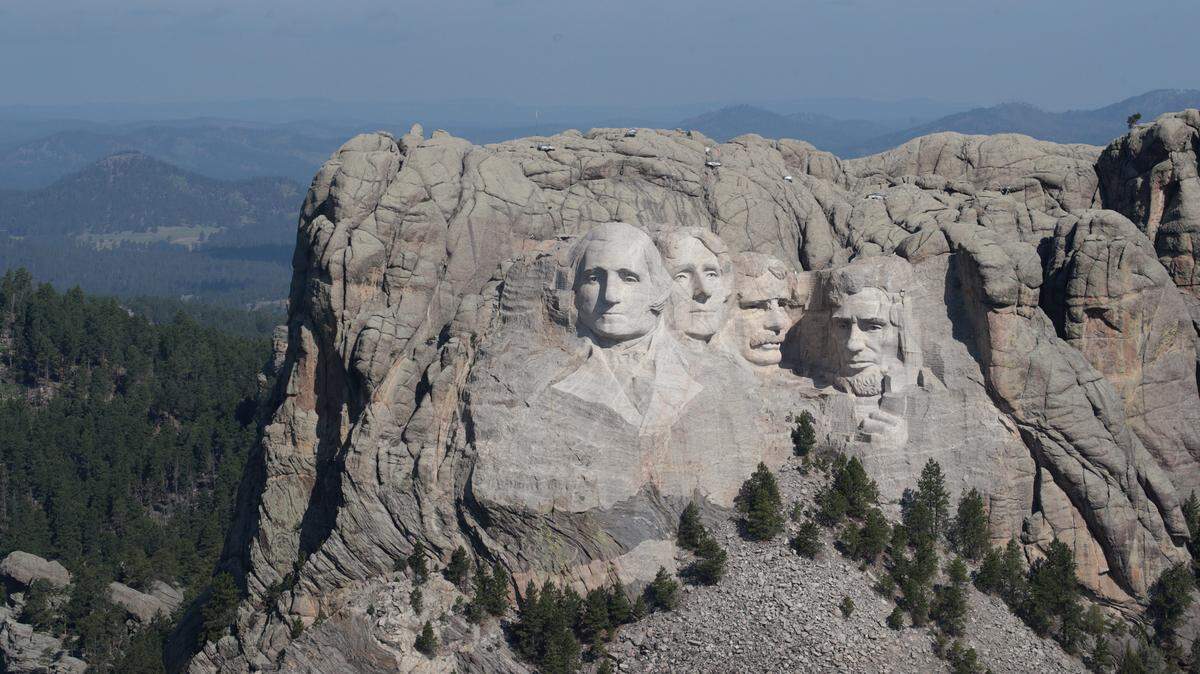
The most iconic landmark in the Great Plains — and arguably one of the most recognizable in the country — Mount Rushmore features 60-foot granite carvings of Presidents George Washington, Thomas Jefferson, Theodore Roosevelt and Abraham Lincoln. The four were chosen to represent the nation’s founding, expansion, development and preservation across its first 150 years. Carved between 1927 and 1941, the monument anchors a region packed with hiking opportunities.
While you’re in the area, make time for the Crazy Horse Memorial nearby. When complete, it’s set to be the world’s largest mountain carving.
Badlands National Park, South Dakota
For Charlotte hikers used to forested singletrack, Badlands National Park is a striking change of scenery. The 244,000-acre park features a unique landscape of eroded buttes, pinnacles and spires, and contains one of the world’s richest fossil beds.
Wildlife is part of the draw. The park supports roaming bison, bighorn sheep and black-footed ferrets — a payoff for active travelers willing to log miles on foot.
Chimney Rock, Nebraska
History buffs and runners alike will appreciate Chimney Rock, a site mentioned in more emigrant diaries than any other feature along the Oregon Trail. Its distinctive spire rises more than 300 feet above the North Platte River valley, where it once guided thousands of westward-bound pioneers. Today it remains a powerful symbol of American migration history — and a memorable stop for anyone tracing the routes that built the country.
Tallgrass Prairie National Preserve, Kansas
If your idea of a perfect weekend involves trail miles under enormous skies, Tallgrass Prairie National Preserve belongs on your list. The preserve protects one of the last remaining expanses of a grassland ecosystem that once covered 170 million acres of North America.
Nearly 11,000 acres are open to explore, with hiking trails, a historic ranch to tour, fishing spots and frequent wildlife sightings — bison included. The rolling golden grasses are quintessential Great Plains scenery and a worthy reward for active travelers.
Theodore Roosevelt National Park, North Dakota
Theodore Roosevelt National Park honors the president who was deeply shaped by his time ranching in the Dakota badlands — an experience said to have inspired his later conservation work. The park delivers rugged, colorful terrain, wild horses and abundant bison herds.
Hikers and campers should follow the leave no trace principles to keep the landscape intact for the next visitor.
Devils Tower, Wyoming
Devils Tower is a massive igneous rock column rising 867 feet above the surrounding terrain. Designated by President Roosevelt in 1906, it was the nation’s first national monument. The site is spiritually significant to many Native American tribes in the region and appears in at least five different tribes’ legends.
Movie fans will recognize it as the centerpiece of Close Encounters of the Third Kind, where aliens dramatically land at the formation in the film’s climax.
Why the Great Plains Belong on Your Radar
Often called the “breadbasket of the world,” the region is also known for its extreme weather and a high frequency of tornadoes due to lacking natural wind barriers. For Charlotte travelers chasing wide-open trails, historic bison herds and prairie ecosystems unlike anything in the Carolinas, the Great Plains deliver a bucket-list payoff.
This article was created by content specialists using various tools, including AI.