
Commentary | Lakers have gripes. but their problems go a lot deeper
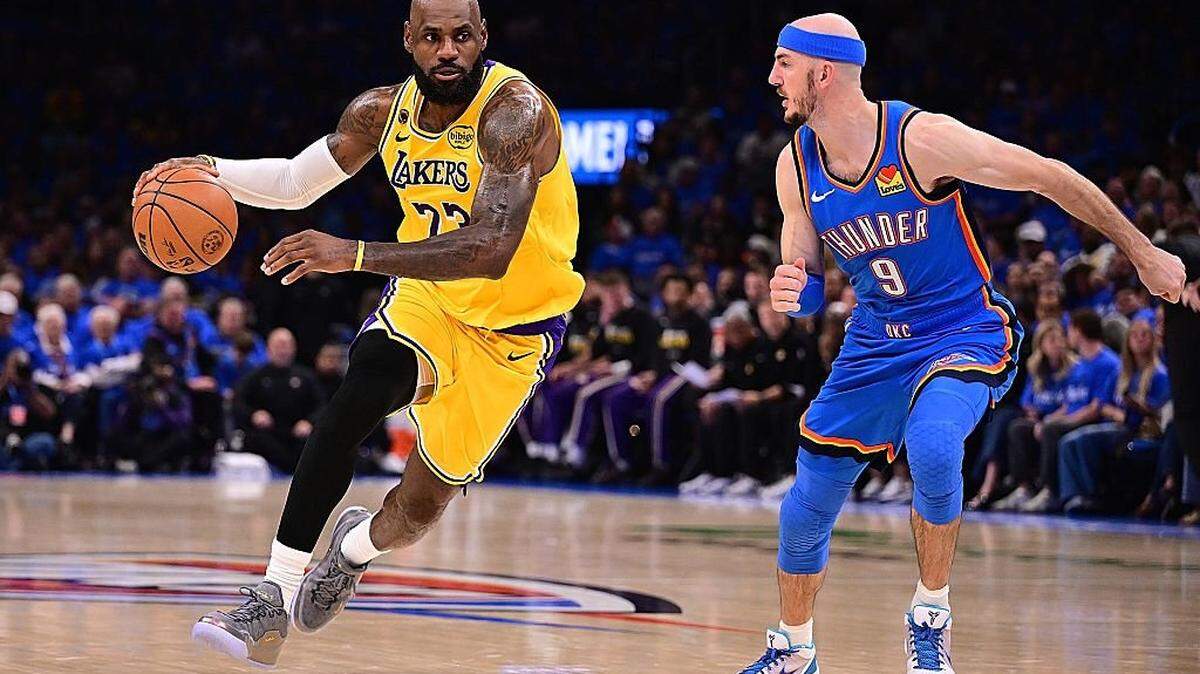
OKLAHOMA CITY -- As the Los Angeles Lakers publicly and privately vented their anger with officials Thursday night after losing Game 2 to the Oklahoma City Thunder, the cases they made were compelling.
Video did seem to show Jaxson Hayes had his shorts pulled down as he went for a rebound -- a play that would end up as a double foul. Video did seem to show one official turning and yelling into Austin Reaves’ face as the Lakers and Thunder danced around the center circle, looking for the best positions before a key jump ball. LeBron James did seem to get slapped, grabbed, hit and held.
“LeBron has the worst whistle of any star player I’ve ever seen,” Lakers coach JJ Redick said after the 125-107 loss. “I mean, I’ve been with him two years now. There’s, again, the smaller guys, because they can be theatric, they typically draw more fouls, and the bigger players that are built like LeBron, it’s hard for them. He gets clobbered.”
During the two games in which James operated frequently out of the post and attempted 15 shots in the paint, he took just five free throws.
“He got clobbered again tonight a bunch,” Redick said.
The Lakers can present all the evidence they want to the league. They can share their grievances, express their anger and make their case. None of it has mattered through 96 minutes in the Western Conference semifinals, not when the problems are so much bigger.
A perceived bad whistle is not close to the biggest problem the Lakers are facing.
As they throw coverages at the reigning MVP, Shai Gilgeous-Alexander, the Lakers have been repeatedly punished. And when they have overcome those big shots from Chet Holmgren, Jaylin Williams and Jared McCain, the Lakers have given the basketball away. They are playing a team that is greater than its individual parts.
The Lakers look like they are running the mile. The Thunder, it seems, have taken this on as a relay race, passing the baton from one fresh-legged dagger-thrower to another each time the game starts a new lap.
While players complained about the calls they did not get or the disrespect they felt from interactions with officials, they also had to be frustrated with the feeling that they have spent a majority of the last two games either playing at or -- at times -- above the Thunder’s level, only to leave town having been outscored by 36 points.
The series, as it shifts back to Los Angeles, has been in some ways closer than the scoring gap. However, the margins themselves show just how little time the Lakers have left and how difficult it is for them to get within 10 points, let alone win four times.
They have taken Gilgeous-Alexander, one of the smoothest players in the league, and forced him into staccato possessions. In Game 1, they did it with double-teams. In Game 2, they did it by adding foul trouble to the recipe and pushing Gilgeous-Alexander into rhythmless basketball.
That has been the top-line item on the Lakers’ game plan, and they have mostly made it work.
But the strategy has come at a cost, with the Lakers scrambling once they send a double-team toward Gilgeous-Alexander. They, unlike the Thunder, do not have an Alex Caruso or a Luguentz Dort or a Cason Wallace to unleash on a star player. They need to do it as a collective, and they have paid by seeing their players run around the court only to gas out in the end. Two games that looked close fell apart in the final half of the fourth quarter.
When James was asked about the officiating, he responded, “We’re down 2-0.”
Maybe he wanted to save his money and avoid the fines for publicly criticizing the referees. Maybe he understood that even if he had gone to the line for 10 more free throws, it would not have mattered.
James did not say much after Game 2, perhaps because he knew that if he did, it would have sounded a whole lot like what he said about the Thunder during the regular season. When the Lakers fumbled their best chance to beat Oklahoma City in early February, a reporter asked him about the gap between the two teams.
“You want me to compare us to them?” he said incredulously. “That’s a championship team right there. We’re not.”
He added: “We can’t sustain energy and effort for 48 minutes, and they can. That’s why they won the championship.”
The Lakers have improved since that game and have become a tougher, more consistent team. They did it in the first round against the Houston Rockets. Reaves, whose future with the franchise and as a free agent was deeply scrutinized after a miserable Game 1, bounced back to score 31 points in Game 2.
However, he took no victory lap postgame.
“Just played basketball,” Reaves said blankly.
James again defied age, following up 27 points in Game 1 with 23 in Game 2. But like with Reaves’ bounceback, it did not matter. Rui Hachimura, again showing he is ready to take and make important shots in the playoffs, did not matter either.
Because for the Lakers to win in this series, they need everyone to play well. They need Deandre Ayton to be stronger with the ball and to finish with force. They need Marcus Smart to hound Gilgeous-Alexander without fouling while still having the legs to bang open 3-pointers and make the right plays as a ballhandler. They need their bench to execute and energize.
And they need the Thunder to miss. And they need a good whistle. A healthy Luka Doncic might have changed things; the Lakers don’t have that.
Against the Thunder, it is not one thing or another -- it’s everything. And it’s that way because with the Thunder, it feels like they have even more everything to throw back.
This article originally appeared in The New York Times.
Copyright 2026 The New York Times Company
This story was originally published May 8, 2026 at 5:29 PM.