Uptown businesses fight for survival amid uncertainty of RNC move, COVID-19, protests
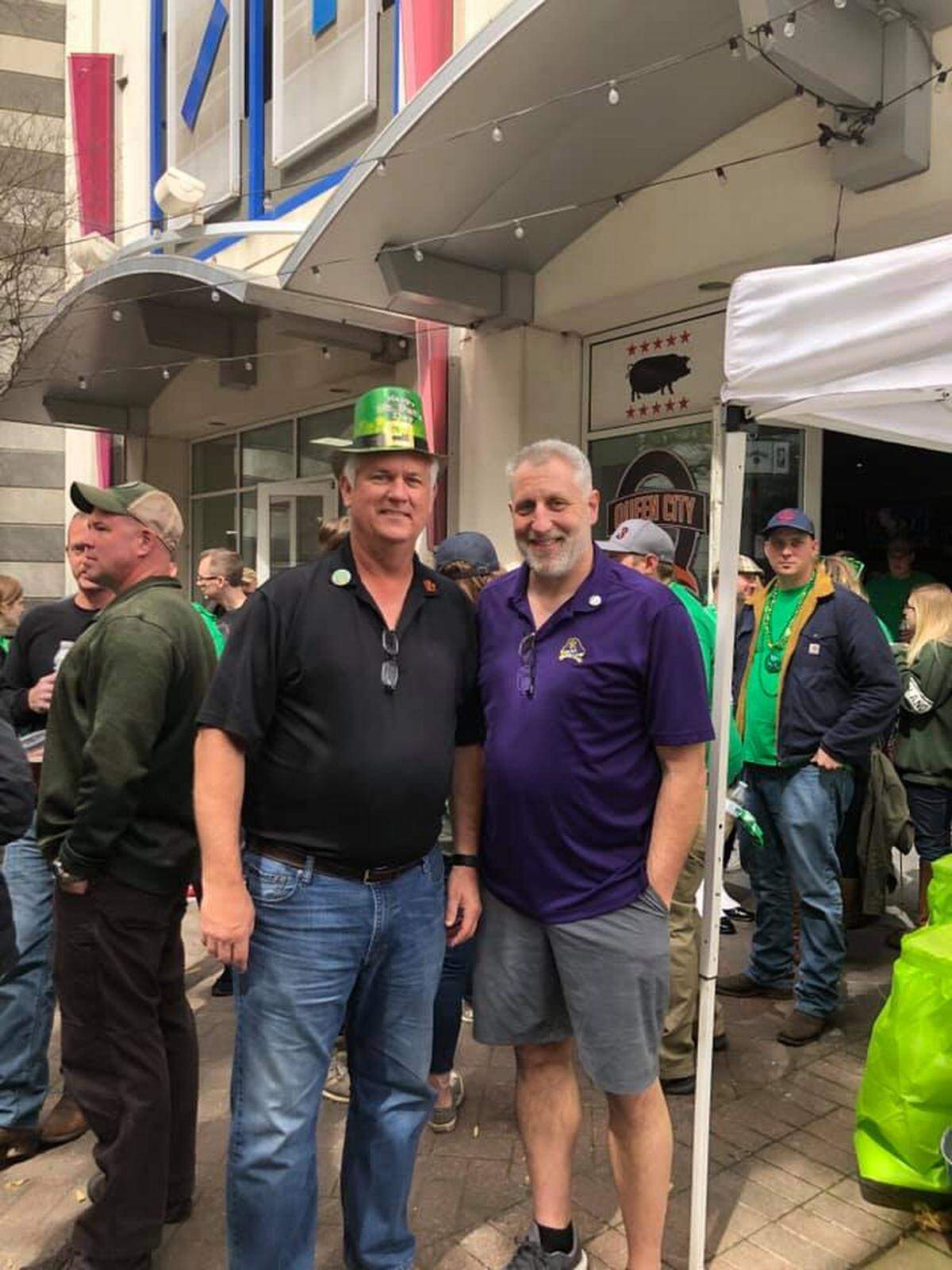
After two and a half months of being shuttered due to COVID-19, Bryan Meredith carefully calculated how to reopen his barbecue restaurant: He rehired his staff, restocked the kitchen and implemented limited seating.
But a few days later, he decided to close down temporarily because several protests over the killing of George Floyd were scheduled in the area. Then over the weekend, he read the news of the back-and-forth between President Donald Trump and Gov. Roy Cooper over hosting the Republican National Convention in Charlotte. Meredith is managing partner at Queen City Q, which is a block from the Spectrum Center.
Finally on Monday, Meredith realized that there was no way for his business to move forward. He is shutting down for good.
“In our location, uptown Charlotte – there is no path to success right now,” he said. “Maybe we’re wrong, maybe we’re right. But what I am sure about is it’s too big of a gamble to go out and borrow more money and place that on a bet that we might see light at the end of the tunnel.”
Businesses in uptown Charlotte have been reeling for months from the impact of the coronavirus, as the state’s economy is only starting to reopen. Now, the Republican National Convention, pitched as a boost for the local economy, appears to be moving elsewhere after a standoff between Trump and Cooper. Adding to the uncertainty facing businesses are the Floyd protests, largely peaceful, that have taken place mainly in uptown.
“It was just a perfect storm of things beyond our control,” Meredith said.
Already hit by COVID-19
While the economy is reopening, many companies are continuing to allow employees to work from home. That has meant that business is slow for uptown restaurants that rely on office workers and are just opening their doors again.
James Bazzelle has owned Mert’s Heart and Soul restaurant with his wife, Renee, for more than 20 years. He has never seen an impact on uptown small businesses like the one caused the past three months by the COVID-19 pandemic.
“I’ve never seen anything like this virus,” said Bazzelle, whose restaurant is at 214 North College St. “Protests I’ve seen, but if you told me something like this (the impact of the pandemic), I’m not sure I’d believe it.
“We’ve stayed open through tornadoes and hurricanes. I’ve never seen (impact on business) like this.”
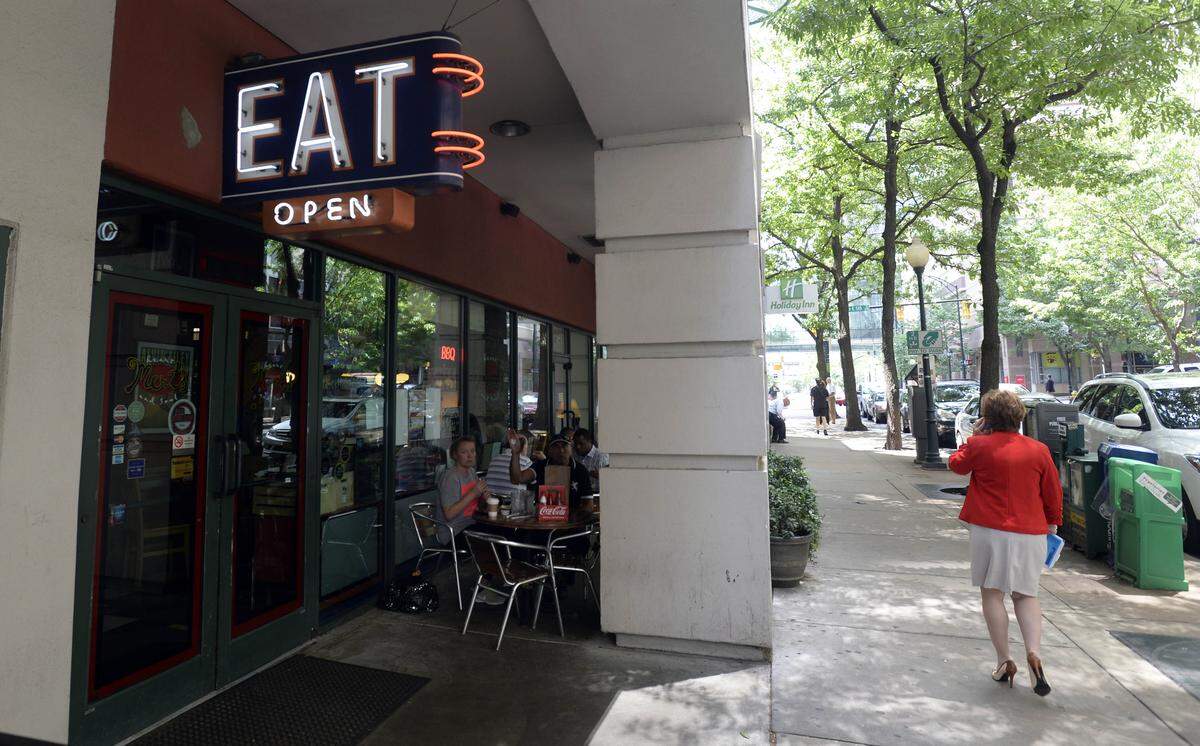
Bazzelle said he closed entirely for about one and a half months, then reopened with a reduced staff of three for carryout starting May 8, hoping to catch Mother’s Day business.
By his count, he is doing a quarter of his normal business this time of year. He said reopening with limited seating, when the state order allowed, hasn’t changed much in that regard.
The driving factor, Bazzelle suspects, is how few people come uptown now, either to work or for entertainment, such as concerts or sporting events. Typically, his best week of the year for business has been during the CIAA men’s and women’s basketball tournament, which is leaving Charlotte after a 15-year run for Baltimore through at least 2023.
“People from Ballantyne or Davidson don’t come (uptown) to eat” specifically, Bazzelle said. “Things happening in the city make you come uptown. Like in (Carolina Panthers) football season; we feed off of that.”
RNC’s impact
Some businesses uptown were looking to the Republican National Convention as a lifeline amid an economic downturn. Others said the convention would disrupt business if streets are closed and workers stay home.
A 2013 study found that the 2012 Democratic National Convention added $163 million to the local economy.
Bazzelle said his restaurant’s revenue is seasonal to a degree, with December, January and February being slow. Conventions in the spring bring in lots of business, so the anticipated loss of the Republican National Convention, which was scheduled for Aug. 24-27 at Spectrum Center, will hurt.
When the Democratic National Convention was in Charlotte in 2012, a group of politicians rented out Mert’s for three days for private dinners and parties. Bazzelle hoped for a similar arrangement during the RNC, but at minimum expected a strong business week.
Still, Robert Rondelez, owner of Rhino Market and Deli, said because his business wasn’t hosting any events, it is probably better off without the convention coming to Charlotte. He worried that customers would not be able to access his business because roads could be blocked off.
Some black-owned businesses may have benefited from Charlotte hosting the event, said Shante Williams, chairwoman of the Board of Directors of the Charlotte Mecklenburg Black Chamber of Commerce. But she said many in the black community were opposed to an event celebrating the president and his rhetoric.
“If the argument was, ‘There is an economic benefit to my business,’ black business owners always have to ask: at what cost?” she said. “Is that at the cost of my peace? Is that at the cost of my politics? Is that at the cost of my community?”
Recovery
A few of the windows in Rhino Market’s uptown location were broken by a handful of “outliers” in a largely peaceful protest Sunday, Rondelez said. But the damage was quick to clean up, he said, and the business had been closing early anyway.
By far, coronavirus has been the biggest challenge for his market, and Rondelez isn’t expecting business to reach pre-COVID-19 levels until next year.
Bazzelle’s long-term concern for uptown businesses: What if the pandemic creates a lasting cultural shift where there aren’t nearly as many office workers commuting into the center city to do their jobs?
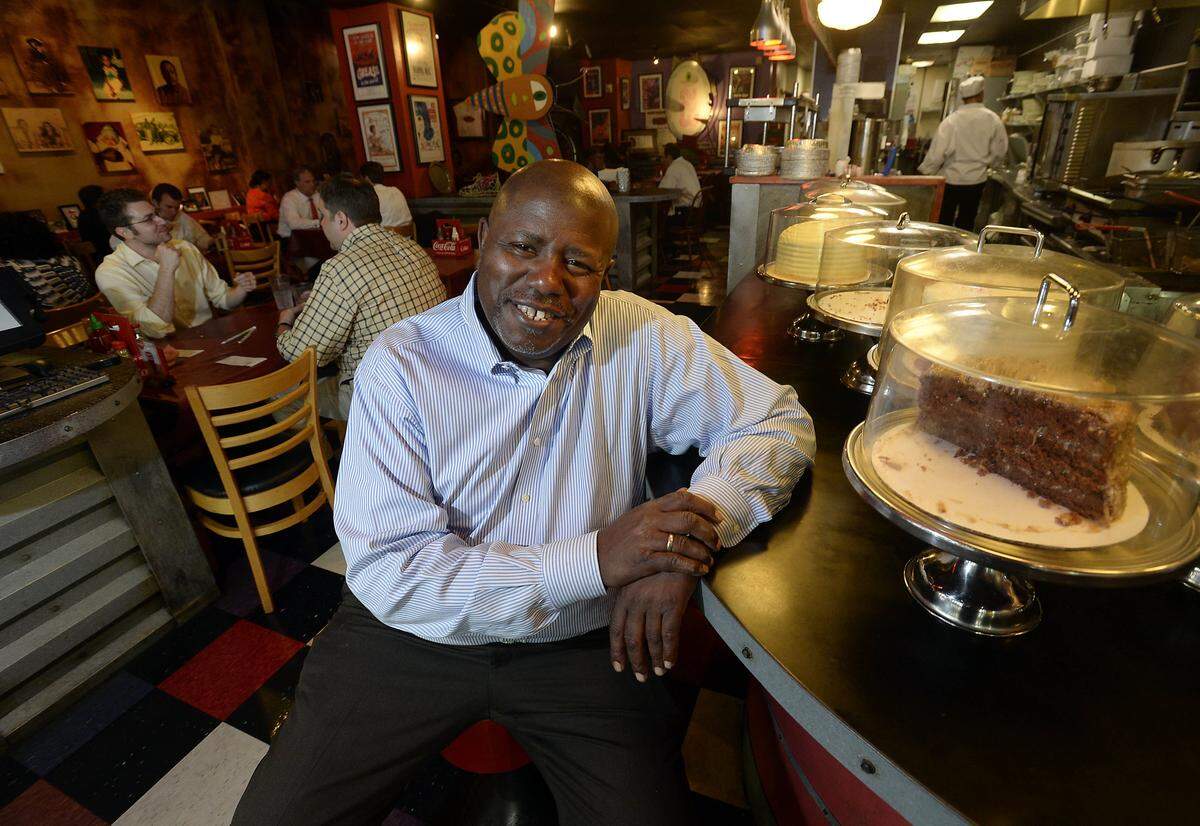
“I don’t know if Bank of America will make you come uptown to work,” Bazzelle said, “or give you the choice to work from home.”
Bazzelle said it took six to eight months after the recession in 2008 for small-business owners in uptown Charlotte to stop feeling significant drops in their revenue. He won’t be surprised if this is worse, causing some businesses to close for good.
“I think so,” Bazzelle said. “I really do.”
This story was originally published June 4, 2020 at 6:00 AM.