Two early 20th century buildings in Camp North End area are now historic landmarks
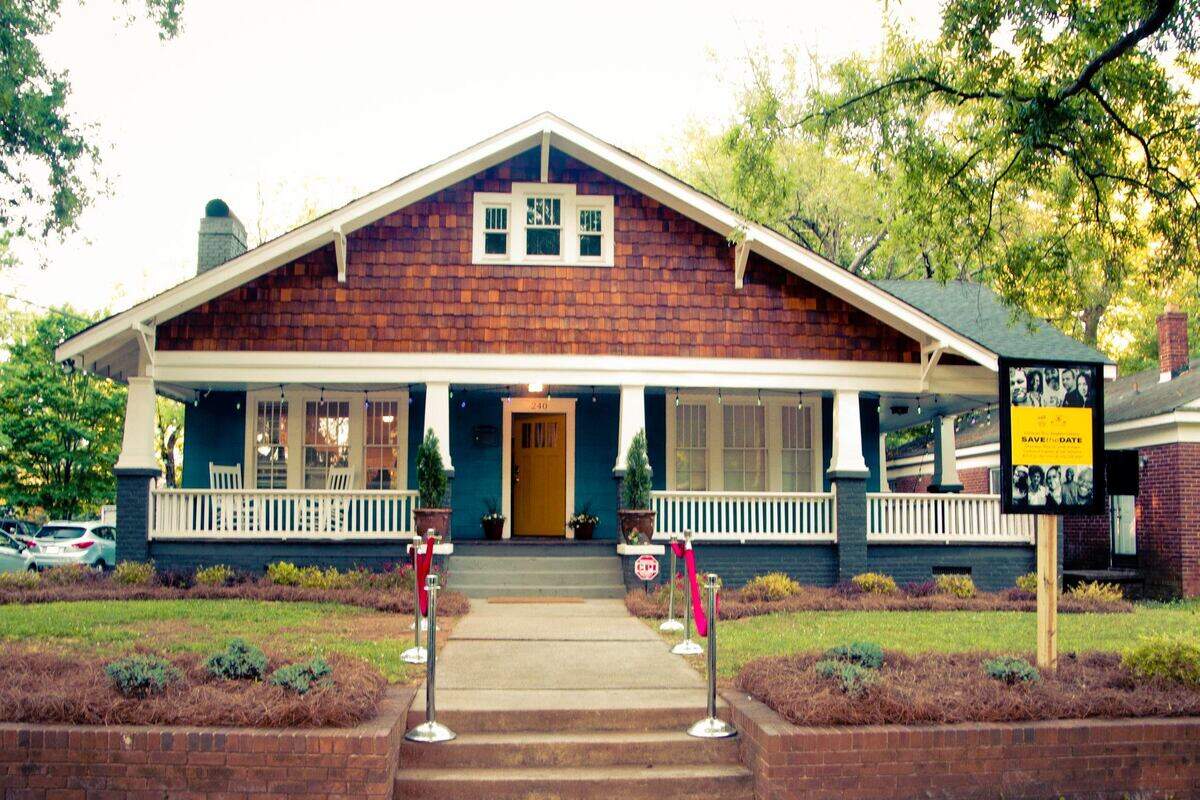
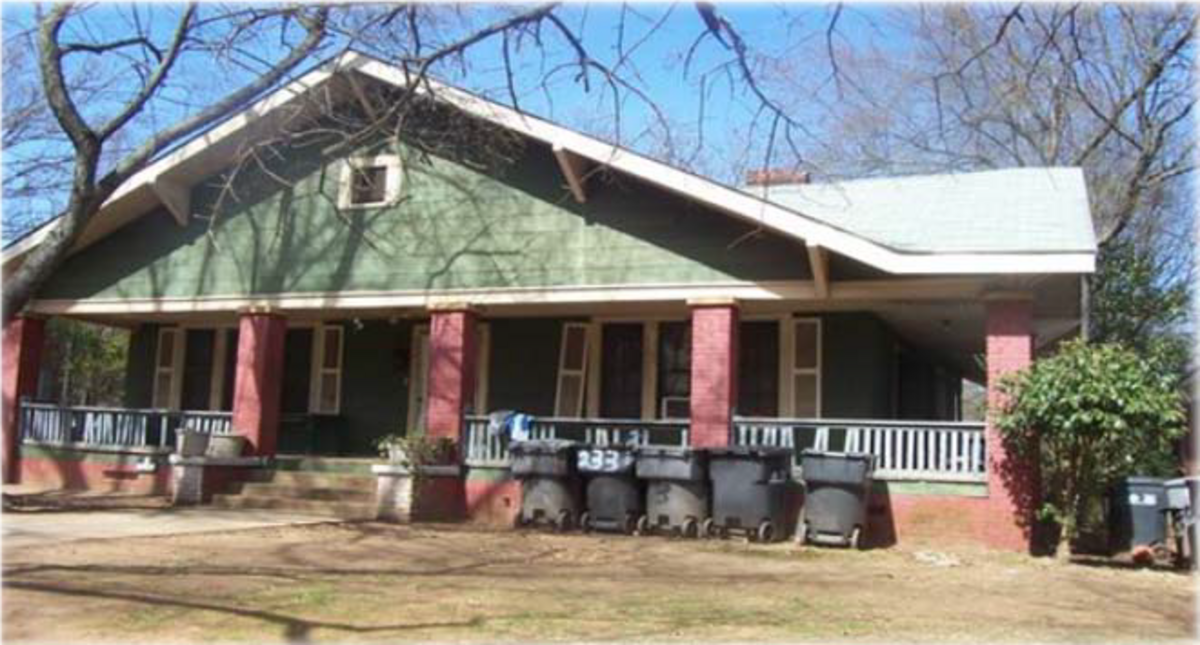
On Sylvania Avenue stands one of the only original craftsman bungalows left in the Lockwood neighborhood of Charlotte.
A few streets away lies the Ford Motor Company Plant, a building that once manufactured Model-T Fords and later, Hercules missiles. Both buildings were designated historic landmarks at a Charlotte City Council meeting last Monday.
In North Carolina, this designation gives design review authority over the property to the landmarks commission, said Stewart Gray, senior preservation planner for the Charlotte-Mecklenburg Historic Landmarks Commission.
Any material alterations made to the property have to get approved by the landmarks commission, he said. In addition, private property owners are eligible for significant property tax reductions.
“This just puts another thing in place to help make sure that those buildings will be there for years to come for future generations to enjoy and learn from,” said Charlotte City Council member Larken Egleston.
‘A crown jewel’
The landmarks commission has been working to get the Ford plant designated as a historic landmark for almost 15 years, Gray said.
The 9.4-acre property on Statesville Avenue has gone by several names since it was constructed by industrial architect Albert Kahn in 1924.
Originally built as the Ford Motor Company Assembly Plant, the warehouse was used to make Model-T and Model-A Fords, a symbol of industrial growth in 20th century Charlotte. The plant manufactured 231,066 cars and trucks from 1924 to 1932, according to research in 2002 by local historian Ryan Sumner.
During World War II, the building turned into a federal military warehouse known as the Quartermaster’s Depot that processed and distributed supplies for the U.S. Army, said community historian Tom Hanchett. Years later during the Cold War, the plant was the only factory in the country to manufacture the Nike Hercules Missile, according to Sumner’s research.
It was known as the Charlotte Army Munitions Plant — and the area is now known as Camp North End because of it, Hanchett said.
“I’m very happy as a historian that the folks who now control that property see the Henry Ford plant in its history, as... a tremendous asset for Charlotte,” Hanchett said.
Camp North End has turned into an adaptive reuse project to bring new life to a myriad of old historic buildings in the area, including the Ford plant. The area is now home to retail, restaurants, offices and art galleries.
“We knew from the moment we first came upon this property, that the Ford factory is a crown jewel and the heart of the 76-acre property and that it needed to be restored and preserved,” said Tommy Mann, development director for property owner ATCO. “It was a no-brainer for us to pursue local historic designation for the building.”
Mann said the Ford plant has been used to host events, such as a vintage motorcycle and hot rod show and a spring market run by Vintage Charlotte. He said the building will be restored to its original form and turned into an office and retail space with indoor and outdoor public areas.
The Camp North End area had been closed off to the public for almost 100 years, surrounded by a chain-link fence, Mann said.
But Mann said when ATCO acquired the property in 2016, the fences came down and the eight neighborhoods that surround the area, including Lockwood, have become more connected as a community.
“That facility that used to have this real strong symbiotic relationship with folks in the neighborhood, folks that worked there, (and) is once again opening itself up to that neighborhood,” Hanchett said.
‘Intentional conversations’
In 1926, the master mechanic at the Ford plant, Arthur C. Butler, built a house on Sylvania Avenue, according to Hanchett.
The house was in the Locke Wood neighborhood, now known as Lockwood, named for revolutionary war soldier George Locke. It’s one of the most substantial examples of the Craftsman bungalow in a neighborhood that has experienced a lot of change over the years.
While the neighborhood was a majority-white community until the 1960s due to a clause in the deeds of most houses that segregated Charlotte suburbs, redlining policies in the 1960s and 1970s transitioned the area to a majority-Black neighborhood.
Hanchett said Lockwood was one of many Charlotte suburbs that began to experience racial transition in the 1960s. The transition was exacerbated by the destruction of the old Brooklyn neighborhood, the largest Black neighborhood in Charlotte, which displaced 1,004 families.
Many families moved into Lockwood after being displaced, Hanchett said.
In recent years, gentrification took hold and last year, a study by realtor.com named it as the third most gentrifying neighborhood in the country.
Chris Dennis founded E-Fix Housing Solutions, a company that buys old properties, fixes them up and sells them to renters or new owners at an affordable price.
One of the houses he bought was the Butler house. Dennis bought it in 2015 after the former owner died. She had used the house to provide food and shelter to members of the homeless community, he said.
Dennis said he was inspired by the former owner’s actions and founded a nonprofit, Community Dreambuilders, that turned the house into what he now calls “Lockwood Legends.” It’s an arts hub that hosts events to use “art as a medium to drive intentional conversations.”
In the past, the house has partnered with the Bechtler Museum, the Arts and Science Council and other groups to host arts events, while acting as an Airbnb on weekends to recuperate costs for the nonprofit.
“The forethought of the house was, how do we take this house and give it a voice and tell the positive and the negative, just like art does, and be able to tie culture and communities together,” Dennis said. “And we did that.”
Dennis said that as areas in Charlotte continue to transform, he hopes the landmark designation helps to preserve not only the story of the house but the history of the whole community.
This story was originally published July 24, 2020 at 3:41 PM.