This women-run plumbing shop is a Charlotte fixture. But what does the future hold?
Upon being reminded by a reporter that he’s planning to come by to take a look at the little shop in Charlotte owned by her mother, Meredith Withrow Boyd quickly points out how amused she is by the prospect.
“I can’t wait to see your, um —” Boyd interrupts herself by letting out a good laugh before continuing “— your initial reaction.”
Then, upon being reminded that another Observer staffer is planning to come, too, and will be bringing a camera, she laughs again, adding: “I told the girls that we’ve got to clean up the place a little bit. We’ve got to make it look, you know, a little less grungy than it usually does.”
“The place” is Piedmont Tool and Plumbing Supply, which is a veritable mecca for both licensed plumbers and do-it-yourselfers in search of older or hard-to-find faucet parts, toilet parts and PVC fittings.
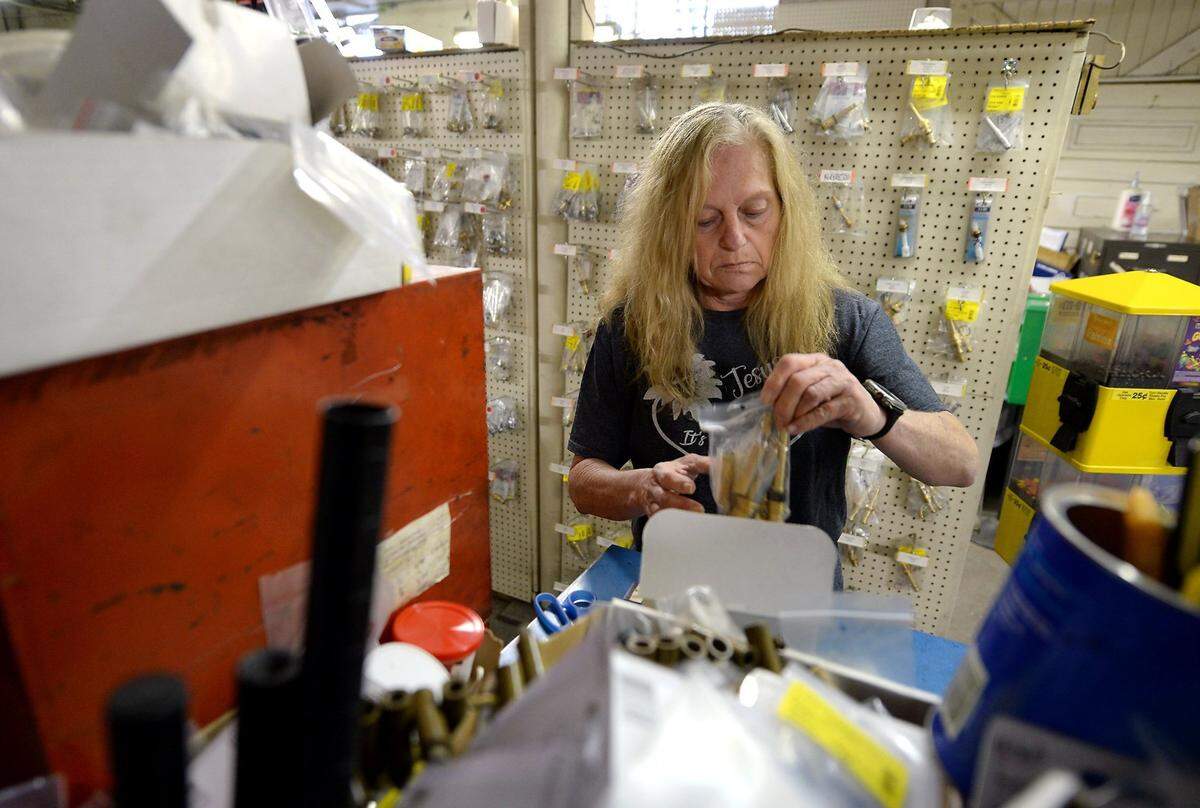
“The girls” are Kathy Keziah, 48, and Renee Smith, 56, who are the shop’s only two employees, who between them have spent more than 60 years working at the shop, and who each knows more about faucet parts, toilet parts and PVC fittings than most plumbers.
And the reason Boyd — who does the bookkeeping for the place — thinks the notion of someone walking in for the first time is funny? Because the space is ... well, “interesting” might be the kindest word for it, while “hole in the wall” is probably much more appropriate. It’s seen much better days, both inside and out.
Piedmont’s days there might be numbered, too.
Last June, Boyd’s father — David Withrow, the man who had owned Piedmont for the last 15 years, having bought it mainly because he didn’t want to see it go out of business — died of a heart attack.
Although the wife and adult daughters he left behind also love the shop, the Withrow family knows some critical decisions are on the horizon. A big one is whether they should pour more money into Piedmont and break with tradition by moving out of their longtime location and into more modern digs.
Perhaps the biggest decision, though, is this: Once Keziah and Smith call it quits, will they even want to keep the place open anymore?
A little bit of the history
It hasn’t always been a plumbing supply store, and it wasn’t always run entirely by women.
Opened in 1946 by a group of Rutherford County brothers including Joe C. Withrow (who would go on to be a member of Charlotte’s City Council and was David Withrow’s father), the business was originally a military surplus store that sold everything from khaki Army uniforms to combat shoes, foxhole shovels to parachutes.
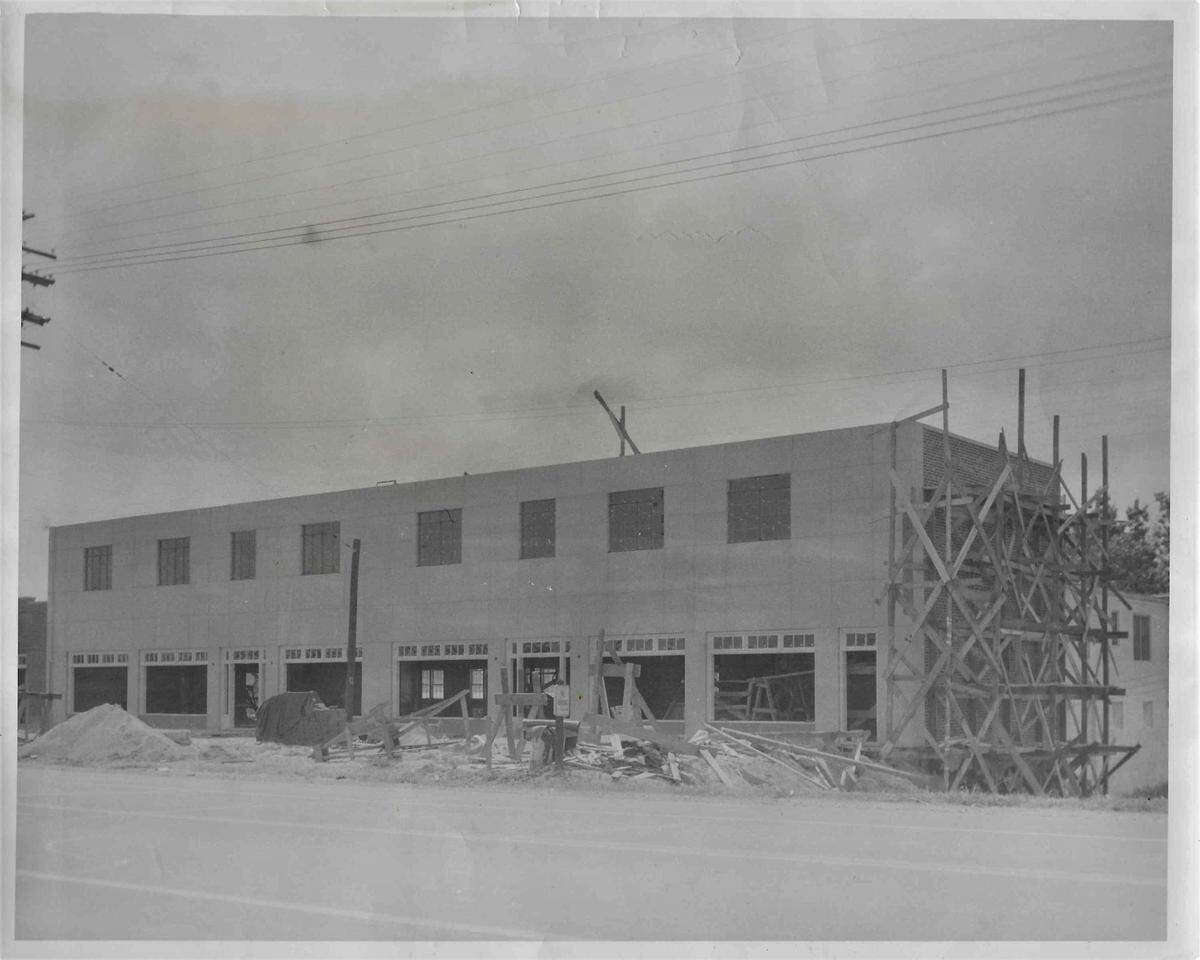
Eventually, the Withrow brothers started buying houses in the area and renting them out, and as they did, their store became a hodgepodge of stuff, including items — like tools and plumbing supplies — that were useful to keeping up the properties they owned.
No one alive now remembers exactly when the name became what it is today, or when catering to plumbers became the focus. But 1969 can be pinpointed as the year the brothers sold the shop to Cleatus “J.R” Whisnant, a friend of theirs from back home who had been working at the place since it was founded, mostly as a mechanic. And Whisnant would go on to make an interesting mark:
By insisting on hiring only women to work for him.
“His thought on that was that men are too masculine and they’ve gotta one-up everybody else when they work together. They gotta be the big dog or whatever,” says Renee Smith, whose mother was one of the first people Whisnant hired. “(He felt) women are not that way. Women work together. Women are more nurturing. We cause less ruckus in the workplace.”
Smith says she started hanging out at the store after school, while her mother worked, around the time she was 5 years old, that Whisnant had taught her to weld by the time she was 10, and that she was helping out customers when she was 12 or 13.
She’s officially been on the payroll for more than 40 years — since August 1980.
Keziah, meanwhile, has “only” been there for 22 years — since 1999. Her older sister Tina was working there at the time, and lured her away from her job managing a Waffle House when Whisnant was looking for more help.
“I didn’t know a thing about plumbing when I went to work there,” Keziah says. “All I could do was walk around and watch everybody else. You couldn’t really even answer the phone. ... It took me about a good year and a half before I really knew what I was doing.”
Once she got it all figured out, she knew the store backward and forward. She knew aerators and handles and inserts and cartridges and stems and vacuum breakers and bibb washers and O-rings — and on and on and on. She wasn’t ever going to know as much as Smith, but even in the early years, she knew more about plumbing parts than most plumbers.
Yet there were still sometimes customers who didn’t trust that either of them knew what they were doing.
‘Is there a man in here?’
This probably will come as a surprise to no one: Plumbing is an extremely male-dominated profession.
According to the U.S. Bureau of Labor Statistics, in 2010, only 1.5% of the 553,000 plumbers, pipelayers, pipefitters and steamfitters were women. By 2020, that figure had increased — to 2.3%.
Now, Keziah and Smith are not licensed plumbers (though Smith knows her way around toilets and faucets pretty well). But it’s probably safe to assume that, when it comes to the niche business of selling parts to plumbers, there aren’t a whole lot of women in that particular line of work, either.
As such, Keziah and Smith say they’ve had their fair share of experiences involving male customers coming into Piedmont for the first time who clearly weren’t expecting the only employees to be female.
Smith, for example, recalls instances — after Whisnant died in 2001 and his daughter Gail decided to let her son, Robby Adams, run the business — in which men would routinely make false assumptions.
In one typical scenario, she says, “a customer’d come in here and I’d say, ‘Can I help you?’ And they’d be looking around, looking around, and they’d see Robbie (and say), ‘I think I need to see him.’ I’d say, ‘OK. ... Robby, this customer needs to see you!’ And Robby’d get up and he’d go over, and he’d have the part in his hand, and he’d be looking at it, and looking at it all crazy and stuff. Then he’d hold it up and he’d say, ‘Well, Renee, what is this?’”
Keziah has similar stories.
“I’ve had my husband go to work with me before,” she says. “And I go up (to a customer) and say, ‘Can I help you?’ They look over to my husband, and he’s sitting in a chair somewhere in the corner, and they walk over and start rattling off to him what they need. We’re like, ‘Mmmm, he doesn’t work here. That’s why I approached you and said, Can I help you?’”
“We’ve literally had a customer walk in and go, ‘Is there a man in here?’ ... So we’re like, ‘No, we don’t allow them to work here,’” she adds, with a laugh.
They carry that sense of humor around with them to this day. In fact, just last week Keziah wore a shirt to work that was emblazoned with this slogan: “Women plumbers — of course we don’t work as hard as men. We get it right the first time.”
Smith has jokingly threatened before to get a shirt made that’s not so safe for work.
“I’m not gonna say exactly what I was thinking,” she says, before offering up her edited version: “It was basically ‘I don’t need no man genitalia to be able to tell you how to fix your plumbing.’”
But in all seriousness, they say, you can trust that they know what they’re talking about when it comes to parts.
Longtime customers agree.
“I’ve been going there since 1984,” says Pat LeClair, a plumbing repair contractor who lives in Mount Holly. “Those women are incredible. They know more than most plumbers.”
The look and feel of the place
While there’s no question that having women at the helm of a shop catering to plumbers is unique, perhaps what makes Piedmont stand out most — as has been mentioned — is the look and feel of the place.
And it’s a look and feel you can sense before you even arrive at the front door. Which is actually a back door.
To explain: Piedmont Tool and Plumbing Supply almost seems to be trying to hide behind and beneath Dirty South Customs, the pimp-your-ride headquarters with the windows full of bright neon signs and shiny rims that look out over a dingy stretch of Wilkinson Boulevard.
“The main thing that’s bad for us here is ... people don’t know where we’re at,” Keziah says. “If we were up front we’d be a lot easier to see. We get phone calls every day, ‘GPS says I’m here, but where you at?’”
You have to drive down around the left side of the building — past the big sign that says “No Trespassing” — to see the yellow signs with Piedmont’s name on it. Once you get back there and square up to the brick facade, there’s another yellow Piedmont sign over a faded-reddish-brown door with dings, dents, and a bullet hole in it.
Push your way inside and you can imagine that it looks much the same way it did when Smith started working there in 1980, maybe even the same as it looked when her mother started working there in the ’60s.
Concrete floors. Metal shelves. Work benches that were salvaged from World War II battleships. Poles scrawled with names, ages, dates, and height marks of Smith and Keziah’s children and grandchildren.
Computers are used for inventory and the internet for research, and Smith and Keziah recently started a free service that allows customers to get parts help via text message; but otherwise the women do almost everything old-school, hand-writing order tickets, and using fax and credit-card machines that have yellowed with age.
“We get little kids who come in here with their dads, it’ll be their first time here,” Smith says, “and they’ll be like, ‘Ew, it stinks in here!’ ’Cause you get the smell from upstairs. From the chemicals and things that they use.”
“And the dust,” Keziah chimes. “That’s 50 years of dust is what you’re smelling.”
“Yeah,” Smith continues, “I tell people all the time, when I give ’em a part that’s got dust on it, I’m like, ‘You’re just paying for the product. I’m not charging you for the dust.’”
They both would argue, though, that the hidden location and the shop’s appearance and the old-school features and the smell and the dust — that it’s all part of the experience. The charm. The tradition.
“It’s just always ran this way,” Keziah says. “And there’s no point in changing it. You change the history if you do. I mean, that’s the way I feel about it. I’m sure that’s probably the way Renee feels, too.”
Smith nods. “Yep,” she says. “I want it to stay the same.”
But will it?
‘We don’t know what the future holds’
David Withrow brought the business back into his family in 2006, buying the name, the infrastructure of the shop and inventory from Whisnant’s family and keeping it running because he believed in that charm, that tradition, that history. There was still a place for it, he thought.
He was right.
Home Depot, Lowe’s and Ferguson Plumbing Supply can have lower prices on the plumbing parts they stock, but they don’t carry nearly the variety, and Piedmont is often the only place in town that has replacement parts for older fixtures that are no longer manufactured — or are made by manufacturers that no longer exist.
It’s not a cash cow. Never has been.
What it is is a service to the community, and as one of Charlotte’s longest-running independently owned businesses, it’s an institution.
It’s also like a family.
That’s why, when Withrow died last year at age 70, leaving the business to his wife, Marilyn, there was never any talk of walking away from it.
Meredith Boyd, who has done the books for Piedmont for the past 15 years and is in line to inherit the place with her younger sister Allison, says “The main reason is because of these two.” She is gesturing at Keziah, who is helping a customer, and Smith, who is methodically fixing a bag of parts. “They’ve been here so long. This is what they know. So I don’t want to put them out. I just don’t.”
(Piedmont never closed due to the pandemic, by the way, because the business was considered essential.)
Smith says she’s probably still got 10 years in her. Keziah has 15, maybe more. If they both changed their minds and left sooner, though, Boyd says Piedmont’s long run would probably come to an end.
“I mean, my dad had always said, if they decided they didn’t want to work anymore or we weren’t selling enough parts or whatever, then he would literally sell the inventory, lock the door and walk away. ... And that’s what makes it hard to decide whether to move or not. ’Cause we don’t know what the future holds.”
That’s right. There’s been talk of moving. To a newer, more-visible location.
It’s not imminent, given how costly moving and updating everything would be. But Keziah and Smith know it’s within the realm of possibility.
And if it does happen, they know there will be a lot of mixed feelings.
“I feel J.R.’s, and my mom’s, and Tina’s, and all the women who went before us ... I feel their spirit here,” says Smith, who is sitting on a chair squarely in the center of the shop.
“Of course, I would like to have a big storefront place, too, where we’d be better seen and maybe even do a little more business that way.
“But I feel like the spirit of Piedmont wouldn’t be there,” she says, as she looks around the room.
“It’s here.”
This story was originally published March 25, 2021 at 6:00 AM.