EPA proposes settlement with New-Indy mill over pollution, but some say it’s not enough
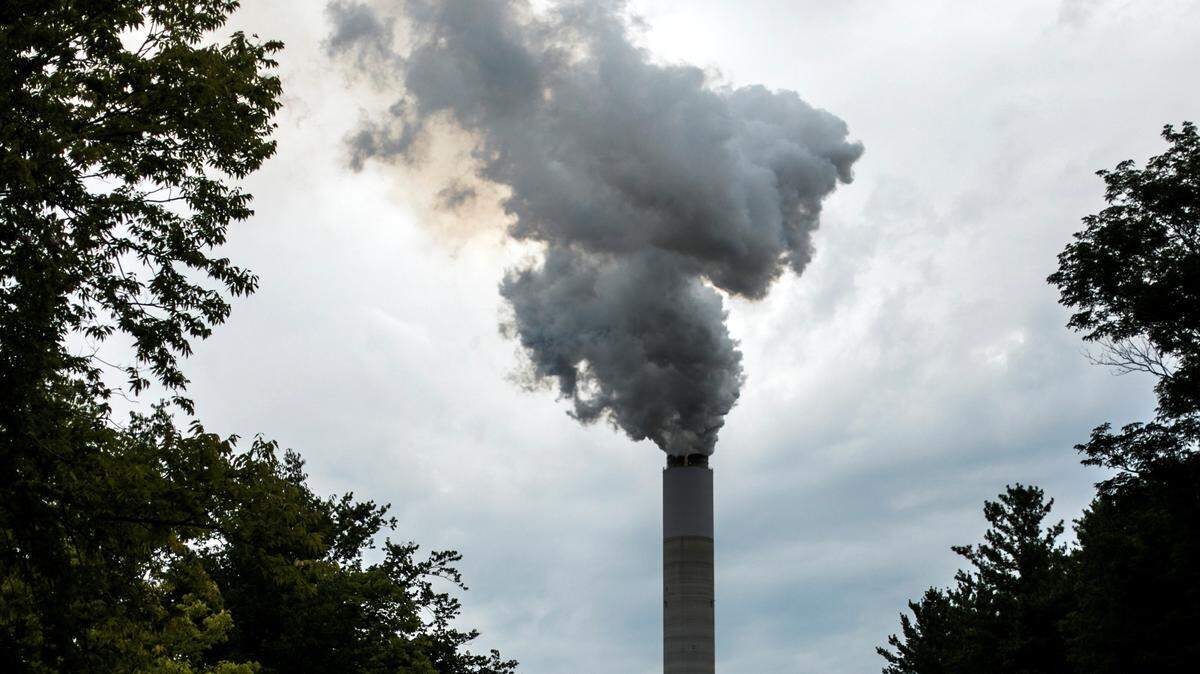
Jessica Elise Fitzgibbon sobbed as she explained what life is like near the New-Indy Catawba LLC. paper mill, a York County operation that has generated thousands of complaints in the Carolinas about its rotten-egg odor.
Family members are unable to breathe, and are hesitant to leave their house in Fort Mill, she said during a U.S. Environmental Protection Agency hearing in late January in Rock Hill.
“My whole family is sitting at home. We can’t go outside. We get headaches and nosebleeds all the time when we go outside. Our children go outside at recess… my daughter doesn’t want to leave her classroom anymore.”
Frustrated, often tearful, residents from Fort Mill, Indian Land and Catawba in South Carolina, and Waxhaw, in North Carolina, came to beg for changes to an EPA consent order, and a stop to the foul odor they say is ruining their lives.
Fitzgibbon was among dozens of people who complained that the EPA isn’t doing enough. The topic at hand was the EPA’s proposed federal consent order intended to force New-Indy to curb odors and stop air pollution.
While the EPA passed an emergency order against New-Indy last May, the proposed consent order, which will require more action to be taken at the mill, has not yet been passed. New-Indy has agreed to meet the requirements currently outlined in the consent order, officials with New-Indy and the EPA said.
The current draft can be read online at www.justice.gov/enrd/consent-decrees.
Before the order is passed, the EPA will take public comment until Feb. 9.
At Tuesday’s meeting, public opinion was clear: People who are affected don’t think the EPA order goes far enough. And they want to know, now, when the odor will end.
The state has received complaints about odors from the New-Indy mill since February 2021, according to the South Carolina Department of Health and Environmental Control. DHEC representatives said their own employees also have experienced the smell.
What action has been taken?
The emergency EPA order in May required New-Indy to implement monitors to measure the emission of hydrogen sulfide (H2S) and ensure the plant curbed those emissions. The order was meant to “stop an imminent potential endangerment,” officials from the EPA say.
Being able to smell fumes from the mill does not necessarily mean there is a health risk, or “endangerment.” And officials at New-Indy say the monitors placed at New-Indy show the plant now is emitting acceptable levels of H2S.
But the rotten-egg smell, which officials say comes from emissions of H2S, still is so strong that people say they’re trapped in their homes.
The proposed federal consent order would require more changes by New-Indy to ensure its wastewater treatment system is operating at full capacity and preventing H2S.
The two most commonly voiced complaints about the order:
- Locals want New-Indy to install a second steam stripper, part of the process to clean the air and stop pollutants from escaping the plant. Shutting down the plant’s steam stripper for maintenance is part of what causes the odor problem, officials say. If the plant’s stripper shuts down, citizens said New-Indy must have a backup. A backup is not included in the order.
- The EPA order does not list methyl mercaptan, a chemical that contains sulfur and can cause a rotten-eggs smell.
There is mention of chemicals such as methyl mercaptan in documents provided in a class action lawsuit against New-Indy.
A report submitted to the Rock Hill District Court as part of this suit says several other chemicals in the plant’s liquid waste known to cause “an offensive smell” could be harming the community. The chemicals include methyl mercaptan, dimethyl sulfide, dimethyl disulfide and methanol.
The Columbia State newspaper reported on Jan. 16 that experts have found dioxins, a known carcinogen, and other toxic chemicals in wastewater on the property.
Monitors currently installed around the plant’s perimeter only monitor levels of hydrogen sulfide.
In a presentation by health officials in January, medical professionals from the Southeast Pediatric Environmental Health Specialty unit discussed the health risks of H2S. They said the risks are minimal. That presentation did not mention other chemicals.
“Why only hydrogen sulfide?” one citizen asked. The crowd erupted in agreement.
Another person said: “You picked the one chemical being emitted to tell us how it’s not harmful. But what about the rest?”
“Why don’t we talk about methyl mercaptan?” demanded Andrew Tagliani, who lives in Indian Land. “You could come to my house. I’ll give you permission to go in my backyard. You can measure anything you want. It’s getting worse and worse. This is ruining our lives living here.”
Investigation continues
Officials with the EPA said they are continuing to investigate New-Indy and cannot comment on the presence of methyl mercaptan.
The biggest problem, it seems, is that people enduring the odors don’t trust the EPA.
Over and over, comments voiced a lack of confidence. Two people said that saying hydrogen sulfide doesn’t affect health was implying they are not suffering, and there is no problem.
“This whole meeting is a sham,” Kristen Blanchard, of Lancaster, said.
Complaints about odors from the New-Indy plant have been coming in droves since February 2021, according to the Carolina Department of Health and Environmental Control.
Comments last month could be summarized in the words of Rebecca Albanese, who lives in Waxhaw: “We are prisoners in our own homes.”
“We can’t even walk in our own neighborhoods,” she said. “Our kids cannot use their backyards.”
Albanese said she has driven across the border into South Carolina, up to 29 miles, to find a place for her children to play. But the smell followed them everywhere.
Alan Snader, who lives in Indian Land said his family moved from Florida to be closer to their grandchildren. “They don’t even want to come over.”
There also was testimony about health concerns.
“My grandma is 90, has never had a health issue in her life, recently hasn’t been able to breathe,” Fitzgibbon, who lives in Fort Mill testified.
Timothy Phillips, who lives in the Tree Tops community in Lancaster, S.C., said when he steps outside, the air is “hitting (him) like a tennis racket.”
“My daughter-in-law has breathing issues, has had cold symptoms since February, throat and eye irritation. They’re considering moving,” he added.
Before ending her comments, Fitzgibbon made one final plea: “We asked our government, people that we have elected, to help us in the community, and they’re not protecting us from this one thing we are asking of them. And it’s unfair for our community.”
Statement by New-Indy
The mill fully accepts the orders outlined in this consent degree, says a public relations consultant for New-Indy.
New-Indy is working to meet the requirements of the EPA’s consent degree, and the progress can be seen in dropping levels of H2S, he said.
“In many instances, such as the cover and filter on the post-aeration basin, we have already installed interim measures that are working very well, as evidenced by the negligible levels of hydrogen sulfide (H2S) detected by fence-line monitors.”
New-Indy says the actions required by the EPA are working and will continue to mitigate odors. “The H2S levels have dropped and continue to drop, mostly due to actions that New-Indy Catawba has taken in consultation with representatives of EPA and SC DHEC. We expect that to continue as we implement more provisions set forth in the consent decree.”
What does New-Indy have to say to those who say this order is not working or will not work? “We respect the process and each person’s right to participate. We try to investigate each complaint to determine what more may be done to address this situation. H2S levels detected by the monitors on the fence-line around the mill and in the community indicate that approach is working well,” a statement reads.
How to be heard
If you would like to comment on the proposed consent agreement, you can either contact the EPA or the Assistant Attorney General, Environment and Natural Resources Division.
To contact the Assistant Attorney general, you can email your comments to pubcomment-ees.enrd@usdoj.gov or submit comments via mail to: Assistant Attorney General, U.S. DOJ—ENRD, P.O. Box 7611, Washington, DC 20044-7611.
To contact the EPA, you can go to www.epa.gov/aboutepa/forms/contact-epa.
This story was originally published February 1, 2022 at 9:27 AM with the headline "EPA proposes settlement with New-Indy mill over pollution, but some say it’s not enough."