
Duke’s carbon plan includes ‘all of the above’ approach to slashing emissions
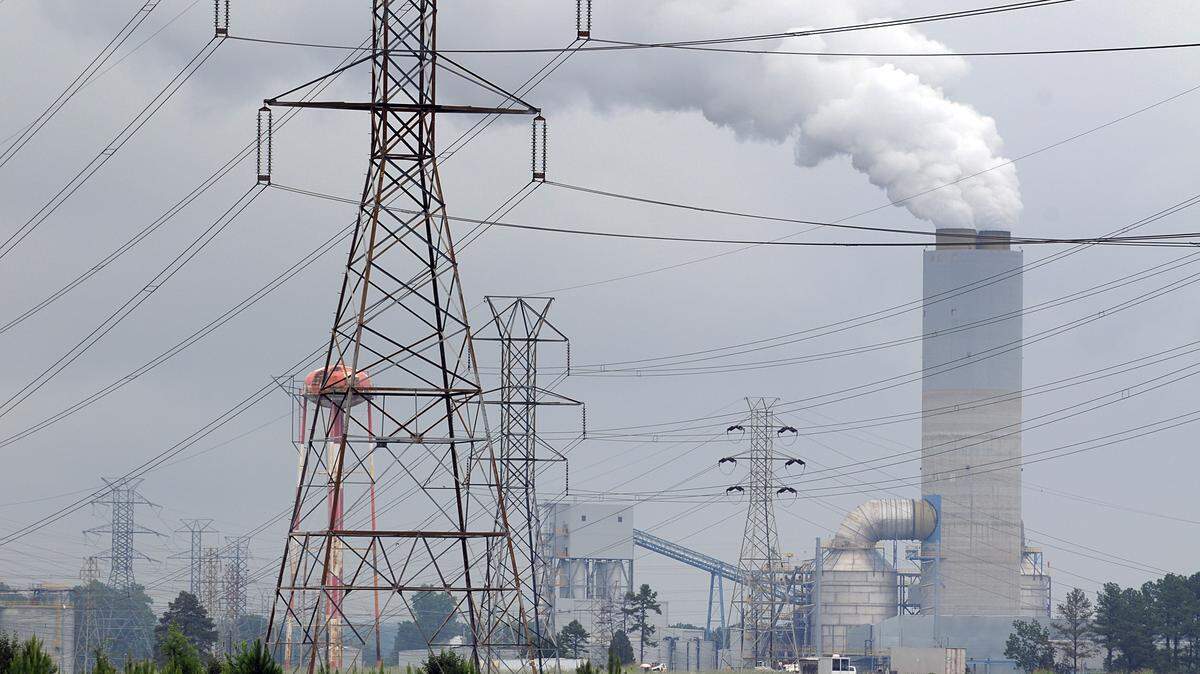
Duke Energy is asking the North Carolina Utilities Commission to approve an “all of the above” approach to reducing carbon emissions that would see new renewable electricity generation brought online in addition to new natural gas and nuclear facilities.
Monday, the Charlotte-based utility filed the first version of its carbon reduction plan. Last year’s House Bill 951 required that Duke craft the plan and that its first iteration receive approval from the Utilities Commission by the end of this year.
In its filing, Duke lays out four different scenarios for meeting the 70% reduction in carbon emissions required by the law, with one achieving the goal by 2030. The other three scenarios would see Duke reach the goal between 2032 and 2034 with the addition of offshore wind, a small modular nuclear reactor or both forms of generation.
“This all of the above, sort of diversified strategy is not only needed for reliability to meet demand 24/7, but it also helps to diversify risk, which is beneficial for customers,” said Glen Snider, Duke’s managing director of Carolinas’ integrated resource planning and analytics, in an interview.
Duke is not asking the Utilities Commission to pick one of the four options, but rather asking it to approve the plan as a whole. That would mean allowing Duke to take steps leaving the utility with the option to pursue any one of the four paths as prices for different kinds of generation fluctuate or technology develops.
Those steps include procuring 3.1 gigawatts of new solar energy that would be in service by 2028; developing and procuring a gigawatt of standalone battery storage; and procuring 600 megawatts of onshore wind power by 2024. Duke would also seek Utilities Commission approval for three new natural gas-fired power plants.
Additionally, Duke would begin deciding where to build a small modular nuclear reactor, work on permitting for the Wilmington East wind energy block it won last week and investigate the feasibility of 1.7 gigawatts of hydro pumped storage. Hydro pumped storage involves pumping water upstream when there’s a power surplus and allowing it to flow downstream when it’s needed, creating more energy.
“The near-term steps were needed for any of the pathways, so if you’re a stakeholder that is really focused on getting to 2030, no exceptions, no delays, those near-term actions still keep you on that path,” Kendal Bowman, Duke’s vice president of regulatory affairs and policy in North Carolina, said in an interview. “And if you’re a stakeholder that’s really looking for what is the least-cost potential pathway that exists, these near-term actions keep you on that pathway, as well.”
Solar, wind and other power sources
Duke says it will reach net zero emissions by 2050 under every proposed pathway. The company also plans to retire plants generating 6.2 gigawatts of coal-fired power by the beginning of 2035 in every scenario, with another 2.2 gigawatts of coal power being retired at the company’s Belews Creek plant that year and 850 megawatts of coal power at the company’s Cliffside power station in Cleveland County being converted to natural gas.
Some energy resources remain the same under all scenarios. Those include trying to cut 4.23 gigawatts of demand through energy efficiency efforts and peak pricing structures by 2035; adding new natural gas-fired power plants that generate at least 3.1 gigawatts of power; adding 1.7 gigawatts of pumped storage; adding 1.2 gigawatts of onshore wind; and adding a small modular nuclear reactor that can generate about 600 megawatts.
The resources that vary depending on the plan are solar, battery storage and offshore wind.
It is possible, Snider said, that Duke will purchase onshore wind that is generated elsewhere in the country and transmit it to the Carolinas rather than building new wind farms here.
HB 951 allows Duke to ask for some flexibility in meeting the 70% target, with the Utilities Commission able to give the utility an extension as long as it is pursuing either offshore wind or small modular nuclear projects. In three of the four scenarios laid out Monday, Duke would seek to use that flexibility, pushing its achievement of the 70% target to 2032 under one and 2034 under two others.
The utility took its first large step toward offshore wind last week, when its unregulated wind subsidiary won one of two leases to a wind energy area off of the Brunswick County coast. In the days since, Duke has stated that it believes the area has about 1.6 gigawatts of potential energy, or enough to power 375,000 homes.
In comments released Monday afternoon, clean energy and environmental groups indicated that they plan to file an alternative carbon plan that focuses heavily on renewable sources of energy. Once the plan has been filed, interested parties have 60 days to either critique it or provide an alternative.
“We’ll review Duke’s plan with our experts and propose an alternative plan that will achieve our state’s carbon-reduction goals at least cost to ratepayers by rapidly phasing out expensive, polluting fossil fuels, ramping up clean renewable energy, and maximizing low-cost energy efficiency — all while centering equity and environmental justice.,” wrote Gudrun Thompson, a senior attorney with the Southern Environmental Law Center.
The Southern Environmental Law Center represents the Natural Resources Defense Council, the Sierra Club and Southern Alliance for Clean Energy.
Maggie Shober, the Southern Alliance for Clean Energy’s research director, said in a press release that Duke’s plan is only one of the pieces the Utilities Commission must consider. Shober called energy efficiency and solar “near-term investments in proven strategies” and warned that investments in natural gas could be risky.
“We look forward to presenting the Commission with an alternative plan that could reduce emissions while avoiding risky investments in new fossil-fuel infrastructure,” Shober wrote.
What will it cost?
The wide-ranging energy legislation also required that the Utilities Commission consider cost and reliability when deciding how to curb emissions from the state’s largest electric utility. Energy prices in North Carolina would increase under every scenario Duke proposes, as the utility would need to build a significant amount of new generation.
Last year, energy advocates pushed back against HB 951 by decrying its lack of protections for low-income consumers who will be hit the hardest as prices rise. Supporters of the bill argued that by requiring the Utilities Commission to consider cost when approving Duke’s plan, they were providing protections for those customers.
A scenario in which Duke reaches the target of a 70% reduction from 2005 levels by 2030 would see energy prices increase 2.5% annually until 2035, the highest average increase. That plan would also achieve the quickest and steepest cuts in emissions — 71% by 2030 and 80% by 2035.
Duke said the plan with the lowest average annual increase would be one in which it uses small modular nuclear generation to reach the 70% target by 2034, which would see bills go up an average of 1.9% annually. Under that plan, Duke would achieve a 74% reduction by 2035.
Once the Utilities Commission approves the plan, it will need to be reviewed every two years. Duke officials and state legislators have said that this is designed to help the company take advantage of new technologies or of decreasing prices among resources that already exist.
In a written statement, Stephen De May, Duke’s North Carolina president, said three virtual meetings with interested parties earlier this year played a key role in shaping the plan.
“Based on the robust conversation, we accelerated the timeline for offshore wind options and significantly ramped up projections for new solar and storage resources,” De May wrote.
The N.C. Utilities Commission will hold public hearings on the carbon plan across the state this summer, including July 11 in Durham, July 12 in Wilmington, July 27 in Asheville and July 28 in Charlotte. The commission will also host a virtual public hearing on August 28.
This story was produced with financial support from 1Earth Fund, in partnership with Journalism Funding Partners, as part of an independent journalism fellowship program. The N&O maintains full editorial control of the work.
This story was originally published May 16, 2022 at 4:31 PM with the headline "Duke’s carbon plan includes ‘all of the above’ approach to slashing emissions."