Is the job market slowing down? Not in Charlotte: ‘We don’t even see a yellow light.’
Construction is wrapping up, social media is abuzz and Peter Han is pretty much set to open the newest location for international grocer Super G Mart in Pineville. There’s just one thing missing from a potential grand opening: the employees to staff it.
“We’re still very far from meeting our hiring needs,” said Han, Super G Mart’s vice president of business development. He needs 80 full- and part-time employees to run the 108,000-square-foot international grocery store.
Since announcing the new location in April, the store delayed its opening multiple times, due to COVID-related construction supply shortages. But now, Han said he can’t set the opening date until he finds enough workers.
“Where are they?” he asked. “It’s concerning.”
For the last several months, a number of factors have hinted at an economic slowdown that could affect hiring options. Inflation is putting pressure on Americans’ pocketbooks, despite officials’ attempts to slow its pace. A growing number of economists warn the U.S. will see a recession within the year.
But you wouldn’t know it looking at Charlotte’s job market.

Business owners and hiring managers say nothing has changed since the beginning of this year, when firms across several industries, from manufacturers to accounting companies, were still riding the high of a post-COVID economic boom.
So employers of all kinds are still scrambling for staff, and many candidates have their pick of offers. Even sectors that were expected to show signs of cooling, like construction, still have long lists of job vacancies.
“Everybody is just as busy as they were six months ago or a year ago,” said Bill Sofio, who runs the staffing firm Specialized Recruiting Group in Charlotte. “We don’t even see a yellow light.”
Low supply, high demand for workers
Hiring sprees and labor shortages have been a fact of life in Charlotte for over a year now.
During the initial COVID outbreak in spring 2020, unemployment spiked to record heights and the economy screeched to a halt as Americans shut themselves in their homes and held on to cash. But as lockdowns eased, consumers flocked back to businesses, spending on everything from used cars to restaurant meals.
Jobless claims fell as employers built their payrolls back up and struggled to keep up with surging demand. In North Carolina, the unemployment rate shot up to 14.2% in April 2020. A year later, it was 5.1%, and by this spring it hit a 20-year low at 3.4%.
That red-hot labor market has outlasted many other economic effects of the outbreak.
“There’s still two job openings for every unemployed person (in the U.S.),” said Michael Walden, a Raleigh-based economist and professor emeritus at N.C. State.
That low-supply, high-demand pairing nurtured another troubling economic trend: inflation. The U.S. Labor Department’s key measure of rising prices, the Consumer Price Index, has been hovering at or near four-decade highs for months.
The Federal Reserve has already moved to rein in those rising prices in the form of higher interest rates, hiking the cost of borrowing five times in 2022. Those moves are meant to cool the economy, slow the pace of inflation and eventually loosen a tight labor market, Walden said.
Inflation is still running rampant.
But nationally, the labor market started showing signs of a cool-down last month: the Bureau of Labor Statistics reported fewer openings, lagging wage growth and fewer job gains across the U.S. in September.
‘Nothing has changed’
But in Charlotte, the gap between supply and demand for workers hasn’t budged.
Sofio’s staffing company recruits workers across a number of industries, including construction, logistics and professional services like accounting.
In a March 2022 interview with The Charlotte Observer, Sofio described a competitive labor market where candidates held the cards and employers were hiking wages and offering perks — like remote or hybrid work arrangements — to lure jobseekers.
Seven months later, he said little has changed and the continued demand has surprised him. Sofio even worked to diversify his business earlier this year in anticipation of his recruiting business falling off in some sectors.
“I fully anticipated our construction hiring to be much lower than it is now. We have not seen that at all,” he said.
Many employers are still catching up on backlogged orders, he said. If there’s storm clouds ahead, local businesses don’t see them — or at least don’t see a reason to slow hiring yet, he said.
“Nothing has changed.”
.JPG "CLT_SUPER_G_MART_04 (1).JPG")
‘A unique era’
If a recession does take hold, workers can expect to see the opposite of a hiring spree, Walden said. As the Fed raises the cost of borrowing and tries to slow the economy, it could tip the country into recession and trigger job cuts.
“There is a possibility that we could get through this without major job losses,” he said. “If it does (happen), that would be – in my opinion, and at least to my memory — a first.”
But it’s hard to know what the path forward might look like. Today’s labor market is confounding even some economists, said Laura Ullrich, a Charlotte-based senior regional economist for the Federal Reserve Bank of Richmond, Virginia.
“It remains a lot tighter than maybe a lot of economists would have predicted,” she said. “This is such a unique era, it’s hard to know what’s going to happen.”
Still, Charlotte is well-insulated from the worst effects of a slowdown, she added, because of strong economic growth in the region. “I find myself wanting to remind people of recessions in early the 2000s and 1990s. It wasn’t a catastrophic event.”
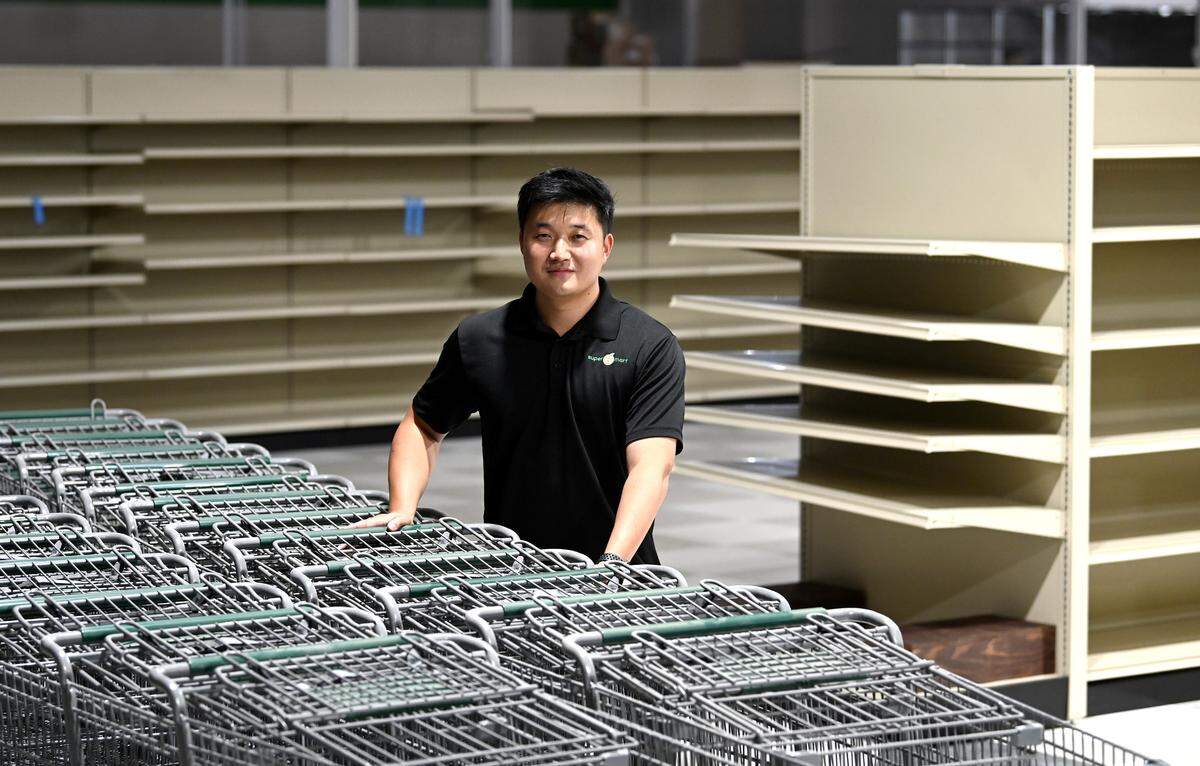
As for Han, he’s excited for Super G Mart to eventually be much more than a supermarket in Pineville. The international grocer will one day feature a food hall with 14 vendors, a community center and cooking and language classes.
It’ll take a full staff to make that vision a reality.
“There’s a lot we want to implement,” Han said. “But the doors have to open first.”
This story was originally published October 17, 2022 at 5:45 AM.