‘Who is Charlotte for?’ This immersive play tackles the city’s growth and housing issues
Inside QC Family Tree’s Big Blue House in Enderly Park, a real estate agent is eagerly waiting to sell that home to the highest bidder.
Meanwhile, the homeowner quickly parses through years of memories and belongings because they have 90 days to vacate the premises.
In a city, such as Charlotte, that’s rapidly growing and changing, the interactions between the agent and homeowner will have one asking, “Who is the city of Charlotte really for?
The question, including gentrification, displacement, housing justice and what it means to be a Charlottean are at the center of the immersive play, “Kudzu: A Story of Belonging.” The play is created by Mixed Metaphors Productions, in partnership with QC Family Tree, a nonprofit focused on housing and community needs.
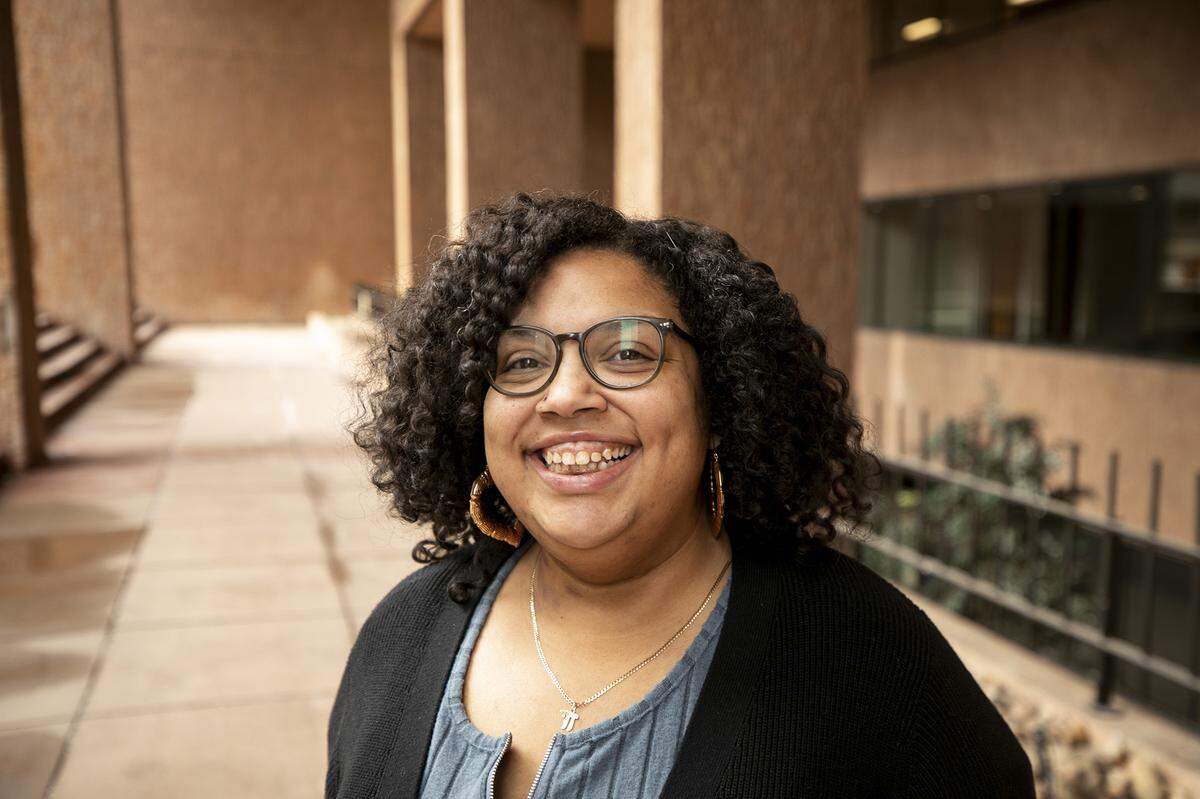
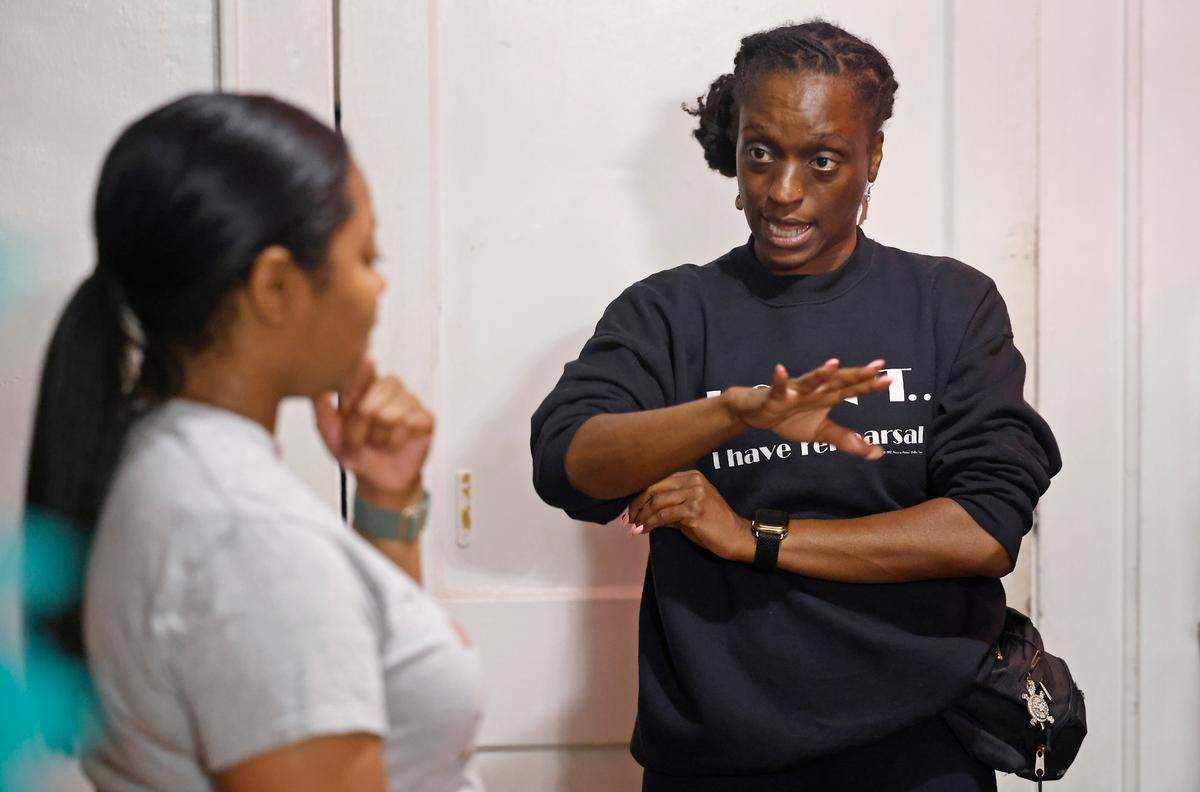
The play’s main message is to peel back the layers of what it means to be a growing city and what that does to its residents, says Mixed Metaphors co-founder Kat Martin.
“There are parts of the city that I knew well but I get lost now... I feel like my entire life, Charlotteans have kind of lived in a duality where you have nostalgia for the past and you’re anxiously looking forward at the same time,” Martin said. “And this is not in a ‘eat your vegetables or you’ll be in trouble” way but we want you to look at your part in this because we’re all Charlotteans and we are all a part of this story.”
Charlotte’s growth and its kudzu connection
Charlotte was listed as the 15th largest city in the U.S. with a population exceeding 911,000 people in 2023.
But while more people are calling the area home, people are losing their homes.
As of June, 2,784 people were considered homeless in Mecklenburg County, according to the Charlotte-Mecklenburg Housing and Homelessness dashboard. And last year, about 33,507 eviction cases were filed and ultimately, 7,000 households lost their homes, according to the county.
Then there’s the housing stock. A Charlotte Observer investigation in 2022 noted that one in every 20 single-family homes in the city were owned by a corporate landlord. Most of those homes are in Black and brown neighborhoods.

That’s evident in Enderly Park, Martin said. About five houses on Parkway Avenue near QC’s Big Blue House are owned by corporations.
“I think that when you live in a city where 25% of homes are owned by corporate landlords, it is natural to be anxious and afraid and to question who is this city for,” Martin said. “I want it to be for me. I want it to be for us. I want it to be for people that have been here... And it’s not that people can’t move here — it’s that if you go anywhere, you need to know where you’re going.”
The idea of who gets to call Charlotte home is what “Kudzu” looks at.
A partnership and an immersive play
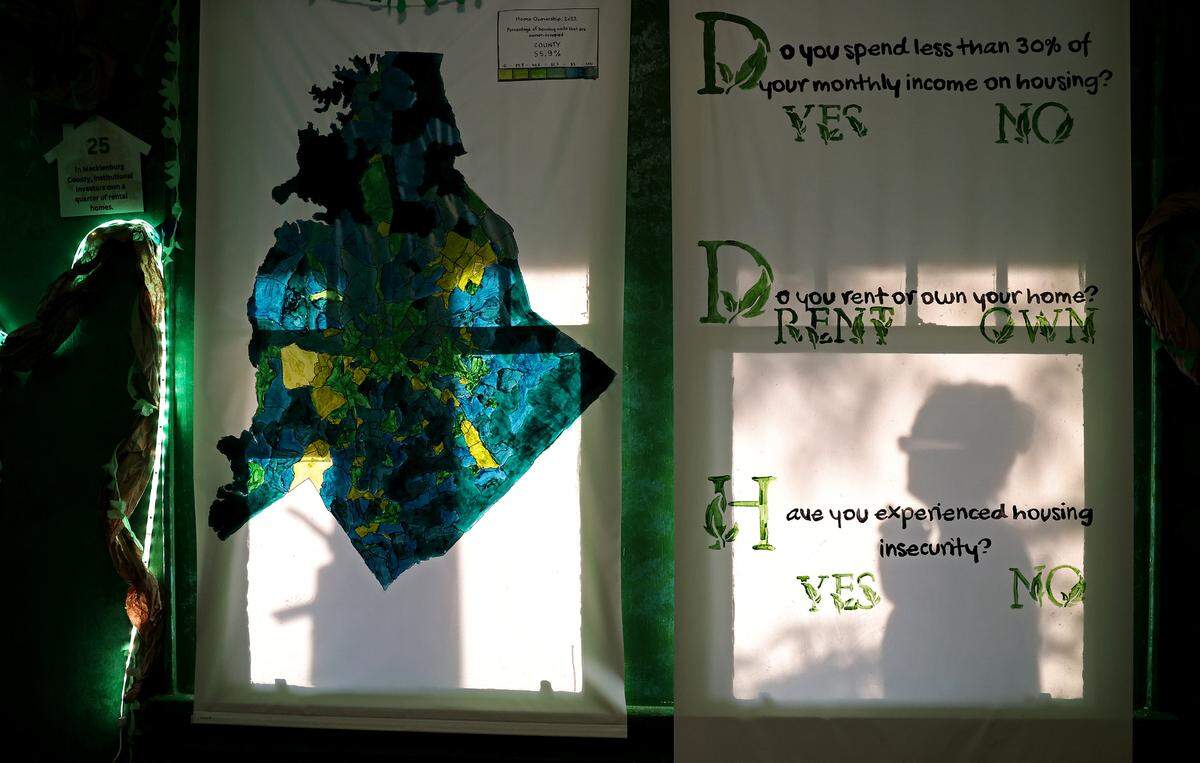
“Kudzu” takes place inside QC’s home base, which is used as a community gathering hub and a residency space for artists. QC co-founder the Rev. Helms Jarrell said the partnership with Mixed Metaphors was a natural occurrence because both groups are focused on social justice issues.
Some of those issues are having decent and affordable housing around Charlotte — and what better way to showcase that than through a hands-on play.
Groups of about 10 people will enter the QC home for an open house where they’ll be shown four rooms each representing the city’s housing issues.

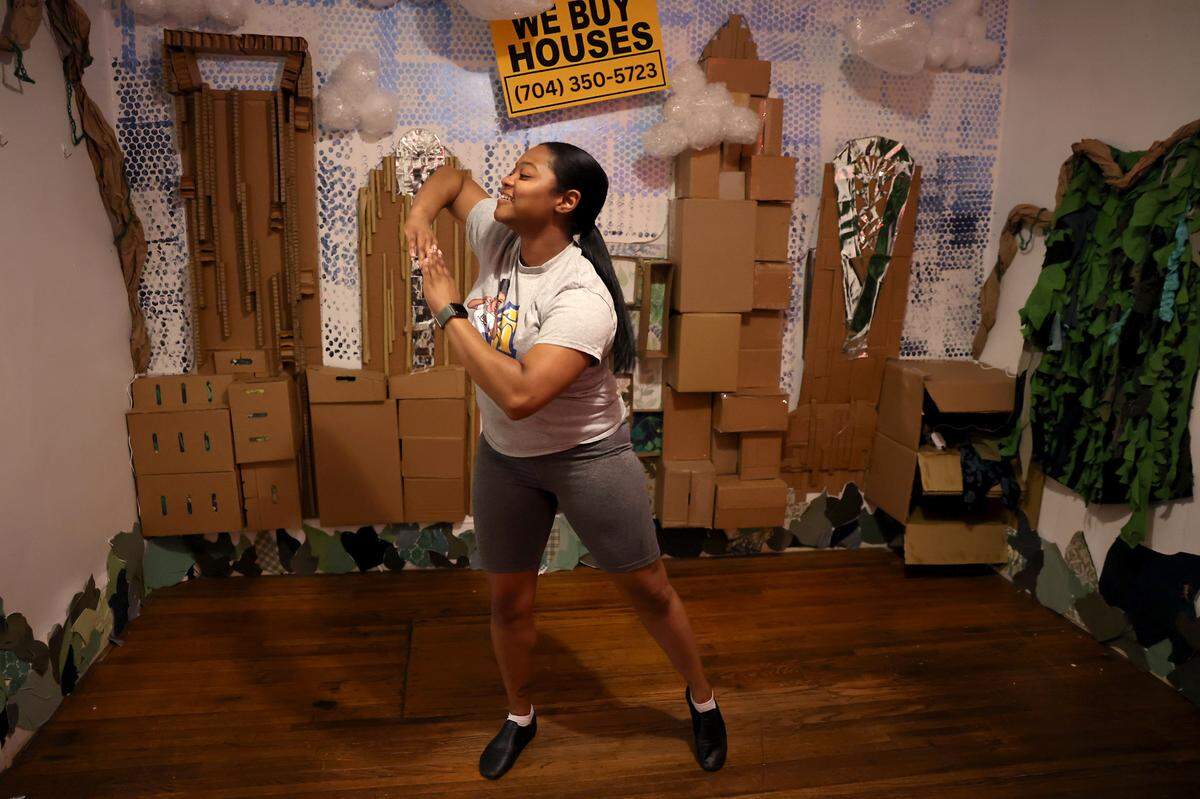
They’ll also meet those issues personified. There’s the real estate agent, played by Teresa Long, who says the house is in a “transitioning” neighborhood.
Then there’s the house flipper, played by Cecilia McNeill, who lurks in the shadows ready to purchase the house from the prospective buyer.
“These are the forces at play within gentrification and inside of housing,” Martin said.
“We play around in the piece with coded language and how language can be used to conceal and reveal. ‘Transition’ is code. Cozy doesn’t mean cozy. There’s so much rhetoric that Charlotteans get glossed over with.”
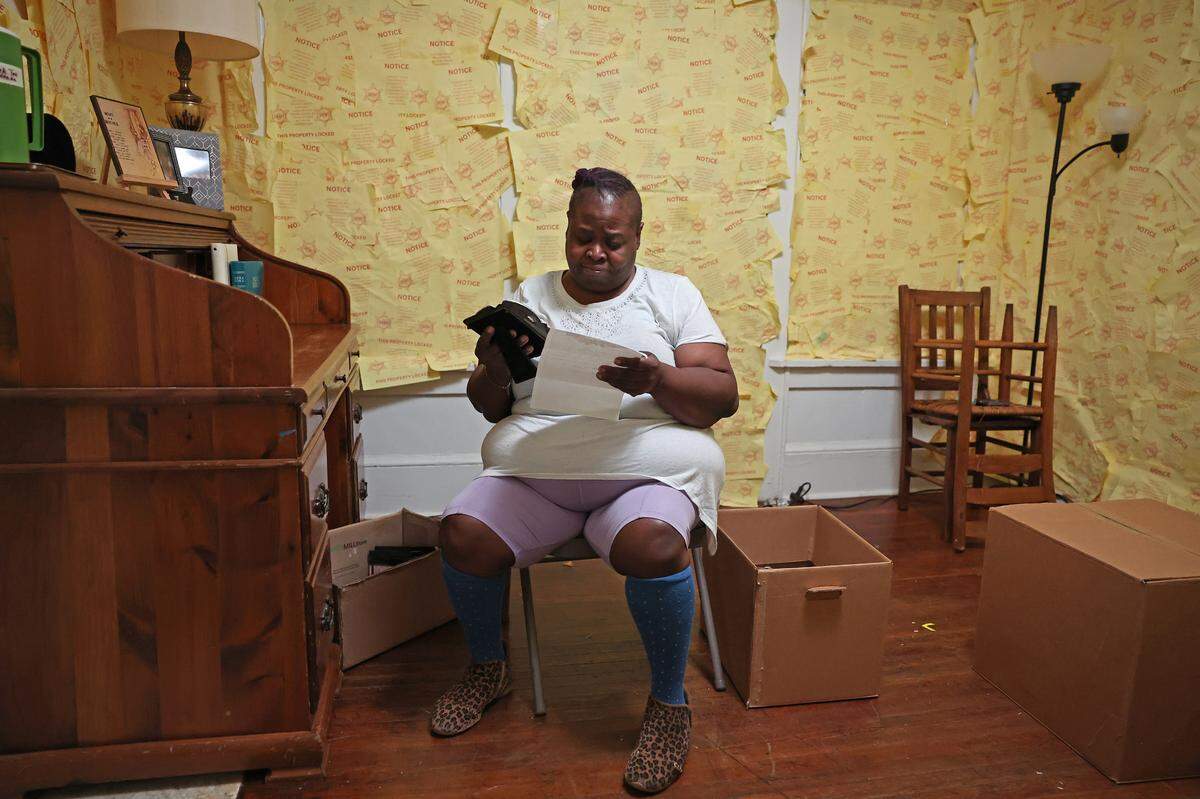
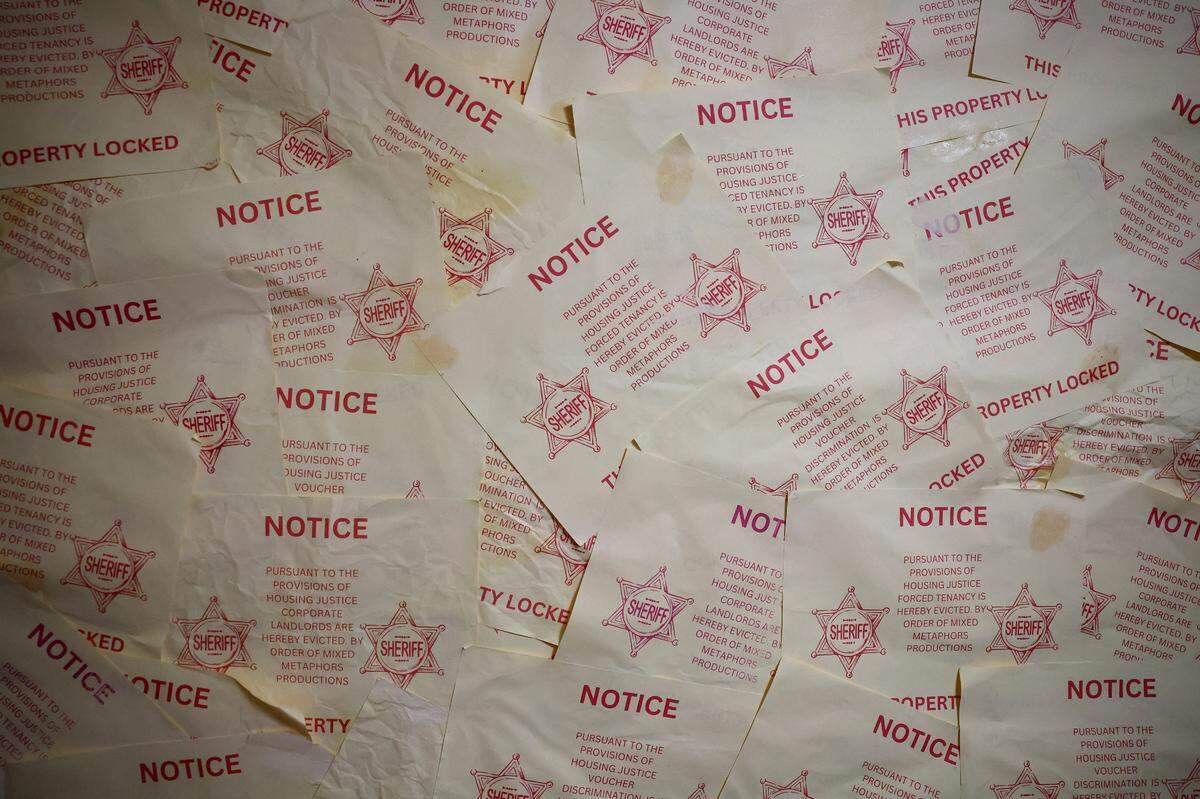
Then, visitors meet the homeowner’s daughter, played by Sunnee Goodwin, the current resident of the house, who is being evicted. Her walls are plastered with 90-day notice signs and she asks viewers to help her choose what she should pack as she’s forced to leave the house.
“She is a real person,” Martin said. “The creation of her text was pulled from the community interviews and engagements that we’ve done.”
Viewers will then meet the spirit of Charlotte, also played by McNeill. She’ll take the audience through the city’s history and her realization that she doesn’t recognize herself amid Charlotte’s change, Martin said. McNeill will perform an original dance choreographed by by K. Alana Jones.
Throughout the play, audience members will also hear original music from local musician Lisa Ortiz.
Martin said the audience will be asked throughout to write down some of their thoughts about the city. Participation isn’t mandatory if anyone is shy. The play is meant to be interactive and the ultimate goal is to inspire people to ask themselves whether Charlotte is for everyone?
What is kudzu?
Kudzu is a trailing vine indigenous to East Asia. The plant was brought to the states in the late 1800s as ornamental greenery that could be used for shade. During the Dust Bowl in the 1930s, it was marketed as a solution to soil erosion.
But Americans quickly turned their backs on the vine because of its invasive nature and ability to grow as much as a foot a day. The vines grew out of control, especially in southern states such as North Carolina, covering everything and anything from houses, to the sides of highways and trees.
The vine that was once deemed as helpful, earned the nickname “the vine that ate the South.” Now, although kudzu is iconic to southern culture, it’s also considered a nuisance.
Martin said kudzu represents the gentrification that’s occurred in the city to welcome new residents. The motto of Kudzu Realty is “Cultivating change by consuming communities.”
“Everybody deserves to have nice things and now there’s a grocery store over here but the question is, who’s that for, though? Why did it happen now?” Martin said.
“We’re not where we are because people moved to Charlotte. We’re where we are because in order to attract people to move to Charlotte, we sweep stuff over. We present ourselves in a way that is more easily digestible. But even if you tear the house down…or remove the kudzu…the memories are still there.”
Want to go?
Martin said she hopes viewers feel connected as Charlotteans after the play and that they begin to notice what’s under the kudzu.
“You would have just shared an intimate art experience… and we hope that it lights you up,” Martin said. “When you drive home, clock the buildings…We hope you feel empowered as a Charlotteans to read between the lines a little bit when people are talking to you about these issues.”
What: “Kudzu: A Story of Belonging”
Where: 2916 Parkway Ave.
When: Through Aug. 25, and Aug. 29 to Sept 1.
Time: 7:30 p.m. and 8:30 p.m. Thursday through Saturday. 3 p.m. on Sundays
Cost: Tickets are $28 with 40% of ticket sales donated to QC Family Tree.
More arts coverage
Want to see more stories like this? Sign up here for our free “Inside Charlotte Arts” newsletter: charlotteobserver.com/newsletters. And you can join our Facebook group, “Inside Charlotte Arts,” by going here: facebook.com/groups/insidecharlottearts.
This story was originally published August 23, 2024 at 6:00 AM.