A Charlotte area power plant is coming down. Here’s the clean energy plan to replace it
Behind its iconic candy cane smokestacks, Duke Energy’s Allen Steam Station in Belmont powered generations of homes and businesses across the Charlotte region. The dwindling number of employees there now, though, have a new task.
They look to protect Gaston County from the residue of Allen’s past while creating a cleaner energy source for its future. And they’ll have to do it without the power plant there anymore.
“In the end,” said Duke Energy spokesman Bill Norton, “you’ll never even know the power plant was here.”
The last operating coal-powered unit at Allen will close by year’s end. Pre-demolition work is happening now at the red and white smokestacks familiar to Lake Wylie boaters or even plane passengers who fly east into Charlotte.
It’ll be more than a decade before all the coal ash, a metal-heavy byproduct of coal power generation, is buried and sealed in new on-site landfills. By then, two new battery storage sites will be operational.
Those battery sites will be unlike anything yet built in North Carolina, Norton said. They’d put the Allen site at the forefront of power production ingenuity, all over again.
What is the Allen Steam Station?
The coal-fired plant opened on the northern shores of Lake Wylie in 1957. Duke Energy, then called Duke Power, planned just one production unit on the 943-acre property. Four more were added in its first four years of operation.
Allen was the only Duke Energy facility with five units under one roof, with the output to power about 924,000 homes.
In its heyday Allen employed about 160 people. That number dropped in the past decade amid plans to close or convert coal plants across North Carolina. Now there are about 45 Duke Energy employees, and another 100 contract workers are there for cleanup activities, too.
Duke Energy retired one of its production units in early 2021, and three total that year. Another unit ran for the last time just two months ago. The final one will end operations next month. The plant only operates part-time now, during peak demand.
Allen was home to a series of firsts for the power company that still runs it, from how much power it created to construction materials, furnace boiler size, the weight of its massive electric rotors and the placement of smokestacks on the ground rather than on the roof.
Yet power wasn’t all Allen produced. There’s also the material all that coal burning left behind.
Coal ash at Allen site
Coal plants use coal ash basins to store some of the byproduct they create. Some residues can be recycled, in construction or as gypsum. Most coal ash settles into basins near power plants, typically along water bodies.
High-profile spills in North Carolina and elsewhere in the Southeast in the past two decades led to public concern since coal ash can contain trace elements like arsenic and mercury.
In early 2020, Duke Energy announced up to $9 billion for plans to close its nine remaining coal ash basins in North Carolina. Two at Allen Steam Station would be excavated, with ash moved to new double-lined landfills built on site.
A basin active from the plant opening in 1957 until 1973 had almost 9 million tons of coal ash. The one used from 1973 to early 2019 had 10.5 million tons.
Marshall Steam Station in Catawba County is one of two sites where uncapped ash (basins without a lid) would be excavated but lined landfills would be built on top of covered ash basins. Across North Carolina, the plan added 80 million tons of coal ash to be excavated. Projects would take 15 years.
All those plans were part of Duke Energy’s plan to close all 31 of its coal ash basins in North Carolina.
The Riverbend Steam Station in Mount Holly is one of six retired sites, with 10 combined ash basins, where excavation was complete prior to the announcement four years ago. Statewide, the 31 basin sites combined for about 124 million tons of ash.
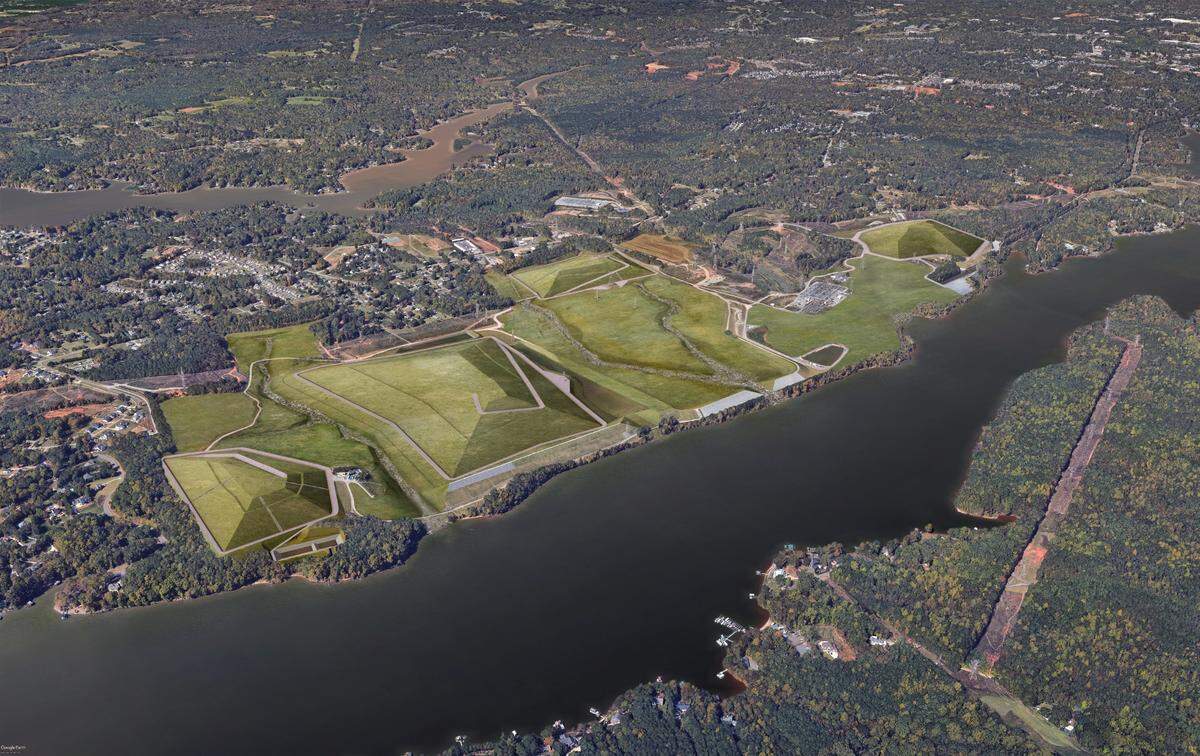
At Allen, the plan called for a 110-acre landfill that would rise more than 100 feet above nearby South Point Road. Plants would grow on top of what would appear to be a large earthen mound.
A separate 30-acre landfill on the northwest corner of the Allen property would rise about 50 feet higher than the road.
The Allen plan had the most material to remove, Duke Energy’s closure engineer Dave Renner said after the excavation plans were announced four years ago. Storms would be a concern, he said at the time, where rainwater from 200 acres flows into the ash basin. Coal ash at Allen was 60 feet deep in places, below Lake Wylie’s water level.
Today, plans are a little different.
There will be four landfills at the Allen site. Material from an ash basin near the center of the property will go into three landfills. Then, that central area will become a large landfill itself for material from another ash basin.
Duke Energy didn’t provide a cost for that work at Allen.
The landfills will spread out the same amount of ash. They’ll still be double-lined with composite materials, on top of a foot of clay and another foot of synthetic clay. Landfills will be covered once they’re filled, with native grasses planted atop them.
Some of the landfills, including one on the southern end of the Allen property and another planned for its northern end, overlook Lake Wylie. Water filtration and monitoring systems will be in place for at least three decades after the landfills become earthen mounds.
The landfills should be complete by 2038.
Across North Carolina, about 50 million tons of coal ash have been excavated, with another 73 million to go, Norton said. There are 11 finished basins with 20 others in excavation now.
At Allen, about 1.4 million tons of ash have been excavated. Another 18.5 million tons remain.
Battery power at Allen
Despite its broad layout, the Allen property won’t have much room for new power options once the coal ash is buried.
The Marshall station had natural gas capabilities, so it made sense to create some new power output there. Other coal station sites have been or could be converted to create solar or nuclear power. “Batteries were the most compact resource,” Norton said.
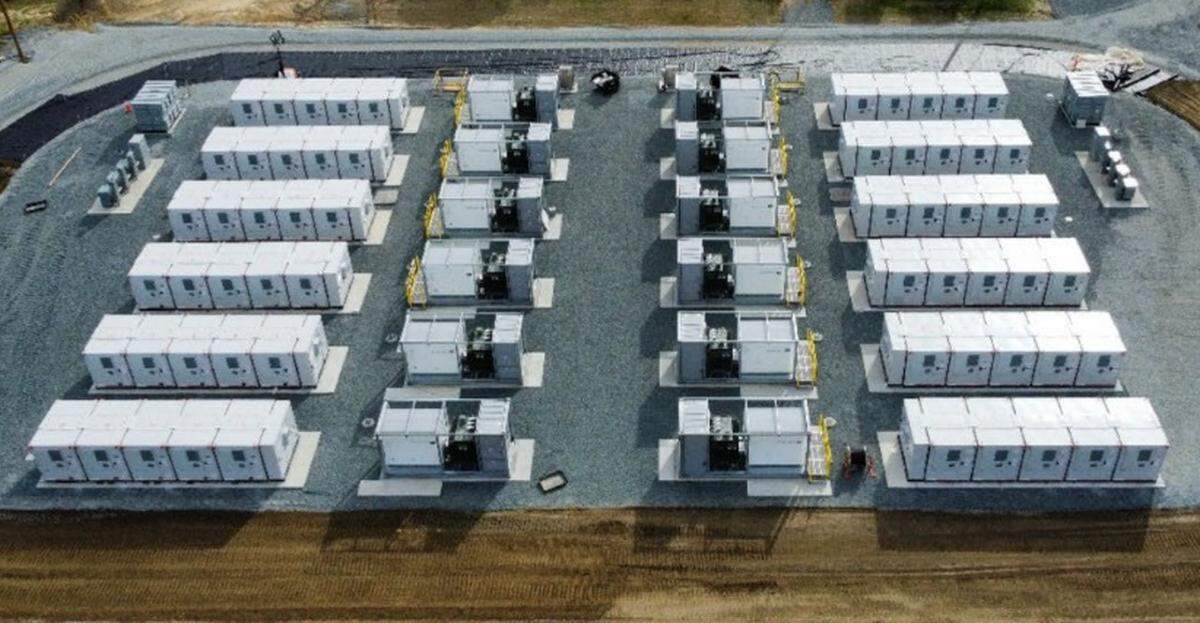
A new, 50 megawatt, four-hour battery storage site will be installed on nearly 8 acres across the street from the Allen plant, at a Duke Energy substation. It’ll be the largest four-hour battery storage site the company has when it’s complete late next year.
A second lithium-ion battery site will go on 10 acres where Allen’s large plant emissions control system is now.
That’s the large white smokestack built almost two decades ago to replace the five red-and-white ones along the lake. That four-hour battery site will store 167 megawatts of power, the same peak capacity as the unit Allen will shut down later this year. It should be ready by fall 2027.
Battery sites will connect to the Duke Energy grid, storing power when available to redistribute during peak demand.
Battery power would come from a mix of solar and nuclear sources. Duke Energy expects up to 40% of costs to be covered from the federal Inflation Reduction Act, Norton said, but the company doesn’t have an estimate for what that cost will be.
The Allen station has always been part of a network, a grid of sites that powers areas in both North Carolina and South Carolina. The drive into the Allen plant shows why more power is needed, as McLean and other subdivisions have sprouted in recent years where only farmland stood prior.
“We’ve got to power all of that,” Norton said.
Saying goodbye to coal power plant
On Halloween, Duke Energy held an event for hundreds of former workers at Allen.
“It’s been manned 24/7, for over 67 years,” said Jeff Flanagan, zone general manager for several plants including Allen.
Flanagan drives in on the narrow, downhill road, toward an office building in view of a glittering lake. He walks down a quiet block wall corridor that shows its age, and into an enormous space where massive motors, compressors, pumps and aged steel hint at what Allen once was.
The plant still works, but it won’t forever. Fewer people know how to repair and maintain what’s there.
“There’s a lot of equipment on site where it’s the last of its kind,” Flanagan said.
There’s also a higher cost now compared to natural gas or other sources. The remaining employees were all given opportunities to stay with the company in other roles, some even in site demolition or cleanup. About half were ready to retire. All the signs point to the plant’s retirement, too, but that doesn’t make it easy.
“We know it’s the right time,” Flanagan said. “We know it’s the right transition, but it is a little sad.”
One of the red and white smokestacks, the fourth one looking south to north, is being prepped for demolition. Others will follow.
Workers encircled the high rim of the larger stack still in operation on Thursday, too. Stacks will come down starting at the top, maybe 20 to 30 feet a day, until traditional demolition claims the bottom 60 feet. By the end of next year, they won’t exist.
In a generation or so, the site will be a series of berms and battery centers. Nature will reclaim most of it.
The coal power plant that stood tall as a region grew up around it will be little more than a memory, a lakefront symbol of power washed away by time.
This story was originally published November 21, 2024 at 5:29 PM with the headline "A Charlotte area power plant is coming down. Here’s the clean energy plan to replace it."