One of the Rock Hill region’s biggest companies sits on an actual gold mine
One of the Rock Hill region’s biggest businesses turns rocks into gold. Increasingly, Haile Gold Mine also produces green — as in an annual economic impact statewide of $717.5 million.
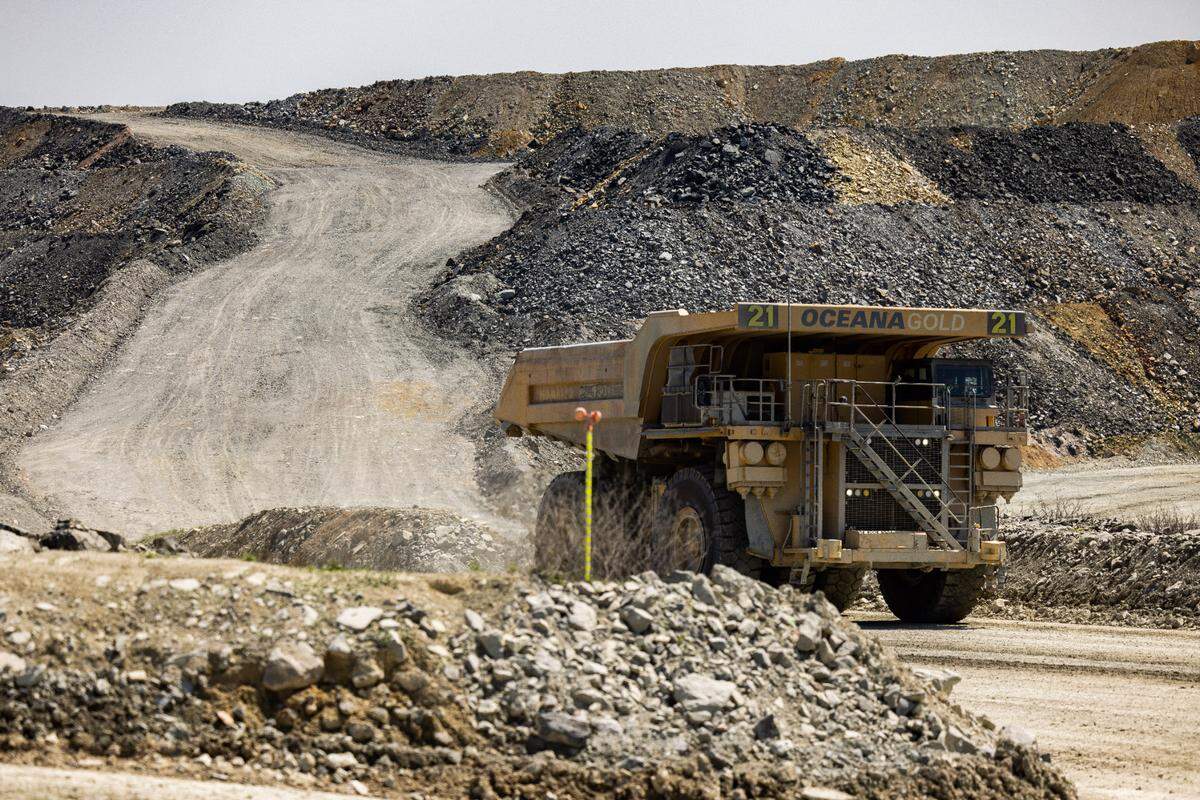
The Lancaster County site that’s been mined for nearly 200 years is a driving force for jobs and wage growth in the region. Yet it’s relatively unknown, company officials say, despite being the largest commercial gold mine east of the Mississippi River.
A new University of South Carolina study puts a greater focus on Haile. Commissioned by publicly traded Canadian Haile parent company OceanaGold and produced by the Darla Moore School of Business, the study projects that by 2037 the Kershaw mine will have had a $9.3 billion economic impact on the state.
That figure includes gold output from the mine, company investment, jobs created, labor income and spending indirectly tied to operations.
“Our commitment to responsible mining goes beyond simply producing gold,” said Haile President Matt Warner said in a news release for the economic impact report.
Haile grows employees, financial impact
The economics at Haile start with its workforce.
Haile Gold Mine employs about 830 workers. Another 200 or more contract workers are there at any given time. Haile expects to hire 50 or 60 more full-time workers this year.
About 80% of workers are local, though mining specialists come from all across the world.
The average annual wage of $86,485 is higher than the Lancaster County average of $62,660 or the 11-county Charlotte region average of $72,488, according to the U.S. Bureau of Labor Statistics. Haile employs a range of engineers in geology, environmental, chemical and other fields.
“This can be life-changing for our local residents,” Warner said of the salaries.
Haile mines silver, too, but typically 60% to 80% of its output is gold. OceanaGold averages about 200,000 ounces of gold per year at Haile.
With a good day producing 3.5 grams of gold from a ton of rock, Haile workers move more than 700,000 tons of underground rock and 40 million tons of surface rock per year.
In 2012, a USC study estimated Haile had a $36 million economic impact on Lancaster County and $119 million statewide. A 2018 study, coinciding with OceanaGold starting its mining operations, put the impact at $87 million for Lancaster County and $634 million statewide.
The new study from the same business school puts the Lancaster County impact at $568.7 million, and the South Carolina impact at $717.5 million.
History of gold in the Carolinas and the Haile mine
In 1799, a farmer’s son named Conrad Reed found a shiny rock while fishing in Little Meadow Creek, about 30 miles east of Charlotte in North Carolina. The 17-pound rock became a doorstop until the Reed family learned it was a gold nugget, the first documented gold discovery in the country.
The Reed farm became Reed Gold Mine, and it’s still a popular tourist attraction in Midland, North Carolina.
Tale of the 12-year-old boy striking gold in a creek led to the Carolina Gold Rush. Prospecting spilled into neighboring counties in the early 19th Century, decades before the famed California Gold Rush in the late 1840s.
“It was the original gold rush in the U.S.,” said Nick Riggins, environmental manager at Haile Gold Mine. “The reason why Charlotte is such a financial hub is there was so much gold mining they put a U.S. mint in Charlotte. That’s why the banking industry is here.”
Haile mining began in 1827 when plantation owner Benjamin Haile discovered gold on his farm. The Kershaw property, like the Reed farm in North Carolina, is part of the Carolina Slate Belt that runs from Virginia to Georgia.
It’s a shale deposit created by volcanic activity, a geologic match to gold-heavy western Africa.
The Haile family mined their property until 1858. The mine reopened briefly after the Civil War, but sat idle from 1873 to 1880.
Then a New York firm bought it and named it Haile Gold Mine. The mine operated off and on until 1999. By then, nearly 22,000 pounds of gold had came out of the mine.
Romarco Minerals bought the site in 2007, and detailed its $353 million development plans. OceanaGold bought Romarco Minerals in 2015 for $856 million. OceanaGold resumed commercial mining in 2017.
How is gold mined in SC?
There aren’t any flashes in any pans at Haile. The easy gold to extract is long gone. It takes a high-tech approach now that begins with rock-like granite or quartz excavated from volcanic vents along a fault line.
“That is our gold,” Riggins said. “That gray rock. It looks like road gravel.”
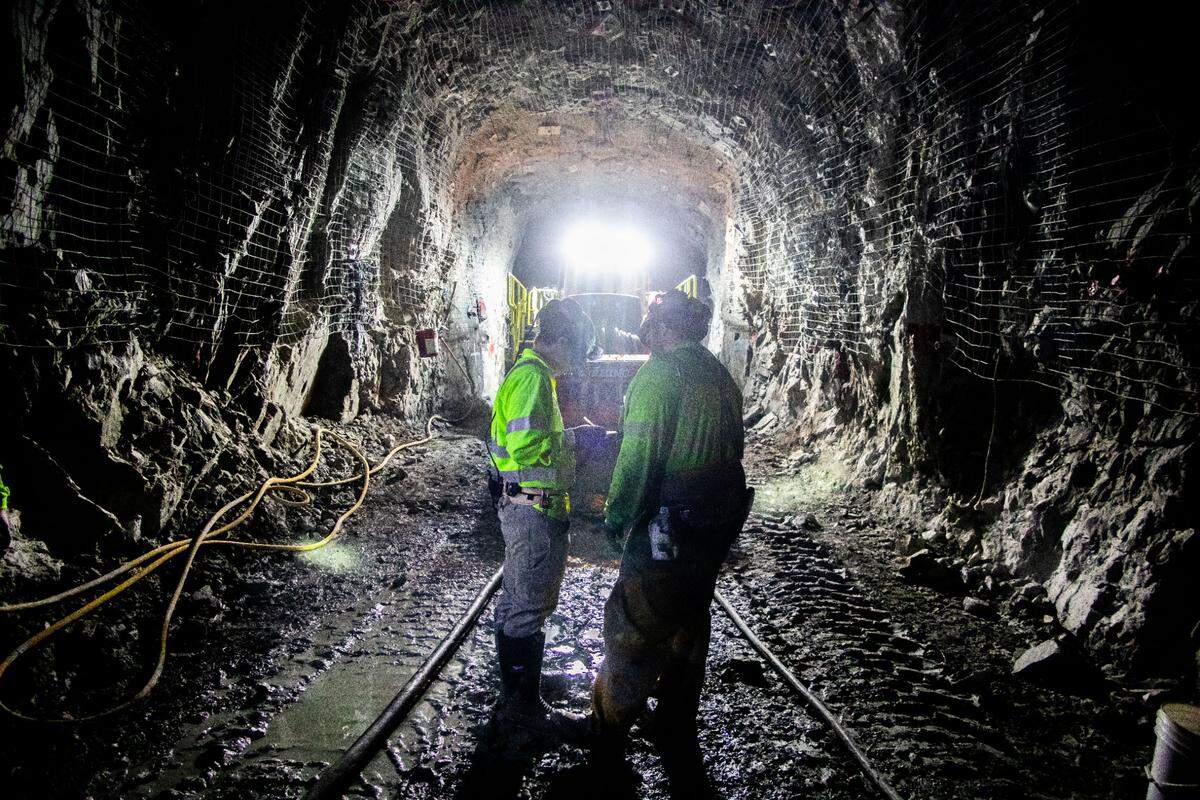
Haile does open pit and underground mining. Original gold deposits were found in a creek that flows into Lynches River. Now mining happens in and under that creek bed, with the water rerouted.
The water returns to the creek bed before leaving the Haile property.
Workers feed rock into a main crusher and several smaller crushing or grinding circuits. The rock is pulverized to one-sixth the size of a human hair. But that’s still three times the size of the gold held within it.
“You cannot see this stuff,” Riggins said. “And it has to be separated from the sulfate complexes which it’s bound up in.”
Sulfate complexes are chemical compounds that interact with gold. Haile uses them in a flotation process to separate gold from rock.
More chemicals then break the sulfate complexes apart, attaching gold to activated carbon. In the gold room, there are acid washes and furnaces that remove the gold from the carbon.
Gold goes onto an electrowinning plate, something that uses an electrical current to extract and purify metals. Gold powder is pulled off and put into a furnace, then poured into bars before the gold leaves Haile for further refinement.
It can end up in anything from governments securing currency to high-grade medical equipment, technology components or even COVID tests.
How long will the gold last at Haile?
Haile evaluates the life cycle of its mine annually.
It’s projected to be viable through 2037, but it’s common for sites to outlive projections. A company site in New Zealand, Riggins said, has been on a five-year mine life for about 20 years.
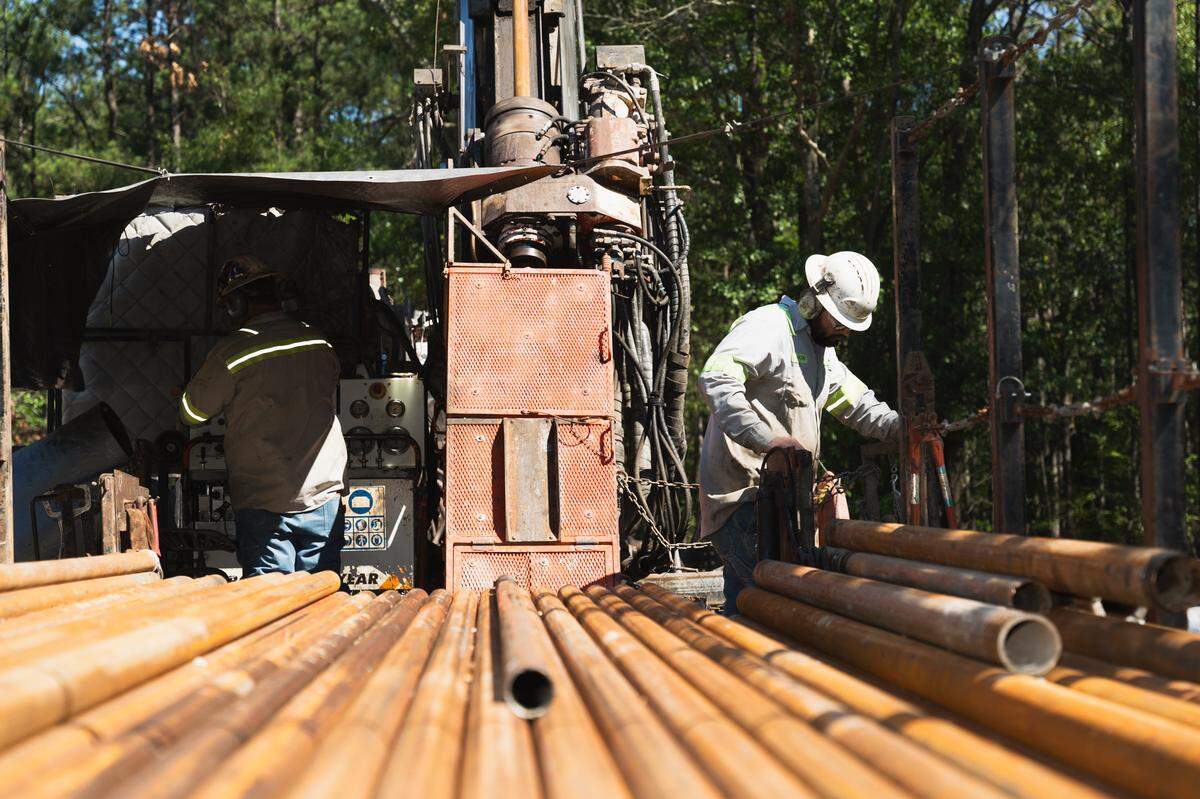
The timeline at Haile depends on what the company finds. In the past couple of months crews found deposits in the Pisces section of the mining pit that will be drilled over the next year or two. Expansion next year will venture into the Palomino pit area from the nearby Horseshoe area, all within the active mining area.
Haile found the Horseshoe pit when workers were drilling an area to put the pulverized rock back after its gold was removed. Core samples came up with visible gold, which is rare.
Any new gold sites the company finds like that one, intentional or not, could extend Haile’s life by years.
The company intends to grow on property where it already mines, rather than seeking extensive approvals to expand its mining area. The Haile property is more than 10,000 acres. The mining area is about 4,600 acres, with about 300 acres as an active mining pit.
When the gold runs out, OceanaGold will remain in Lancaster County for decades. It would take five to seven years to reclaim the area, securing and covering mined rock in the area it was drilled. Site closure and monitoring would take another 25 years.
OceanaGold estimates Haile will have produced 250,000 pounds of gold during its lifespan — roughly the weight of a blue whale or a NASA space shuttle orbiter.
At current market rates, that much gold would be worth about $13.3 billion.
This story was originally published June 10, 2025 at 5:30 AM with the headline "One of the Rock Hill region’s biggest companies sits on an actual gold mine."